
Due to the nature of a live performance, what happens on the stage during a play or musical is never exactly the same.
This in-the-moment approach is what makes the theater the most exciting, some would argue, mode of performance. And for ASL interpreters, it’s something that requires ultimate dexterity.
“One of the biggest lessons that I learned at the beginning was to never marry the script. I can’t just decide this is what’s written, this is what they’re going to say,” says ASL interpreter Andrew Leyva, “they may change it. So we’re still listening. We’re still interpreting the play.”
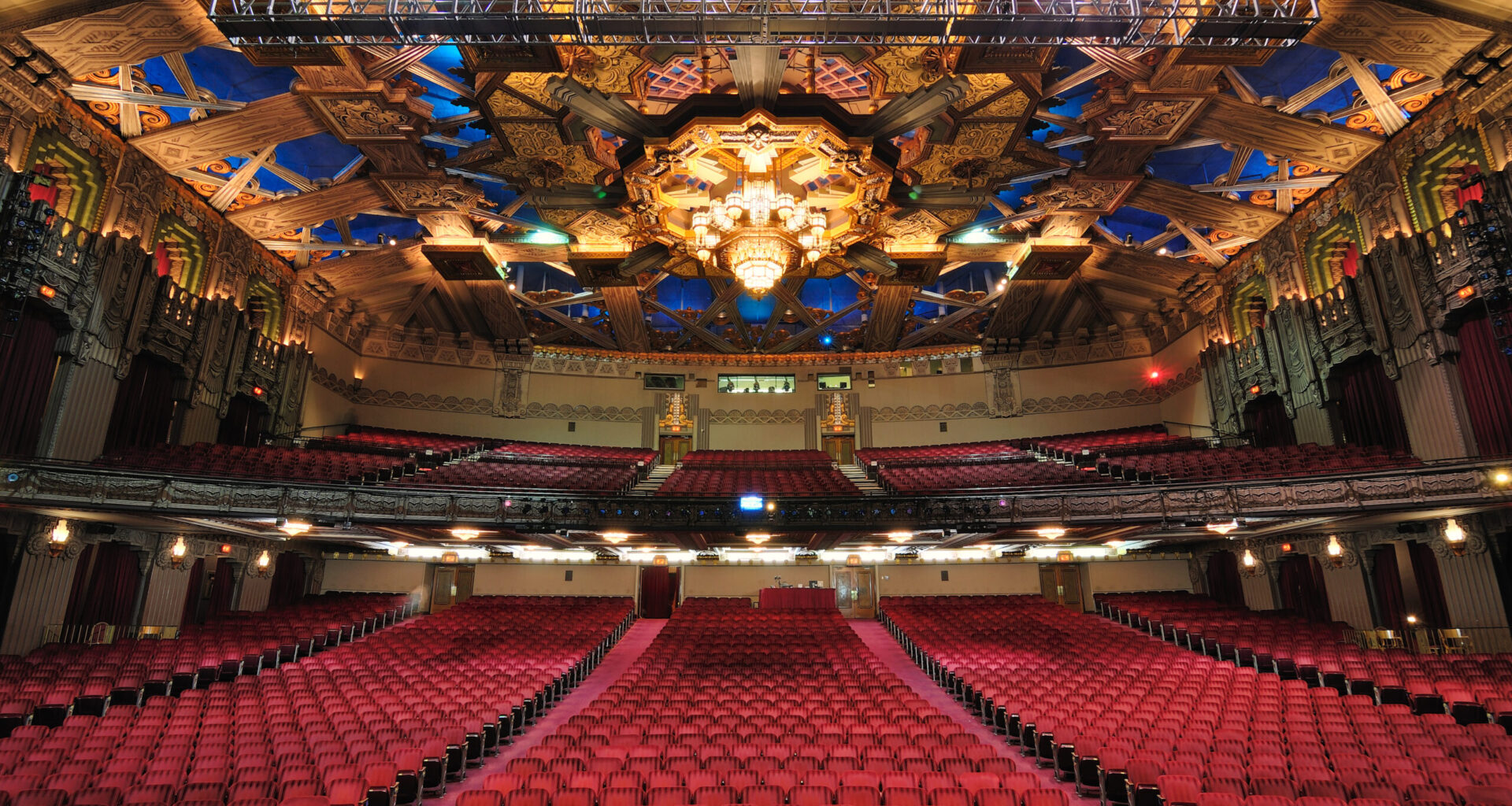
Starting his career as a theatrical ASL interpreter 30 years ago with a Christmas show at a local church, Leyva now serves eight to ten shows each year, primarily in theaters around Los Angeles. Come mid-August, he will also be one of the ASL interpreters for Disney’s Beauty and the Beast at Pantages Theatre (which hires interpreters as vendors, not as full-time employees). The production runs from Aug. 12- Sept. 6.
An Inside Look at Rehearsals
“Typically what we do is we get the script and we’ll get to read the script several times,” says Leyva. In the reading process, he works to find out the timeline of the story and the personality of the characters.
Leyva also rehearses with the ASL interpreter team, which decides on the signature language version of the play and language use. “Even [with] something like Beauty and the Beast,” says Leyva, “I may not use the sign monster. I may use the sign animal. That’s something that me and my team will have to talk about.”
After learning the script, for Leyva, the next step is creating a “character division,” which divides who will embody each character throughout the performance. For Beauty and the Beast, Leyva helps map out the roles, from the central characters to the enchanted objects that bring the story to life.
Scroll to continue reading
“What would be preferred, but not necessarily, is you have a male interpreter and a female interpreter,” says Leyva, “So I’m going to be Beast, and my female counterpart is going to be Belle. Those are the primary characters.” From there, the team works through the rest of the cast. The enchanted cup, candelabra and clock may also need their own distinct interpretations, especially as they interact with Belle and the Beast throughout the story.
Maintaining consistency is key. Leyva explains. “We try to keep the characters consistent throughout the entire story. That’s the goal.” However, because characters occasionally interact in unexpected ways, the team must remain flexible and adjust when necessary.
Before the performance begins, Leyva and his team also introduce the character assignments to deaf audience members so they can follow the interpretation more easily. “We try to prepare the audience with some of that information so that they know this is the person who’s talking, this is the person that I’m taking off,” he explains.
ASL: A Brief Overview
Originated in 1817, ASL has been used in America for over 200 years. Along with growing public awareness of Deaf culture and disability inclusion, the language has gained broader recognition and acceptance.
“ASL has become more popular and more visible. You’re seeing people talk about it more. And people are more accepting and understanding of deafness, the Deaf community,” says Mariam Janvelyan, UCLA Interpreter for the Deaf under the school’s linguistics department. “In the past, it was very dark. People were just isolating deaf people because, ‘Oh, it’s a disability’.”
Janvelyan adds, “I think people get confused because it’s [called] American Sign Language and it’s used here, but it is still a completely separate language with its own syntax, its own phonology, morphology.”
In fact, there is no direct corresponding relationship between English and ASL.
“ASL is not a word-for-word translation of English. For example, there are no specific signs for words like are, am, be, were, or it,” explains USC ASL instructor Karen A. Ruiz.
And because American Sign Language is deeply rooted in Deaf culture, the jokes, idioms and cultural references are usually hard to translate.
“For example, knock-knock jokes, hearing people love. Deaf people don’t understand them because the majority of the time knock-knock jokes are sound-based,” says Janvelyan. “From my experience interpreting, knock-knock jokes almost 99.9% of the time never land.”
ASL and AI
Like the rest of the entertainment industry, theater ASL interpreters are facing AI encroaching on their craft.
In April, Sorenson Communications announced its AI Sign Language Translation and Proofs of Concept and claimed to design “an AI Sign Language Translation platform that recognizes ASL and translates it into English text in real time to enable two-way conversations between a non-signing user and an ASL signer.”
Many ASL interpreters, however, remain skeptical that artificial intelligence can replace human interpreters.
Janvelyan believes interpretation is different from translation: “Interpreters, it’s now, live. It’s a constant flow of information and so the second it comes in, I have like a split second to make a decision and throw it back out. That’s what makes interpreting challenging but that is also why I love interpreting.”
“The beauty of interpreting, all that is the human connection, is the human touch,” says Janvelyan. “There are certain things that robots will never understand no matter how great technology gets.”
That human connection is especially essential in live theater, where interpretation is not only about literal accuracy. It is a shared experience shaped by the emotions of the audience, the energy of the performers and the atmosphere of the entire performance space.
ASL interpreters become part of the ever-changing rhythm of live storytelling. With every gesture, expression and movement, they help ensure the stage is not reserved for a single kind of audience, and it remains a place where everyone can experience the magic of theater.