
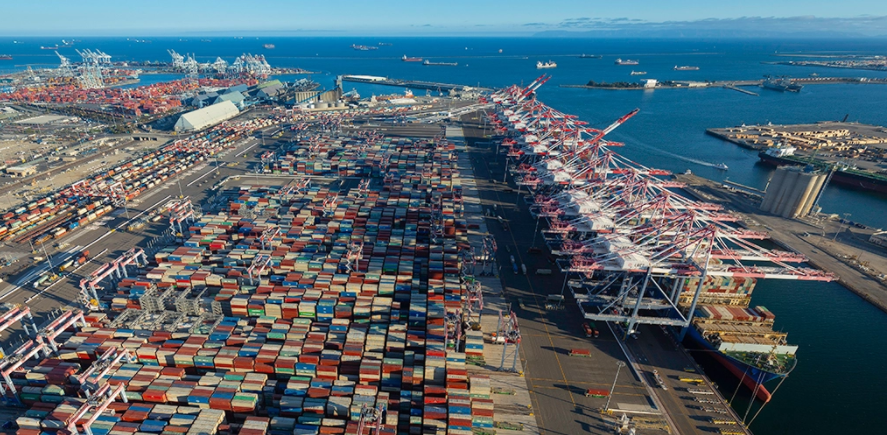
The Port of Long Beach has approved three new measures aimed at improving air quality and accelerating the transition to zero-emissions goods movement, in coordination with the South Coast Air Quality Management District (SCAQMD) and the Port of Los Angeles.
The measures include $40 million in new funding for a regional zero-emissions truck charging network, enhancements to green ship incentive programs to encourage calls by cleaner oceangoing vessels, and a new program to support the deployment of zero-emissions trucks.
The Long Beach Board of Harbor Commissioners approved the measures unanimously on August 11, following SCAQMD approval on August 7. The Port of Los Angeles is scheduled to consider the measures on August 13.
Long Beach Harbor Commission President Steven Neal said the measures would enable the ports to make progress toward zero emissions through “concrete, measurable and transparent actions”, following more than six months of public input and discussions. Meanwhile, Port of Long Beach CEO Noel Hacegaba said the initiatives would help build the “Port of the Future” and strengthen the port’s commitment to a zero-emissions transition.
The initiatives form part of an addendum to the three parties’ Cooperative Agreement and build on the San Pedro Bay Clean Air Action Plan, which has helped reduce port-related diesel particulate matter by 90%, nitrogen oxides by 68% and sulfur oxides by 98% since 2005.
The charging investment will expand infrastructure beyond the San Pedro Bay port complex to key locations across Southern California. The Port of Long Beach currently has 102 charging stations, the most of any U.S. seaport, with another 92 expected to become operational later in 2026.
The ports are also developing comprehensive zero-emissions infrastructure plans, with the first phase expected to be released in spring 2027.
The measures support the ports’ longer-term target of achieving zero-emissions goods movement while maintaining competitiveness. Long Beach aims to handle 20 million TEUs annually by 2050 and become a 100% zero-emissions port.