
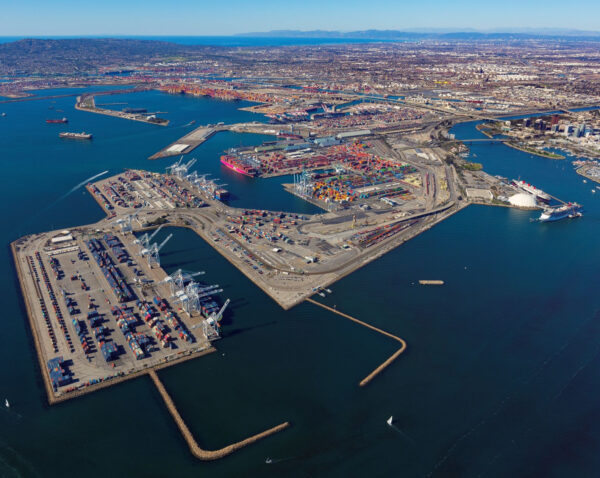
 Port of Long Beach
LONG BEACH — Three new strategies to improve air quality and lessen community impacts from port-related emissions have been approved by the Port of Long Beach, in coordination with the South Coast Air Quality Management District or SCAQMD and Port of Los Angeles, as they work toward a shared goal of zero-emissions goods movement at the ports complex.
These strategies build on the historic Cooperative Agreement adopted last December and include:
$40 million in new funding from the ports for a regionwide zero-emissions truck charging network;Enhancements to existing green ship incentive programs to encourage visits from the cleanest available oceangoing vessels;And a new program to further incentivize deployment of zero-emissions trucks.
The Long Beach Board of Harbor Commissioners Aug. 10 voted unanimously in favor of the above “CAAP Plus” (Clean Air Action Plan) measures following SCAQMD board approval on Aug. 7. The Los Angeles Board of Harbor Commissioners is scheduled to vote on the issue on Aug. 13.
The new strategies are part of an Addendum to the Cooperative Agreement entered into by the Ports and South Coast AQMD last year, and expand on theSan Pedro Bay Clean Air Action Plan that has delivered progress in cutting emissions from port-related sources, including reductions of 90% in diesel particulate matter, 68% in nitrogen oxides and 98% in sulfur oxides from port-related sources since 2005.
The three-party Cooperative Agreement was negotiated to ensure that both ports maintain their competitiveness while completing comprehensive zero-emissions infrastructure plans to improve air quality in the region. The first phase of the zero-emissions infrastructure plans is expected to be released in spring 2027.
The Port of Long Beach currently has 102 charging stations on site, with 92 more coming online later this year. The addendum to the agreement between the SCAQMD, Port of Long Beach and Port of Los Angeles will expand charging infrastructure outside the complex and into key locations around Southern California.
Details: polb.com/environment and www.cleanairactionplan.org.
Related