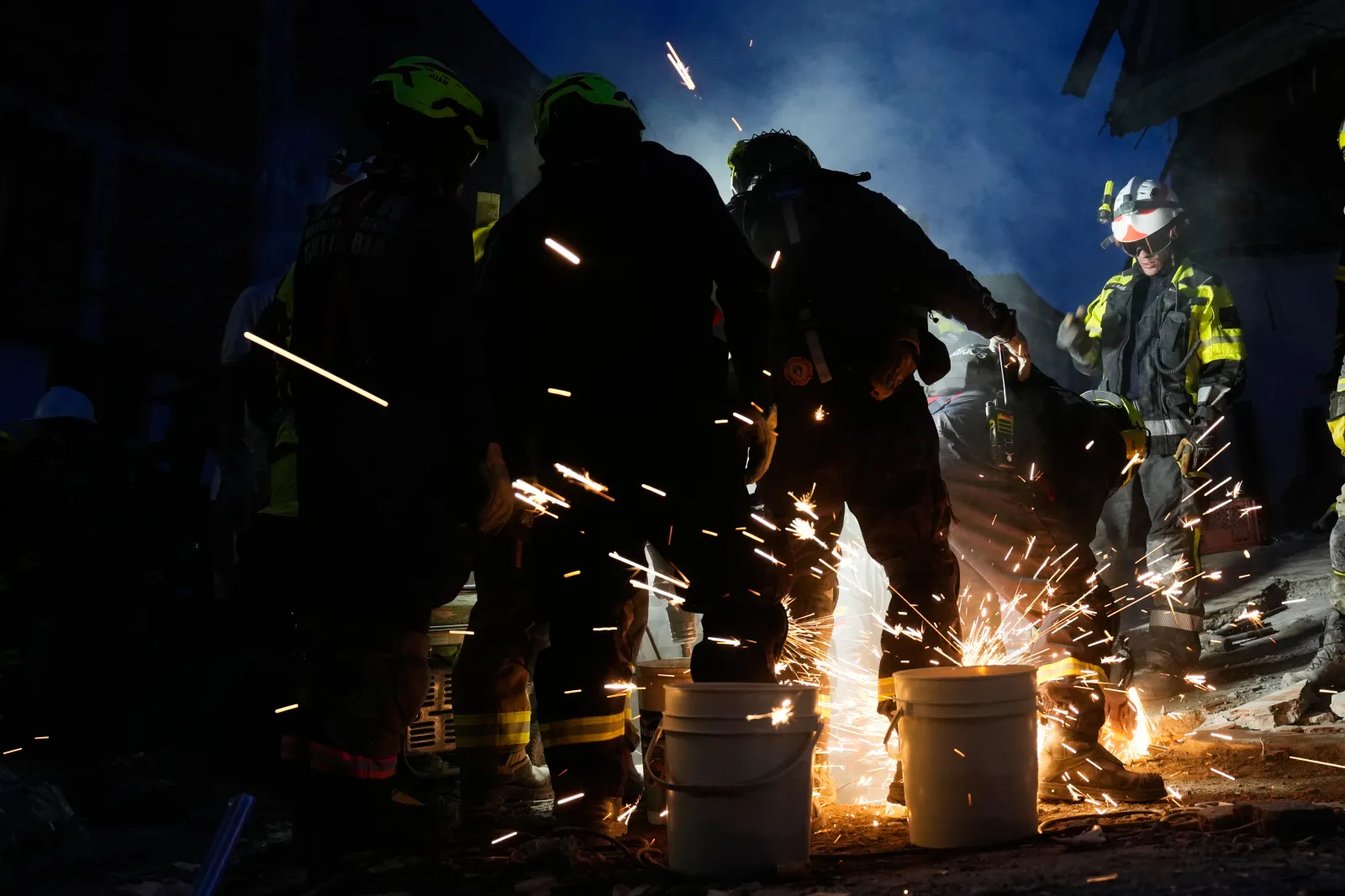
Search and rescue teams fanned out across western Colombia on Tuesday as the hunt for thousands of missing people entered a second day after the region’s catastrophic 7.4‑magnitude earthquake on Monday.
The stakes have grown as local officials report rising death counts and expanding collapse zones across multiple cities. Families, soldiers and volunteers are digging through unstable debris in hopes of finding survivors while the country’s new president confronts the first major crisis of his administration.
The U.S. Geological Survey (USGS) estimates there is roughly a one‑in‑three chance the earthquake could result in more than 1,000 casualties. So far, at least 250 deaths have been estimated, according to Reuters.
Read More on News
It comes weeks after deadly quakes devastated parts of Venezuela.
1 of 10
One of the Strongest Earthquakes in Recent Decades
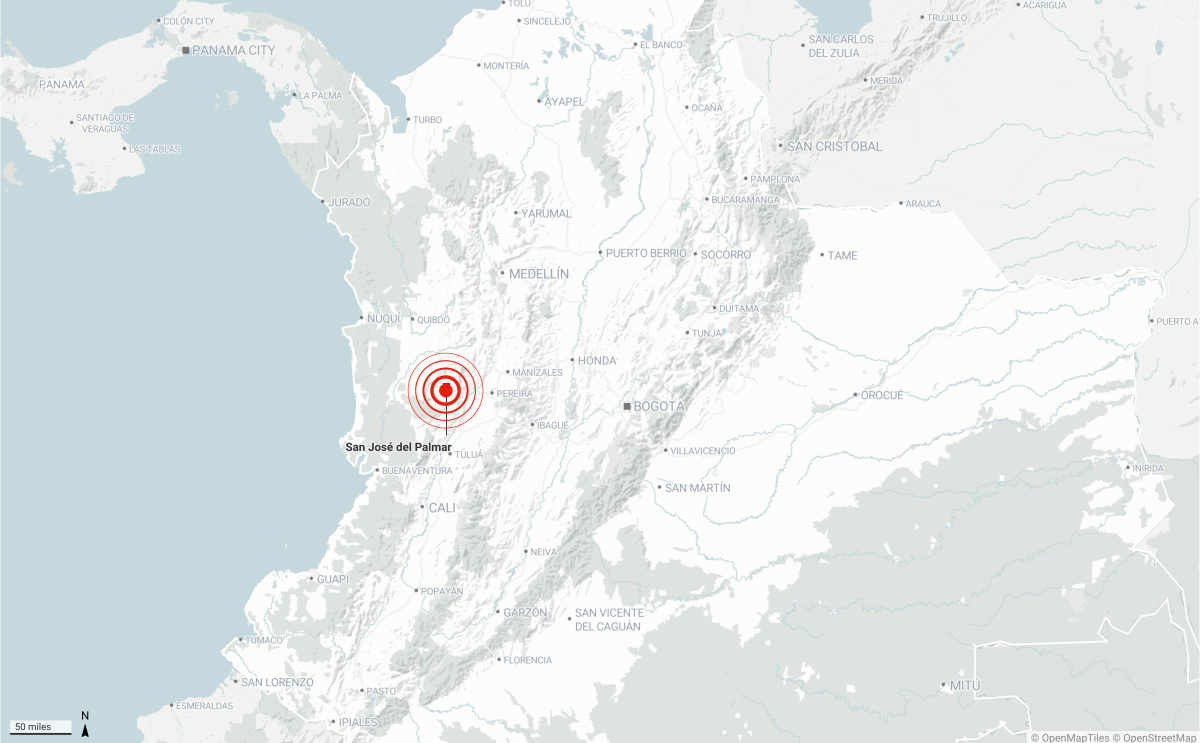
The quake hit at 7:34 a.m. local time, with the epicenter located near San José del Palmar in the Chocó region—an area of roughly 4,800 residents surrounded by mountainous terrain. Colombia’s geological service said it was a 7.4 magnitude earthquake at a depth of roughly 96 km, making it one of the strongest earthquakes to strike the country in recent decades.
Chocó Governor Nubia Carolina Córdoba‑Curi described injuries and significant damage to buildings in Quibdó, a city of about 130,000 people. She warned that aftershocks were already being detected and urged residents to remain cautious as emergency teams conducted structural assessments.
In neighboring Risaralda, Governor Juan Diego Patiño described “serious damage to some buildings” in Pereira, calling the situation “very severe.”
The shaking was felt hundreds of miles away in Bogotá, where Mayor Carlos Galán reported no major damage, as well as in Venezuela and Ecuador, where residents also described intense tremors.
The U.S. tsunami warning system confirmed there was no tsunami threat.
Photos, Video Show Initial Destruction From Colombia’s Biggest Earthquake
Images shared by local media show homes and small buildings collapsing in Pereira, Cali, and Quibdó, with debris spilling into streets and residents helping injured neighbors. In Manizales, part of a neo‑Gothic cathedral tower fell onto the nave, scattering rubble across the plaza and prompting emergency evacuations. Footage from Cali, a city of 2 million, shows rescue crews responding to at least 19 collapsed buildings where people were reportedly trapped.
Videos from Chocó depict chaotic scenes: cracked roads, shattered windows, and residents gathering in open areas as aftershocks rattled the region. Emergency teams are still working to determine how many people were injured, but officials have confirmed multiple injuries across Chocó, Risaralda, and Valle del Cauca. Colombia’s disaster agency said it is coordinating with local authorities to verify structural damage and reach remote communities that may have been cut off by landslides.
In an update to X on Monday night, Colombian President Abelardo de la Espriella said immediate financial and humanitarian aid to more than 1,400 families affected by the disaster in Chocó has been allocated. Injured people are being transferred to Medellín for medical care, while temporary housing assistance will be provided to families whose homes were damaged.
In Cali, authorities are focused on helping affected families, searching for missing people, treating the injured and maintaining security, de la Espriella said. “Cali and Valle del Cauca are not alone. The State is present and will continue to act with all its capacity to protect and support our people. ¡Stand Firm for the Homeland!” he concluded in his post.
Colombia’s aviation regulator temporarily halted flights at multiple airports across the region, including those serving Pereira, Manizales, Quibdó, Armenia, Cartago and Buenaventura, as engineers assessed the facilities for possible structural damage, Reuters reports.
Local, US Leaders React
Governors across western Colombia urged residents to remain outdoors while engineers inspect damaged structures. Córdoba‑Curi said her government is preparing an official report and warned that the mountainous terrain around San José del Palmar could complicate rescue operations. Patiño said Pereira’s emergency services were overwhelmed by calls and that additional support may be required as assessments continue.
Abelardo de la Espriella announced he would personally supervise recovery efforts and establish an emergency center in San José del Palmar. His statement signals the government’s concern about the quake’s impact on rural communities, where infrastructure is often limited and damage assessments take longer.
U.S. Secretary of State Marco Rubio said on X, “The Trump Administration is closely monitoring the large earthquake that struck Colombia and stands ready to support the people of Colombia and President @ABDELAESPRIELLA’s Administration.”
Rubio also urged American citizens in Colombia to enroll at http://STEP.State.gov.
Buildings Destroyed, Residents Injured
Across affected cities, reports describe collapsed homes, damaged commercial buildings, and compromised historical structures. In Manizales, the cathedral tower collapse became one of the most striking symbols of the quake’s force. In Cali, widespread structural failures left dozens trapped, prompting large‑scale rescue operations.
Officials have not yet released a confirmed death toll, but they acknowledge numerous injuries across multiple provinces. Emergency responders say the number could rise as crews reach rural areas and sift through debris. The National Unit for Disaster Risk Management said it is working with local governments to verify reports of collapsed structures and potential casualties.
Other Earthquakes in the Region
Residents in Táchira and Barquisimeto reported feeling Colombia’s quake, adding to regional anxiety following June’s deadly events.
Colombia sits along the Pacific Ring of Fire, where several tectonic plates—including the Malpelo, Panama, Caribbean, North Andes, and South American plates—converge.
This makes the country one of the most seismically active in the hemisphere. Historical records show major quakes throughout Colombia’s history, including the 1999 Armenia earthquake that killed more than 1,100 people.
Contact Newsweek editors on this story: Gabe Whisnant, Tony Phillips and Anna Commander.