
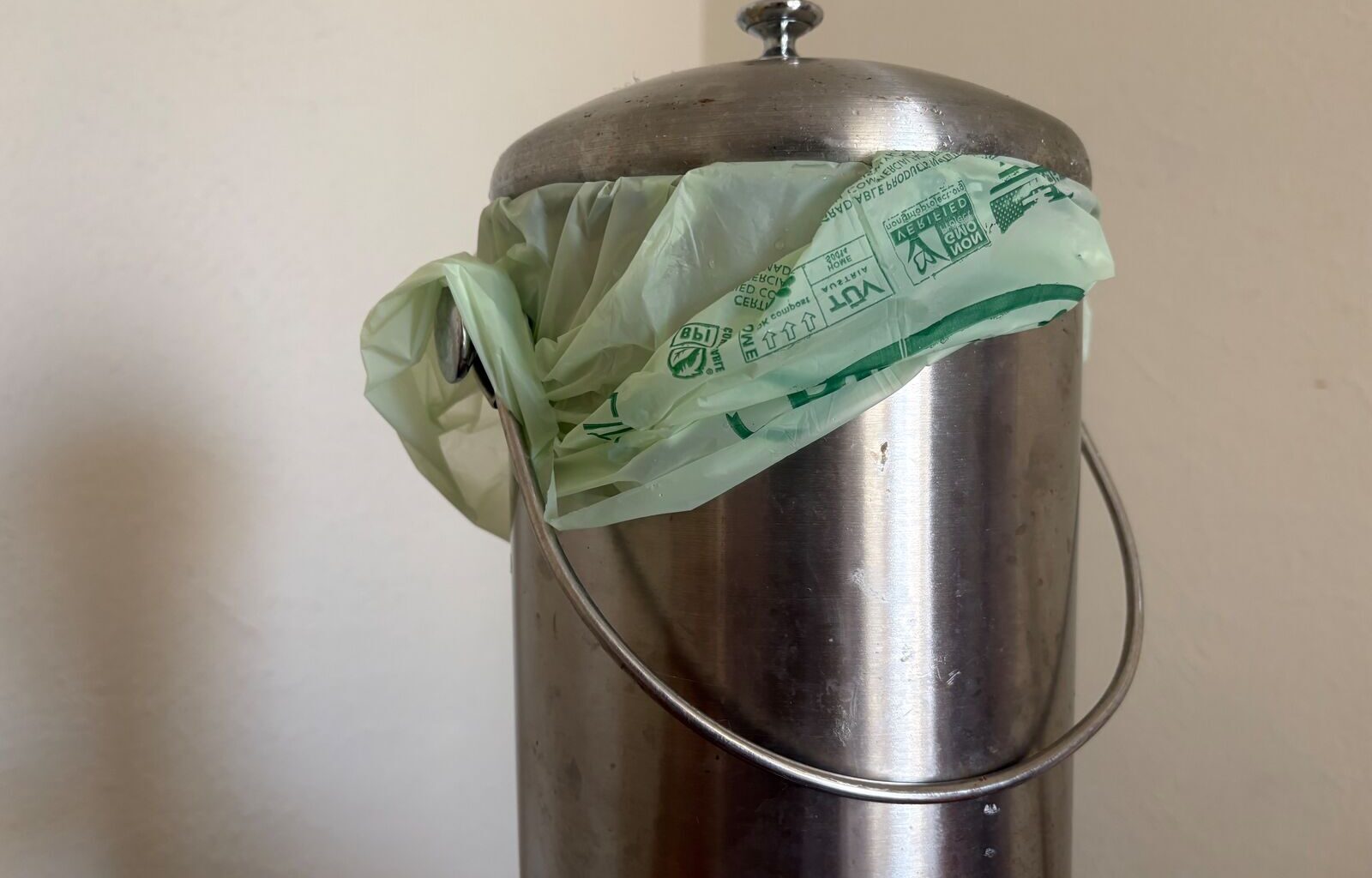
In Oakland, we have access to some of the freshest produce in the country. But what’s a home cook to do with all the citrus peels, carrot tops, and other food scraps a meal can generate?
For many upstanding environmental citizens, the answer is obvious: compost them. But, in trying to do the right thing, many Oakland residents are inadvertently contaminating every load they place in their green curbside bins.
That’s because those green “compostable” bags that many people use to contain their food scraps don’t actually break down into a safe and usable compost. As a result, the local compost collector doesn’t accept them.
“Emerging research suggests that compostable plastics can pose human health and environmental risks as well as challenges to waste management programs,” says the regional agency StopWaste.
While these “bioplastics” are made from organic materials, they require specific environmental conditions to break down and decompose. And some of these products contain additives or aren’t transparent about the materials they use.
Fast facts
Oakland doesn’t accept bioplastic bags in the compost
“Compostable” cups and utensils are also prohibited
You can line your kitchen pails with paper instead, or put them in the freezer
In 2023, Oakland adopted an ordinance limiting the distribution of single-use foodware like plastic cups and utensils — including the so-called compostable kind — by restaurants. Throughout this process, the city had conversations with Waste Management, Oakland’s curbside trash and composting contractor, said Rebecca Parnes, the city’s recycling manager. The company decided to stop accepting bioplastics, including the green bags.
Parnes said the reckoning over bioplastics was fairly recent and gradual.
“If people have been buying compostable bags and putting them in their compost, they shouldn’t feel bad, because they thought they were doing the right thing,” she said. “And for a period of time, a lot of cities were promoting it, because we thought it was the right solution. Now that we’re learning more, we’re realizing it’s not.”
Confusingly, several cities in Alameda County do accept bioplastic bags in compost. You can find illustrated regulations for cities in three Bay Area counties online. But, according to Parnes, only one facility in the state can actually process bioplastics — and it’s in Southern California.
Composting rules should become clearer and more standardized in coming years, due to a couple of state laws meant to reduce waste and encourage transparency.
Senate Bill 1383, which went into effect in 2022, required cities in California to offer organic waste collection services. It specified that cities can accept compostable plastics only if the facilities they use provide annual notice that they are able to process them. Another 2022 law, SB 54, required clearer labeling on packaging.
Currently, plastic bags of all sorts are the most common contaminant found in local compost (and in recycling bins, where they’re also prohibited), Parnes said. But she’s seen plenty of more creative stuff, too — including a television once placed in a green bin in Oakland. The city conducts regular audits of curbside bins.
So what happens if you do put a green bag of fruit and vegetable scraps in your bin?
At Waste Management’s processing facility in Altamont, contamination, including “compostable” plastics, “is sorted out during processing and directed to the landfill,” said spokesperson Daiane Cezário in an email.
Parnes said industrial processors typically grind up compost, then sift it through a series of screens that separate out larger items. This process catches a lot of contaminants, but it isn’t perfect, she said.
Waste Management sells the compost it processes to farmers, landscapers, and other customers. In comments made to the state legislature in 2023, the company said there’s a market for compost that includes (uncoated) paper scraps, but it’s much harder to sell compost contaminated with plastic. It’s also hard to effectively sort it out with existing technology, the company said at the time.
What should Oakland residents do with their home compost?
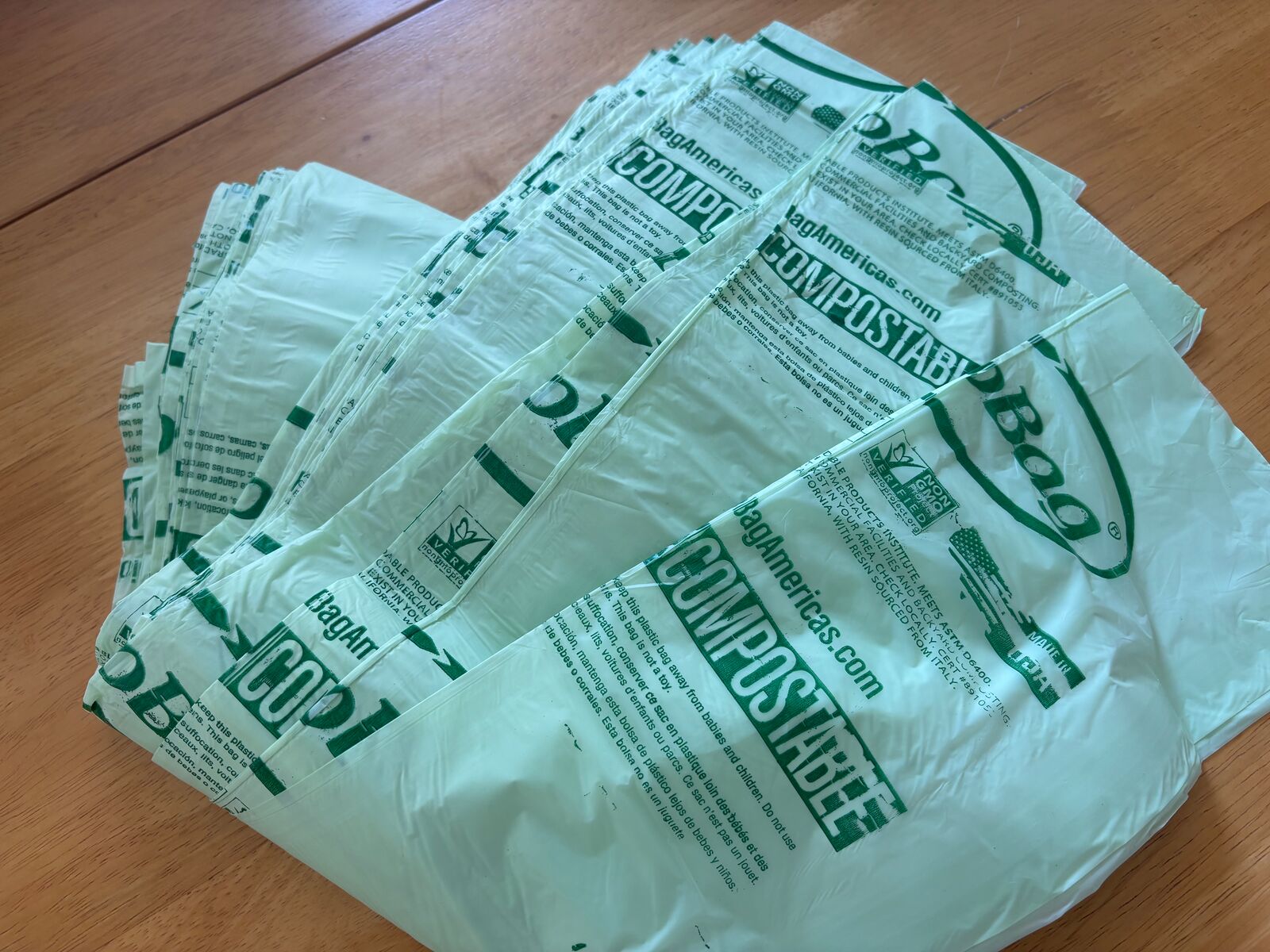 Products made from bioplastics are often advertised as compostable. But in Oakland, they’re not. Credit: Natalie Orenstein/The Oaklandside
For residents who rely on green bags, it might be difficult to figure out what else to do with your drippy, stinky food scraps. Those bioplastic bags – sold in bulk at places like Costco and provided for produce at popular local stores like Farmer Joe’s and Berkeley Bowl — presented a convenient, but ultimately too-good-to-be-true, solution.
Parnes often uses small paper bags she’s accumulated, like the ones that bread loaves come in. Or you can use mail or shredded paper to line your kitchen pails. Many people also keep their food scrap buckets in the freezer or fridge to avoid leaks, rotting, and fruit flies.
We’ve heard from a reader who expressed concern about residents interacting with mold and bacteria if they have to regularly dispose of compost that isn’t contained in a bioplastic bag. He said he wears an N95 mask when dumping scraps into the curbside bin, which in some households or buildings might already have food rotting in it from earlier in the week.
Several people have told us they were unaware that green bags are prohibited in Oakland compost.
Parnes said the city and its waste collectors both provide public education on what’s permitted where — including through tabling at public street fairs, including literature with bills, directly mailing residents annually, and posting on social media. Oakland lists acceptable and unacceptable items online.
But she said the city doesn’t have the staff or funding to raise as much awareness as it would like. And bioplastic products sold to customers often have inaccurate information on the packaging.
So what’s a resident to do with your leftover roll of green bags? Treat them like any other plastic bags, Parnes said: “Put them in the trash.”
“We’ve been sold the idea that this is an easy solution,” she said. “Really, the best solution for most things are reusables, because they don’t have as big of an environmental footprint or toxins or all the other things we don’t want.”
“*” indicates required fields