
‘Suspense Day’ is here. What it means for proposed California laws

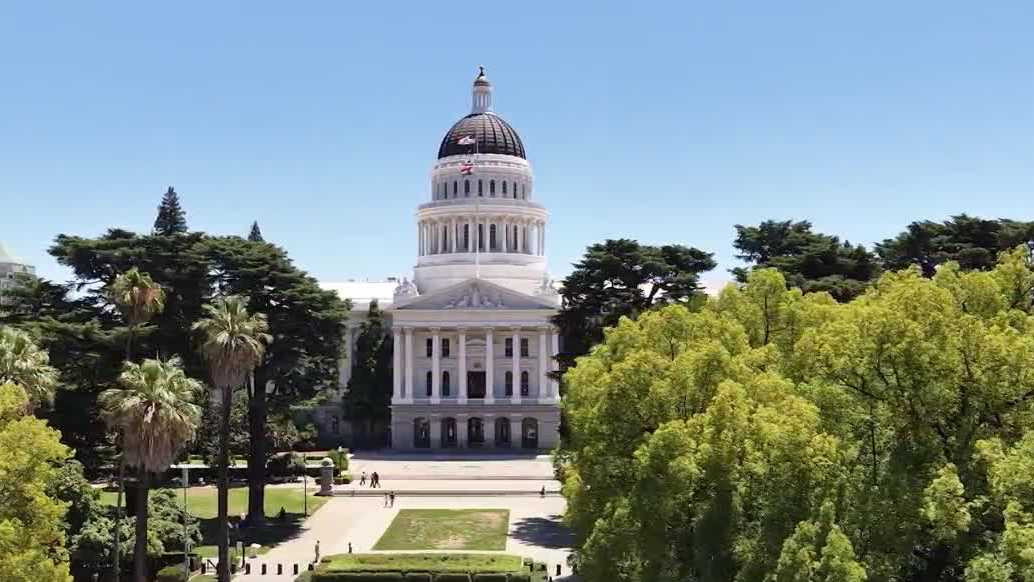
Thursday will mark one of the most pivotal yet secretive days for hundreds of proposed laws working their way through the state Capitol, a day when the state Legislature’s powerful appropriations committees quickly pass or kill bills for the year without public discussion.
The day is referred to as “Suspense Day” because, over the past several weeks, the committees have placed hundreds of bills into what’s called the suspense file. That file is reserved for bills that cost the state more than $50,000 from the general fund or $150,000 from any of the state’s special funds.
Each house in the Legislature, the Senate and the Assembly, has an appropriations committee. The committee’s task is to analyze bills based on their cost to taxpayers. As of Wednesday afternoon, there were an estimated 850 bills between the two houses.
Suspense hearings are unlike any other at the state Capitol. The leader of the committee quickly rattles off a bill number and then announces if it’s passed or held on suspense. There is no testimony, no discussion, and often the committee does not publicly disclose why a bill is blocked.
Hearings on the suspense file happen twice a year — Thursday will be the final one of the year, and of the 2025-2026 legislative session. Bills written in the Assembly will be sifted through the Senate’s appropriations committee, while Senate bills will be heard in the Assembly. Assembly bills that survive move to the Senate floor, while Senate bills approved head to the Assembly floor. Lawmakers then have until August 31st to send the bills to the governor. Bills will essentially be near the finish line at this stage.
Gov. Gavin Newsom will have the final say in all of them, his deadline to sign or veto what’s sent to him by September 30.
You can see the full list of bills on suspense here and here.
Here are some of the bills we’re tracking:
AB 1709: Prohibits social media companies from using addictive feeds for children under 16 and creates a new advisory commission in the California Department of Justice to advise on how to regulate social media moving forward.
AB 2: Would make social media companies liable for harm caused to children through their platforms.
SB 867: Stops the sale and manufacturing of toys with artificial intelligence chatbot capabilities for four years.
AB 1776: Makes major changes to the state’s antitrust laws to try to make business competition fairer in the state, giving the state more tools to intervene when one single company gets too powerful. Critics warn this could open up businesses to more lawsuits.
AB 1729: Requires state agencies to provide telework options and if not, justify why.
AB 2646: Raises the minimum wage for farmworkers to $19.75 an hour starting January of 2027.
AB 2244: Creates a special state certification program and government seal for non-ultra-processed foods
AB 2393: Makes it easier for people wrongfully detained by immigration authorities to sue for damages.
AB 2393: Makes it easier for people wrongfully detained by immigration authorities to sue for damages.
AB 1896: Prohibits federal immigration officers and workers in the Trump administration to be hired as California state employees.
AB 2624: Allows people who work or volunteer at immigration support service organizations to be added to the Secretary of State’s “Safe at Home” program. The program is designed to protect individuals who fear for their safety by shielding their home address from public records. Also prohibits a person or business to post photos or personal information of those providers on the internet if the poster specifically intends to “incite a third person to cause imminent great bodily harm” or threaten an immigration support service provider in a way that puts the person in objectively reasonable fear for their personal safety.
SB 1257: Requires the Attorney General to publish an annual report on immigration enforcement incidents happening in health care facilities, shelters, polling places, courthouses, public transportation, state and local property.
AB 1633: Taxes companies that fund ICE detention centers. The state would collect 50% of the money those companies make off of the ICE facilities located in California. The money would then be used for immigration services.
AB 2108: Would allow repeat retail thieves to be eligible for mental health diversion.
SB 1203: Changes who is responsible for training and attempts to raise minimum wages for private security guards.
SB 878: Penalizes property insurance companies if they delay payments on undisputed claims.
SB 1301: Requires property insurance companies to provide more notice before dropping policy holders and provide policy holders with options to keep their coverage.
SB 1047: Would add frontotemporal dementia to the state registry that tracks brain diseases.
SB 1259: Requires refineries to provide closure cost estimates, dates and other financial information, even if the refinery has no plans to shut down.
SB 966: Requires employers to work with employees to develop and implement a written plan to provide for employee participation in all process safety management (PSM) elements. The oil industry said this would override a settlement agreement over the issue that has been in place.
AB 605: Establishes the Refinery Safe Staffing Task Force to develop standards and best practices for retaining safe staffing levels at refineries. It also directs the California Environmental Protection Agency (CalEPA) and the Division of Occupational Safety and Health (Cal/OSHA) to adopt regulations that require all refineries to develop “safe staffing management plans.”
SB 493: Would allow the governor to declare a state of emergency when the federal government is in an international conflict or war to allow the Attorney General to crack down on price gouging in California during that time.
KCRA 3 Political Director Ashley Zavala reports in-depth coverage of top California politics and policy issues. She is also the host of “California Politics 360.” Get informed each Sunday at 8:30 a.m. on KCRA 3.