
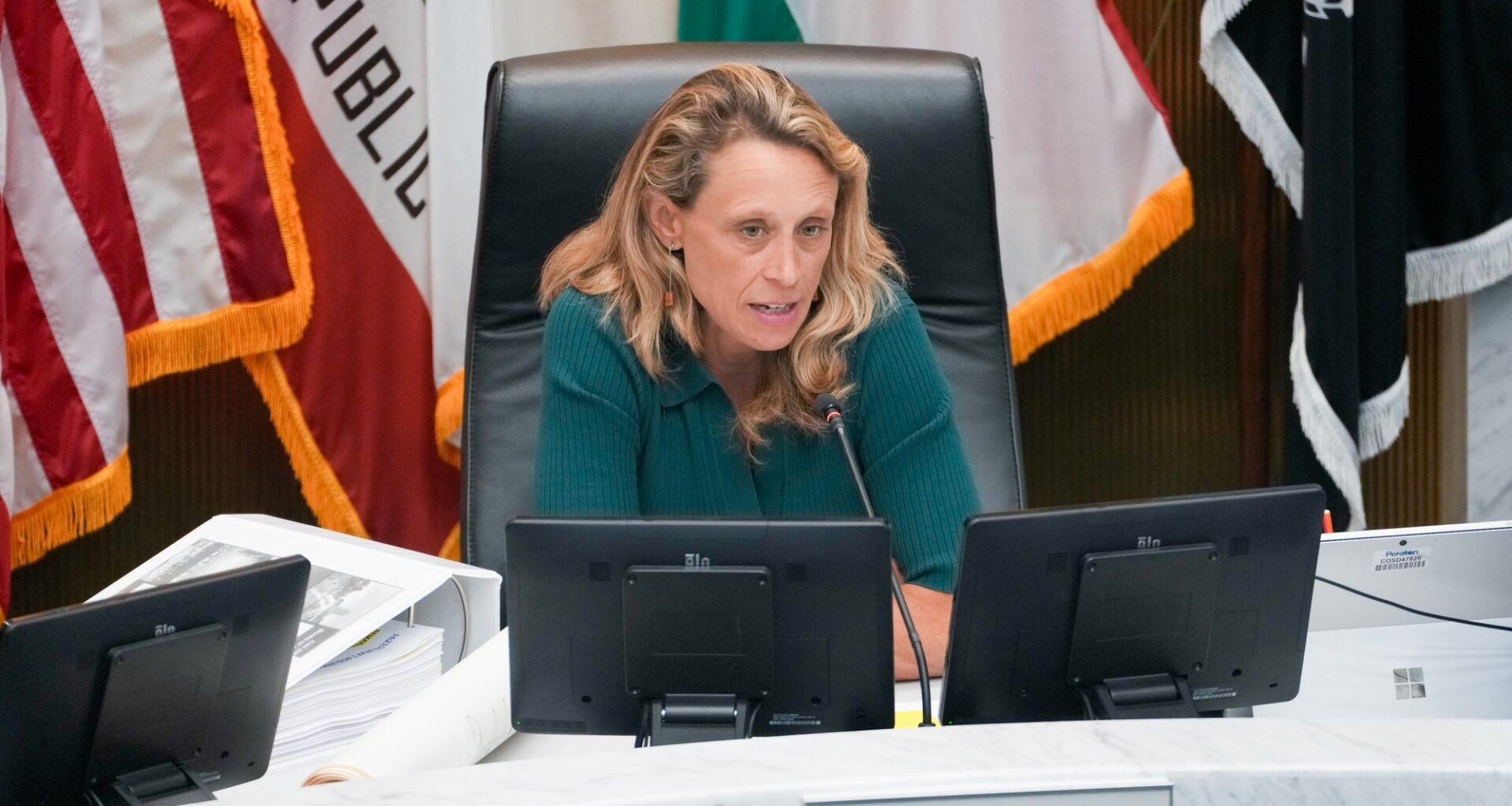
A San Diego County supervisor is pushing for a fresh round of ethics requirements for county government.
County staff could face a two-year ban on lobbying for private clients after they leave public service under a new proposal from Supervisor Terra Lawson-Remer.
The proposal comes weeks after The San Diego Union-Tribune reported on lax county rules governing former government employees’ ability to lobby their prior employer on behalf of private clients.
Some duration of lobbying ban exists for former government employees in California’s other large jurisdictions, like Los Angeles, San Francisco and the city of San Diego. But San Diego County has none.
As of June, 10 former county employees were registered as lobbyists, according to a Union-Tribune review of lobbying disclosures. Of those, seven began lobbying the county within two years of leaving its employ, with clients ranging from real estate developers and local nonprofits to large corporations.
Good government experts warn that so-called revolving lobbying can allow for private interests to benefit from deploying as lobbyists former officials who have existing personal connections and expertise in local government.
“You’ve got to know that you can trust the government and that government’s working for people, and is not being captured by a couple insider special interests,” Lawson-Remer told reporters Wednesday.
The supervisor’s proposal also aims to restrict use of prediction markets by county employees, banning them from using such platforms to make wagers on anything related to their work. And it would require county officials to disclose any income from prediction markets on state-mandated financial disclosures.
Prediction market platforms like Kalshi and Polymarket allow users to bet money on when and how future events happen. Their use by public officials has resulted in scandal.
A former teleprompter operator for President Trump faced federal investigation for allegedly making $100,000 betting on what Trump would say in speeches using insider information. In April, a soldier was charged with using insider information about the U.S. operation to overthrow the then-president of Venezuela to make $400,000 on Polymarket.
Lawson-Remer said she was not aware of any county officials or staff who may have improperly used prediction markets but invoked those recent examples at the federal level as a cautionary tale.
“This is about being ahead of the curve and seeing challenges and dangers and temptations that are emerging in our society,” Lawson-Remer said.
Supervisors are slated to consider her proposals for lobbying and prediction-market rules when they meet next Wednesday.
If the rules are approved, county staff would then draft specifics for how they would be enforced and what kinds of staff would be subject to them. Supervisors would then vote on a formal ordinance later.
The new package follows Lawson-Remer’s push in recent months for a ballot measure to overhaul the county’s charter, an effort she has billed as a good government and ethics reform package.
The ballot measure scored support from county labor unions, nonprofits and other community leaders, who backed its proposal to create a new county budget analyst and give supervisors more power to confirm and remove top bureaucrats.
But opponents decried the package’s expansion of term limits for supervisors, arguing sitting supervisors should be exempt. Should voters approve the ballot measure in November, supervisors would be allowed to serve three terms instead of the current two.
While Lawson-Remer’s office was drafting the charter package, it polled county residents to gauge support for a number of reforms to county government, including a two-year lobbying ban for former staff.
That poll found respondents overwhelmingly supported a lobbying ban, but the idea did not make it into the charter rewrite that will appear on the November ballot. Some other ideas polled also didn’t make the final cut — such as adding more members to the Board of Supervisors and making the top county bureaucrat an elected position.
On Wednesday, Lawson-Remer said she opted not to include a lobbying ban in the county charter amendment package because it could instead be enacted more easily through an ordinance.