
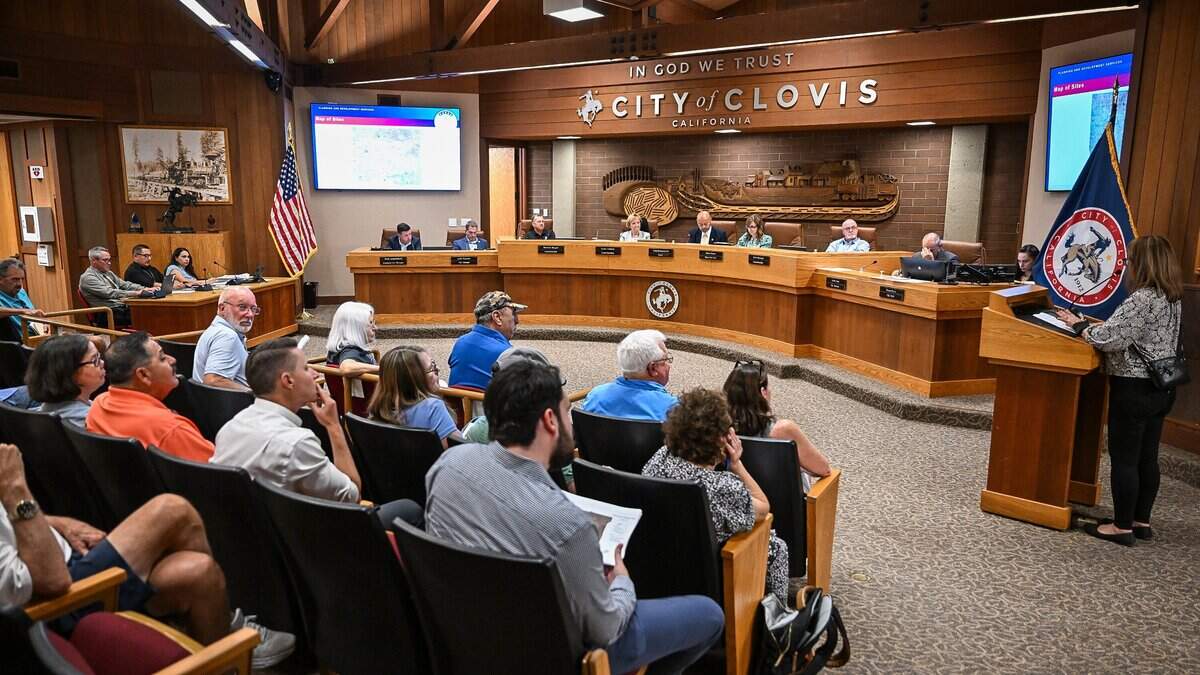
The Clovis City Council abruptly halted plans this week to rezone five parcels for higher-density residential developments, despite the risk of potential litigation and the practical difficulties of finding parcel replacements.
The five sites were part of an infill rezone program that would redesignate 20 neighborhood parcels to allow apartment buildings. This is the last milestone for Clovis to fulfill a 2024 settlement agreement after a lawsuit accused the city of violating state law by not providing enough affordable housing opportunities.
The program has faced significant pushback from city leaders and residents who worry that the city’s resources and infrastructure are already stretched thin as Clovis’s population has swelled to 139,000 over the past two decades.
After two years of preparation and spending $400,000 in tax dollars, the City Council was expected to approve the 20 selected sites. Combined, these sites cover 54 acres in residential neighborhoods across the city and can accommodate 1,303 housing units, slightly above the court-ordered requirement of 1,284 units.
At Monday’s meeting, however, the five-member City Council raised last-minute questions and suggested new ideas about the program, and directed staff to reconsider five of the sites.
The remaining 15 approved sites can support 817 units and approximately 34 acres, according to the city’s planning department.
Amid the three-hour council discussion and public outcry, the city attorney recognized the council’s reluctance to move forward with the plan as it is, but he warned that Clovis might find itself back in court for noncompliance if the council fails to approve all of the sites.
“I would prefer, as your counsel, to get as many of the sites approved as possible to get as close to compliance as possible. It would be easier to be in front of a judge if we had 15 or 16 sites approved tonight as opposed to zero,” said Scott Cross, the city attorney.
Five parcels, including two plots in Harlan Ranch, two lots on Shaw and Leonard Avenues, and the site next to Garfield Elementary School, were taken off the approval list for further review.
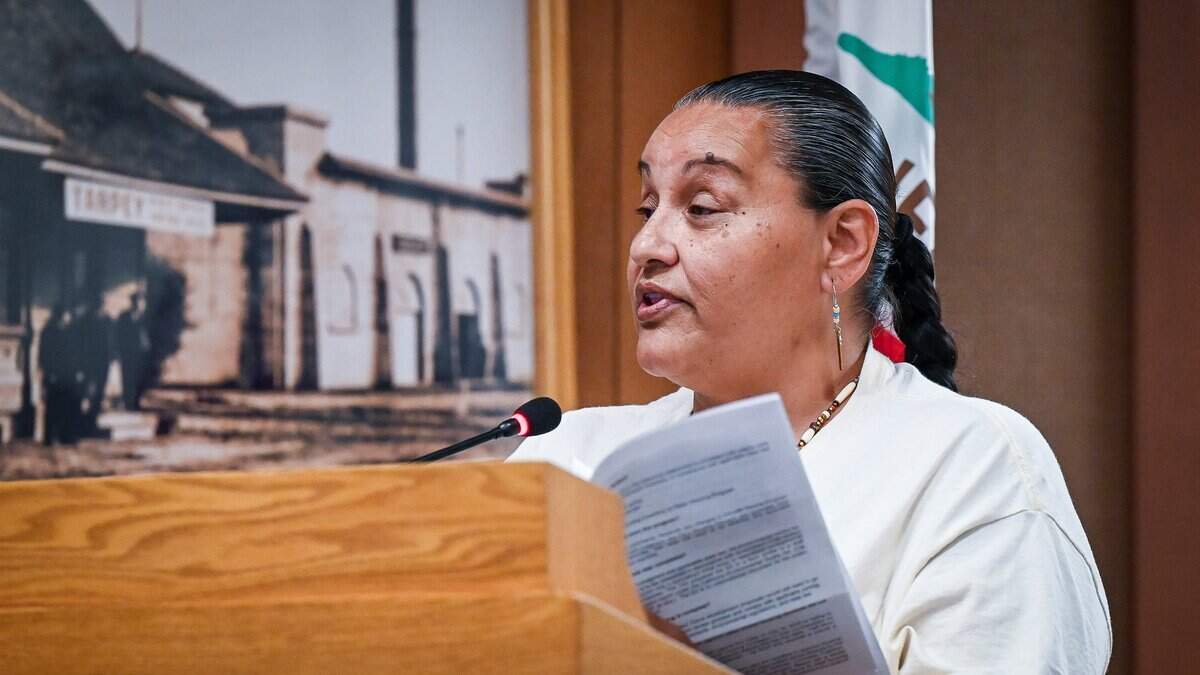 Homeless advocate Dez Martinez speaks at a Clovis City Council meeting in Clovis on Monday, Aug. 10, 2026. CRAIG KOHLRUSS ckohlruss@fresnobee.com
Ugochi Anaebere-Nicholson, attorney representing Dez Martinez, the plaintiff in the lawsuit against the City of Clovis, told The Fresno Bee that they are very disappointed, especially because all of the sites were selected and recommended by the city’s staff.
“Having major changes made at the 11th hour was quite disappointing, and it’s a setback,” said Anaebere-Nicholson. “So we are exploring where our options are going to be to compel the city’s compliance with its mandatory obligations and the settlement agreement, and that includes conferring with the city’s attorneys.”
Last-minute brainstorming
Councilmembers said they have received numerous letters from city residents expressing concerns — particularly regarding the five plots — about traffic, safety, and accessibility to grocery stores.
“We’re not trying to just put more people in Clovis, that’s not really the goal. The goal is to put them in a way that’s healthy and thriving and good for their kids and good for the rest of us,” Councilmember Lynne Ashbeck said. “So the Harlan Ranch site in particular isn’t necessarily near any grocery stores. Some transit, but not a lot.”
Prospective residents without private vehicles will struggle with transportation in the Harlan Ranch area, Ashbeck said. Two larger-sized parcels were designated for this area, which also seems to have an unfair impact on the existing neighborhood, she added.
The item before City Council this week only sought to rezone the lands. The city hasn’t received any actual proposal from developers, according to the city planners.
Due to the absence of proposals, the planning department hasn’t yet conducted analysis on the environment, traffic, school enrollment and other factors to address specific concerns of councilmembers and nearby residents.
The City Council cannot enforce specific projects on a particular site, city attorney told the council when some residents petitioned for senior housing be built on the lot in their community to reduce the impact on traffic and school capacity.
But the city and the council still retain the authority to approve or reject individual building proposals when they are submitted in the future, Cross said.
“The city is still going to be able to impose conditions on those projects to require additional traffic studies or other technical studies that are in connection with that, and impose the required mitigation measures that are identified in the environmental assessment,” Cross said.
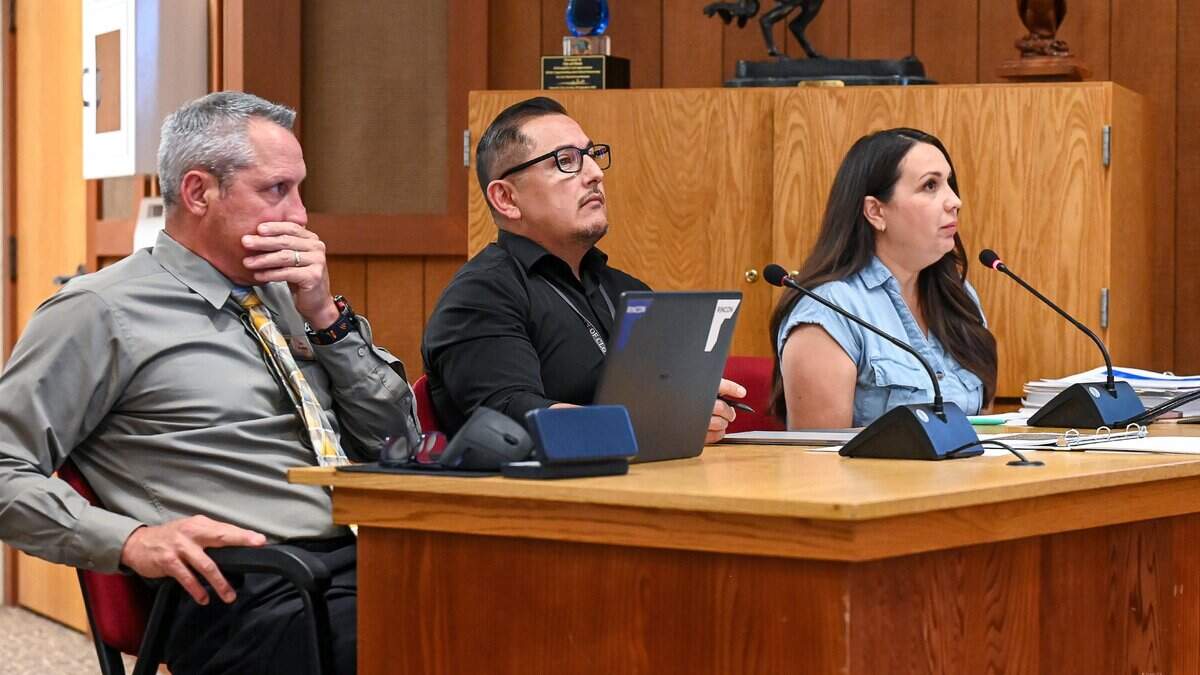 Clovis city staff members answer questions about an infill rezone program to increase affordable housing opportunities in the city during a Clovis City Council meeting on Monday, Aug. 10, 2026. CRAIG KOHLRUSS ckohlruss@fresnobee.com
The City Council also challenged the parcel selection criteria on Monday and suggested new locations.
Councilmember Drew Bessinger asked if the city could recycle the land from dilapidated commercial properties.
“I’m thinking Sierra Mall. They have a movie theater there that’s been vacant for probably ten years. There’s the Wolfe Manor, which used to be the haunted house. And there’s one on Alluvial between Sunnyside and Fowler, there’s a radio station with a big, huge area,” Bessinger said.
Planners said demolishing existing structures adds additional costs to the project, making it less affordable. Therefore, selection preference was given to vacant parcels.
Some larger parcels were excluded from the selection because the size of the plot is limited between 0.8 acres and 10 acres. Lands that have already been designated for residential use are considered the city’s housing inventory so they don’t qualify for the infill rezone program, said McKencie Perez, deputy city planner.
“We had a difficult time finding inventory for our sixth-cycle Housing Element,” Perez said. “There’s not a lot of sites that are either not already part of our inventory and that are not part of the program.”
She reminded the council that changing sites would require Clovis to conduct new environmental and water assessments, among repeating a series of other procedures.
The city already spent $400,000 on assessments and outside consultant fees to select the 20 parcels, and this number does not include staff time and costs within the institution, Perez said.
Clovis residents’ opposition
On Monday evening, several dozen residents, especially homeowners from Harlan Ranch, packed the council chamber to voice their frustrations.
Jennie Daly, a resident of Harlan Ranch, said she was raised by an immigrant mother and a father who was stuck in a wheelchair. She worked really hard to be able to live in Harlan Ranch, she said.
“I agree that everyone should be able to have affordable housing… I don’t think any of us who live in Harlan Ranch are opposed to affordable housing, but the locations need to make logistical sense,” Daly said. “It’s not about the type of people, I’m Latina, it’s not about that. It’s about the impact to the neighborhood, safety for our children.”
Harlan Ranch is not gated, which means the grounds and parks are open to the public, Daly said.
“However, the residents of Harlan Ranch pay for that,” Daly said. “So the impact financially to increasing the population to that extent would be on the residents of Harlan Ranch, and that does not seem very fair for that unique type of neighborhood.”
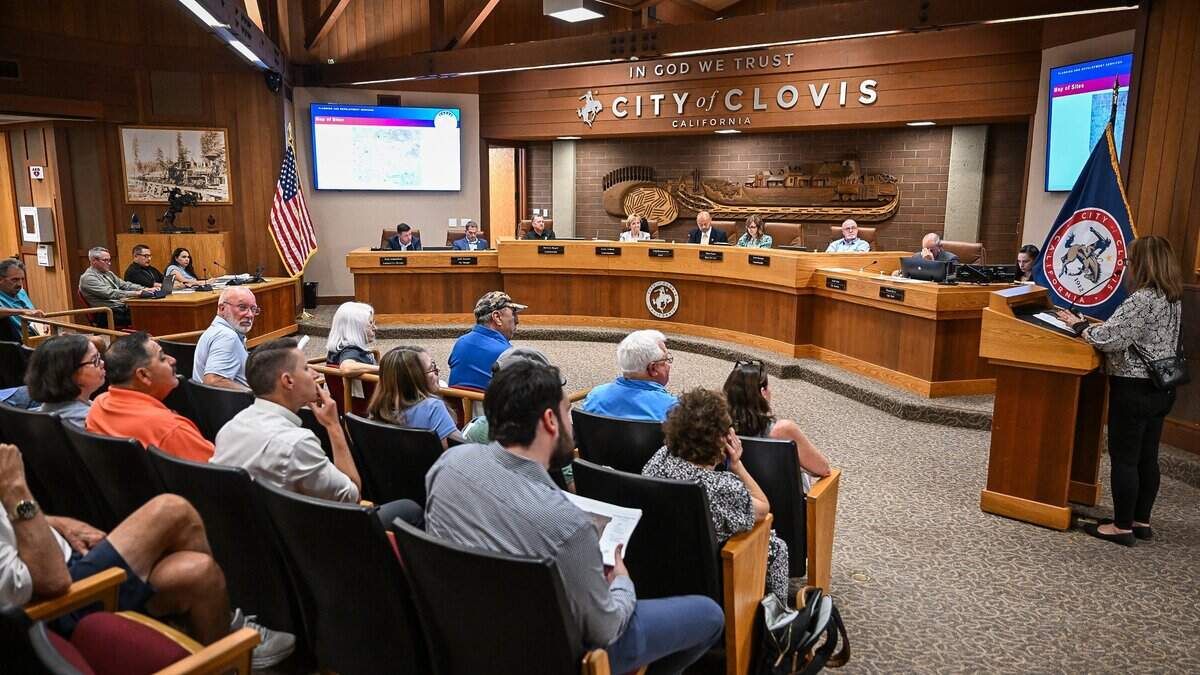 Clovis city councilmembers listen to public comments about an infill rezone program to increase affordable housing opportunities in the city during a Clovis City Council meeting on Monday, Aug. 10, 2026. CRAIG KOHLRUSS ckohlruss@fresnobee.com
Other residents talked about the increased traffic in the area and that Harlan Ranch is three miles away from grocery stores and the nearest bus stop.
“This is a car-dependent area. There are no amenities near those sites. And you’re talking about 300 new sites,” Ciarán Jones, whose parent lives in Harlan Ranch. “It’s not 300 people going to be using a car. It’s 600 for mom and dad. It’s 900 when ‘little Tammy’ turns 16 and wants to drive to high school because there’s no high school nearby. It’s 1,200 when his girlfriend comes over every night.”
Another controversial site is located at the intersection of Peach and Nees Avenues, which is next to Buchanan High School and its feeder schools.
Matt Britter, a homeowner across the street from Garfield Elementary School, said the traffic is already heavy in the area and his son was hit by a car in front of the school. It’s not safe to develop more apartments near schools and students, he said.
“What I’d say is that if you can look this kid in the eyes and tell him that your project is going to be safe for him to cross, and he won’t get hit, and the next generation of kids won’t get hit by somebody, then tell him,” Britter said.
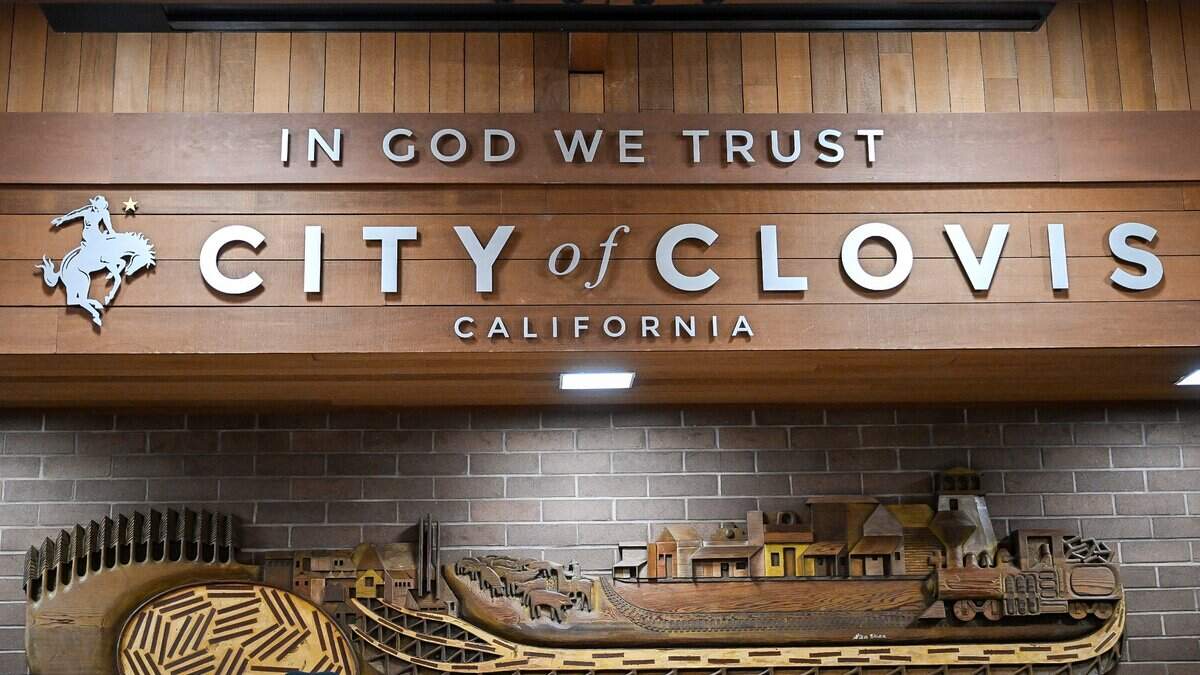 A mural and sign stand above the dais in the Clovis city council chambers in Clovis on Monday, Aug. 11, 2026. CRAIG KOHLRUSS ckohlruss@fresnobee.com
This story was originally published August 12, 2026 at 4:36 PM.
Related Stories from Fresno Bee
The Fresno Bee
Leqi Zhong is the Clovis accountability/enterprise reporter for The Bee. She is a graduate of UC Berkeley with a Master’s degree in journalism. She joined The Bee in 2023 as an education reporter. Leqi grew up in China and is native in Cantonese and Mandarin.