

SAN FRANCISCO — Out here, in another coastal city plagued by inequality and starved for new home construction, officials are trying an approach to affordable housing that may sound counterintuitive: Reduce how much of it developers are required to build.
Like Boston, San Francisco has spent years deep in a housing crisis, with thousands facing homelessness and rising costs pushing even well-paid workers farther out to the suburbs. Now, as the city claws its way out of an “urban doom loop” under a new mayor, it is drastically lowering the share of affordable housing that developers must build as part of their market-rate projects, in the hope that more housing will be built overall.
The plan — paired with major new city spending on dedicated affordable housing units — underscores how desperation is prompting some left-wing strongholds to make surprising compromises. Ostensibly liberal San Francisco has built a coalition that is willing to experiment, even if it means rejecting some closely held progressive ideas.
Get Power Play
A twice-weekly dive into the power players and moves driving business in Massachusetts, authored by long-time business columnists Shirley Leung and Jon Chesto.
“We can’t afford to be reactive in this moment,” said Leigh Lutenski, the city’s director of development. “We need to be, as a city, doing everything we possibly can to tackle this housing crisis.”
Developers say inclusionary requirements — which mandate building a certain amount of affordable housing alongside market-rate units — discourage new construction by making it less profitable to build. Investors get a lower return when some apartments collect less than market-rate rent or sale price. Under San Francisco’s earlier requirement to keep 15 percent of a building affordable, that could mean developers earned $5 million to $9 million less in a building of 100 units, according to the city’s analysis.
Some advocates, meanwhile, argue inclusionary requirements are essential for getting affordable housing built and for creating mixed-income housing rather than segregating low-income tenants into separate buildings.
 Pedestrians passed people sleeping in cardboard structures and sleeping bags across the street from the Salesforce Tower in downtown San Francisco in 2023.Jakub Mosur for The Boston Globe
This summer, San Francisco is cutting its inclusionary requirement by two-thirds, from 15 percent of new builds to 5 percent. In Boston, where the requirement stands at 20 percent, Mayor Michelle Wu has so far resisted calls to do so. But nearby Chelsea and Waltham have slashed their mandates, and Cambridge is exploring doing the same, along with a slew of other efforts to build more housing.
“We want affordable housing, but if inclusionary is not getting us there, then we should be considering other ways,” said Cambridge City Councilor Patty Nolan, who pushed the city to study its policy.
If nothing is getting built, it doesn’t matter how much of each new project is set aside for affordable units, Nolan argued. “50 percent of zero is zero. 20 percent of zero is zero.”
San Francisco officials and developers are making the same argument: When so little market-rate housing is being built, the city can’t rely on those developments to create enough affordable housing. They have to make it cheaper to build market-rate housing and find another way to grow affordable housing.
“The way that we had been doing things wasn’t going to work right now,” said Jack Sylvan, founder of the San Francisco development firm SDG. “If you want to see any housing being built, you just can’t overburden market-rate housing production.”
Inclusionary requirements are just one of many factors — land costs, construction prices, interest rates — that have made it especially costly to build in expensive coastal cities. But it’s one of the few levers that cities themselves can pull; a mayor alone can’t lower inflation, for example, or reduce the price of steel.
That’s part of why local leaders across the country have faced so much pressure to adjust the requirements. In San Francisco, Sylvan said, the new administration of Mayor Daniel Lurie has a “we want housing built” attitude.
 An Amazon-owned Zoox driverless robotaxi negotiated a street earlier this month in San Francisco.Heather Diehl/Getty
Indeed, they need housing built. The AI frenzy has pushed San Francisco’s housing market to an unprecedented high, with prices spiking in anticipation of two IPOs that are expected to create vast new wealth. Rents climbed a staggering 23 percent in a single year, from July 2025 to July 2026. Homes are selling for double their list price, with sellers asking for stock in AI companies rather than cash.
Affordable housing, ‘eventually’
The inequality that has helped inflame the housing crisis was obvious around San Francisco earlier this summer. A driverless Waymo car slowed for a man pushing his belongings across the street in a shopping cart. The smell of urine lingered outside the clothing store Everlane. Ads for multimillion-dollar AI companies loomed over people sitting with their belongings on the hot sidewalks of the Mission District.
Stalled projects that could house them were everywhere, too, languishing for want of capital investment. In the window of a Motel 6 steps from the beach in the Outer Sunset, a sign said affordable housing was coming — but it was so old that the dates had faded away. In Forest Hill, dirt and debris lined a church parking lot that is one day set to hold eight stories of apartments. In a small city-owned asphalt lot in Hayes Valley, another sign promised “eventually, this parcel will be developed into affordable housing.” But for now, it’s home to an upscale outdoor gym, a juice shop, and an Airstream trailer offering crochet classes.
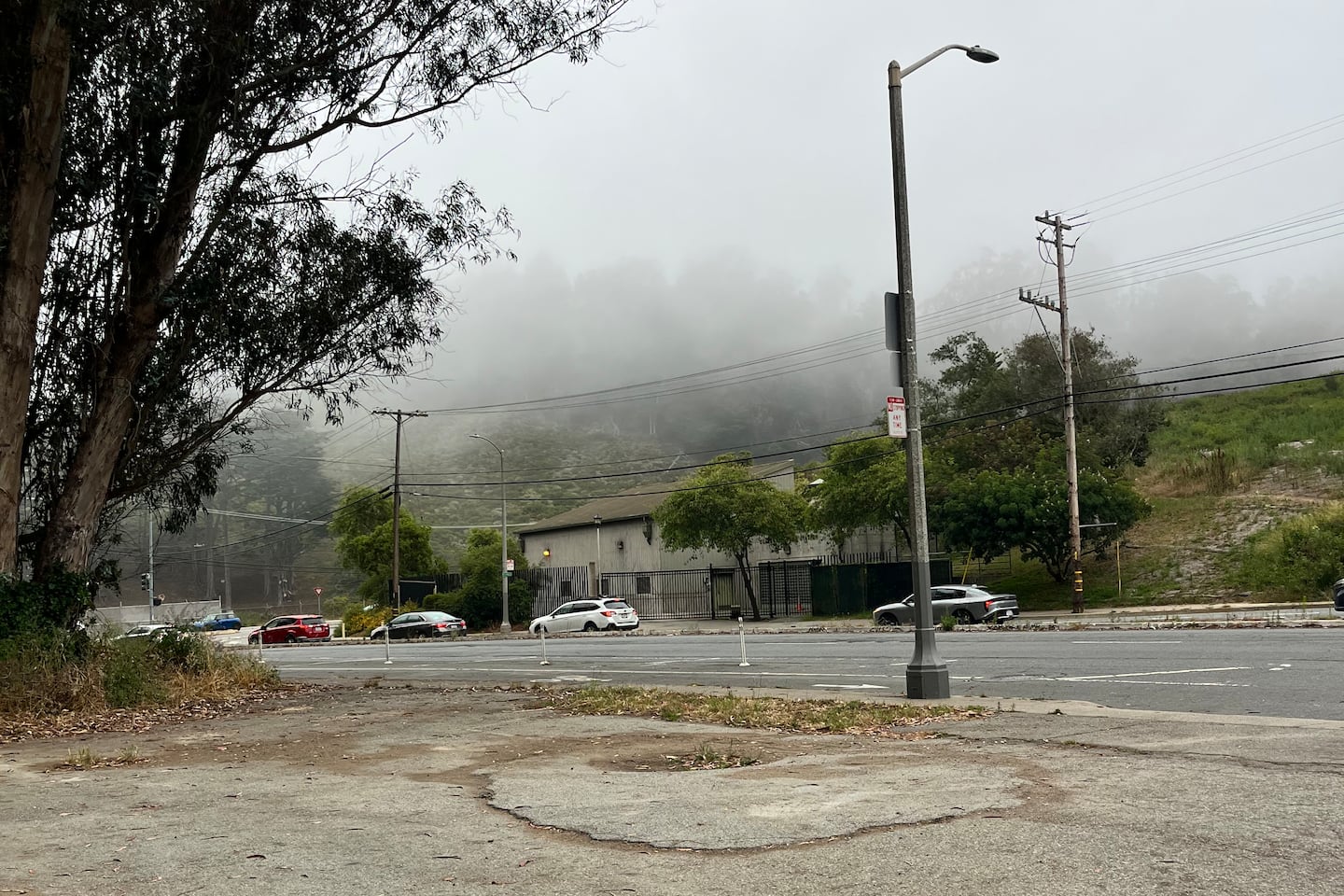 A parking lot in San Francisco’s Forest Hill neighborhood is the site of a future affordable housing project.Emma Platoff/Globe Staff
Housing advocates hope that with more money set aside for affordable housing, these projects will actually be built. The latest changes are among several efforts the city is making to address housing, its greatest challenge and likely its new mayor’s greatest political vulnerability.
Lurie, who was elected in 2024 on promises to turn San Francisco around, has also cut fees for new construction and signed legislation to upzone the city, allowing for denser developments in San Francisco’s western and northern neighborhoods. If government is known for moving too slowly, this particular government is trying to embrace the tech world’s “fail fast” mantra, both to try new policies and reject existing ones that no longer serve their purpose.
Lurie’s approach so far has been notably developer-friendly. In the spirit of YIMBY — an enthusiastic, “yes, in my backyard!” — some see that strategy lifting the city out of its housing crisis.
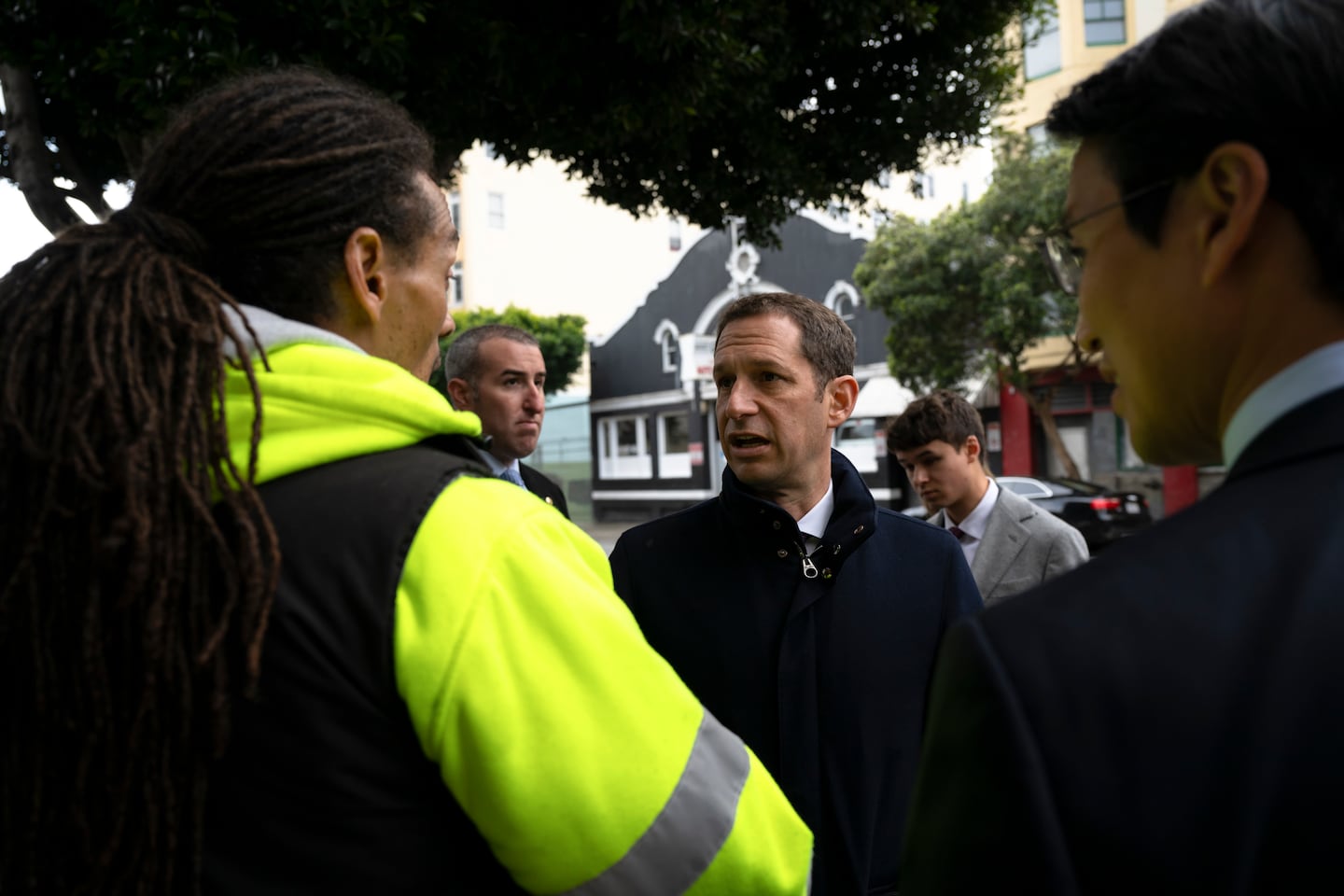 Mayor Daniel Lurie spoke with a city worker about cleaning up the neighborhood in the Tenderloin neighborhood of San Francisco last year.MIKE KAI CHEN/NYT
“To me, it’s a pretty good deal,” said Myrna Melgar, a progressive member of the city’s Board of Supervisors and chair of its land use committee, sitting beneath San Francisco’s trademark fog in a park near her home. Melgar agreed to reduce inclusionary requirements in exchange for new investments in affordable housing, more than doubling the city’s housing trust fund.
Her own neighborhood, in the hills on the city’s west side, was recently rezoned to allow for more multifamily units. “And a lot of people were very unhappy with me,” she said with a resigned laugh, gesturing to the attractive single-family homes that line her street.
But all those changes are key to the city’s survival, she said.
“What I will say about this administration . . . they are not afraid to try new things,” Melgar said. “A couple of things they’ve tried have not worked, and they’ve been embarrassed by it, but they’re trying new things, and I don’t think that’s a bad thing.”
The latest housing proposal — the city putting more money into affordable housing, while lowering requirements for developers — has attracted a strange group of bedfellows, bringing activists and developers into rare alignment, along with Melgar and her colleagues. Perhaps no one is more surprised to be among them than Kyle Smeallie, a longtime affordable housing advocate and card-carrying Democratic Socialist who works as policy director for the San Francisco Community Land Trust.
“This is not the coalition we anticipated we’d be in,” Smeallie acknowledged in a recent interview. His organization takes “kind of a radical,” anti-displacement approach, but it also recognizes the economic realities.
Smeallie said he would not favor simply slashing inclusionary requirements without the rest of the deal: new investments in affordable housing.
“To cut and replace, to figure out a new way to fund … it starts to make a little more sense,” he said. “Sometimes when conditions change, you have to be flexible and figure out where you can agree.”
Smeallie walks by that asphalt lot in Hayes Valley practically every day, shaking his head at what the city-owned land currently houses: the juice shop, a cafe with pastries, a “farm to cone” ice creamery.
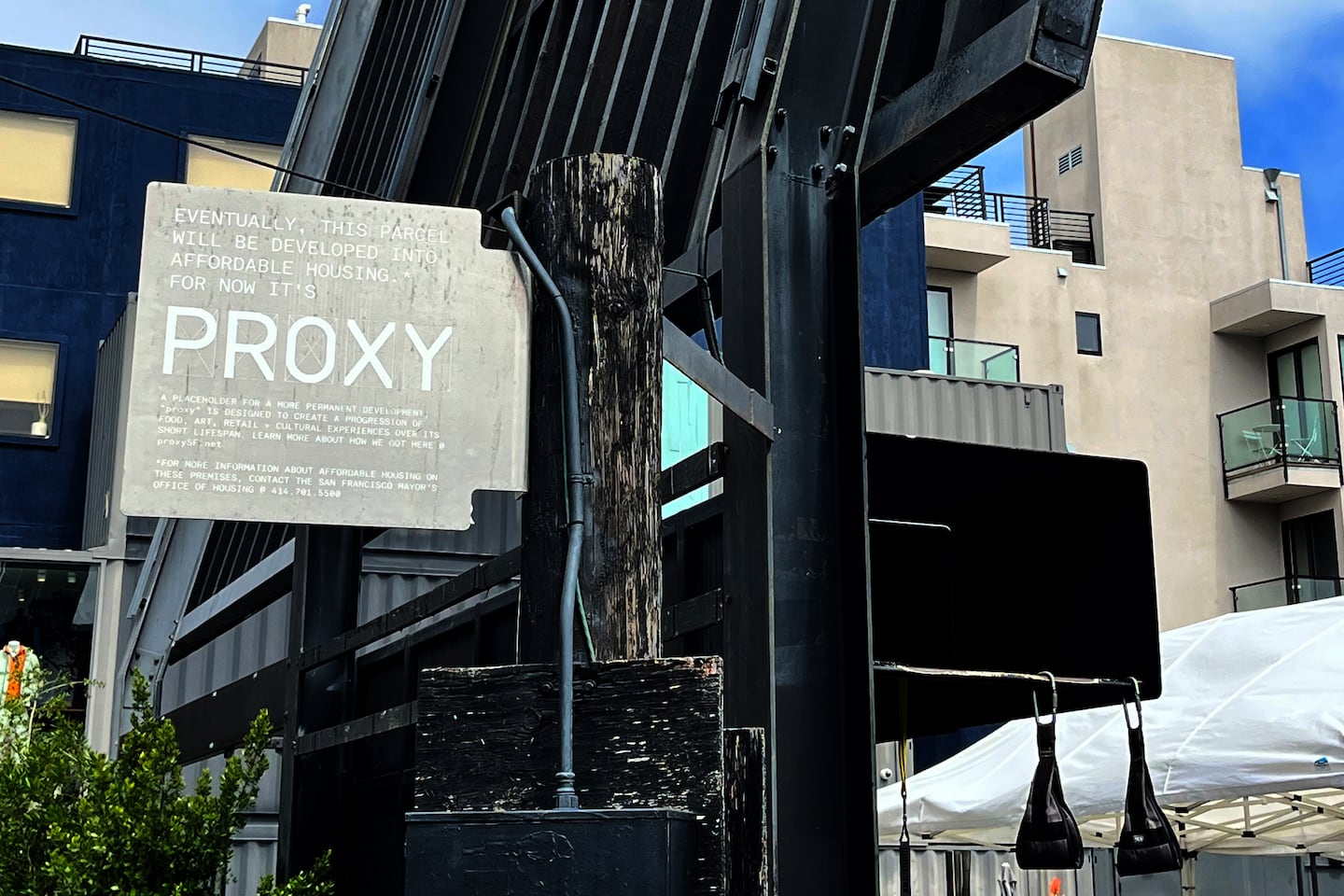 A city-owned parcel of land in San Francisco’s Hayes Valley is set to be turned into affordable housing “eventually.” For now, it houses a luxury gym, juice shop, and cafe.Emma Platoff/Globe Staff
“It’s almost Marie Antoinette,” he said. Let them eat gluten-free carrot cake.
With a bit more money set aside for affordable housing, Smeallie hopes the city would make good on its promise to build there. Standing on the corner of Hayes and Octavia streets, he gazed up at what could be: nine or ten stories of apartments, ground floor retail (“keep your juice shop!”). Generations of families living within those imagined walls.
The changes to inclusionary requirements have already passed the board of supervisors, with the second part of the deal, the money for the housing trust fund, expected to be approved by voters this fall. But not everyone is on board. Critics note that a few years ago, when the city cut its inclusionary requirement more modestly, it did not succeed in reviving the construction industry, and many projects stayed frozen.
And some housing activists say the change shows San Francisco isn’t the welcoming place it promises to be.
“We want our values to be reflected in the actual laws that we pass around land use and housing,” said Quintin Mecke, executive director of the Council of Community Housing Organizations, or CCHO — pronounced “choo-choo” — in a recent interview in a coffee shop in the Mission. Slashing inclusionary requirements signals “a value shift that I think is worth noting and worth resisting.”
 Mission Cabins at the Five Keys transitional housing location in San Francisco.Jeff Chiu/Associated Press
Developers, Mecke pointed out, face many requirements when they build in cities. ADA compliance, for example; green building codes, parking spaces. “Why is inclusionary singled out as the sole reason for feasibility, the sole thing that we should get rid of or diminish, unless you’re not orienting to the needs of low-income communities of color?”
“Is San Francisco progressive right now?” Mecke asked. “No, it’s not.”
‘One piece of the challenge’
So far, progressive Boston isn’t biting.
Even as housing construction has sputtered, Wu has not lowered the inclusionary requirement. In her first term, Wu raised Boston’s requirement from 13 percent to 20 percent.
The requirement has created about 3,000 affordable units in the last decade, but those numbers have slowed in the last few years alongside an overall decline in construction.
Wu said in a recent interview she is not considering a change to inclusionary requirements and noted “permits are trending in the right direction,” thanks to policies such as tax relief and a new accelerator fund to speed up housing construction. In the first half of 2026, the city permitted 1,643 new units of housing, the highest total for the first half of the year since 2022, Wu’s office said.
“The tools we’ve created are helping to jumpstart good development,” Wu said. Inclusionary development, she added, “is our tool for including affordability in our housing market, and we need more affordability.”
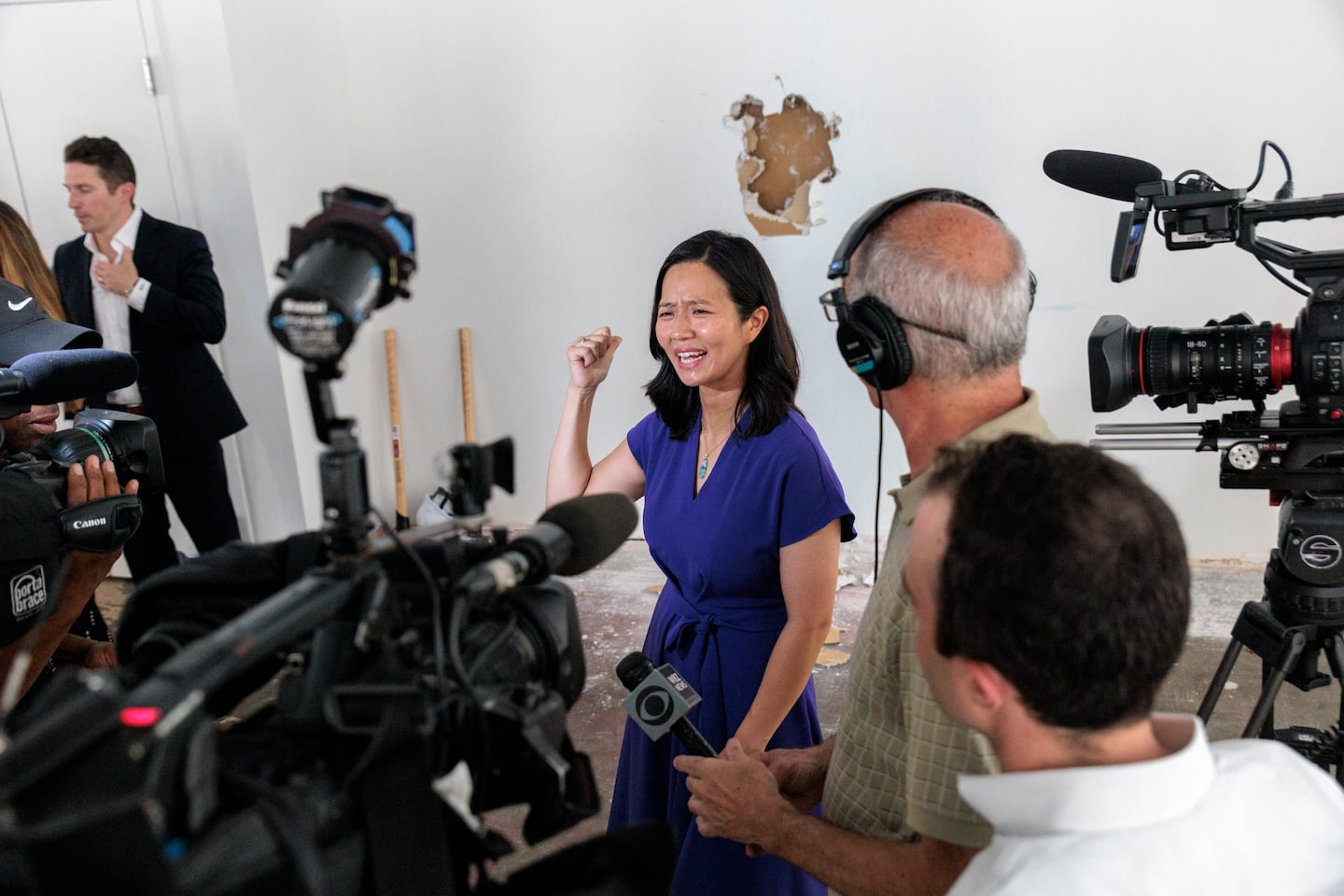 Last summer, Boston Mayor Michelle Wu spoke about the need for more housing after knocking a hole in a wall at 263 Summer St., which was slated to be converted into housing.Ben Pennington/for The Boston Globe
Of course, the two cities are very different places. San Francisco is set to grow its housing trust fund to $125 million; Boston’s housing accelerator fund launched with $110 million. San Francisco has access to revenue streams that Boston does not, notably a transfer fee on real estate sales that generates hundreds of millions of dollars each year. (Wu and other Boston mayors have long pushed for a transfer fee, but can’t get one without state approval.)
Boston affordable housing activists, a crucial part of Wu’s political constituency, say inclusionary requirements are especially necessary here.
“To take a step back from that would be a step back from [Boston’s] commitment to fair housing, and to being a city that cares about racial justice,” said Armani White, coordinator for the Coalition for a Truly Affordable Boston.
And, as even proponents concede, it’s hard to know whether reducing the inclusionary requirement will actually spur more housing — as San Francisco learned after it cut inclusionary requirements in 2023.
Still, developers here are eager to see Boston experiment the way San Francisco has — if only because it’s running out of things to try.
“Inclusionary is one piece of the challenge, but it’s an important piece,” said Ted Tye, a co-founder of the Massachusetts-based firm National Development. For a developer operating on tight margins, the difference of a few percentage points “could be enough to tilt you one way or the other.”
“I don’t think it’s fair to say that this would be the lever that would change everything,” Tye said. “But you’ve got to be able to pull a few of those levers.”
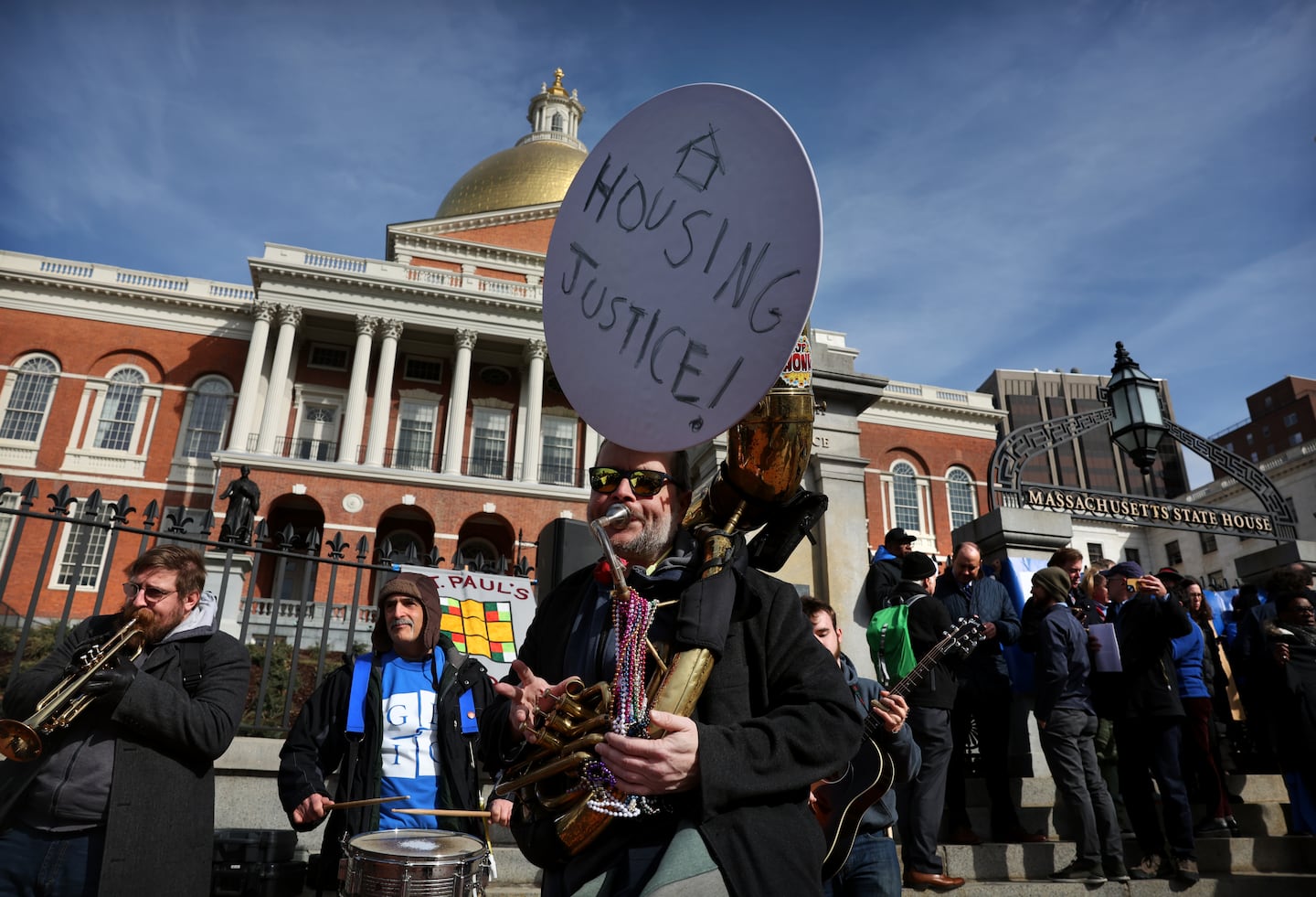 Kirk Israel, of Boston Area Brigade of Activist Musicians, played his tuba during a rally held by the Greater Boston Interfaith Organization outside the State House in 2023. Craig F. Walker/Globe Staff
Emma Platoff can be reached at emma.platoff@globe.com. Follow her @emmaplatoff.