
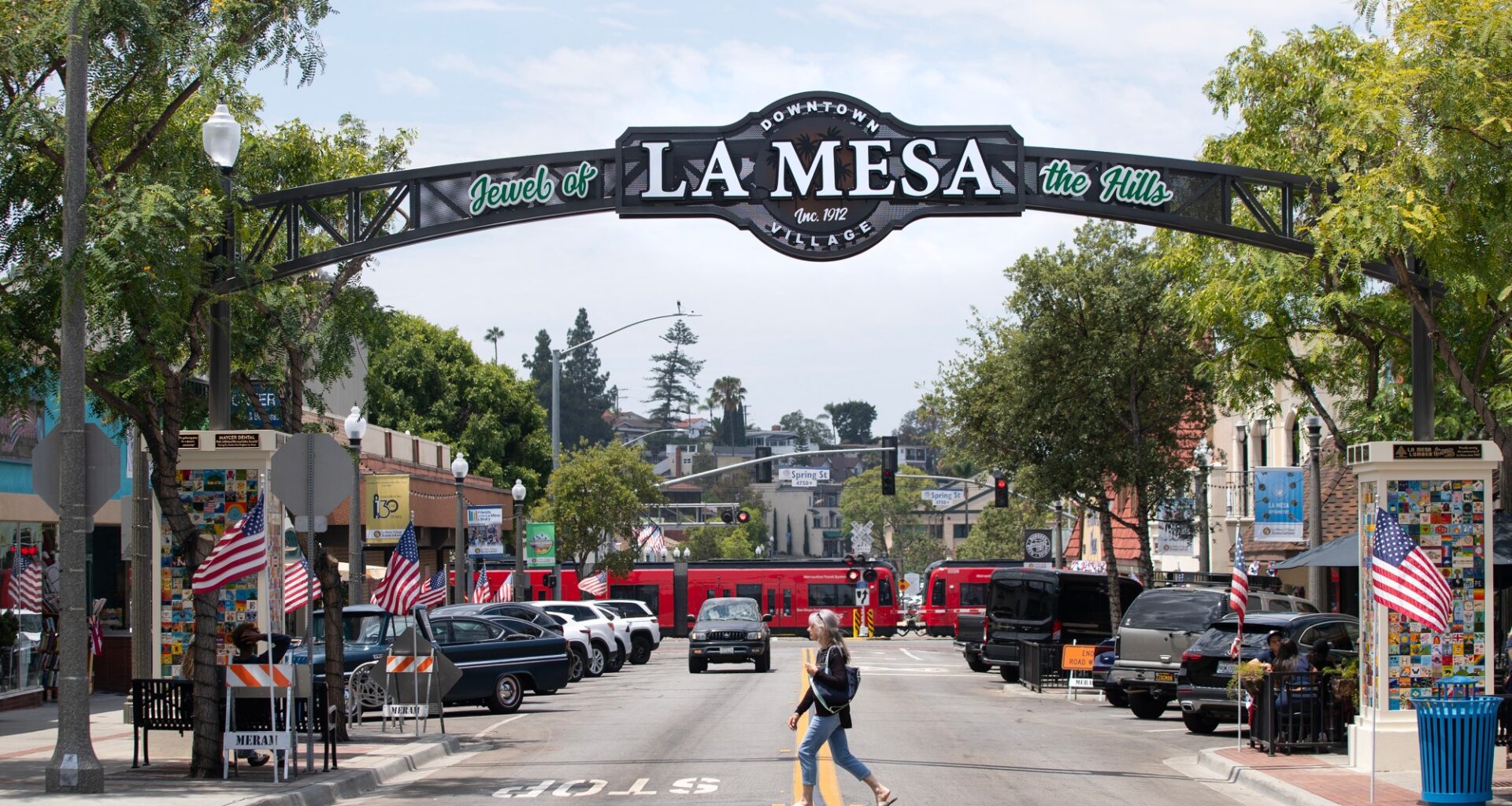
La Mesa’s downtown area, called The Village, has a thriving business environment with many new and existing restaurants, stores and more after a decade of revitalization.
One major problem for local businesses has been customers’ struggles to get there. The heart of the issue is the San Diego Trolley that runs parallel, on street level, to Spring Street and snarls traffic, creating one of the county’s biggest bottlenecks.
La Mesa City Council received a long-awaited study recently by the San Diego Association of Governments that offered solutions anywhere from $569 million to $741 million. Ideas included moving the trolley tracks or placing them underground, or minor improvements such as signal upgrades and new walkways (which is still estimated to cost $13.7 million).
La Mesa does not have the money to make the improvements itself, but would have to apply for state or federal grants. Still, the city would likely have to spend some of its own money along with grants.
Question: Is it worth the cost to make improvements to La Mesa’s downtown trolley?
Economists
Norm Miller, University of San Diego
NO: Not if you base the analysis on purely economic terms since the payback from traffic savings, retail uplift, safety benefits, environmental benefits plus increased property taxes from higher values all likely total no more than $20 million a year, which on the best option of $569 million results in a 28+ year payback. This should have been considered prior to building the trolley line. But “yes” if sufficient external funding can be found and we add sufficient quality of life value from supporting a well-located community.
David Ely, San Diego State University
NO: When La Mesa city leaders asked SANDAG to study ways to improve traffic flows, they surely hoped that the proposed solutions would not be so expensive. It must first be determined if it is even feasible to raise the substantial amounts to fund most of the cost of the project from federal and state grants. It is too early to judge whether the benefits of trolley improvements will outweigh the huge costs and construction disruptions.
Ray Major, economist
NO: At a cost of three-quarters of a billion dollars, the expenditure works out to over $12,000 per La Mesa resident or over $2,000,000 per business in the village. Surely a better and more cost-effective solution could be found other than moving or burying the trolley underground.
Kelly Cunningham, San Diego Institute for Economic Research
NO: Calculating the costs to improve the line at a single location is difficult to reconcile with ridership and expected revenue from trolley usage. Ridership on the trolley line is not enough to justify paying for limited aesthetic or traffic-ease improvements considering taxpayer subsidies are already required for trolley operations. The city of La Mesa would need to generate considerable local tax revenues along with state and federal government grants to actually pay for it all.
Alan Gin, University of San Diego
NO: At least not the major solutions suggested by SANDAG. Those would cost more than a half-billion dollars and take a long time to implement. While they would improve the situation for businesses in La Mesa, it probably doesn’t pencil out in terms of benefits vs. costs. The major projects would also negatively impact the character of the downtown. The smaller upgrades may not completely solve the problems, but would be more cost-effective.
James Hamilton, UC San Diego
NO: There are fewer than 40,000 registered voters in La Mesa. A project that costs over $400 million amounts to more than $10,000 for every voter. There is no way that could be justified by any rational cost-benefit analysis. Modest changes to improve traffic circulation such as optimized timing of traffic lights, better intersection design and turn restrictions will not solve the problem. But they are the only realistic options on the table.
Executives
Jamie Moraga, Franklin Revere
NO: Spending more than $700 million on major trolley improvements isn’t worthwhile when funding currently doesn’t exist. La Mesa should have considered how revitalizing the Village would increase traffic around the trolley and planned accordingly. Congestion there has persisted for years, and significant solutions are decades away. Instead, the city should make affordable short-term improvements while pursuing state and federal grants. It should also develop a long-term plan to fund future improvements without relying on taxpayers.
Chris Van Gorder, Scripps Health
YES: The Village is vibrant and has benefited from redevelopment dollars and the foresight of local leaders for years. Unfortunately, this issue is the downstream result of regional transportation planning that cannot be easily rectified without significant local investment. I’d pick the least expensive solution to make small improvements. These are issues which should be carefully studied and addressed as the city is attempting to do.
Mark Kersey, San Diego County Taxpayers Assoc.
NO: The proposed improvements are simultaneously necessary and wildly unaffordable. La Mesa will never have nearly enough money to make these changes, and neither SANDAG nor the state can step up in a meaningful way given their own budget difficulties. In the late 1990s, the Solana Beach train tracks were grade-separated for $18 million, which is $36 million in today’s dollars. La Mesa’s is projected at over half a billion. Cost escalation with infrastructure projects of all kinds is a major concern.
Gary London, London Group Realty Advisors
YES: I really want to say ‘no’ because the trolley system is sparsely used and is a transportation relic of the past. However, it would also be imprudent to waste the huge capital expenditures that built it and not maintain and improve it. Enhancing La Mesa’s downtown matters. But the future is autonomous rapid response vehicles with quick and reliable destination trips. Public and private transportation will be transformed and at far lower capital expenditures.
Bob Rauch, R.A. Rauch & Associates
NO: I like what La Mesa has done, but SANDAG’s options run in the half-a-billion-dollar range, far beyond the city’s scale and with limited mobility, safety or economic return. These are megaproject prices for modest benefits. The only sensible path is incremental improvements such as signal upgrades, pedestrian fixes and circulation changes in the $10 million to $15 million range. Those deliver value without burdening taxpayers or relying on unlikely outside funding.
Austin Neudecker, Weave Growth
NO: Improving access to La Mesa’s thriving Village is worthwhile, but spending more than half a billion dollars to relocate or bury the trolley is difficult to justify. Transportation projects should be measured against their economic benefit and alternative uses for scarce public funds. La Mesa should pursue targeted signal, pedestrian, and traffic improvements that reduce congestion at a fraction of the cost before considering large infrastructure investments.
Not participating this week:
Caroline Freund, UC San Diego School of Global Policy and StrategyPhil Blair, Manpower
Have an idea for an Econometer question? Email me at phillip.molnar@sduniontribune.com. Follow me on Threads: @phillip020