
“This was exactly the kind of real-world entrepreneurial skill set they would need to launch a product or business,” continued Zook, “The foundation offered by the summer camp is something that will serve them very well in the future.”
Harpreet Mangat, the director of administration for Interdisciplinary Social Science Programs, launched the summer program with a vision to grow it through new and expanded course offerings. Mangat believes the Global Studies Program offers students a unique opportunity to explore global perspectives while gaining the confidence, critical thinking, and communication skills that will help them thrive in college and in an increasingly interconnected world.
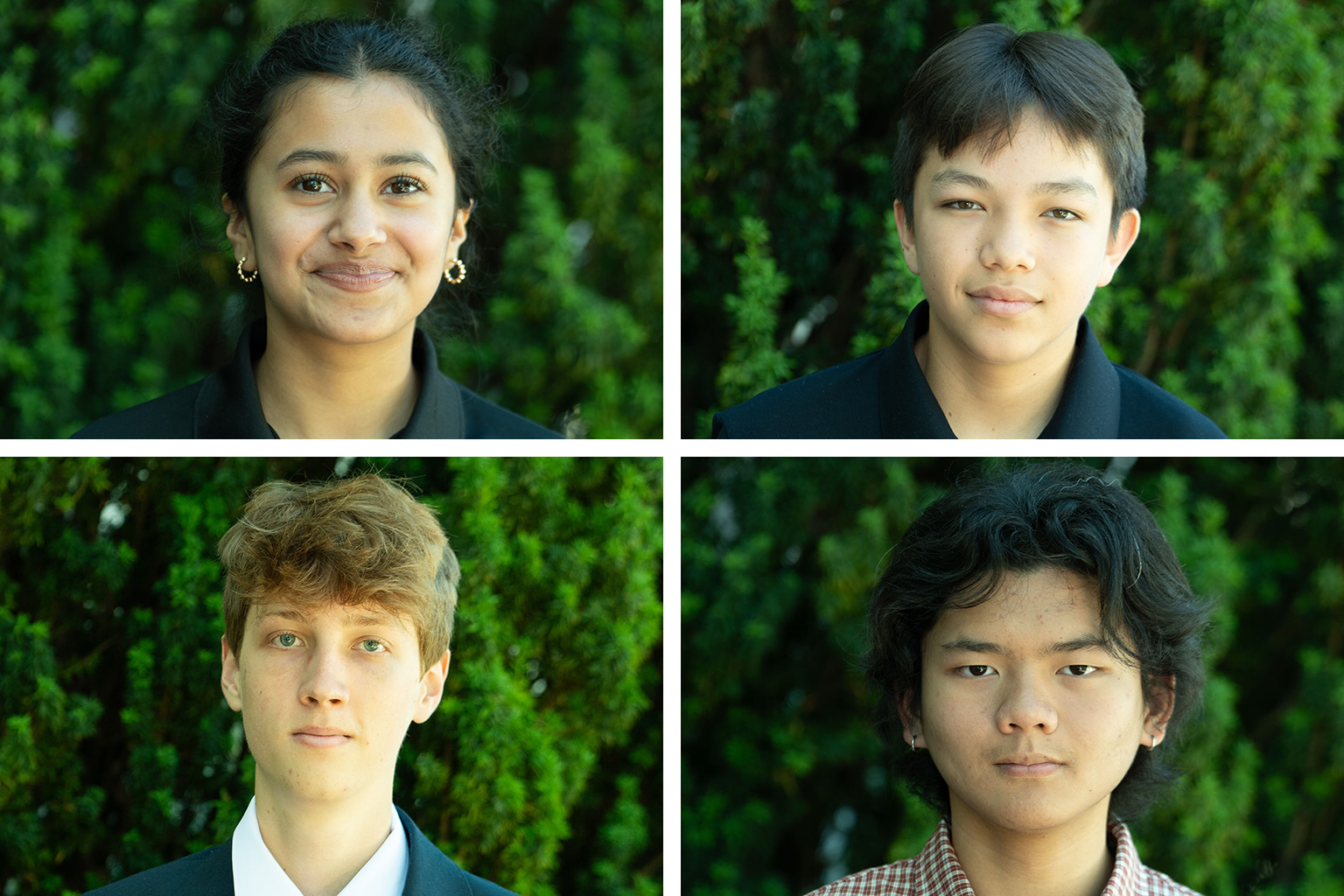
“This program taught me the importance of starting an enterprise for the purpose of helping the society around me,” said Nithya P., one of the student-participants.
Her team pitched Fighting for Education, an initiative to provide self-defense training, leadership development, and college readiness for girls in New Delhi, India. Each team of students established roles, developed a business plan, analyzed peer organizations, and developed a professional slide deck. The panel of judges rated their overall presentation and the viability of their ideas.
“This program has taught me so much about public speaking while also balancing fun,” said Elizur F., whose group presented on Neptune, an idea to turn plastic waste into affordable building material in Indonesia. “There are so many great people I never would have met had I not done this program.”
“Watching these kids who grew up in China, Mexico, Egypt, Texas, and California become good friends and tell inside jokes by the end of camp was the best part for me,” said Crystal Chang, a lecturer in global studies and political economy who ran the summer camp.
This was the summer camp’s first year, and Chang was thrilled by the participants’ reactions. Before entering academia, she spent several years in venture capital and the high-tech industry in both Silicon Valley and Shanghai. Chang developed the summer program out of her popular Berkeley course, “Silicon Valley and the Global Economy,” where students study the region’s history, meet alums working in the tech sector, and compete in a startup pitch challenge.
Chang hopes to provide young visionaries with the knowledge and skills they need to change the world. The program introduces students to core concepts in innovation, venture capital, and startup strategy while emphasizing teamwork, creativity, cross-cultural communication, social impact, and critical perspectives.
Participants also heard from two entrepreneurs who have built successful companies: Paul Bryzek, the founder of CarbonSustain, and Naeem Zafar, a lecturer at the Sutardja Center for Entrepreneurship & Technology who co-founded TeleSense and Bitzer Mobile. The guest speakers discussed the lessons they learned in their careers and answered student questions.
“You could see something click: this idea that getting people to lean in, telling your story, and working a room are acquired skills, not personality traits,” said Chang.
Participants testified to the program’s positive impact.
“I will never forget the importance of public speaking and communication in trying to convince others to invest in me and my ideas,” said Mikhail “Misha” S. “Listening to inspirational and unique guest speakers such as Naeem Zafar and Paul Bryzek as well as the leading teacher, Crystal Chang, has educated me on how to lead and organize startups and how to take advantage of my strengths as an entrepreneur.”
“The experiences and lessons I’ve learned from this program extended my knowledge and understanding of being an entrepreneur,” said Mark Y. “The people I met in the program wrote a unique chapter in my life.”
The two students proposed GatherUp, an app designed to drive in-person connection for Taiwanese youth. The tagline: “Turning screen time into real time.” The GatherUp team was motivated in part by rising loneliness trends. While a wealth of remote communication technologies exist, people still desire to meet face-to-face. That same drive for personal connection also influenced the format of the Global Social Entrepreneurship Summer Camp.