
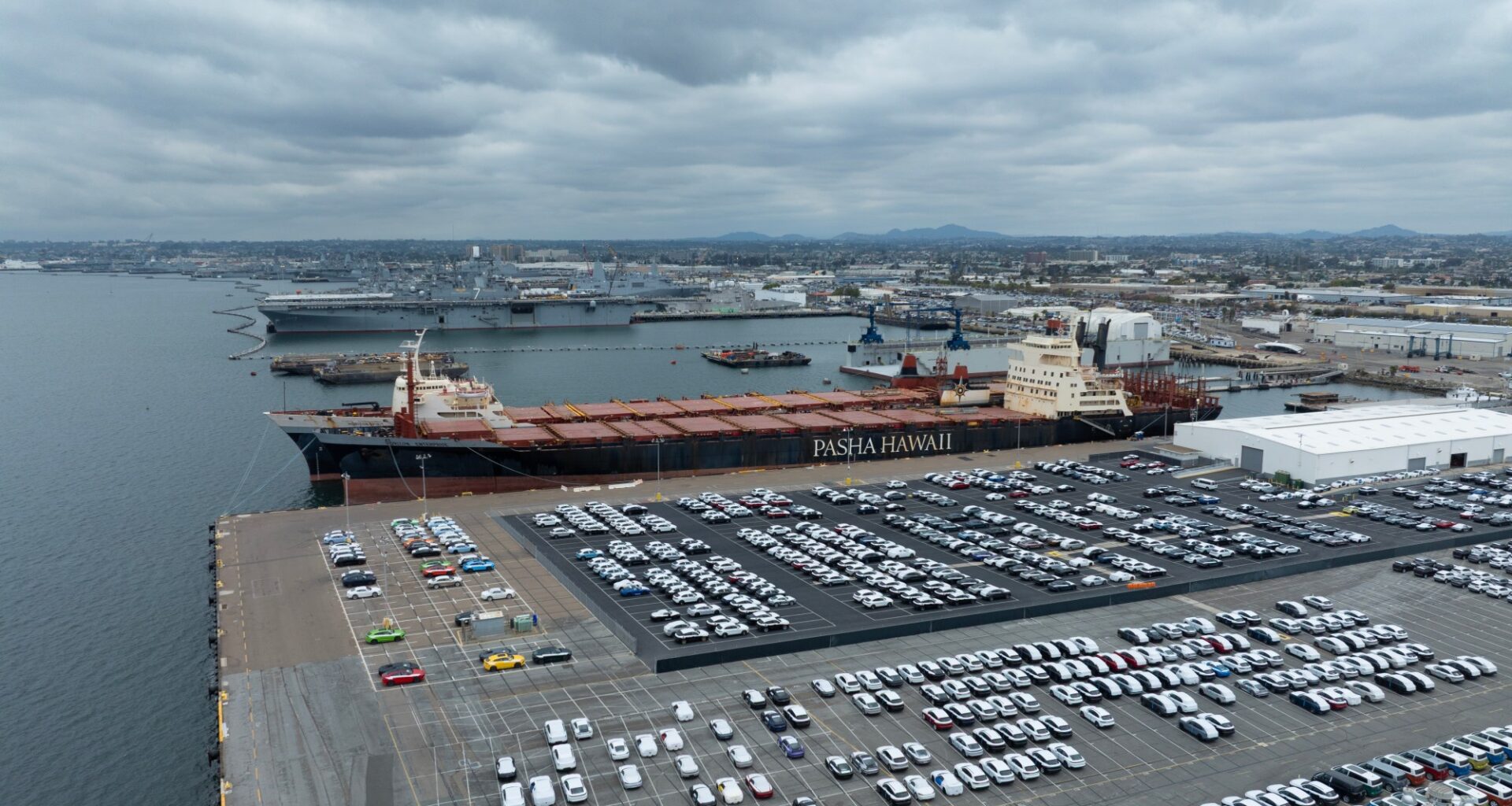
The Port of San Diego’s Board of Port Commissioners voted unanimously Tuesday to advance two major National City initiatives, authorizing staff to seek a $15.5 million grant allocation for the city’s Balance Plan and clearing the way for an electric truck charging hub, pushing both projects closer to construction.
The first action authorizes staff to seek allocation of California Port and Freight Infrastructure Program funds, administered by Caltrans, for the Marina Way Realignment and Rail Connector Track projects. The board also adopted an ordinance adding $8.8 million to the district’s fiscal year 2027 budget for the realignment project.
Marina Way’s commercial segment, funded with $8.8 million in grant money plus $1 million from a prior operating surplus, will relocate and upsize utilities and shift the roadway to create a boundary between maritime and commercial land uses, according to Port staff.
The Port is targeting a construction contract award by December, with completion by June 2028.
The remaining $6.7 million will fund a rail connector track led by tenant BNSF, linking the National City Marine Terminal to the BNSF National City Yard. The Port will serve as a pass-through agency for those funds, according to staff.
The board separately certified the final environmental impact report for the Skychargers LLC Tidelands Avenue Electric Truck Hub, authorized a non-appealable coastal development permit, and approved a non-binding term sheet allowing staff to continue lease negotiations with the developer.
The 70-stall facility would charge electric trucks serving nearby marine terminals, supported by on-site solar power and battery storage. Under the term sheet, Skycharger would pay escalating flat rent starting at $250,000 annually, along with percentage rent on gross sales, and contribute $150,000 per year toward community benefits — totaling $3.75 million over a 25-year lease term, according to staff.
As previously reported, the National City Council voted 2-1 in June to send a letter supporting the project. Council members voted to strip language from that letter citing concerns over truck traffic, fire risk from lithium-ion battery storage, and the scope of community benefits. Mayor Ron Morrison dissented, being in support of the advisory language.
Morrison reiterated those concerns Tuesday, telling commissioners the facility’s location was placed “directly upwind from the densest city in the county.” He said he supports electrification but questioned whether risks tied to the trucks themselves — which he compared to “lithium mobile power banks” — were adequately addressed once vehicles leave the site.
Commissioner Gilanthony Ungab, who represents National City on the Port’s board, pressed staff on fire risk, economic benefits and road impacts.
Principal Planner Peter Eichar said the EIR found no expected negative health impacts from a battery fire, given the battery’s smaller size, wind patterns and distance to residents, adding the project would contribute 4% of lease revenue to a fund National City could tap for road maintenance.
Vice Mayor Luz Molina and City Manager Doug Schultz both voiced support, citing improved air quality and economic opportunity.
Representatives from the Environmental Health Coalition, Climate Action Campaign and multiple building trades unions also spoke in favor during public comment, citing union labor commitments and health benefits for portside communities.