
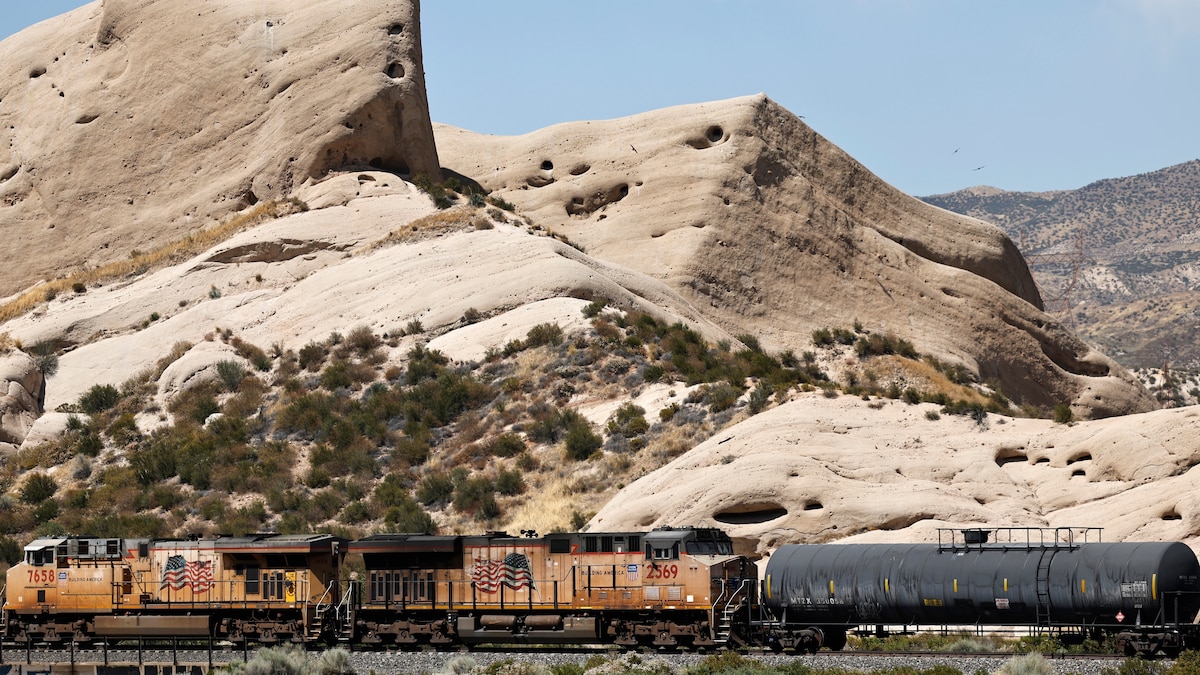
The June study found that tectonic stress has steadily built along the two fault zones that meet at Cajon Pass, growing in some places to its highest level in 1,000 years. In the past, when stresses rose in concert, like they are right now, the pass has acted as a gateway, allowing the rupture to go through both fault systems, and producing a larger earthquake. The findings can’t help us predict the next catastrophic quake, but they do imply that when it comes, it could be major—around 7.5 on the Richter Scale.
“We are primed to have another one in our generation,” says Liliane Burkhard, lead author of the June paper and a geophysicist at the University of Bern. She added that her study could further refine investigations into how these fault junctions behave in other parts of the world. Turkey’s North Anatolian fault, for example, has certain branches that could be possible earthquake gates, says Burkhard, as do faults in China, Nepal, and New Zealand.
(Are Two of the Deadliest Earthquake Zones in North America Linked?)
If a major earthquake was to rip through the southern part of the San Andreas fault, the results would be catastrophic. Seismology models have predicted more than 1,800 deaths, 50,000 injuries, and $200 billion in damage in the event of a 7.8 magnitude quake.
At Cajon in particular, highways would be affected. Rail lines would be destroyed. Fiber optic cables could be ripped apart, disconnecting Southern California from much of its Internet traffic. And gas lines could combust, according to the 2008 ShakeOut Scenario report led by Lucy Jones, a former USGS seismologist who developed the methodology used for earthquake advisories in the state of California. The shaking could trigger landslides that would topple transmission towers and bury petroleum and fiber lines. Some 75,000 cubic meters of debris would cut off all roads going through the pass.