
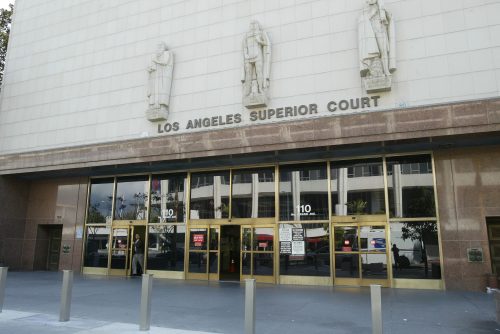
LOS ANGELES — Attorneys and parties seeking to disqualify judges in Los Angeles County will now be required to disclose certain prior challenges against the same judge under a new procedure aimed at addressing potential abuse of California’s judicial disqualification law.
The Los Angeles Superior Court issued a general order July 28 requiring attorneys and parties who challenge a judge under Code of Civil Procedure §170.6 to disclose certain prior challenges to that judge, according to an article in the Metropolitan News-Enterprise (MetNews).
Under California Code of Civil Procedure §170.6, a party can seek to disqualify a judge from hearing a case by asserting that the judge is prejudiced against them or their interests. The statute specifies that the party must believe they “cannot have a fair and impartial trial or hearing before the judge” because of the prejudice.
Presiding Judge Sergio C. Tapia II issued the order following a May 28 California Supreme Court decision in J.O. v. Superior Court, which held that judicial officers may examine allegations of bad-faith blanket challenges under §170.6.
The Vanguard previously reported on the case, stating that the J.O. court found the approach adopted in Solberg v. Superior Court (1977), which upheld §170.6’s constitutionality even under allegations of abuse, was “no longer tenable.”
“They noted increased caseloads, persistent judicial shortages, the growth of specialty courts and sweeping legal reforms requiring judges with increasingly specialized knowledge,” David Greenwald, executive director and founder of the Vanguard, said. “Under those circumstances, allowing parties to systematically remove judges from assignments threatens the judiciary’s ability to manage its own affairs.”
The general order issued by the Los Angeles Superior Court took this ruling a step further by requiring challenging parties and attorneys to disclose §170.6 challenges made against the same judge during the previous year, according to MetNews.
“In light of the Supreme Court’s recent decision in J.O., the Court is issuing this General Order to establish a clear, uniform process for section 170.6 challenges,” Tapia said in a notice to attorneys. “[O]ne that sets firm expectations for parties, attorneys and judicial officers and ensures these challenges are made responsibly and consistently.”
The article explained that disclosures must include case names, case numbers and approximately how many cases the party had before the challenged judge. For confidential or sealed cases, only the case number is required.
Tapia stated that the disclosures must be made through a “written declaration or oral attestation.”
The court’s directive carved out an exception for parties or attorneys that have filed “only one or two disqualification motions to the jurist in the past year,” MetNews wrote. The order is therefore focused primarily on the repeat use of §170.6, also known as blanket affidavits or “papering.”
Justice Joshua P. Groban, who wrote for a unanimous court in J.O., stated in his opinion that instances of abuse using §170.6 have been “well chronicled” since its enactment in 1957. MetNews noted that parties have historically used the statute to “judge shop,” delay proceedings, punish judges for unfavorable rulings and potentially discriminate against judges based on race.
“These problems are particularly pronounced when challenges are improperly lodged in a blanket fashion,” Groban wrote for the J.O. court. “If, for example, a district attorney’s or public defender’s office engages in the practice of removing a judge from all cases or a substantial portion of cases on a bad faith basis … the office can effectively control the extent to which that judge hears such cases.”
The order applies to challenges made orally or in writing and requires the accompanying disclosure to be served on all parties as soon as possible, and no later than five days after the challenge is made, according to MetNews.
To comment please go to one of these social media platforms:
Facebook: https://www.facebook.com/DavisVanguard
LinkedIn: https://www.linkedin.com/company/peoples-vanguard-of-davis-inc/
Instagram: https://www.instagram.com/davisvanguard/
X: https://x.com/davisvanguard
Bluesky: https://bsky.app/profile/vanguardnewsgroup.bsky.social
Subscribe to the Vanguard News letters. To make a tax-deductible donation, please visit davisvanguard.org/donate or give directly through ActBlue. Your support will ensure that the vital work of the Vanguard continues.
Categories: Breaking News Everyday Injustice Tags: Code of Civil Procedure §170.6 J.O. v. Superior Court Judge Sergio C. Tapia II judicial accountability judicial disqualification Los Angeles Superior Court