
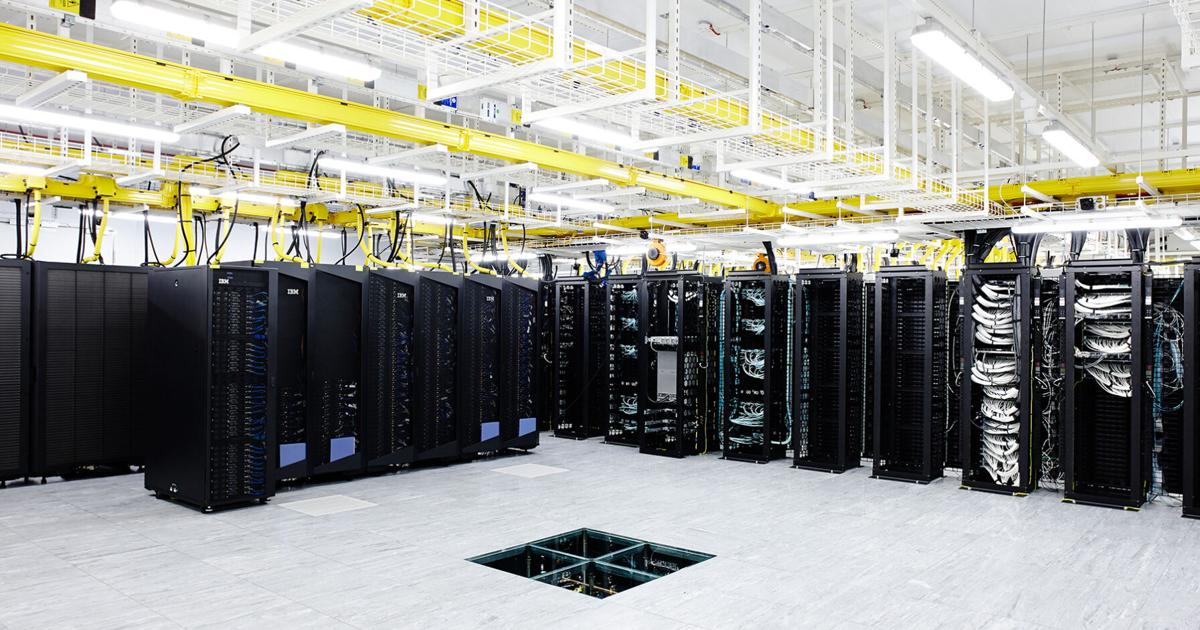
As AI increases the demand for large-scale, high-energy-cost data centers — with nearly 300 in California, largely concentrated in the Bay Area — UC Berkeley researchers argue that the future of AI doesn’t have to include data centers and their accompanying environmental concerns. Instead, AI tools can be small, open-source and even run off of a laptop.
Associate professors Fernando Pérez and Carl Boettiger, along with incoming postdoctoral fellow Cassidy K. Buhler, recently co-authored a commentary urging scientists to invest in AI models that are locally run and open-weight — meaning the encoded knowledge the model learned during training is publicly available.
Pérez, Boettiger and Buhler work at UC Berkeley’s Eric and Wendy Schmidt Center for Data Science & Environment.
The op-ed, published Tuesday in Nature, was inspired by the research of Boettiger and Buhler, who are currently building an open-source AI tool to analyze environmental conservation data.
Buehler and Boettiger’s model runs locally off of a small desktop server instead of a centralized data center, avoiding the costs and energy demands associated with operating and cooling large data centers.
Their website claims that its AI assistant can be asked more analytically complex questions than current commercially available AI models and deliver a response in minutes.
In their Nature op-ed, the researchers argue that models like theirs, centered on energy efficient, local servers, are “the future of AI.”
In 2023, U.S. data centers consumed roughly as much electricity as the entire nation of Ireland — energy consumption that is expected to at least double by 2028, according to Lawrence Berkeley National Laboratory.
Meanwhile, public backlash against data centers is mounting: 71% of Americans are opposed to the construction of data centers in their local area, according to a Gallup poll.
According to Pérez, the impact of data centers on local communities can be “very severe.”
“We’re seeing that often the voice of residents is being silenced by economic interests that can override them and basically remove access to water for a local community in order to power a data center,” Pérez said. “We figured it was important to present an alternate vision that doesn’t necessarily require that these systems sort of bulldoze over local communities.”
Although the most advanced AI models, such as Claude or ChatGPT, are still run on large data centers, Pérez says open-source AI models are slowly catching up — and that most people don’t even need the most advanced AI technologies for daily use.
“As the capabilities of these … open models and open-source tools mature, you start basically finding that they do the job you need them to do,” Pérez said. “We use the analogy that you don’t need a Ferrari to go get your groceries … you need a Toyota Corolla that is reliable to go to a grocery run or take your kids to school.”
More than 7 in 10 U.S. adults say they’re at least somewhat concerned about AI’s environmental impacts, according to a poll by The Associated Press-NORC Center.
But Pérez says AI itself is not the problem.
“I don’t think we should discard the use of these tools in and of themselves,” Pérez said. “I think what we can do is question the approach that requires that they get bigger and bigger and bigger and bigger at any cost. That’s the approach that I think raises problematic environmental questions. But it’s not that AI is inherently an environmentally disruptive technology.”