
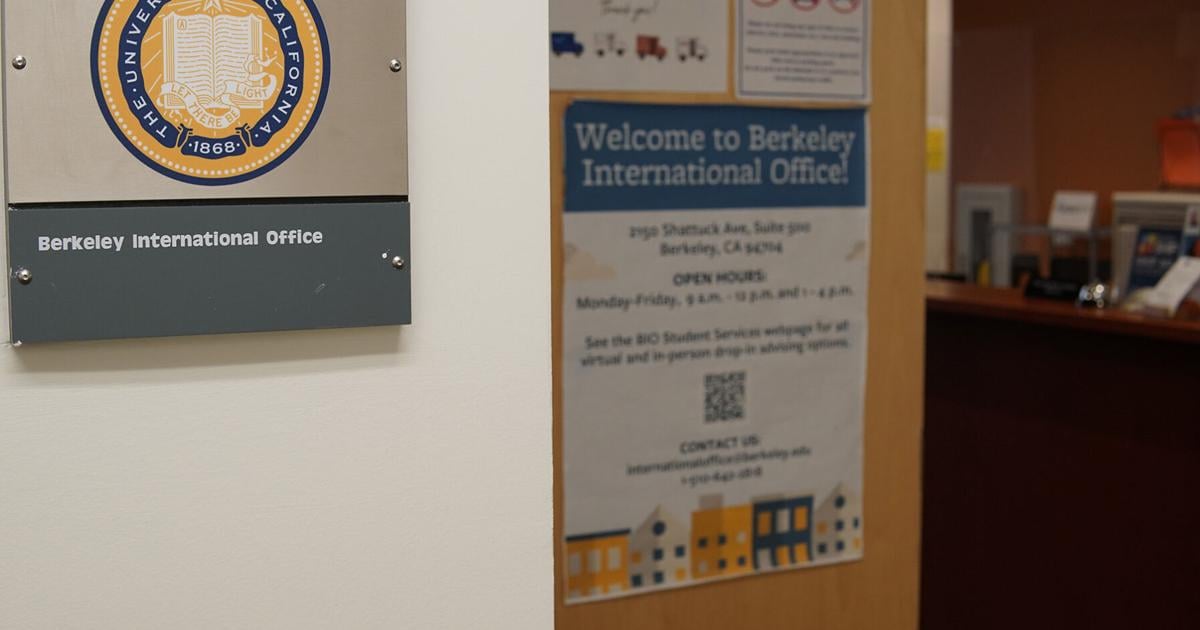
The Berkeley International Office, or BIO, announced Thursday that it is temporarily suspending all applications for Course Credit Curricular Practical Training, the program that allows international students to work in paid off-campus internships.
The suspension follows an Aug. 12 memo from ICE warning all Student and Exchange Visitor Program-certified universities — nearly all American colleges — that officials who improperly authorize Curricular Practical Training, or CPT, could face personal liability. ICE threatened to remove universities’ abilities to enroll international students if they did not comply.
CPT is a work authorization program that allows international students to work and gain practical experience off campus, either as a requirement of their degree or in exchange for course credit.
In the memo, ICE urged that work authorizations only be approved for major requirements, meaning F-1 students will be unable to apply for work opportunities in exchange for course credit.
The memo is unenforceable by law, but threatens potential liability or legal consequences for both the individuals and universities found to be in violation of federal regulations.
According to an email from BIO director Ivor Emmanuel, BIO reached out to legal counsel soon after receiving the memo, and will not resume processing applications until they are advised to do so.
“Please know that we do not take this decision lightly as we know the importance that course credit CPT plays in your academic journey,” Emmanuel said in an email sent to all international students. “We will support (international students) to the full extent allowed by law.”
Students with fully processed Course Credit CPT applications or who have already already received a CPT I-20 will not be affected, according to Emmauel.
Emmanuel said there is a possibility of legal challenges that may allow them to continue processing Course Credit CPT applications, but they have not updated students on a timeline as of press time.
In the meantime, BIO said they will continue processing “Degree-Requirement” CPT applications as normal.
“For all students, an important part of undergraduate education is to prepare us for work readiness, to prepare us for industry experiences,” said East Asian and international student communities-endorsed ASUC senator Sandra Ding. “Without CPT, basically we can no longer legally work. We cannot get paid at all for any kind of work we do here.”
International students are still eligible for on-campus jobs, limited to 20 hours a week.
Ding urged eligible students to vote on behalf of those who cannot. “We really hope to receive more support from a federal level or from students,” she said. “Don’t vote for the people who are doing this. We cannot vote because we’re (immigrants). Please make the right decisions when you are approaching the political election system.”