
LOS ANGELES — At the MLK Community Hospital in South LA, officials have turned their gift shop and meditation rooms into patient care areas as more people seek care than they can fit in their rooms.
But despite the demand, the hospital said they are at risk of shutting down because of lack of funds.
“Most of the patients that are seeking care at the hospital are either underinsured or uninsured and we are not reimbursed the full cost of their care that keeps the hospital perpetually in a perilous financial situation,” said CEO of the community hospital, Elaine Batchlor.
She said it’s an issue made worse by federal budget cuts and work requirements for Medicaid coverage.
“Because people are going to lose their Medicaid coverage, but they’re still going to get sick and need care. And funding for safety net hospitals is being slashed. So both of those situations are really going to push us into a crisis,” said Batchlor.
MLK Community Hospital is not the only hospital struggling in LA County.
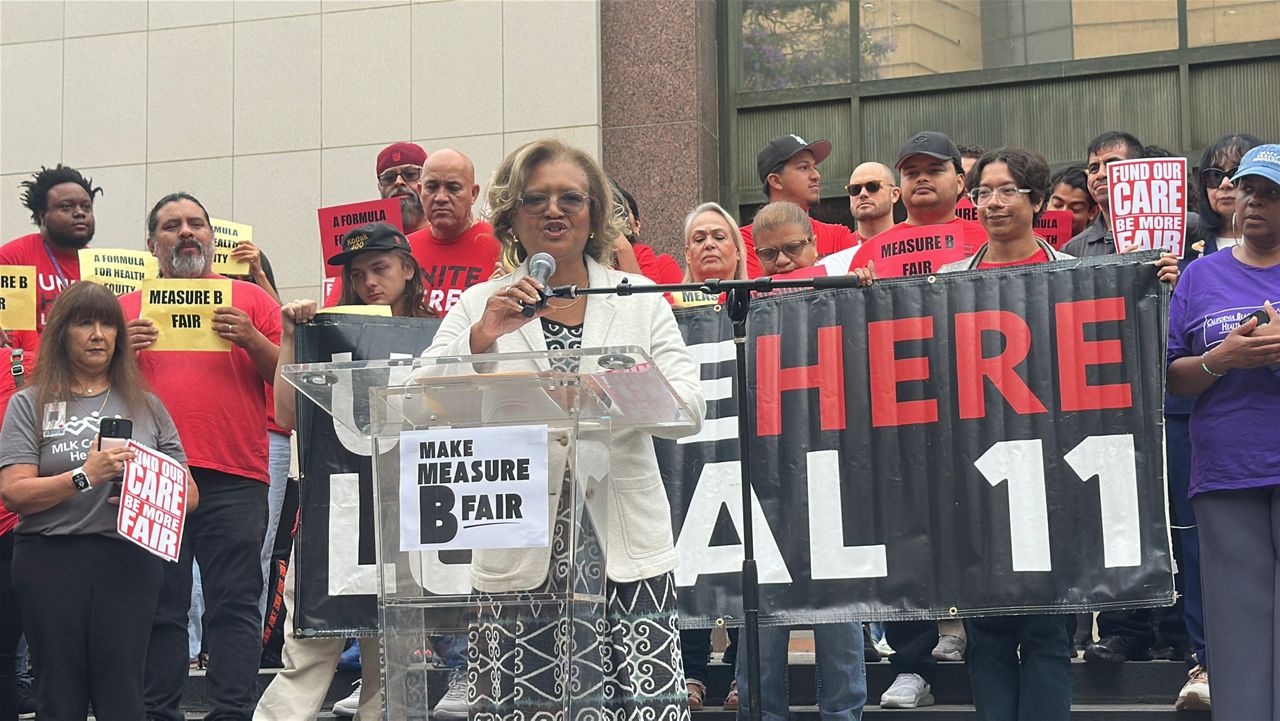
That is why Batchlor along with leaders from Pacific Hospital in Sun Valley and Catalina Island Health, rallied for an independent review of how money is allocated to county hospitals and medical centers with trauma centers, hoping the study can help re-route some of those funds to them.
The funding in question comes from Measure B, a county tax which generated around $340 million this last fiscal year. That money is then split and given to 13 county hospitals and medical centers with trauma centers.
Any leftovers are then given as a onetime fund to private hospitals without trauma centers such as MLK, Pacifica, and Catalina Island.
LA County Supervisor Holly Mitchell, who proposed the review, said it is time to re-asses.
“Funding formula has been the same for 25 years, and we just want to take a look to make sure that it still makes sense that the hospitals that are receiving the lion’s share of the funding are the hospitals that are providing care to the majority of the Angelinos,” said Supervisor Mitchell.
The next step is for the county to hire a consultant who will study the issue and make any potential change recommendations to how those funds are distributed.
“What’s really important about the study is that we’re trying to create an ongoing, sustainable solution so that we don’t have to keep coming back and asking for help every year in these one-off bailouts,” said Batchlor.
Still, these onetime grants have become a lifeline, the latest coming from Kaiser Permanente, who gave the hospital a $25 million charitable grant and loaned $7 million in mobile units to help address the lack of care space.
A spokesperson for the MLK Community Hospital said the grant does not change their operating situation at all, as the funds will go to their capital budget, but it will help in the long term to build out and keep up with demand.