
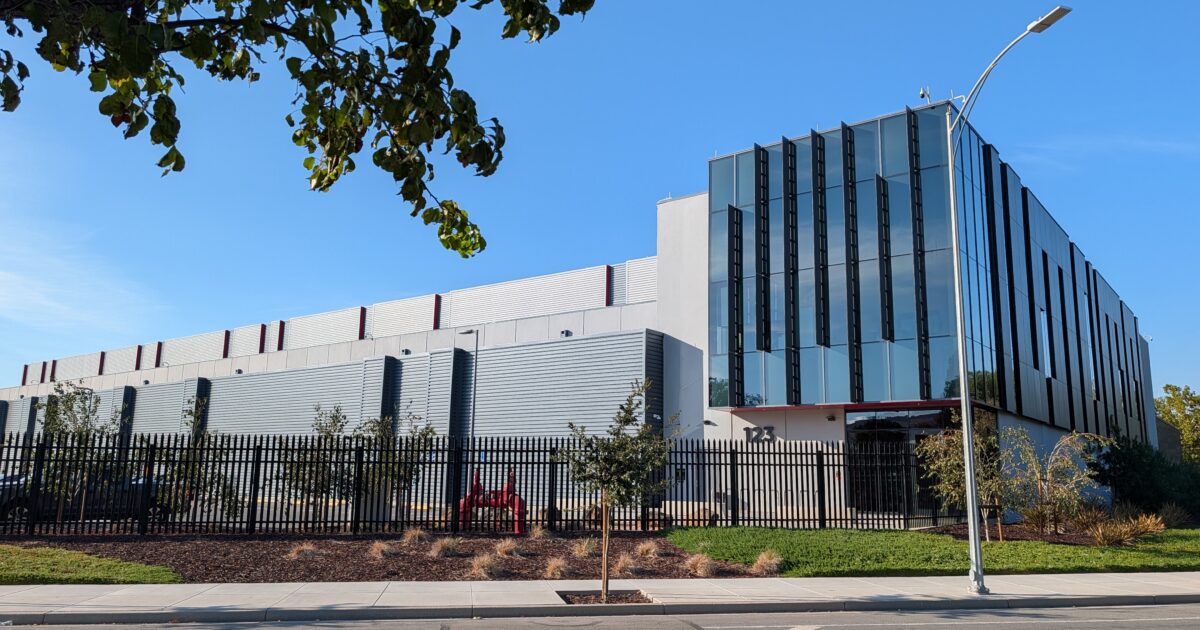
As San Jose hammers out local review standards for data center projects, some residents are calling for the city to follow the lead of other jurisdictions and enact an immediate moratorium on new developments.
The proposed standards are expected to address widespread concerns that a glut of new projects working their way through the city’s development pipeline could overwhelm local water and power infrastructure and cause other environmental harms. Staff are in the process of drawing feedback from residents as they draft the standards, which are expected to also include requirements related to air quality, noise pollution, greenhouse gas emissions and public outreach. The package is expected to go before the City Council in December.
But data center critics worry that without an immediate halt to new developments, some sub-par projects might slip through before the city has a chance to put these safeguards in place. With a growing number of cities and states enacting their own moratoriums in recent months — including New York state and Oakley, California — some residents are questioning why San Jose has not followed suit.
Without a moratorium, “the city is, ironically, creating a perverse incentive for developers to rush to get their applications submitted so that they will be grandfathered in before the standards take effect,” Alice Kaufman, policy and advocacy director with Green Foothills, one of the environmental groups calling for a development halt, wrote in a letter to councilmembers.
City officials maintain given the protracted permit approval timeline faced by data center projects, it is unlikely any applications submitted today will reach the finish line before the new standards are in place. In addition, others have warned a sudden moratorium would kneecap an industry poised to provide San Jose with a much needed infusion of economic vitality.
The issue got a hearing during Wednesday’s meeting of the Rules and Open Government Committee, as a series of speakers raised the demand for an emergency moratorium. The session included proposals to expand the policy push to create local data center standards, first launched in May, to also include community benefit requirements. For example, developers may be required to provide funding for public space improvements, affordable housing or clean energy programs.
The city is planning to hold a series of community listening sessions to solicit resident feedback on the data center standards. The first is set to be held Aug. 19 at City Hall.
Community skepticism
As the artificial intelligence boom has fueled this burgeoning data center buildout, San Jose leaders have suggested the wave of new projects could generate an economic windfall for the city. Officials estimate each new large data center will contribute between roughly $3 million to $7 million annually in utility and property taxes.
But many residents remain unconvinced such benefits will outweigh the potential harms. Among their wide-ranging concerns, they have voiced fears that the new electricity demands could trigger blackouts on PG&E’s aging infrastructure or drive up power rates.
“Taking the time to study the issue and talk to community members — these are important things that shouldn’t be rushed,” Mark Espinoza, an Alviso community advocate who has been raising alarms about data center projects in the neighborhood, told San José Spotlight. “Let’s listen to the community that’s going to be the ones that are living next to these things.”
San Jose has roughly 20 data centers already in operation. Six more are under construction, and five are in the process of obtaining city approvals for construction, according to Erica Garaffo, who works in the City Manager’s Office on projects involving heavy power users.
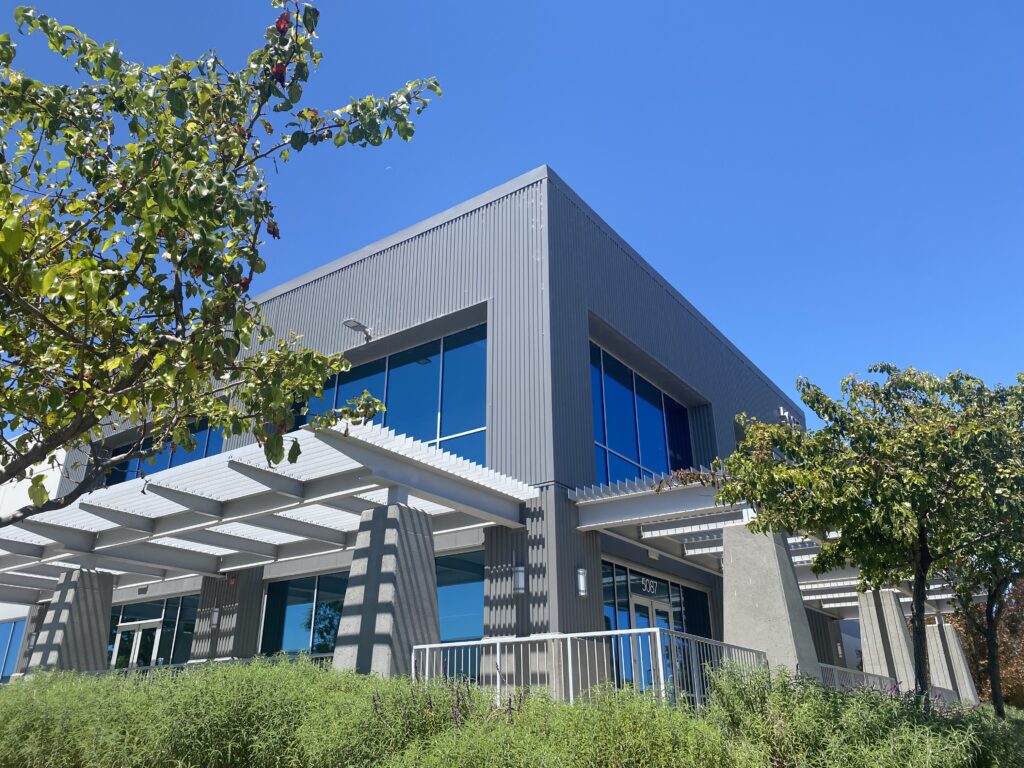 San Jose residents are on high alert for any sign of data center projects in their neighborhood. Some raised alarms over Google’s plan to open a research and development facility in Alviso, over suspicions the project is actually intended to house an AI data center, a claim the company denies. File photo.
Among the proposals advanced during Wednesday’s committee meeting, one seeks to ensure the new standards would apply to data center projects working their way through the development pipeline. It directs staff to reevaluate such projects once the new standards are in place and renegotiate any development agreements that fall short.
“We will maximize the number of projects that will be under the new standards,” Carolina Camarena, spokesperson for the city manager’s office, told San José Spotlight.
Mayor Matt Mahan did not respond to a request for comment. However, in the announcement for the proposed community benefit requirements issued earlier this week, he voiced support for well-regulated data center development.
“We can’t just bury our heads in the sand, say ‘no’ and push the jobs and industries of the future to states with fewer environmental safeguards,” Mahan said. “And we also can’t allow unfettered growth without protecting the people and places that will be impacted. We need to do what California does best: lead the nation forward with a blueprint for responsible development.”
Economic disruptions
District 4 Councilmember David Cohen, who has thrown his support behind the push to create new review standards, warned that an immediate moratorium could cause major economic disruptions while yielding uncertain benefits.
“The people here who are developing data centers want to use the latest and cleanest technology,” Cohen told San José Spotlight. “The purpose of the written standards is to make sure that the public is aware of what it is that we expect. But we already have been asking these data center developers to basically follow what will eventually be written in the standards.”

San Jose officials have said data center projects are subject to the same set of requirements as any other development project in the city. That includes environmental review, community outreach and public hearings.
But Kaufman said a moratorium is a necessary step to reassure wary residents and demonstrate that the city is taking their concerns seriously.
“If the city is certain that putting a pause on processing applications would not affect any data center proposals, then it shouldn’t be a hardship to do it, right?” she told San José Spotlight.
The Data Center Coalition, and industry trade group, also voiced opposition to a moratorium.
“Rather than enacting moratoriums — which will discourage investment and send a signal to the industry that the community is closed for business — the community and its local leaders should work with the industry and all stakeholders to establish reasonable regulatory frameworks that meet the needs of the community without deterring the industry and the benefits it can bring,” Khara Boender, a spokesperson for the group, told San José Spotlight.
Contact Keith Menconi at [email protected] or @KeithMenconi on X.