
Costa Mesa is facing a state lawsuit over its housing element, and when pressure mounts people reach for arguments they think will offer a good defense. That is what happened at the Aug. 4 City Council meeting, documented in the Daily Pilot.
“They’re getting it,” the councilmember said of the Orange County Grand Jury report, California Housing Mandates: The Unintended Reshaping of Orange County Neighborhoods. “What we’re seeing down on the street, at the grand jury level, they’re seeing it countywide.”
But what the report portrays is not what is playing out on the ground, starting with one word: unintended.
There is nothing unintended about recent housing law, or the state’s attempt to hold cities accountable for making room for new housing.
The report’s appendix enumerates the laws, spelling out the facet of the housing shortage each was meant to address and the solution the Legislature chose.
Density near transit. Housing on commercial corridors. Ministerial approval to cut years off the entitlement clock. These were not accidents that snuck up on Sacramento. They were the point.
The state made a policy choice. Pretending it was accidental lets decision makers avoid the rationale behind it: a housing shortage so severe that prices have climbed out of reach, young people delay major life decisions and a growing share of residents doubt the American Dream is still possible here.
All of this is reflected in the most recent UC Irvine-OC Poll: Nine of 10 residents, Republicans and Democrats, renters and homeowners, rich and working class, agreed that buying a home is harder today than it was for their parents. That is the problem these laws were written to solve.
If “unintended” hides the state’s intent, “reshaping” distorts what that intent looks like on the ground. The word is meant to summon bulldozers at the end of your cul-de-sac, a high-rise where a ranch house used to be. That is not how new housing is showing up in Orange County, and the examples cited in the report itself prove it.
In Mission Viejo, the controversy involved an apartment complex expanding on a 30-acre site that was already surface-parked apartments.
In Anaheim, it is OCVibe, an entertainment district built on acres of asphalt around a sports and concert venue.
In Irvine, it was a proposal for a new neighborhood on a privately owned golf course.
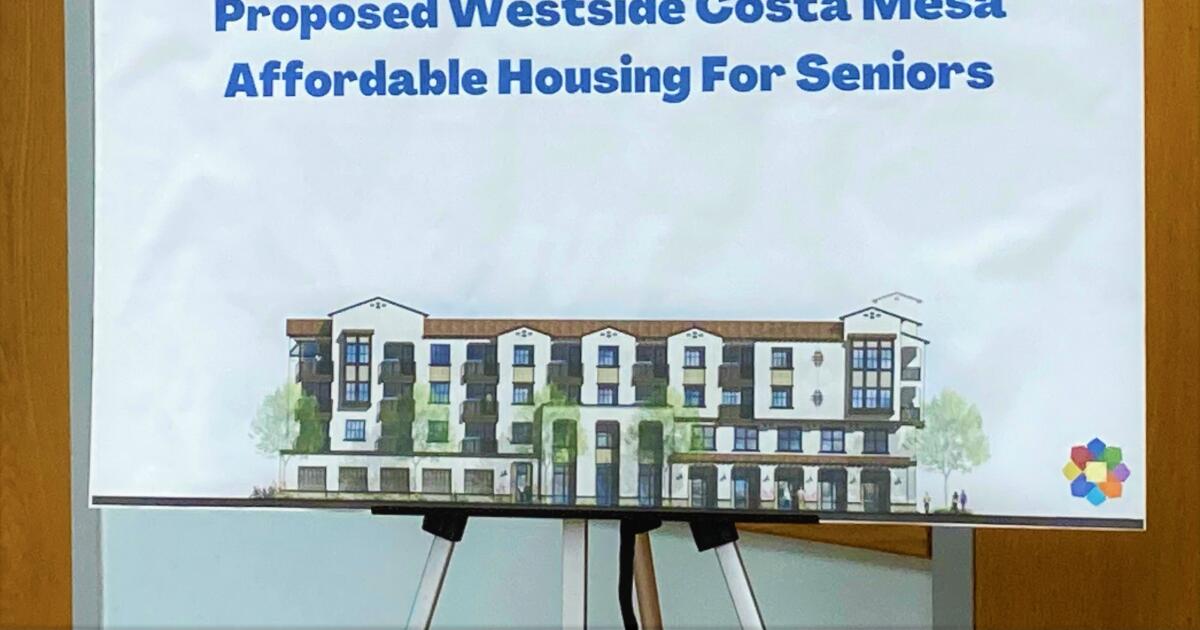
In Costa Mesa, it is a four-story senior housing project on the Senior Center parking lot.
Beyond the report, the pattern holds. New housing has been recently approved on the former Westminster Mall, Laguna Hills Mall properties and the Amway Industrial site in Buena Park.
Not one demolishes an established single-family neighborhood; there are no towers in the park. New homes are replacing tired strip malls, half-empty office parks and land that was already industrial or commercial.
A quiet residential street might contend with a new accessory dwelling unit (ADU) or two, but the neighborhood remains intact.
The grand jury built its findings on city officials, electeds and residents who turn out at public hearings. Those are real voices, and they deserve to be heard.
But it is worth noting who is missing. The adult child of immigrants, first in the family to finish college, who does everything right and still cannot find a home in the county where they grew up.
The nurse, the teacher, the mechanic who keep Orange County running and commute an hour each way because they cannot afford to live here.
In the report they exist only as an abstraction, a “perceived shortage.” Their need is not measured by population, but in overcrowding and cost burden, conditions these laws were designed to address.
The housing laws are not an accident, and they are not tearing down anyone’s home. They are enabling homes on land that sat underused for years, for the neighbors who have been kept out. That is not the unintended reshaping of Orange County. That is the county finally making room.
— Hansburg is co-founder and director of People for Housing OC. She can be reached at elizabeth@peopleforhousing.org