
As students return to class in our polarized political era, an Oakland Catholic high school has come up with a compromise on how to navigate the thorny politics of the Pride flag.
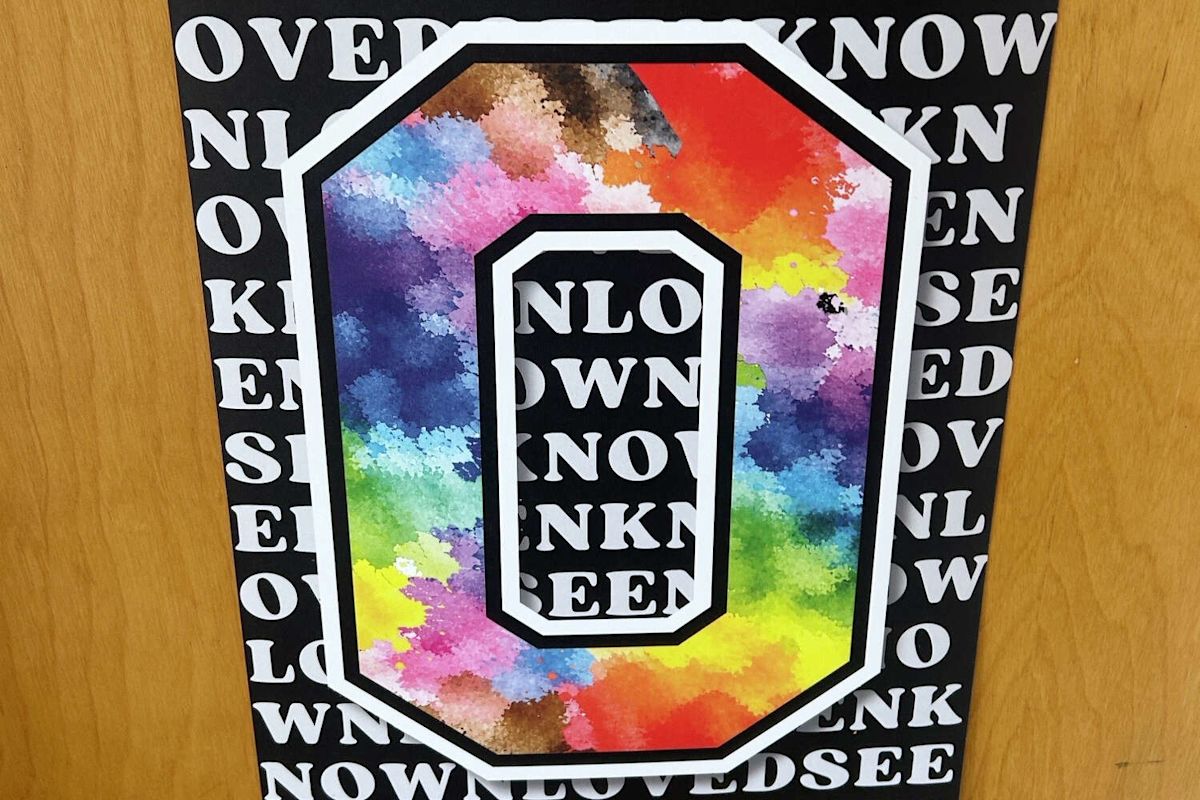
After Oakland Bishop Michael Barber ordered the iconic LGBTQ+ symbol removed from classrooms a year ago in response to a complaint, administrators at Bishop O’Dowd High School worked with parents and student on a solution: They incorporated the flag’s rainbow colors into the school’s “O” symbol and rolled them out this week as students returned to class. It appears on the school’s homepage with the words “Seen. Known. Loved.”
O’Dowd’s affirmation of the value of diversity, equity and inclusion is admirable – and sadly uncommon – in an age when law firms, television networks and elected leaders have crumbled in the face of threats from the Trump administration and other conservatives seeking to hack away at protections for the LGBTQ+ community and erase transgender people from public life. Instead of capitulating completely, the school showed what’s possible when people work toward a compromise that may not be a perfect solution, but at least seeks to protect a marginalized community. It’s the type of caring attitude that I hope shaped our two daughters, who graduated from O’Dowd a decade ago.
Their drive to do something different came down to practicing basic humanity. School administrators, who declined to publicly talk about the flag issues, didn’t want LGBTQ+ students to feel alienated and were looking for a way to “visibly communicate that every student belongs,” according to a letter that school President Kim Walsh wrote to families last week. Pride flags had hung in classrooms for more than a decade. But after someone reported their presence to the bishop, their days were numbered. The bishop has jurisdiction over schools in the diocese.
“We can’t ever forget that this is a Catholic school, right?” said Cecilia Green, president of the school’s Dragon Parents and Guardians parent group, named after the school’s mascot. “And so the request was for the flags to come down, and it was pretty earth-shattering. We’ve always had them up for the last 10-odd years.”
Noting that the school posts “You Belong Here” signs throughout campus, Green said, “when you start removing symbols and things like that, the flag specifically, it’s going to create some tension and maybe even some feelings of being unsafe for the kids.”
The Catholic Church has historically not been welcoming – and often has been downright hostile – to the LGBTQ+ community, even in supposedly friendly climates like California. In 2008, when he was archbishop of San Diego, now-San Francisco Archbishop Salvatore Cordileone told a Catholic radio show that “the ultimate attack of the Evil One is the attack on marriage.” In 2008, Cordileone helped raise $1.5 million to get Proposition 8 – a constitutional amendment that defined marriage as between a man and woman – on the state ballot. Voters approved it.
Ultimately, Cordileone and other conservative religious leaders found themselves on the wrong side of history and public opinion on same-sex marriage. Prop 8 was found unconstitutional, and a U.S. Supreme Court decision legalized gay unions in 2015.
In 2014, the Chronicle broke the story that East Bay Catholic teachers were being asked to sign a contract with the Diocese of Oakland pledging to conform to church teachings outside the workplace – leaving some, particularly non-Catholics, wrestling with a professional and moral dilemma. Teachers worried they could lose their jobs for using contraception, having premarital sex, trying to conceive a child by artificial insemination or marrying someone of the same sex. Five teachers refused to sign the updated clause in an annual contract and left their jobs. Three were teachers at O’Dowd.
In recent years, the church has inched closer to at least talking about being more inclusive. In his first interview last year after becoming pontiff, Pope Leo XIV echoed the attitude of inclusion toward LGBTQ+ folks that his predecessor, Pope Francis, had preached. “Everyone’s invited in, but I don’t invite a person in because they are or are not of any specific identity. I invite a person in because they are a son or daughter of God,” he said.
In 2023, Pope Francis permitted clergy to give informal blessings to same-sex couples as long as they weren’t part of regular church rituals or liturgies.
Papal rhetoric, however, doesn’t match dogmatic reality. The Catechism of the Catholic Church teaches that homosexual acts are “grave sins … intrinsically immoral and contrary to the natural law.” The church recognizes only marriages between a man and a woman.
But just because the church doesn’t fully acknowledge the LGBTQ+ community in its doctrine doesn’t mean it has been erased in real life.
Beyond the flags, O’Dowd administrators and parents have tried other ways to ensure that LGBTQ+ students don’t feel alienated. The school has a Unity Club, a Pride Arts Club and sponsors an Inclusive Family Day. Later this month, the school is planning a queer arts mural. So after the Pride flags were removed, administrators worked with students, families and teachers to come up with an alternative.
“We asked a simple but important question: How do we continue to visibly communicate that every student belongs?” Walsh wrote in the letter to families in advance of the new school year.
The yearlong process led to the creation of what the school calls the “Inclusive O,” “a symbol that belongs uniquely to O’Dowd, one that we define and one that expresses our unwavering commitment to every LGBTQ+ student, family, faculty member, and staff member,” Walsh wrote.
With the rainbow colors of the Pride flag filling the school’s “O,” the new logo is unmistakably a nod to LGBTQ+ students.
Many LGBTQ+ students don’t feel safe at their school, no matter where they live. Nationally, 2 in 3 LGBTQ+ students reported “feeling unsafe because of their sexual orientation, gender identity, or gender expression,” according to the latest annual school climate survey conducted by GLISTEN, a national organization focused on creating safe and respectful learning environments for LGBTQ+ students,.
Other national organizations praised O’Dowd’s new logo.
The Inclusive O is a unique way out of a situation that has twisted other Catholic schools in knots and often wound up hurting students, said Francis DeBernardo, executive director of New Ways Ministry, which seeks to build bridges between the LGBTQ+ community and the Catholic Church. The organization has conducted workshops in 75% of the Catholic dioceses in the country, said DeBernardo, who is Catholic.
“This is a creative solution to a problem that has bothered Catholic schools in the U.S. for the last few years. Catholic high schools want to affirm their LGBTQ students and faculty, but some people see the Pride flag as a political symbol, and so I think this does the trick of finding a happy medium where using the rainbow colors in a different formation. That is something I have not heard any other school doing,” DeBernardo said.
Glisten CEO Melanie Willingham-Jaggers said that ideally, schools wouldn’t ban the Pride flag and other symbols of support, but nonetheless, “any way to acknowledge LGBTQ+ people, and young people in particular, is welcome.”
She added that “although this is most likely not the first time this has happened, we haven’t heard too many instances of schools, especially religious ones, going out of their way to find ways to support their LGBTQ+ students.”
But not everyone is on board. Barber, Oakland’s bishop, did not respond to requests for comment. And in a sign that Californians outside the Bay Area might feel differently, Sonja Shaw, a conservative who’s running to become California’s superintendent of public instruction, said “classrooms should be places of learning, not platforms for political or cultural messaging.”
Shaw led the Chino Valley Unified School District board when it voted in 2023 to ban Pride flags and spearheaded several moves condemned by LGBTQ+ leaders, including a policy requiring teachers to out transgender students to their parents. The current superintendent of public instruction, Tony Thurmond, was forcibly removed from a school board meeting led by Shaw when he showed up to oppose the policy. She is a member of an evangelical Calvary Chapel megachurch whose pastor has backed a slew of conservative candidates, including from the pulpit.
“Once you allow one flag or symbol, it becomes hard to say no to others, whether political, religious, or otherwise. Schools then get pulled into adult debates instead of staying focused on academics,” Shaw said in an email. “Parents send their kids to school to learn reading, writing, and math. Anything that distracts from that core mission is a problem. This is a manufactured controversy that takes time and energy away from what actually matters for students.”
Some O’Dowd alumni, meanwhile, have expressed their displeasure with removing the flags. One alum called the Pride flag removal a “disappointing step backward for inclusion and belonging” on Instagram. “Deciding to ban or prohibit the display of Pride flags at Bishop O’Dowd High School is a deeply regressive move that flies in the face of the school’s core values. For years, O’Dowd has prided itself on fostering a culture of equity, compassion, and community. Erasing symbols of visibility for LGBTQ+ students, faculty, and staff actively damages that mission.”
DeBernardo, who has seen scores of Pride flag controversies in Catholic schools for years, countered that O’Dowd’s “creative compromise” could be groundbreaking nationally.
“I think a lot of Catholic schools are going to be grateful for this solution,” he said. “I think that a lot of Catholic schools are going to follow suit.”
Subscribe
There’s more to San Francisco with the Chronicle. Subscribe today for just 25¢.
This article originally published at Oakland Catholic school navigates thorny politics of Pride flag with alternative.