
Fresno County has had three separate legal fights with the state of California in the past three years — and the odds have not been in the county’s favor.
A common theme of these legal battles are questions of local control versus state mandates.
A lawsuit filed by Fresno County earlier this week, centers on a fight about whether to place a transportation tax renewal measure on the Nov. 3 general election ballot.
California Attorney General Rob Bonta and Secretary of State Shirley Weber sued Fresno County in July 2024 over a ballot measure they alleged defied state law requiring elections for district attorneys and sheriffs to take place in general election years.
In 2023, Fresno County sued California over a 2022 state law that removed a term widely considered to be a derogatory slur against Indigenous women from public places, arguing it took away local control in the decision-making process.
In the latter two cases, courts sided with the state.
Here’s a recap of recent lawsuits between Fresno County and the state of California.
Emergency law for ballot measure .jpeg "FRS_EPZ_BREDEFELD_DEI_05 (2)") Fresno County Board of Supervisor for District 2 Garry Bredefeld discusses his proposal to remove DEI language from Fresno County government during a press conference Friday, Feb. 14, 2025 in Fresno. ERIC PAUL ZAMORA ezamora@fresnobee.com
Fresno County Board of Supervisor for District 2 Garry Bredefeld discusses his proposal to remove DEI language from Fresno County government during a press conference Friday, Feb. 14, 2025 in Fresno. ERIC PAUL ZAMORA ezamora@fresnobee.com
Fresno County is asking a judge to intervene after a last-minute state law signed by Gov. Gavin Newsom last week compels Fresno County elections officials to place a half-cent countywide transportation tax renewal measure on the Nov. 3 general election ballot.
The complaint, filed in Fresno County Superior Court Wednesday, requests a temporary restraining order and a preliminary injunction to stop the enforcement of the state law, known as AB 1923, which requires the election officials to place the transportation tax renewal measure onto the Nov. 3 ballot, essentially bypassing the Fresno County Board of Supervisors decision Tuesday to place the measure on the March 7, 2028, ballot.
There is conflicting interpretation on whether the Fresno County Board of Supervisors still has to vote to place it on the November ballot under the law. Fresno County Clerk/Registrar of Voter James Kus told The Bee Aug. 7 that he believes passage of state bill AB 1923 means it will on the ballot, “unless a court tells me otherwise.”
Fresno County has retained outside legal counsel for this case at a rate of $600 per hour, according to County Spokesperson Sonja Dosti.
The lawsuit is the latest twist in a prolonged fight over the future of Measure C, the half-cent sales tax first passed in 1986 that supports transportation, roads, trails and public transportation across Fresno County.
The citizen-led initiative known as Better Roads, Safe Streets, gathered enough certified signatures to qualify for the November ballot. But the Board of Supervisors voted in mid-July to conduct a 30-day study on the financial impacts of the “Better Roads, Safe Streets” plan, which supporters of the measure called a “dishonest” procedural delay tactic that would delay the ballot measure until at least March 2028. That’s when state legislatures got involved to pass AB 1923.
Opponents to the tax measure, meanwhile, called the eleventh-hour state law “unconstitutional” and “election tampering.”
Lawsuit over derogatory name change law
Fresno County sued the State of California in April 2023 over a 2022 state law that required the term “squaw,” which is widely considered a slur, to be removed from geographic features and place names throughout the state by 2025.
Supervisor Nathan Magsig — who represents the eastern Fresno County region that is home to Yokuts Valley, formerly Squaw Valley — criticized both the federal and state name change processes, saying that residents of the foothill communities wanted their voices to be heard and didn’t want the name to be changed. “The big issue,” he said at the time, “isn’t necessarily that particular name, but the whole process of hearing from the local community is really taken away.”
Critics protested the lawsuit, calling it “frivolous and fiscally irresponsible.”
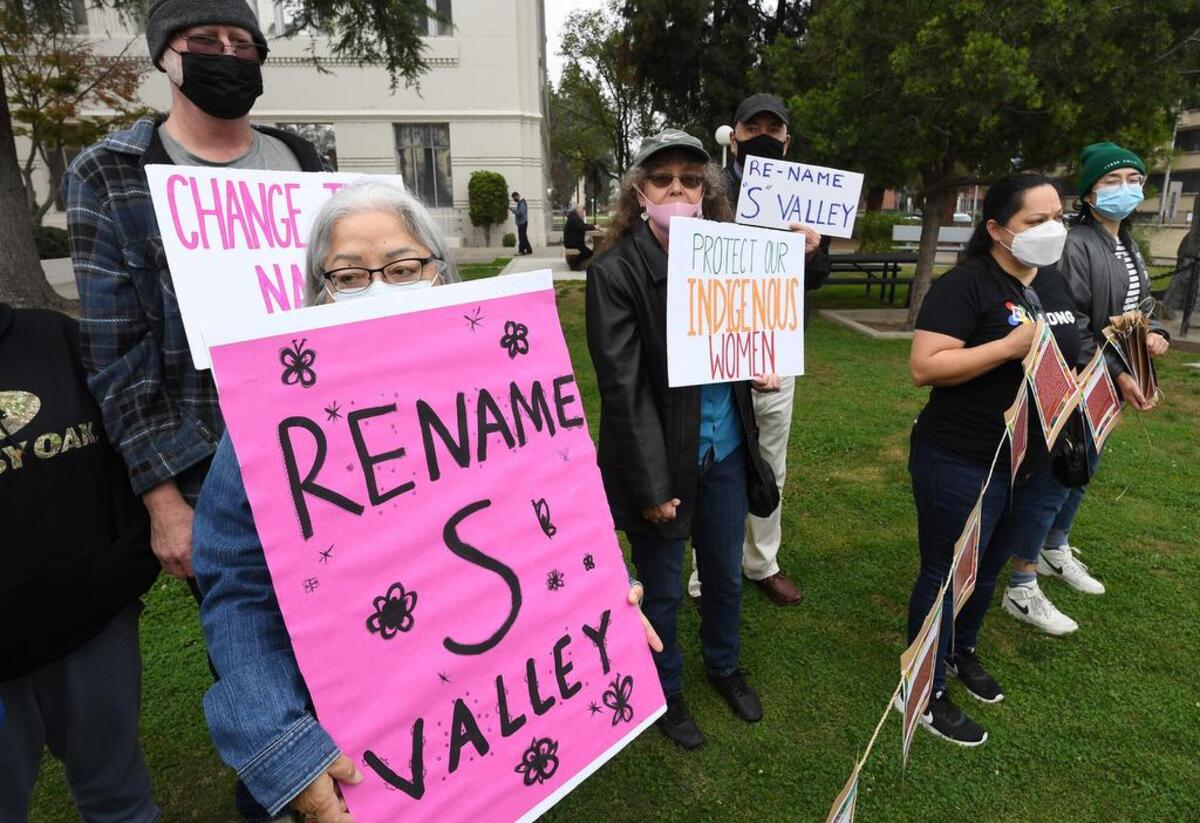 Fresno County is getting ready to sue the state of California over a law they say oversteps local control JOHN WALKER Fresno Bee file
In December 2023, a judge ruled that the county, as a political entity of the state, didn’t appear to have the standing to sue the state and said that only private citizens could bring forth lawsuits over First Amendment violations.
A Public Records Act Request found that the county had allocated $40,000 to litigation costs: it had spent $20,000 on legal fees to outside counsel Brian C. Leighton at a rate of $275 per hour as of March 2024 and another $20,000 was budgeted for the appeal process, which primarily came from Magsig’s office budget.
The case was dismissed in 2025 after the Fifth District Court of Appeal issued an opinion agreeing with the lower court’s ruling that Fresno County did not have standing to assert the free speech and association rights of its constituents.
Lawsuit over timing of sheriff, DA elections
In 2022, Gov. Gavin Newsom signed a law that amended the California Election Code to move District Attorney and Sheriff elections to be held during presidential election cycles.
The law’s authors argued that because these positions “wield such immense power, those elections should occur during election cycles where turnout is highest,” according to the attorney general’s office.
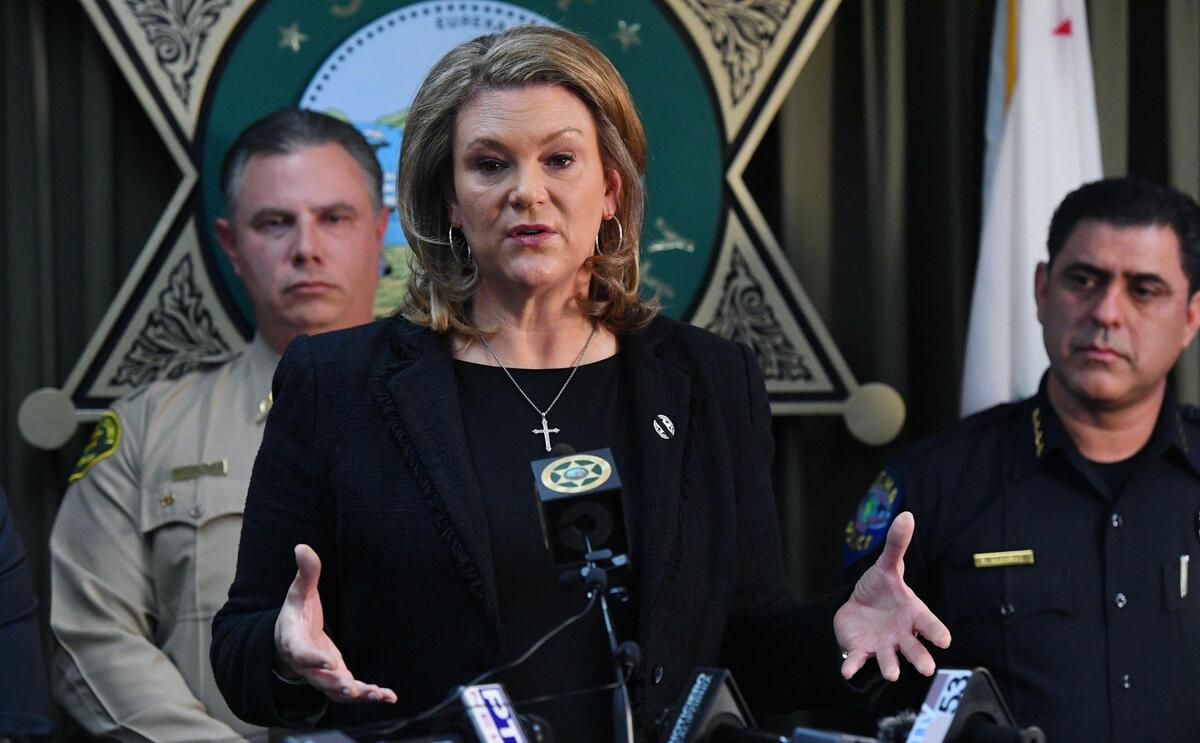 Fresno County District Attorney Lisa Smittcamp, center, with Fresno County Sheriff John Zanoni, left, and Selma Police Chief Rudy Alcaraz, right, speak at a press conference Friday, Feb 3, 2023 in Fresno. Fresno County voters passed a measure to keep election cycles for the district attorney and and sheriff in non-presidential years during the March primary elections. ERIC PAUL ZAMORA ezamora@fresnobee.com
If a charter county, such as Fresno County, already had specific language on its district attorney and sheriff election cycles prior to Jan. 1, 2021, these counties wouldn’t be required to adjust their election cycles.
Fresno County did not have this language in its charter before the deadline. So during the March 2024 primary election, it asked voters to amend the charter by adding language to keep Fresno County elections for sheriff and district attorney in non-presidential years.
Fresno County and its supporters argued this would keep “partisan noise” out of local elections and voters approved the measure during the March 5 primary elections.
A few months later, in July 2024, state officials filed the lawsuit against the county and top elections official James Kus, alleging the measure was not authorized under the California Constitution, calling it “invalid and unenforceable.”
In June 2025, a Republican-appointed superior court judge sided with the State of California and threw out the voter-approved changes to the election cycles of Fresno County’s two top cops, according to a report in Fresnoland.
The Fresno Bee
Melissa Montalvo is The Fresno Bee’s accountability reporter. Prior to this role, she covered Latino communities for The Fresno Bee as the part of the Central Valley News Collaborative. She also reported on labor, economy and poverty through newsroom partnerships between The Fresno Bee, Fresnoland and CalMatters as a Report for America Corps member.