
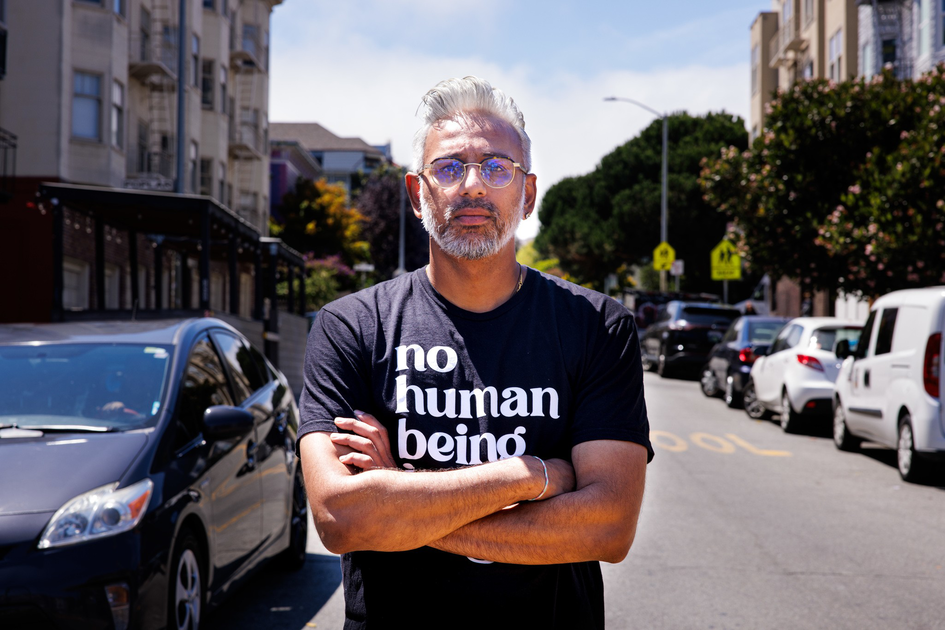
A decade ago, San Francisco-raised Chirag Bhakta protested displacement linked to tech buses. He can no longer afford to live in the city. | Source: Sean Fan/The Standard
Published Aug. 16, 2026at6:00am
They used to live in the Mission, Bernal Heights, the Tenderloin. A few have clung on, but most have vanished from San Francisco, washing up like hurricane evacuees in Union City, Washington, D.C., Seattle, and Durham, North Carolina. High rents and evictions chased some out of town, while others left for new jobs. The few who remain hold tenuous grips on their apartments, one new building owner or economic boom away from displacement.
The tech buses they protested between the years of 2013 and 2018 remain. They are unavoidable and mostly uncontroversial. For the veterans of the Google bus wars, they serve as reminders of the forces that activism didn’t defeat.
A decade ago, the vibes in San Francisco were different. As protesters surrounded the buses and their passengers with pickets, bullhorns, and gonzo street theater, the black-windowed shuttles became a global symbol of the ills brought on by the so-called Tech Boom 2.0. The early 2010s saw Facebook and Twitter IPOs minting millionaires and the explosion of Airbnb and Uber’s “sharing economy.” A spike in rental prices and evictions followed.
“At the time, the tech industry was still very much thought of as, like, the ‘do no evil’ tech industry,” said Manissa Maharawal, a former bus protester and professor of anthropology at American University who recently published “Anti-Eviction: The Fight Against Tech-Led Gentrification in San Francisco (opens in new tab).” “So we were also really trying to contest some of that image. It wasn’t one Google bus blockade that achieved that. But the direct action strategy, the attention it brought, it did do something.”