
Breaking the stigma around mental health, especially at the college level, requires access.
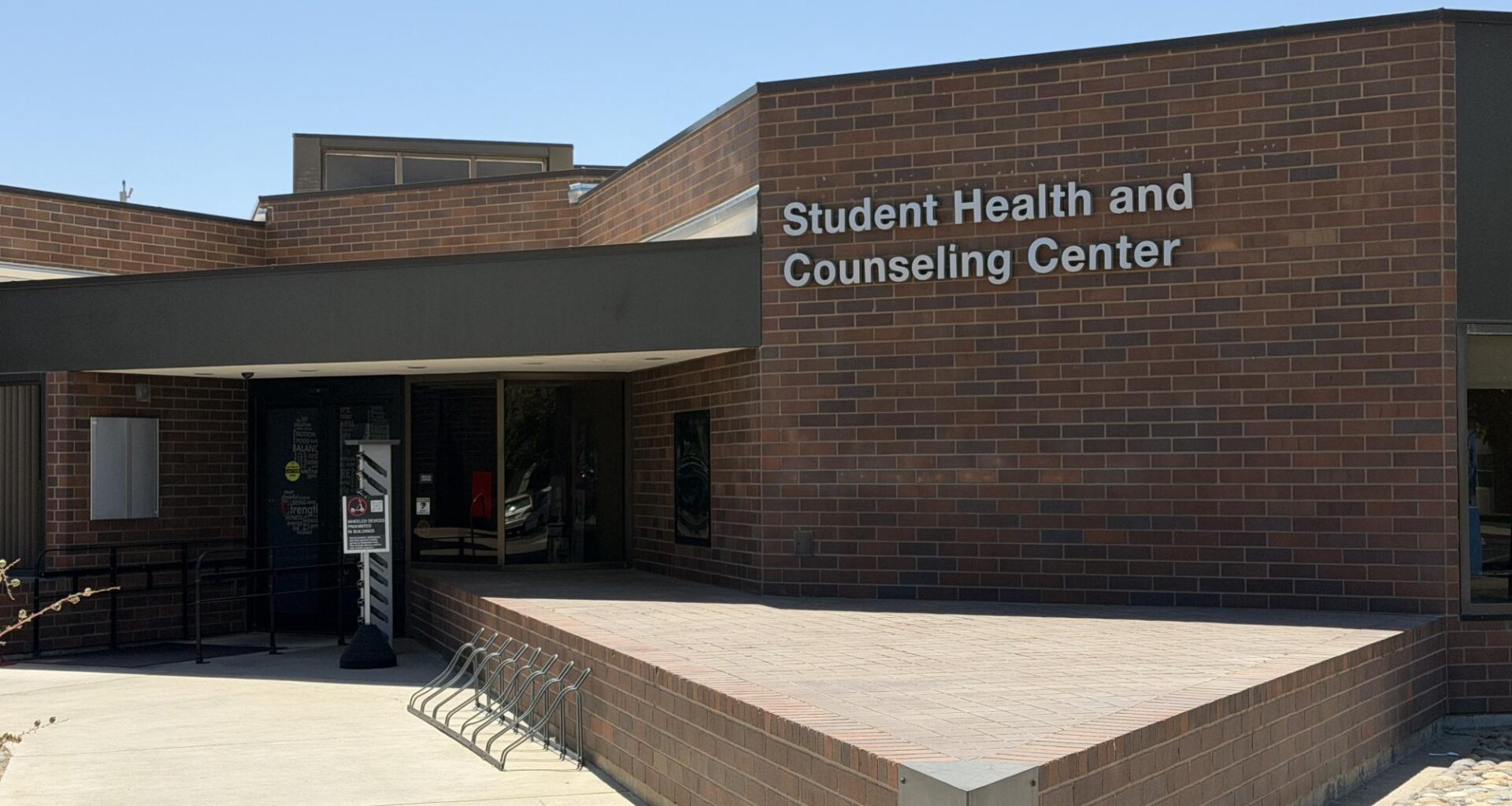
Fresno State offers a plethora of ways to access mental health services through the Student Health and Counseling Center, and students are completely entitled to them as they are included in student tuition.
“Being able to have a space where someone can step in and support you is always going to help expand and help people get better, and we also as a whole, in the Counseling and Psychological Services Department, we really, really lean into that,” said Etisha Wilbon, the director of Counseling and Psychological Services.
However, as Fresno State’s enrollment numbers grow rapidly, it’s becoming increasingly harder to keep up with the demands of students looking to utilize the mental health services on campus.
Jesse Scaccia is a social justice journalism professor at Fresno State who wrote a book about media literacy and mental health care access from his own firsthand experiences, while also telling the stories of young adults and mental health care professionals in the Central Valley.
He teaches his students every day about the importance of responsibly reporting on mental health topics, and has seen accounts of the mental health crisis even within the campus community.
“Students are feeling more alive and engaged as we get further from COVID,” Scaccia said. “On the other hand, when I read my students’ personal writing, I see so much sadness, isolation, fear, anxiety and dark thoughts. So many students need help —- mental health care, community, help developing positive habits.”
The Student Health and Counseling Center is constantly pushing for more resources for students. Wilbon says it all relies on their budget.
“I think on our end, we do a lot of advocacy,” Wilbon said. “We kind of look at the data and say, Hey, we probably need more counselors to serve more students. This is what our caseloads look like.”
The center has had to find ways to get innovative in their care-providing to ensure that they are able to stretch out the services for their students.
“Of that 25,000, we probably have a pocket of about 6,000 that seek out these specific kind of services, we only have 11 counselors to serve those individuals,” Wilbon said. “The ratio is about 900 to 1000 per person.”
In a 2024-2025 campus health and wellbeing impact report done by Cal Poly San Luis Obispo, another CSU with an enrollment number of about 23,000, their Counseling and Psychological Services (CAPS) reported 2,430 students served.
Diego Abeloos, Cal Poly San Luis Obispo’s director of strategic communications, said in an email that the school has 25 counselors on staff.
Fresno State has roughly 2,000 more students enrolled than Cal Poly San Luis Obispo, and a much higher number of students seeking mental health support — but they have less than half the staff to combat the influx.
“To actually meet the mental health needs of students we need many, many more counselors at the student health center,” Scaccia said. “We need enough counselors that students can develop longer-term therapeutic relationships with counselors. That’s when the magic happens. And more counselors means shorter wait times between sessions, and less wait times before the initial session.”
One of the reasons the Student Health and Counseling Center provides different levels and types of therapy for its student body; “Let’s Talk” group sessions throughout the week, quick drop ins through mental health triage, standard recurring one-on-one therapy and even virtual after-hours sessions, is to help counter its lack of resources.
“The way that we’ve gotten around it is using the stepped care model, which is backed by research,” Wilbon said.
Stepped care is an approach that finds the most effective but least resource-intensive treatment for each individual, using treatments with different intensities. The model is based around the belief that different people need different levels of care.
Wilbon says that one of their more out-of-the-box ways that they’re adapting is through utilizing group therapy sessions.
“Our groups kind of range from grief, anxiety, we have cinema therapy, where we kind of use media to discuss depression anxiety and how it’s interpreted in media in comparison to the realities of it,” Wilbon said. “We have stress tolerance, which is our DBT skills group, we have groups on relationships and just a wide variety of things.”
The Student Health and Counseling Center is also pushing beyond its own walls to reach as many students as possible. For example, “Let’s Talk” takes place in a variety of locations all across campus, and they have individuals working in the international office to support their international students.
“We really target populations that don’t typically seek out or have a hard time seeking out counseling services,” Wilbon said. “So we also have some for our undocumented students, for LGBTQ+, which takes place over at CCGC, we are working on one for our students with disabilities. We’re really just trying to make it as accessible as possible.”
Simple discourse, however, is just as crucial as access.
“I give massive kudos to our current student population, or just like this current generation in general, because there is a lot of engagement in help seeking behaviors,” Wilbon said. “They are looking online and they’re trying to understand the things that are happening with them, instead of ignoring them, which is something that historically has happened.”
Bringing light to mental health awareness through media is one of the most powerful ways to break down the anxiety and judgment that often comes with asking for help. Telling each others’ stories and real-life experiences, especially on college campuses, shows students that they’re not alone.
“Student media can help reduce stigma around therapy and mental health by telling the stories of those who have faced mental health challenges,” Scaccia said. “Even better if they continue these stories and let the reader witness that person getting care, and seeing improvement. If a student journalist has faced their own mental health challenges, they can tell their own stories. Stigma melts in the light of stories.”
Student journalists are not the only sole ones with the power to fight the stigmas of mental health. Anyone can make a real difference — all it takes is the power of conversation.
“The best way to continue to eliminate the stigma is to continue to engage in help-seeking behaviors, ask questions, seek out help, talk to the individuals who are the experts in that area and utilize the resources that are readily available,” Wilbon said.
The Student Health and Counseling Center stays open, even during winter and summer break, to provide care to students year-round. However, it does close when the campus is closed.
The center has a list of community resources and therapists available to students during those times, as well as for post-grad students who will transition out of Fresno State’s counseling services.
“Our mission and our vision is to get all of our students to graduation being the best version of themselves,” Wilbon said. “And part of that is not just mental health, but the whole person physically and making sure that all of their needs are met, so that they feel sufficiently prepared to enter into life outside of the university.”
Post-graduate students are also directed towards a campus service that is still available to them — the Center for Essential Needs. Here, recent graduates can receive case management to help them with the process of connecting to community support, even after school’s out for their final semester.
But none of these services would be possible without advocacy for resources. As the Fresno State community continues to grow, so does the need for students to not request, but demand adequate mental health care. It’s the only way the center will be able to keep up.
“These are your services,” Wilbon said. “They’re meant to benefit you, and what you guys say matter, and so the more that students start to talk about it and request and advocate for it, the more likely we are, because we’re always advocating internally, the added stakeholder stance is always going to be a big support group.”