
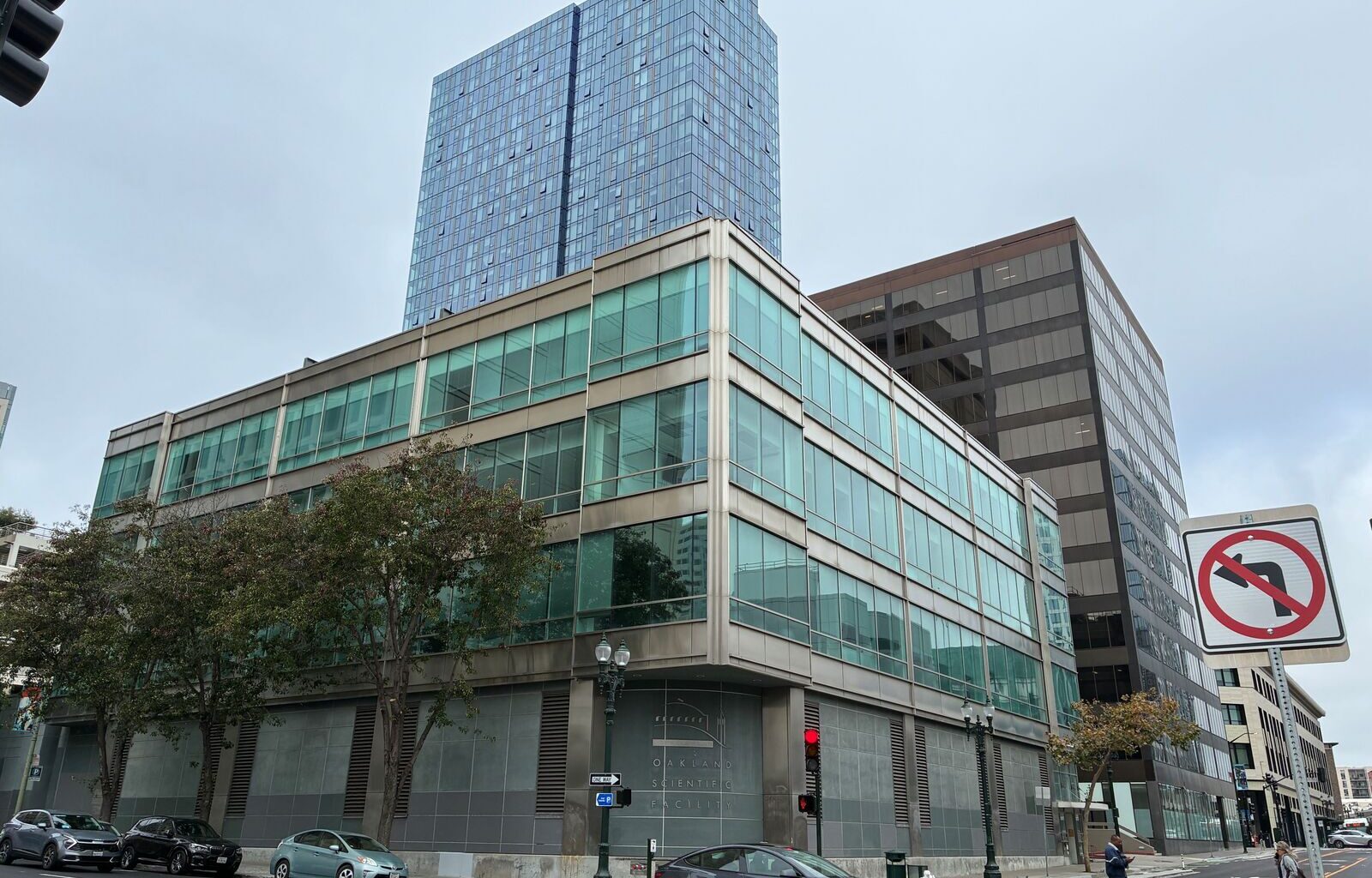
Last week, news came out that a local developer is planning to install a data center in downtown Oakland.
The proposal has excited some and startled others. In online discussions, questions swirl about the project’s scope, why it’s happening downtown, and what it might mean for the city’s energy grid.
And news that two other tech companies — Tesla and a startup founded by Jeff Bezos — are leasing big industrial warehouse spaces in West Oakland has generated even more confusion among Oaklanders.
The Oaklandside is digging into all three of these projects. Here’s what we know so far.
What’s the deal with the proposed AI data center downtown?
Last Tuesday, the San Francisco Business Times reported that a local developer called Behring Companies plans to transform a building at 415 20th St. into a “specialized data center to serve artificial intelligence companies.”
Behring Companies purchased the building last year for $6.8 million. The site was previously entitled for a 39-story office tower, according to the San Francisco Business Times.
The building used to house a Lawrence Berkeley National Laboratory supercomputing facility. It’s now being advertised as an office and research space for AI, robotics, and technology companies.
In January, a company called STAK Space touted the building’s amenities on social media:
“As a cornerstone of the burgeoning four-acre campus in Uptown, this facility offers a rare combination of high-density infrastructure and hyper-connectivity, featuring 4.5MW of immediate capacity with a scalable 20MW opportunity.”
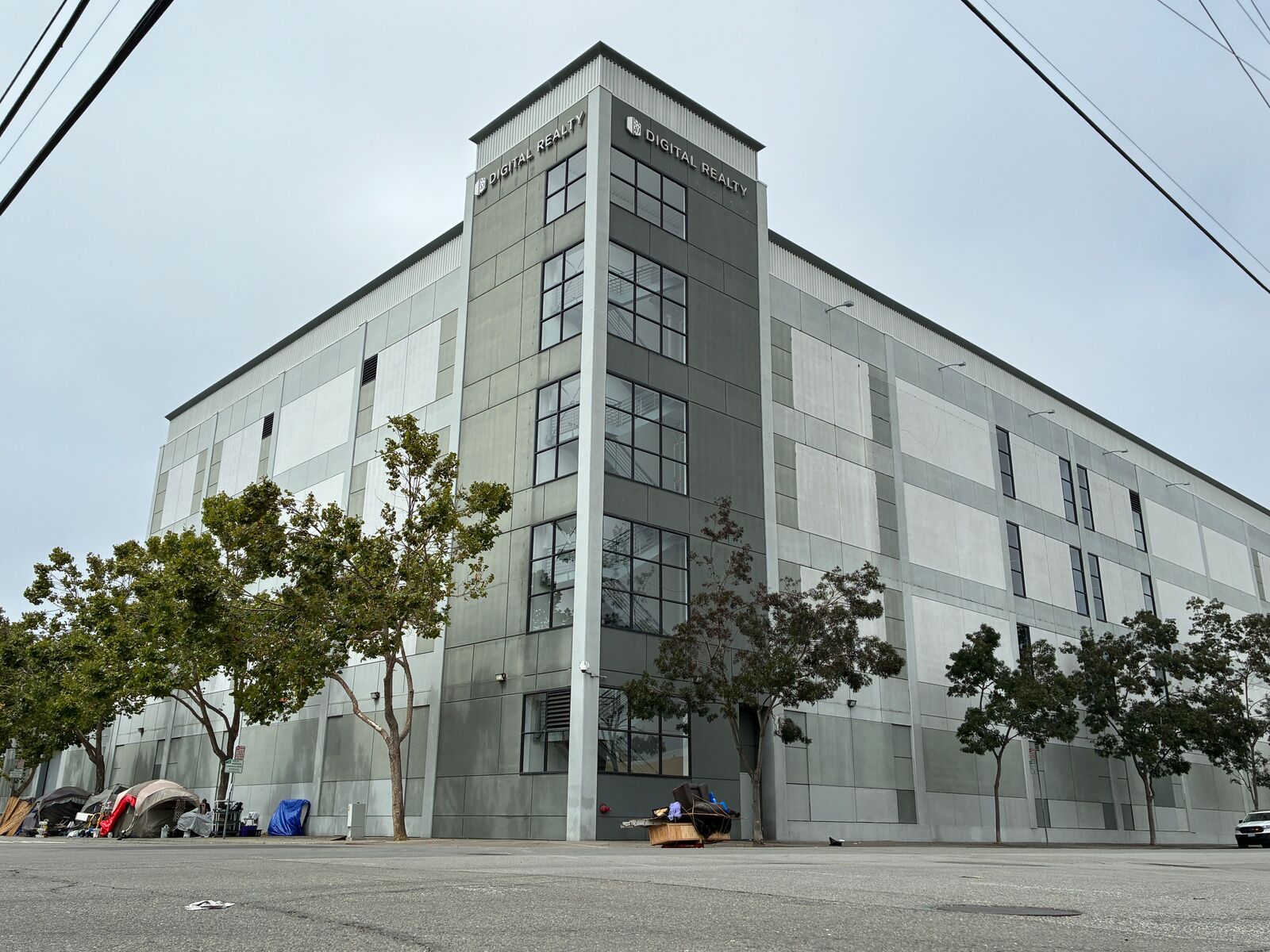 Oakland already has a data center. Digital Realty’s site is at 720 2nd St. Credit: Darwin BondGraham/The Oaklandside
What has the developer said about the data center?
Colin Behring, CEO of Behring Companies, told The Oaklandside that the project at 415 20th St. is only a small part of a 1.3 million square-foot “innovation campus” the company has planned in Uptown Oakland that is anchored around the 19th Street BART station.
“There’s a small AI infrastructure component, roughly 20,000 square feet on the ground floor — about 1.5% of the total campus – that gives these companies hands-on access to the hardware they need for their research,” Behring wrote in an email. “But the campus itself, and the jobs and residents it brings downtown, is really the story — not a standalone ‘data center,’ and we are microscopic compared to other projects out there.”
Behring’s firm has published a briefing with more details about the project. According to Behring Companies, the site utilizes existing PG&E power feeds, closed-loop cooling systems, and clean renewable grid power “without requiring new utility substations or heavy street construction.”
The firm says it is not seeking any major approval for the project. A zoning determination letter is under review by the city. Behring notes in its briefing that water, generator, and cooling specifics for the project haven’t been finalized yet because those will depend on who leases the space.
The project’s power needs are going through a review process used by PG&E for large commercial power requests, and the company says it is not seeking to bypass this process or receive special treatment. According to Behring, mechanical equipment will be placed and designed to meet Oakland’s noise ordinance requirements.
According to KQED, the largest proposed data center in the state in Imperial County has a capacity of 330 megawatts.
Why build a data center in downtown Oakland?
For months, there has been speculation about whether the AI industry in San Francisco would spill over into Oakland as demand grows for commercial, industrial, and residential real estate. While some developers have dismissed the idea that AI companies would come to Oakland in the near future, local leaders have taken steps to encourage the industry’s arrival.
In December, the City Council approved legislation to create AI “activation zones” in downtown Oakland to “foster equitable, community-based innovation and create hubs for community-based AI programming.”
Mayor Barbara Lee and other city officials previously helped host “Oakland Tech Week,” which brought together industry leaders to explore “key economic development opportunities centering AI in the region and Oakland,” according to its website. A similar event is being planned for September.
What’s the timeline for the downtown data center?
According to the San Francisco Business Times, Behring has granted tours of the site to robotics companies, cloud providers, and research and lab AI companies. But we don’t know if anyone has agreed to lease the building for use as a data center.
Last year, a company called NV5, which helps developers with building data centers, asked the city for a zoning compliance letter, which provides information about allowable uses in the building.
We asked city officials for more information about the development and permitting process for this project, as well as two others in West Oakland. We will update the piece once we receive a response.
Meanwhile, an AI engineering and manufacturing startup is leasing a West Oakland warehouse
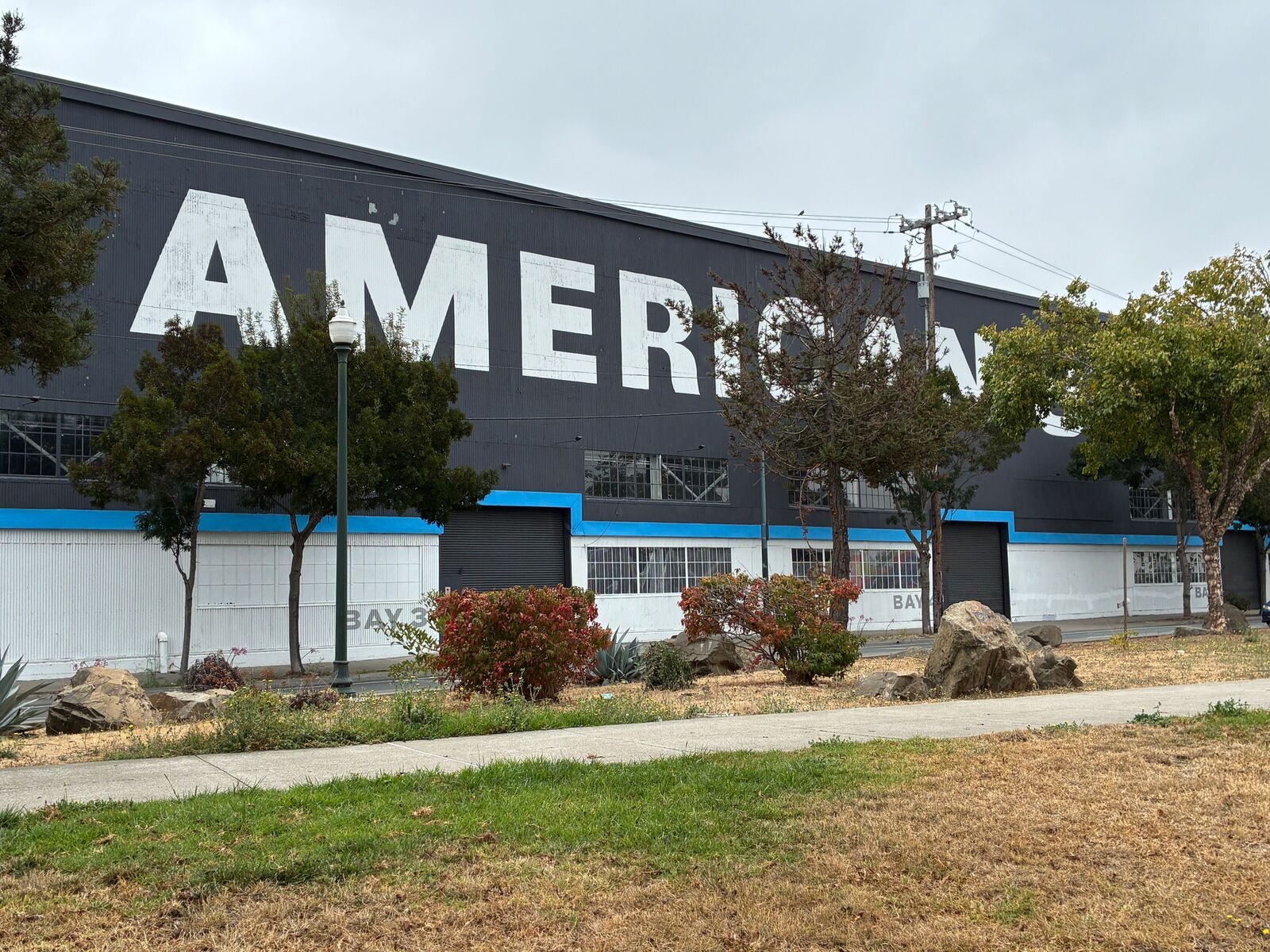 Tesla and a Jeff Bezos AI startup have reportedly signed leases at the American Steel building on Mandela Parkway. Credit: Darwin BondGraham/The Oaklandside
The San Francisco Business Times reported that a startup called Prometheus has acquired a 100,000-square-foot lease at the American Steel Blocks site on Mandela Parkway in West Oakland.
Details on Project Prometheus are scant. But the possible use of the Mandela space appears to be distinct from a data center. The company, which was co-founded by Amazon founder Jeff Bezos, is reportedly focused on developing AI technology for use in computers and vehicles, including spacecraft — “AI for the physical economy,” according to its social media sites.
According to Axios, Prometheus has a $41 billion valuation.
Todd Gooding, a principal at SKB, the company that owns the American Steel building, told The Oaklandside he was unable to confirm the identities of any new tenants. He said the company doesn’t have a public list of tenants, citing confidentiality agreements.
But Gooding said the site has had “really positive leasing activity.” When SKB bought the 13-acre property in 2021 for $82.5 million, the company described its vision of an advanced manufacturing campus. That endeavor contributed to the controversial displacement of an artist community at American Steel.
“West Oakland is going to be really happy with what’s going on there,” Gooding said last week. “The attention in West Oakland is going to be right, and should be very positive over the next six to 12 months.”
The area immediately surrounding American Steel has undergone significant redevelopment in recent years. Climbing gym Pacific Pipe opened next door in 2022. The Oakland Ballers baseball team began playing at nearby Raimondi Park a year later. Developer Joe Ernst’s Prescott Market food hall came in 2025.
Many residents have cheered on the lively developments, while others have called them symptoms of gentrification.
Tesla is also moving into the American Steel warehouse
Tesla, Elon Musk’s electric car manufacturer, has reportedly also signed a lease for 40,000 square feet of space at American Steel, the same building where Bezos’ Prometheus seems to be landing, according to the San Francisco Business Times.
This week, The Oaklandside saw signs identifying two of the warehouse’s giant bays as construction sites for Tesla.
Gooding, the building’s landlord, told the Business Times that advanced manufacturing interest “is through the roof right now” as AI companies are trying to execute real-world products.
Tesla already has a footing in Oakland. The company leases parking for its self-driving robotaxi fleet in a Broadway garage owned by Behring Companies — notably located right next to the potential incoming data center site.
All of these projects are in Councilmember Carroll Fife’s district. What is she saying?
Fife said in a video posted to social media a couple days ago that she only became aware of the project when a person reached out to her last week about it.
But the councilmember said she’s been looking into the issue of data centers. Fife said she reached out to the City Attorney’s Office two months ago to discuss creating legislation to regulate data centers. “There need to be some protections, because we don’t have any legislation on the books right now,” Fife said.
The planned downtown data center hasn’t come before the City Council, Fife noted, and the developer doesn’t have a tenant yet.
According to Fife, the proposed project isn’t like the controversial “mega facilities” seen in other, often rural, parts of the country. She noted that Oakland doesn’t have the physical space for massive hundred-acre facilities.
“I know the developer is trying to send out some feelers” to potential tenants, Fife said, but so far the project isn’t live.
“I will be the first in front of the line to hold folks accountable,” Fife said. She added that she plans to hold community listening sessions about AI and is interested in hearing what people have to say about data centers.
“I have not shared my perspective on data centers, or my political perspective, because I’m forming it,” Fife said in the video. “I know what I’ve seen in other places is unacceptable, completely.”
Fife did not respond to an interview request.
How do Oaklanders feel about a data center or AI engineering hubs?
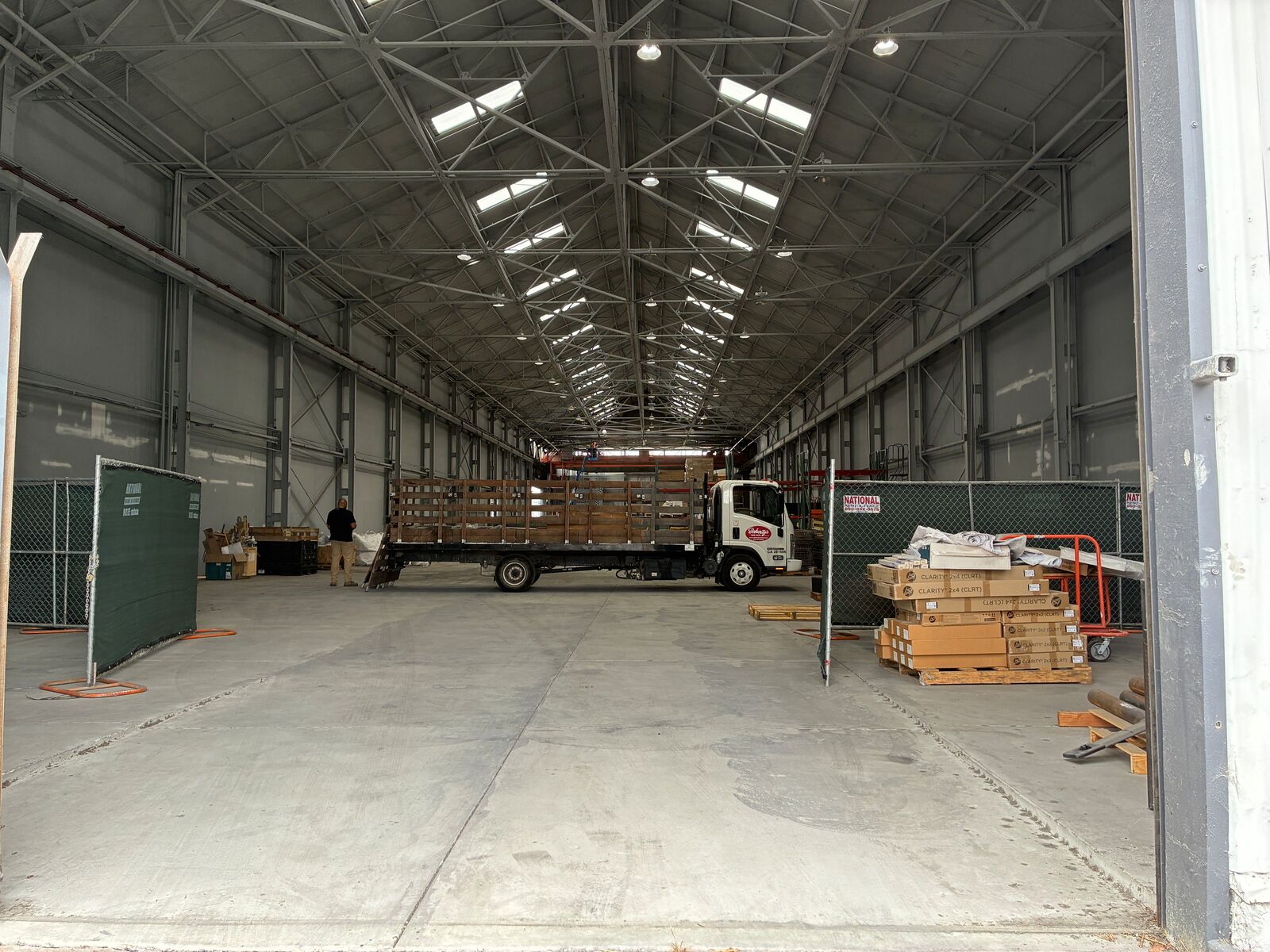 Inside Tesla’s new space on Mandela Parkway. Credit: Darwin BondGraham/The Oaklandside
Discussion is raging in online forums like Reddit and NextDoor, where some residents have expressed concern about city resources potentially going toward data centers.
The Party for Socialism and Liberation, a revolutionary community group, published an online petition this week calling on the City Council to ban data centers in Oakland. The group is planning to host a meeting on August 21 at the Oakland Liberation Center to discuss the proposed center.
Data centers are also potentially shaping up as an election issue in Oakland. Nate Adams, an organizer with the Democratic Socialists of America who is running for the District 2 council seat, reached out to The Oaklandside to say he opposes data centers because of the environmental impact and costs.
In a statement, Councilmember Charlene Wang said, “The public has real questions about this project and so do I. We deserve answers. We need more transparency on whether this will increase energy rates and what the environmental impact will be. These concerns must be addressed, full stop.”
In West Oakland, former Black Panther Elaine Brown, who’s developed affordable housing on 7th Street, called the news about Prometheus moving into American Steel an “outrage.”
In an email to Mayor Barbara Lee, City Administrator Betsy Lake, and Councilmember Carroll Fife, Brown accused the city of “quietly allowing this Billionaire, who has certainly not contributed anything to the Black community of Oakland that I’m aware of, to swoop into West Oakland and install an environmentally unsound operation there.”
There isn’t any information about Project Prometheus’ environmental impacts available at this time.
There has been pushback against data centers in other Bay Area cities in recent months. In March, the Oakley City Council approved a new industrial logistics hub after the developer agreed to drop plans to include data centers. In Pittsburg, some residents have voiced concerns about a planned data center at a former golf course. A massive 300,000-square-foot data center being built in Hayward has also faced pushback from community members.
Mindy Pechenuk, a Republican running for mayor, has celebrated Tesla and Prometheus coming to Oakland, touting the possibility of apprentice jobs for youth, unemployed residents, and homeless people.
Some in the real estate world have applauded the new West Oakland leases as examples of revitalization in the neighborhood.
Would the downtown project be Oakland’s first data center?
No. Broadly speaking, data centers are buildings that house arrays of networked computers, storage, and other infrastructure. The building owned by Behring Companies used to house a supercomputer run by the Lawrence Berkeley National Laboratory and the U.S. Department of Energy. When it was dedicated by officials in 2001, the IBM machine was said to be the world’s most powerful unclassified supercomputer on earth.
Another existing data center occupies a five-story building on 2nd Street in the Jack London District. Run by the company Digital Realty, this data center has been in business for well over a decade.
What’s next?
We’ve asked the city of Oakland to clarify whether the potential data center, Prometheus, and Tesla projects require permits and approval by the City Council. We will update this story when we hear back.
“*” indicates required fields