
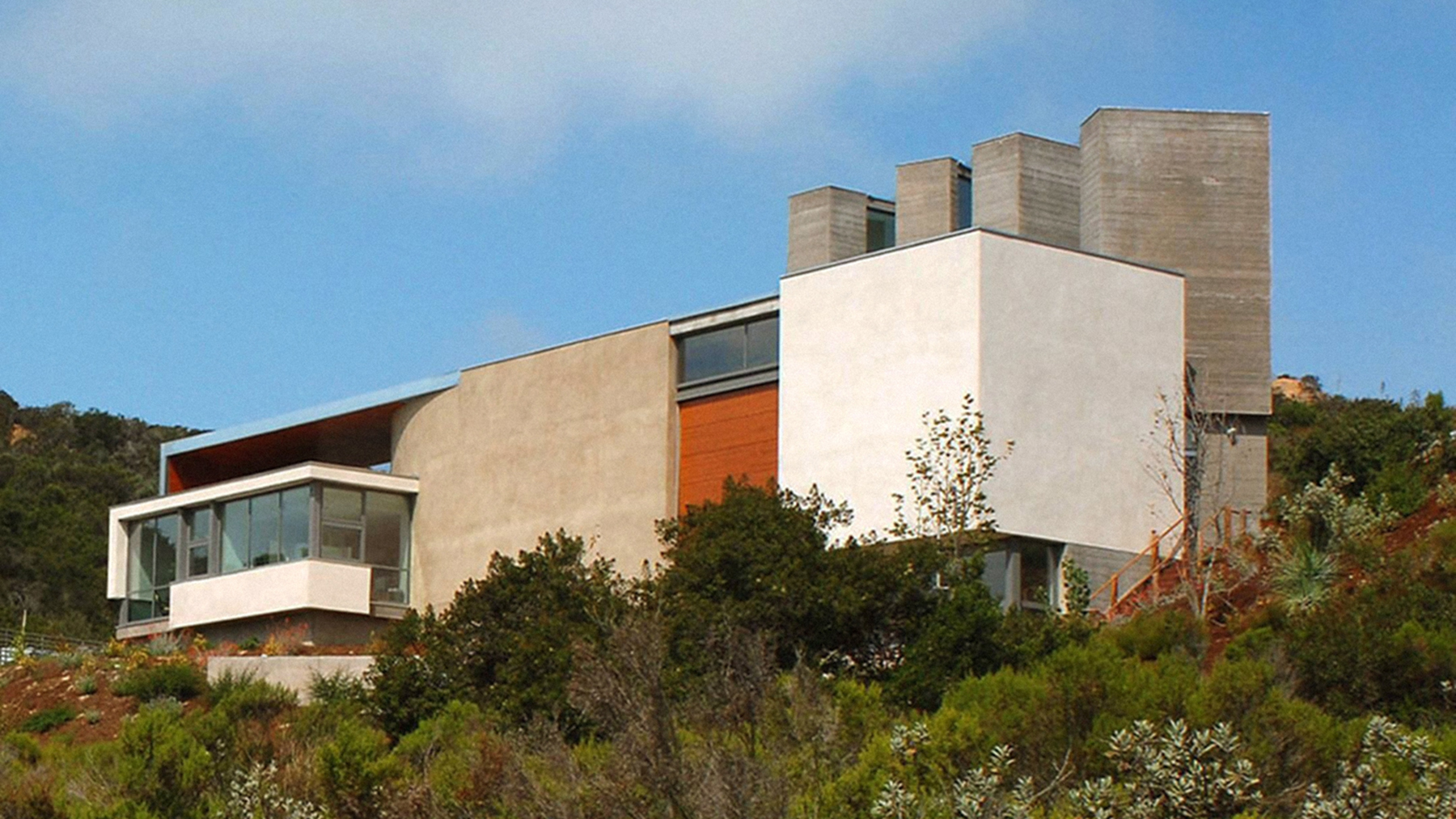
The Institute of Contemporary Art San Diego, with campuses in Encinitas and Balboa Park, has laid off nearly half of its personnel, with most senior staff gone as of Monday.
After Monday’s round of layoffs, ICA San Diego’s staff of 19 will be down to 11, Andrew Utt, executive director, said in a phone interview Monday afternoon.
The reductions at ICA San Diego Central and ICA San Diego North come nearly two weeks after the San Diego Museum of Art, ICA’s neighbor across the Plaza de Panama in Balboa Park, announced it had laid off 11 employees, citing inflation and rising operational costs as the major drivers.
Utt became executive director of Lux Art Institute in Encinitas in 2019 and, in 2021, oversaw its merger with the San Diego Art Institute to become the Institute of Contemporary Art San Diego, expanding its footprint from Encinitas to include SDAI’s location in Balboa Park, next to the Mingei International Museum.
The layoffs affected all departments throughout the museum, including workers in operations, curatorial, facilities and education teams.
The organization’s leadership team was let go over the past three weeks, with the entire public-facing Visitor Experience team, which managed the front desk at ICA Central, let go on Sunday.
ICA’s head curator position was eliminated July 29.
ICA’s North campus remains open for classes, ceramics lab and the outdoor public art experience known as the Sculpture Trail, Utt said. The San Diego campus in Balboa Park will be temporarily closed.
On Monday afternoon, Utt said he wished the conversation would have been under better circumstances, but it’s no secret that “one of the biggest challenges that nonprofits are facing is that there’s a changing landscape in the way that we function. We function on a certain model that is highly connected to contributed revenue. It’s connected to donors, and it’s connected to foundations and the government, and it’s unsustainable for all of us.”
The staff reductions, Utt said, come at a time when the arts have been hit by cuts in funding at all levels — local, state and federal. At its Balboa Park campus, the paid parking situation this year has not helped, he added.
San Diego arts organizations have been on a roller-coaster ride these last few months, with Mayor Todd Gloria initially proposing to cut $11.8 million in arts funding. That funding was partially restored in early June, thanks to a combination of city funding and a $3 million philalthropic donation by the Prebys Foundation.
“For me,” Utt said, “it’s really important that we utilize this time, this moment when things are really tough,” to “rethink” the business model.
“There’s a lot of different things that are happening, and for us, we need to make a change right now. … And reflect the change of how nonprofits can survive in this world.”
Rather than relying on layoffs to right the ship or asking donors to fill the payroll, Utt said, “we can now start thinking about a way of being sustainable as a business. And that’s what we’re doing right now. We’re making a transition.”
Over the next five months, Utt said, he, the board and staff will map out a plan to move forward.
“We need to have a moment of respite in order to realign our team and realign our priorities and our goals,” he said, “and then set forth on that new plan (that will be) a transformation of our business model. But we will continue to serve the public, we will continue to bring cutting-edge artwork to the public and do it in unique ways.”
ICA San Diego, as it exists today, is the byproduct of a merger in 2021 between Lux Art Institute in Encinitas, which opened its facility in 2007, and San Diego Art Institute, founded in 1941.
Utt said the nonprofit museum remains “committed” to keeping both its campuses in Balboa Park and Encinitas.
Based on its 2024 I-990, the most recent tax form available, it brought in $2.11 million in revenue, but had expenses of $2.34 million, excluding depreciated assets. It operated at a loss of $208,856.
The tax forms for 2023 and 2022 also reported net incomes, excluding depreciation, of -$11,857 and $15,258, respectively. In 2021, it operated on the positive side of the ledger, with $93,890 in net income.
A few years ago, ICA San Diego, like some museums across the country, switched to a pay-as-you-wish admission model, whereby visitors can choose to pay or not pay during a visit. The payment, if made, essentially serves as a donation. The decision to go that route, Utt said, did not hurt the museum’s botttom line but did increase its visitor numbers.
“My heart goes out to these staff members that are being laid off,” said Bob Lehman, executive director of San Diego ART Matters, the largest arts advocacy group in the region.
“There have been cuts everywhere. The San Diego Museum of Art lost $94,000 in city funding. ICA lost $11,000. It’s happening all over — sometimes you hear about it, sometimes you don’t,” added Lehman, who formerly headed the San Diego Museum Council. “But they’re all reacting to our current reality and some are making strategic decisions based on what is happening within their institutions.”