
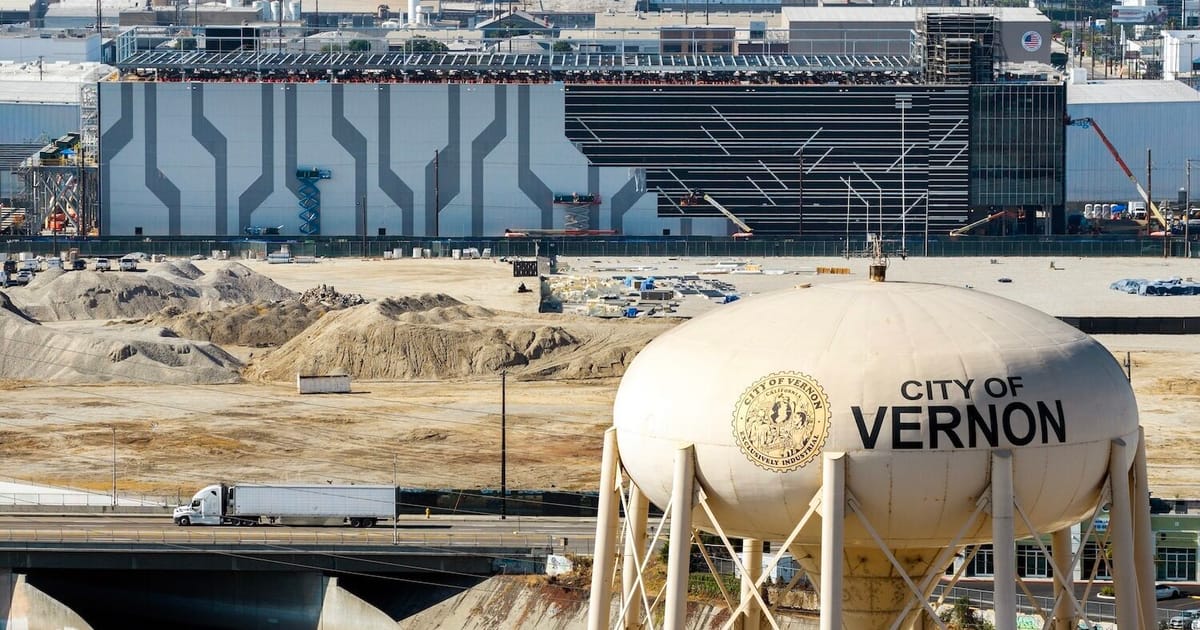
More data centers are coming. Northern California utility Pacific Gas & Electric has 10 gigawatts of demand from data centers in its pipeline over the next 10 years, equivalent to what’s needed to power roughly 7.5 million homes. PG&E says that load growth will create billions of dollars in tax revenue and — more important to its customers — lower electric bills by 10% or more “by spreading fixed costs across more energy usage.”
Environmental and consumer groups are skeptical. The Union of Concerned Scientists warned in a May report that the state “currently has too few protections to ensure data center costs are not passed along to ratepayers.”
“The data center developers don’t really care about costs,” said Matthew Freedman, senior staff attorney with The Utility Reform Network, a consumer advocacy group that supports SB 886 and SB 887. “They’re focused entirely on speed of development, and on proximity to Silicon Valley.” Meanwhile, PG&E and the state’s other investor-owned utilities earn guaranteed profits based on how much money they invest in capital infrastructure, giving them little incentive to control those costs, he said.
Although SB 886 has won the support of utility worker unions, PG&E opposes it. In an email to Canary Media, company spokesperson Paul Moreno said the bill would “introduce rigid, duplicative requirements that conflict with existing regulatory processes, risk higher costs for customers, and delay critical infrastructure needed to serve the state’s growing energy demand. We continue to work with lawmakers to improve the bill, so it better supports affordability, reliability and equitable cost allocation for all customers.” PG&E has taken no position on SB 887.
Both bills face pushback from the Data Center Coalition, a trade group representing major data center developers, natural gas generator company ERock, and business organizations. The groups wrote in a March letter that data centers shouldn’t be “singled out” for different treatment from other big power-using customers. They also fear that SB 886’s demand-response mandate could force them to curtail computing operations relied on for critical health care and government services.
Meanwhile, the coalition argues that SB 887’s clean power requirements are virtually impossible for data centers to meet. “We don’t see it as a streamlining mechanism, because those standards are not attainable,” said Khara Boender, Western government affairs director for the group.
It’s unclear how Gov. Gavin Newsom (D) will respond to bills opposed by politically powerful utilities and tech companies. Last year, Newsom vetoed a bill that would have required data centers to report their water usage. And Padilla said his 2025 proposal to create a new rate class for data centers was watered down to a “study” bill requiring the utility commission to examine and report on their energy cost impacts.
But the politics are shifting. A recent poll commissioned by Net-Zero California, a Sacramento-based environmental policy group that supports SB 886 and SB 887, found that 70% of voters in the state oppose data centers in their communities, and that 74% want to see requirements for data centers to cover their costs and use clean energy. Newsom recently told reporters that “it’s absolutely essential and appropriate that these hyperscalers pay their fair share,” citing Google and Microsoft specifically.
Padilla said he expects SB 886 and SB 887 will pass in the state Senate and Assembly before the end of the legislative session this month. Newsom has until the end of September to sign bills into law.