
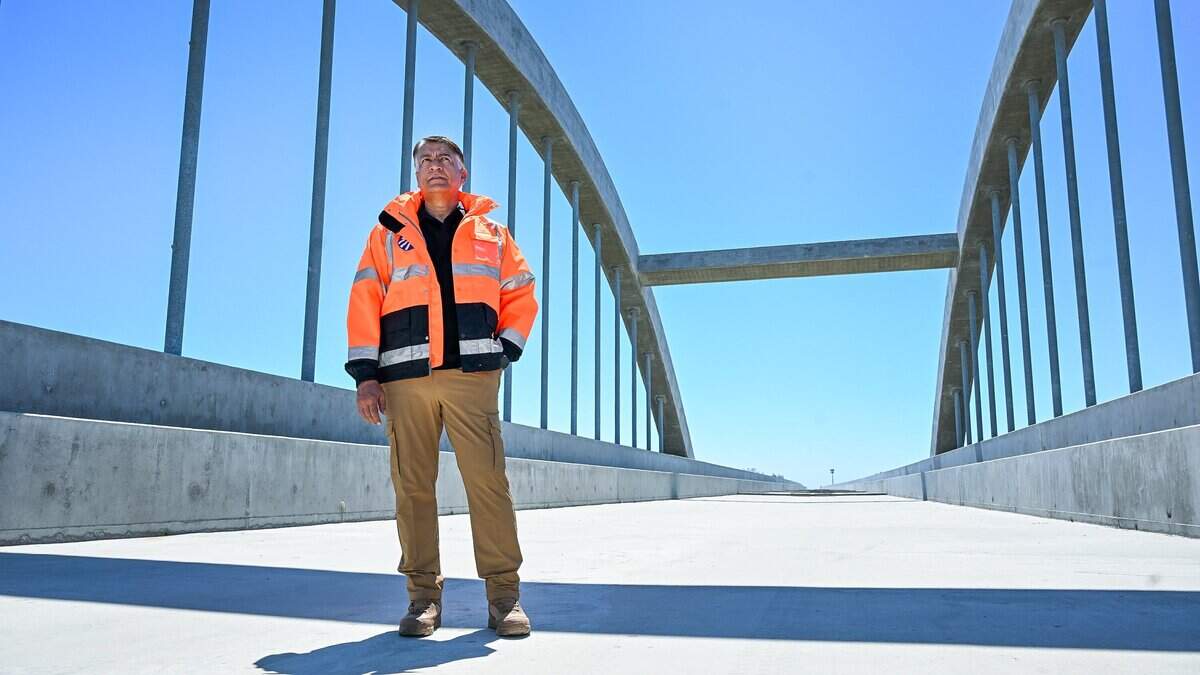
The head of the California High-Speed Rail Authority told a Fresno crowd Monday that a history of increasing regulation is at the root of the project’s slow movement since the state’s voters approved it nearly 20 years ago.
CEO Ian Choudri, who spoke at the Rotary Club of Fresno, stopped short of describing the project’s list of pre-construction requirements as overregulation. But he did say that because of the project’s massive size “every little thing gets a lot of attention — positive or otherwise.”
“Back in the day, in the 1800s, we were able to build infrastructure like this in a very short amount of time,” he said during his speech. “What happened after that, continuously we kept regulating ourselves more and more and more.”
The CEO’s comments on Monday were similar to those made earlier this year by Republican State Sen. Tony Strickland of Southern California. A known high-speed rail critic, Strickland said during an April oversight hearing that “overregulation” has stifled the project and that the Legislature would have to “waive a lot” for it to succeed — something he doubted would actually happen.
Choudri since last year has been calling for the Legislature to approve a list of requests he says will allow the project to move faster and on a tighter budget — among them exemptions from environmental law, increased land-use power and a faster way to get through eminent domain cases.
Delays and cost increases have made the project controversial since 2008, when California voters approved $9.95 billion in bonds for a train that would connect the state’s major metro areas for about $45 billion. Today, the rail authority is still working on its 171-mile Merced-to-Bakersfield segment, which the agency says it can finish by 2033 for about $35.7 billion.
That timeline and price tag could grow, the rail authority has said, if state officials do not help the project move faster.
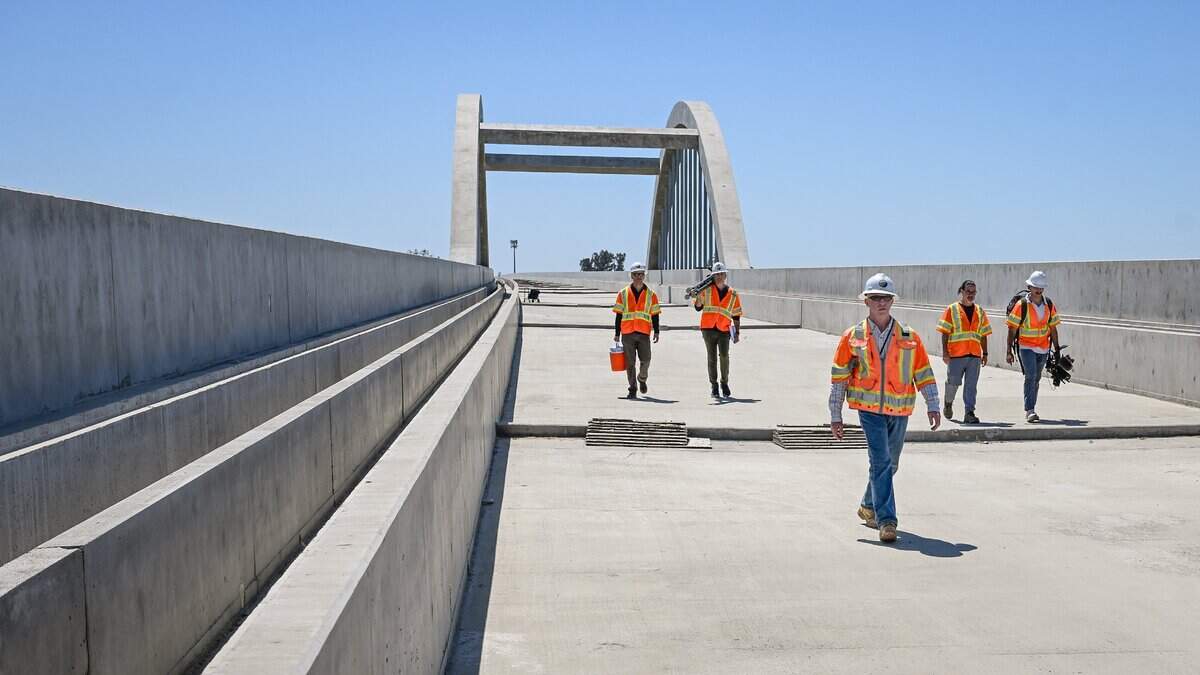 California High-Speed Rail team members walk across the nearly completed San Joaquin River viaduct section of the rail system near Highway 99 between Fresno County and Madera County on Wednesday, June 17, 2026. Cables, tracks and other infrastructure are soon to come, say authorities. CRAIG KOHLRUSS ckohlruss@fresnobee.com CA rail needed input from ‘every community’ for clearance
Choudri said the Transcontinental Railroad system constructed in the 1800s across the Rocky Mountains was built at a pace of up to 10 miles per day.
Today, he said, there is a “permitting regulatory environment” with national and state laws requiring environmental impact reviews. The California law is called the California Environmental Quality Act, or CEQA.
“Construction goes through those — I will not call them constraints — but those environments that were not there in the past, so it takes longer to build a program like this,” Choudri said.
The rail authority finished environmentally clearing its entire Los Angeles-to-San Francisco segment only two years ago. Choudri said that required “local input from every community” the train is going through.
“You do need to get all the due diligence and local input from every community you went through,” Choudri said. “Some of it got subjected to litigation, and we ended up spending a lot of time getting the environmental clearances from all communities.”
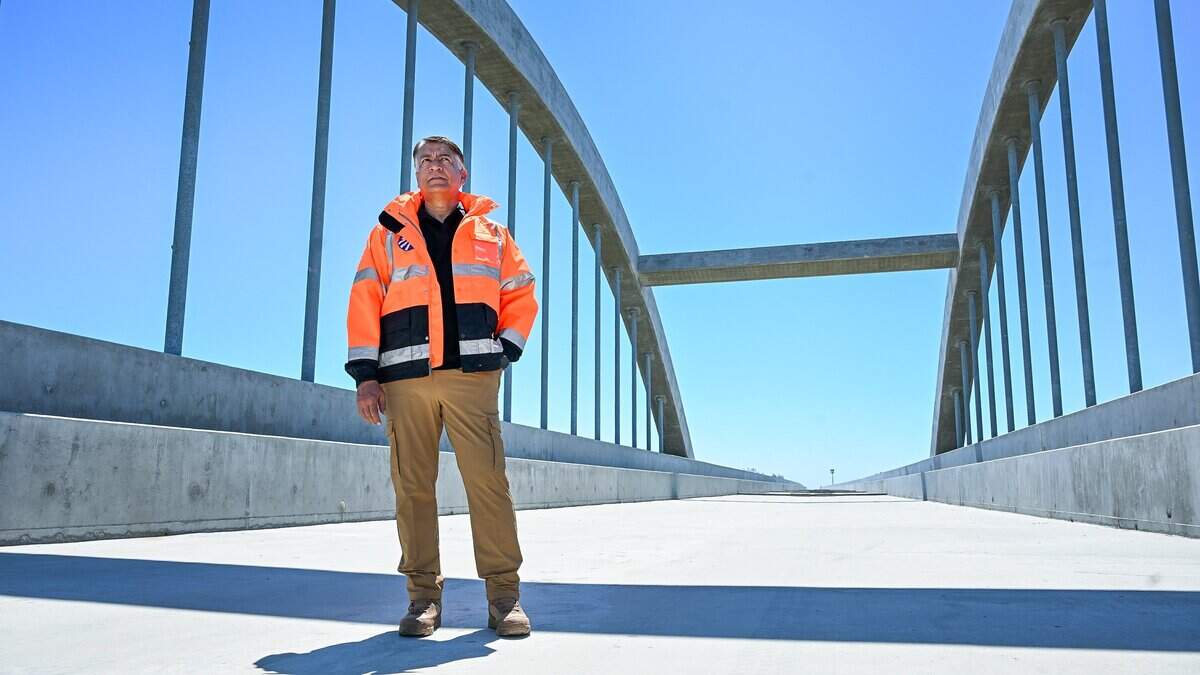 California High-Speed Rail Authority CEO Ian Choudri stands below the archway of the nearly completed San Joaquin River viaduct section of the rail system near Highway 99 between Fresno County and Madera County on Wednesday, June 17, 2026. Cables, tracks and other infrastructure are soon to come, say authorities. CRAIG KOHLRUSS ckohlruss@fresnobee.com Choudri pushes for CEQA exemption for high-speed rail energy
State lawmakers last year decided the construction of high-speed rail stations and maintenance facilities will be exempt from CEQA reviews.
Now, Choudri wants the Legislature to exempt from those reviews the future energy generation system that will power high-speed rail. The rail authority says in its most recent business plan that the power system’s components will allow “100% clean high-speed rail operations, but face multiyear environmental and local permitting timelines.”
Choudri said the power generation system will be a “green” one that could involve solar, wind and geothermal energy.
“If we are going to do green power,” he said, “why do we need CEQA clearance for that?”
Related Stories from Fresno Bee

The Fresno Bee
Erik is a graduate of the Missouri School of Journalism, where he helped launch an effort to better meet the news needs of Spanish-speaking immigrants. Before that, he served as editor-in-chief of his community college student newspaper, Riverside City College Viewpoints, where he covered the impacts of the Salton Sea’s decline on its adjacent farm worker communities in the Southern California desert.