
This story is part of How We Get By, a KQED series exploring how people are coping with rising costs in the Bay Area and California. Find the full series here.
Food banks across California, already strained and serving millions of people each month, are bracing for a rolling crisis of even deeper need as unprecedented federal cuts to food assistance begin to take effect.
Rule changes enacted by the Trump administration restricting who is eligible for the federal Supplemental Nutrition Assistance Program are expected to put more than 650,000 people at risk of losing that support in California, where the program is known as CalFresh, over the next several months.
The program’s recipients, more than five million in California, receive an average of $190 per person each month, which is loaded onto an electronic benefit transfer card that can be used to buy groceries.
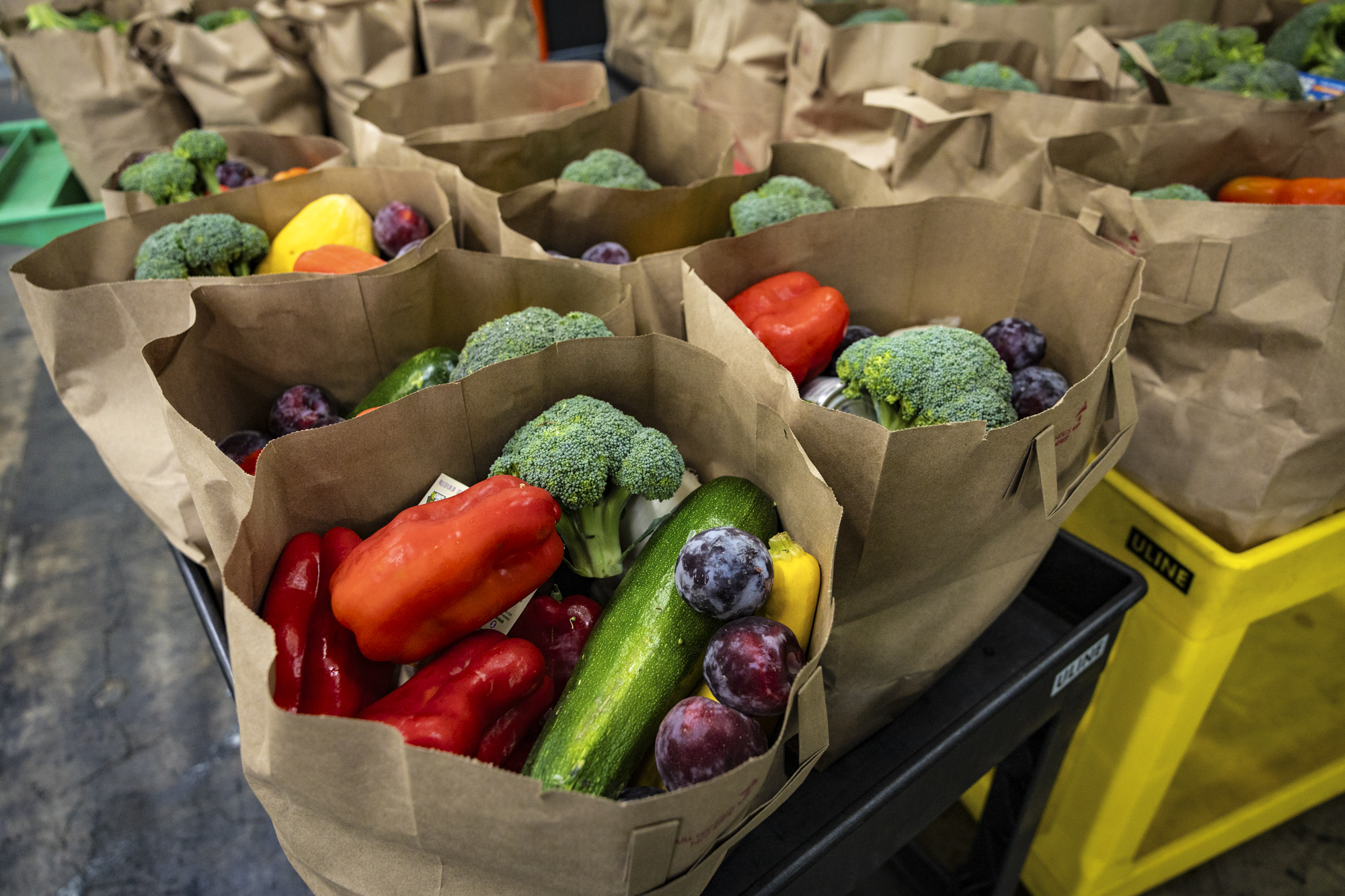 Bags full of fresh produce rest on a rolling tray at Tri-City Volunteers Food Bank & Mobile Pantry’s main hub in Fremont on July 17, 2026.
Without direct monthly payments through SNAP — widely considered the most effective anti-hunger program in the nation — more people are likely to turn to food banks and charities for help, at levels beyond what those systems say they can handle.
“We cannot food bank our way out of the problem that is being caused by the dismantling of SNAP. We need policies that are going to work to end hunger. What we have are policies that are creating hunger,” Tanis Crosby, executive director of the San Francisco-Marin Food Bank, said.
The $187 billion in SNAP cuts planned over a decade are a major tenet of H.R. 1, the federal tax bill signed into law by President Donald Trump in 2025. They represent one part of what some anti-hunger advocates have described as a broader assault on foundational aid systems that will have devastating impacts on people struggling to make ends meet.
In its push to tighten the grip on these lifeline benefits, the Trump administration has claimed there is rampant fraud and waste across the sprawling SNAP program. However, reporting has shown top officials often conflate administrative errors, like overpaying or underpaying a recipient for a variety of reasons, with intentional fraud, and there’s a lack of clear data about how pervasive fraud actually is in the system. The program already has robust checks and quality control measures, and some reports say the narratives being built by federal leaders are weakening trust in safety net services, making them easier to pare back.
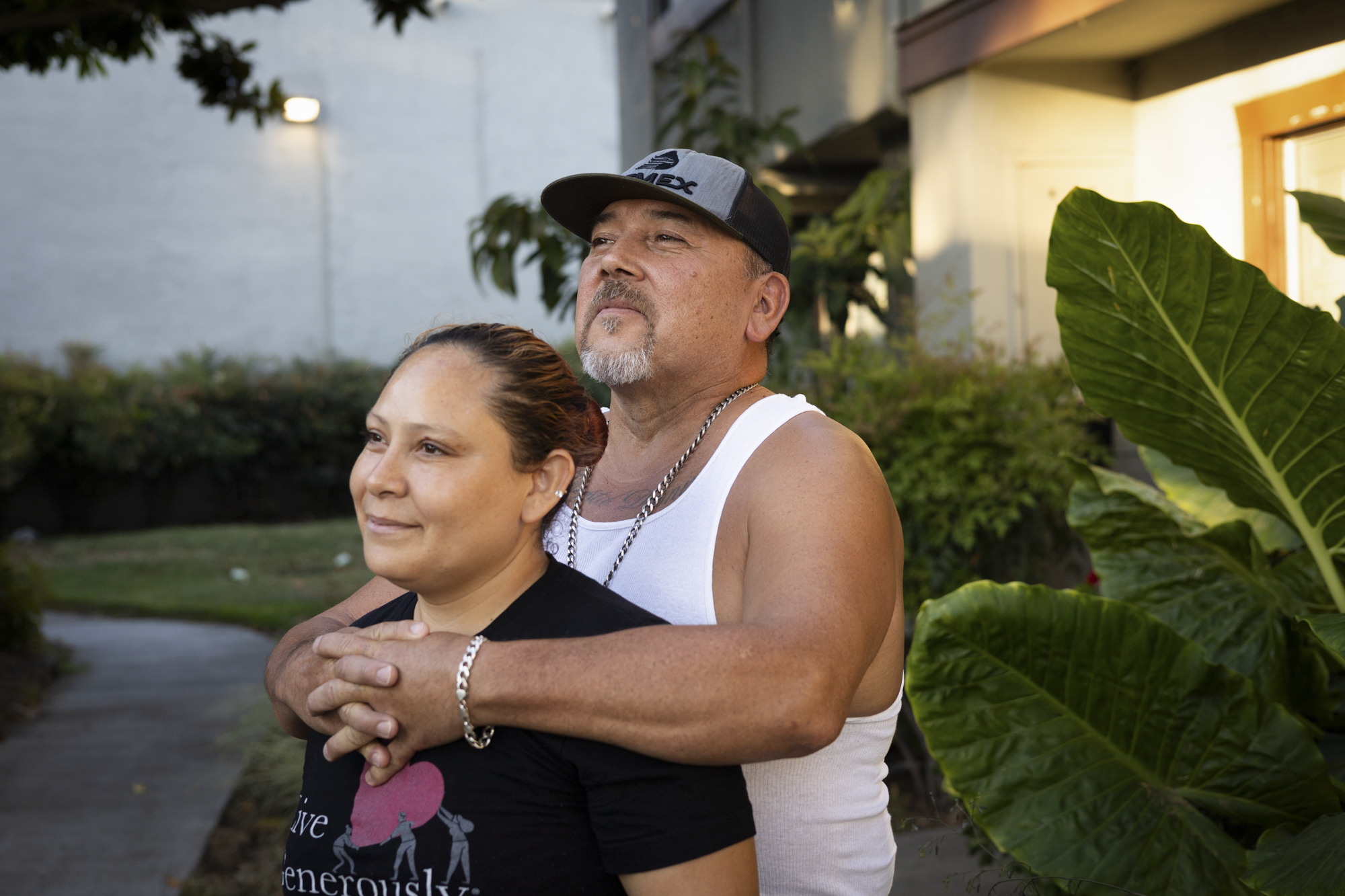 René Campos hugs his wife Carina Moya Martínez Campos at their home in San José on July 16, 2026. René got Valley Fever last year, which he thinks he developed while working as a truck driver, and Carina works part-time as a house cleaner. The couple relies heavily on food banks to alleviate spending costs.
René Campos has leaned on a local food bank near his home in East San José over the last six months.
Campos has been a commercial truck driver for more than 25 years, earning several specialty licenses allowing him to transport larger loads and operate tankers.
His most recent job was with FedEx Ground, where he drove daily hauls from the Bay Area to near Bakersfield and back, until he contracted Valley Fever last year, a disease stemming from breathing in fungi in the soil.
The illness hit him hard, bringing on pneumonia and other issues that forced him into the hospital for a month and kept him out of work on disability.
“It was devastating. I would’ve never thought that something like that would ever happen to me, you know?” Campos said in an interview. “It really changed my life economically, physically and everything.”
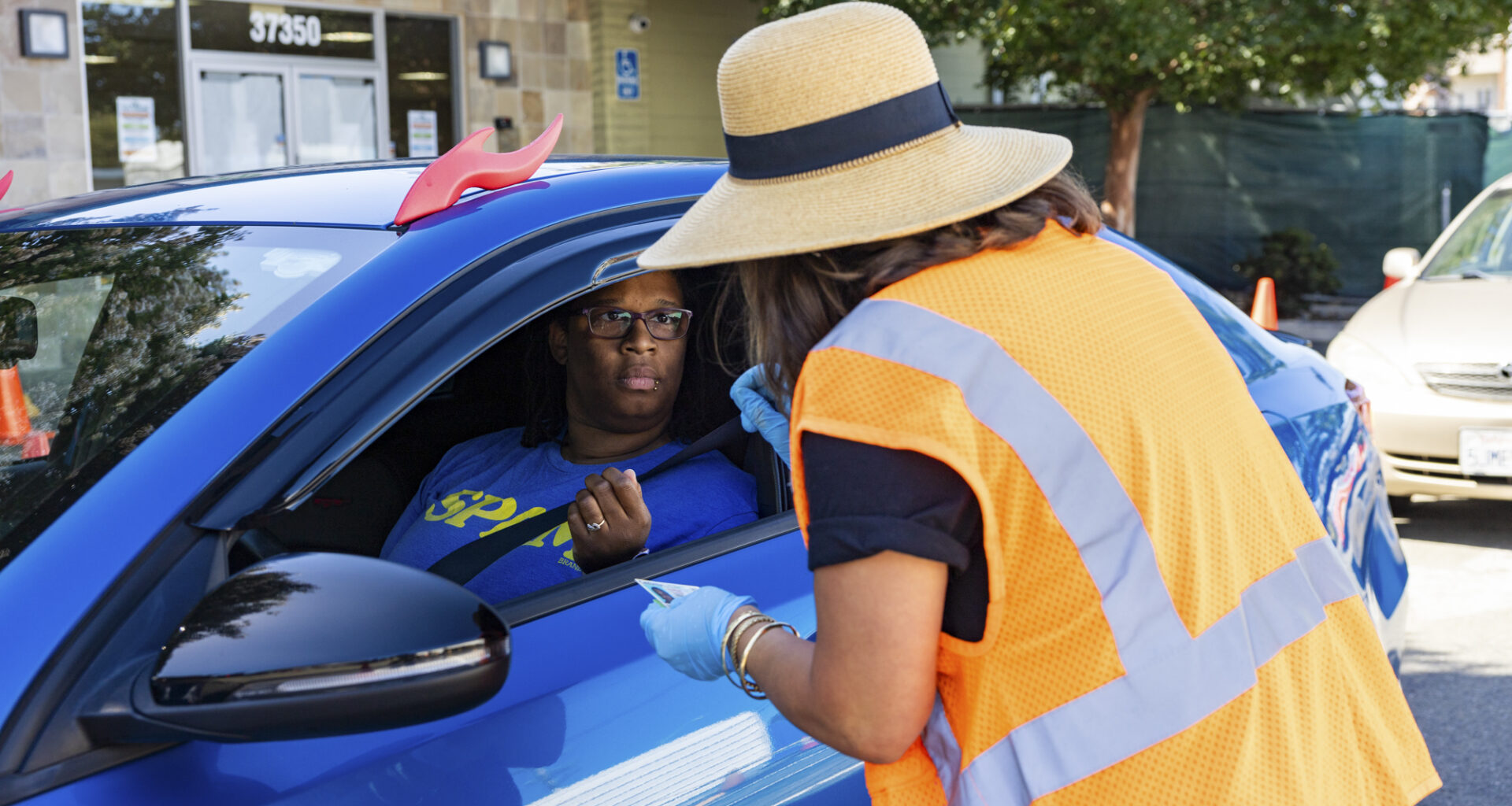
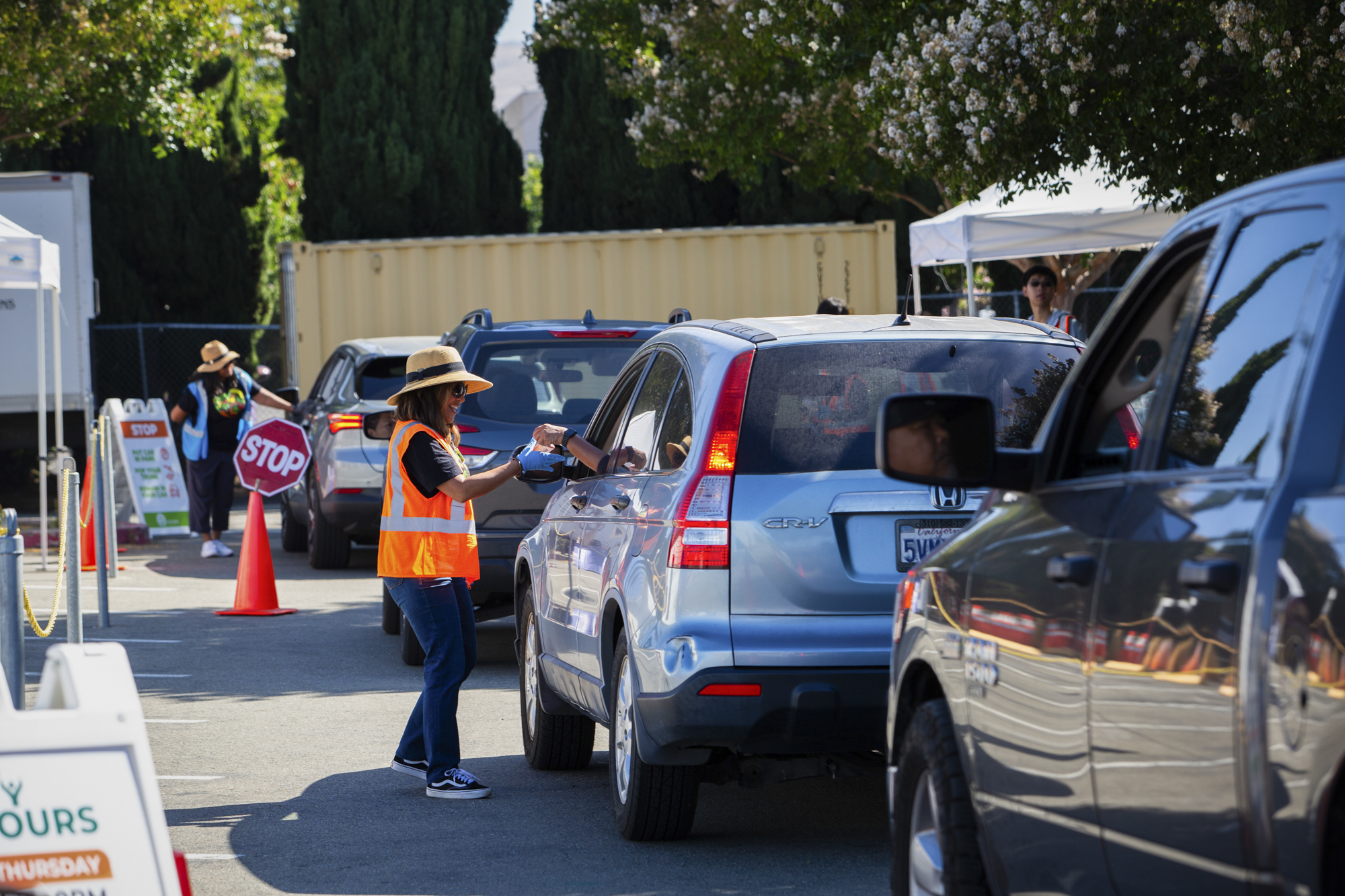 A Tri-City volunteer checks clients in during a drive-thru food distribution at Tri-City Volunteers Food Bank & Mobile Pantry’s main hub in Fremont on July 17, 2026.
He and his wife, Carina Moya Martínez Campos, who works about three days a week cleaning homes and businesses, visit a food distribution site at a church around once a week, where they pick up vegetables, chicken, beans and other staples provided by Second Harvest.
The lines at their pickup site have been getting longer, something other food bank clients and officials also noted.
Together, they earn a little too much for benefits like SNAP, but they need assistance to make ends meet.
Martinez Campos said she enjoys her husband’s cooking with the food they receive, including tuna salads with jalapeño, and an occasional carrot cake, his specialty.
“I’m grateful that we live in a country where there’s help,” Campos said. “It’s a blessing.”
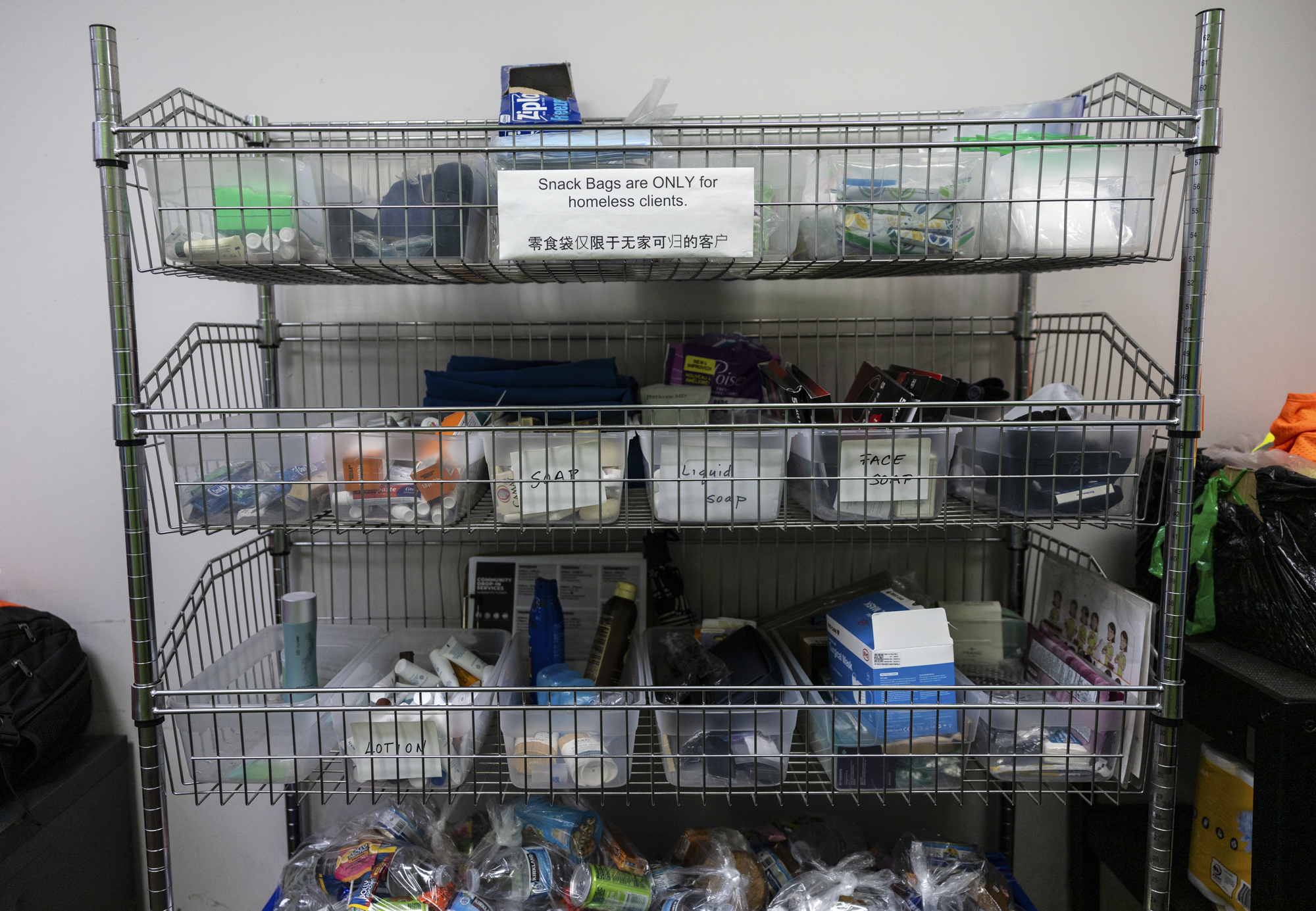 A rack full of snack bags and hygiene products for homeless clients at Tri-City Volunteers Food Bank & Mobile Pantry’s main hub in Fremont on July 17, 2026.
But the state’s network of food banks is facing increased pressure, in part due to the same challenges affecting residents, such as reduced federal food support and rising costs for transportation and fuel.
“And that, combined with the largest SNAP cuts in the history of the program … are combining to really be a perfect storm to cause this surge in need that has started and that we expect to really accelerate over the next few months,” Call said.
Those price pressures are particularly acute in the Bay Area, home to some of the widest income gaps in the country.
Shobana Gubbi, the chief philanthropy officer of Second Harvest of Silicon Valley, a major food bank serving Santa Clara and San Mateo counties, said that as income inequality has grown, the need for food assistance has increased as well.
“It affects everyone, but they hit lower-income households especially hard,” Gubbi said of rising costs. “Food becomes the flex item in people’s budget, and it’s a lot of pressure for low-income households on how to make it to the next paycheck,” she said.
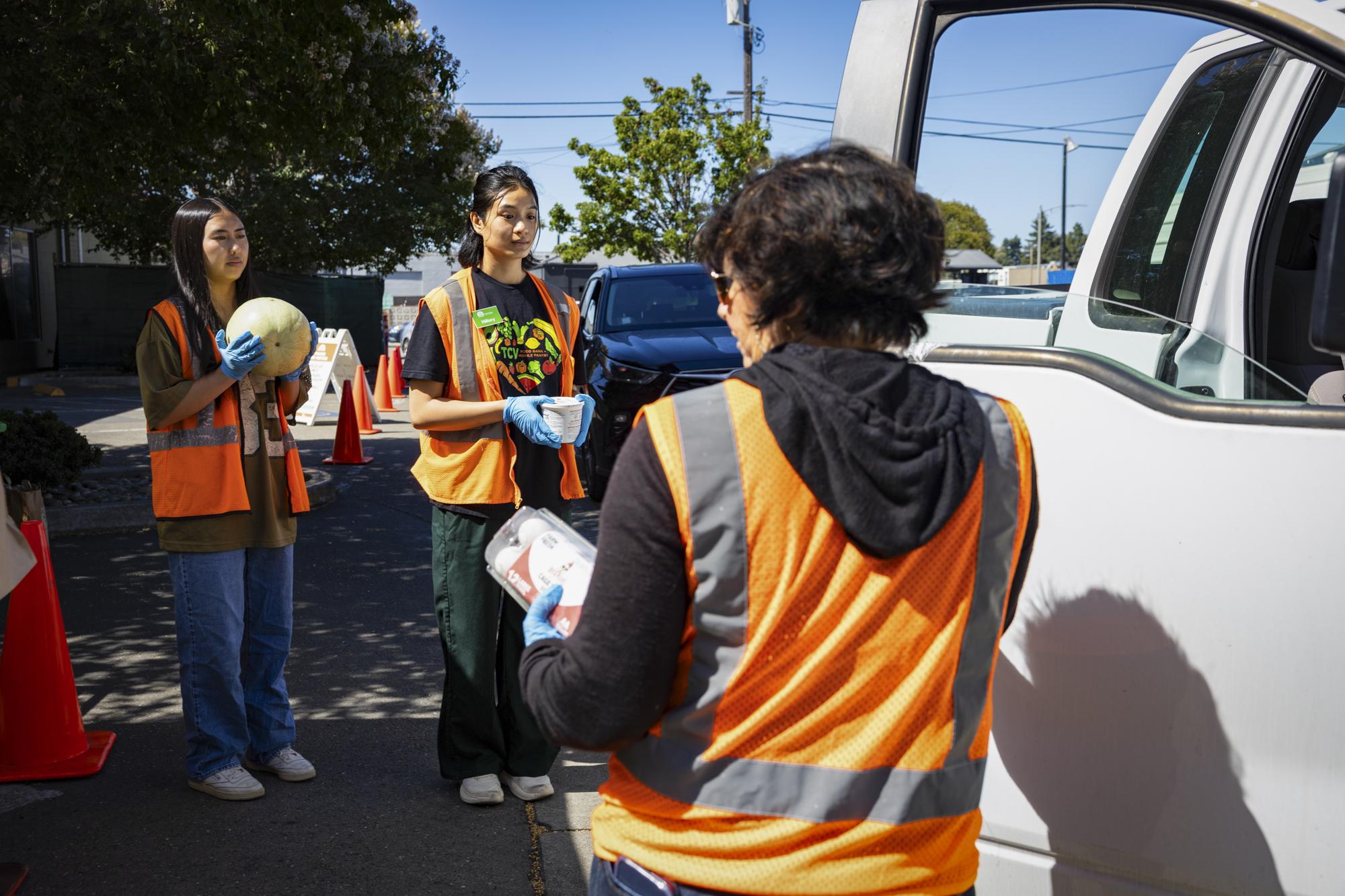 From left, Tri-City volunteers Arielle Asino, Michelle Nguyen and Michele Sayre load food into a client’s car at Tri-City’s Food Bank & Mobile Pantry main hub in Fremont on July 17, 2026.
Some changes in the law have already taken effect, including a provision in April that booted certain groups of noncitizens out of CalFresh, including refugees or asylees, parolees and victims of violence or trafficking, according to the state.
The bigger proportion of cuts went into effect on paper in June, with work or volunteerism requirements of 20 hours a week expanding to people as old as 64, instead of the previous age of 54.
Able-bodied adults caring for dependents were previously exempt from the work requirements until those dependents turned 18. Now, the exemption ends when those dependents are 14 or older.
If those work requirements aren’t met, food assistance must be limited to three months during any three-year period. California previously held an exemption, like many other states, from those time-limit restrictions, but the new law has effectively ended that broad cover. The new changes also eliminate exemptions for former foster youth, veterans, and unhoused people.
Many of the changes will happen on a rolling basis, as annual recertification deadlines come up for people enrolled. Officials said they expect the impacts to become more visible around October and continue into next year.
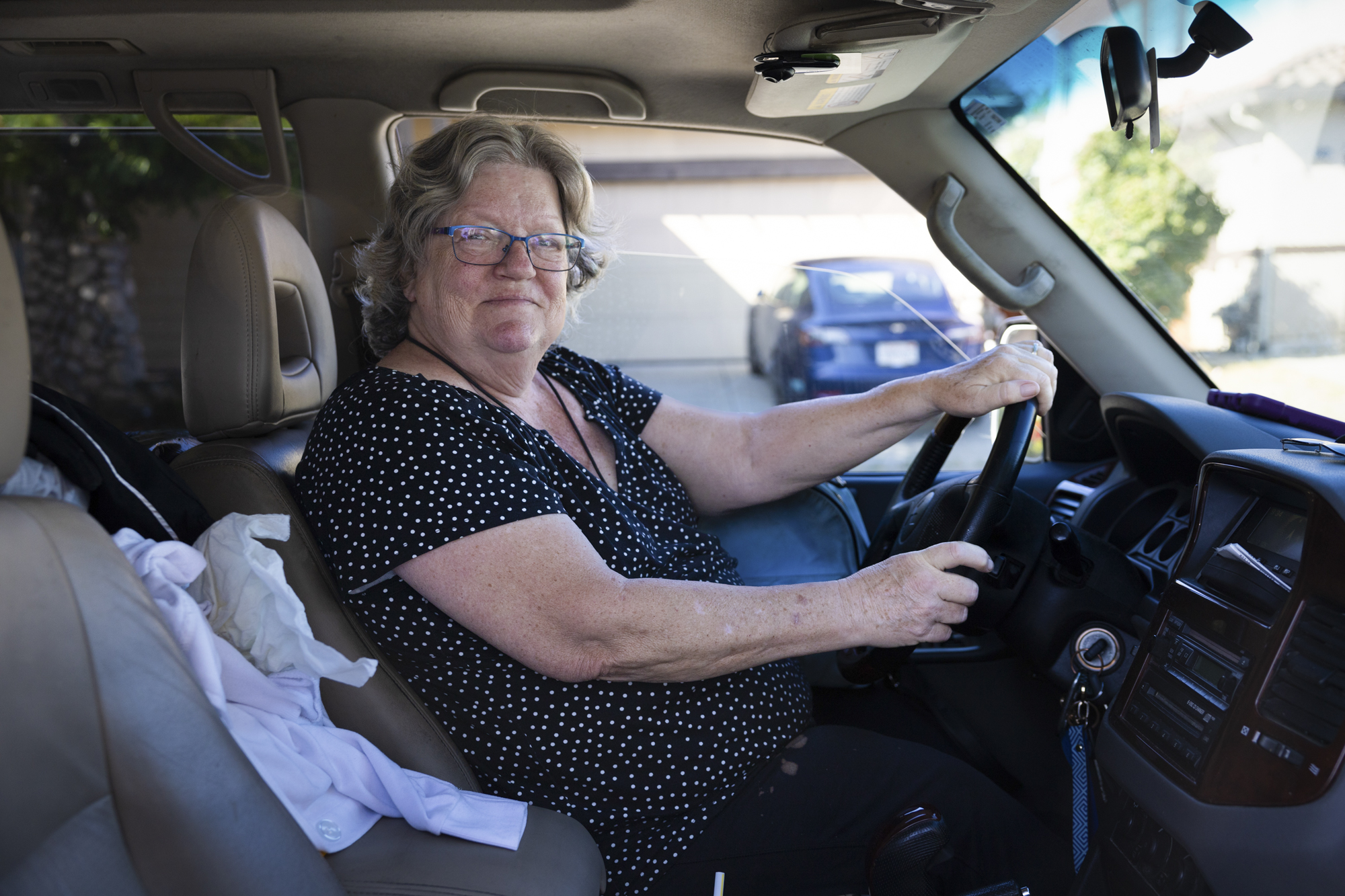 Billie Kallerberg waits in line during a drive-thru food distribution at Tri-City Volunteers Food Bank & Mobile Pantry’s main hub in Fremont on July 17, 2026.
Food bank officials say the majority of people receiving CalFresh benefits are people who are hard-working, some with multiple jobs, while others are caring for a family member, and others are on fixed incomes.
California Food Banks, using a model from the United Way reflecting the true costs of living in the state, created a new data dashboard earlier this year that focused on potential need for food assistance. It shows that for roughly 40% of the population, “the cost of basic needs in their community exceeds their income,” which could push them toward food banks.
“The design of H.R. 1 is a slow drip, a slow, complicated implementation,” Crosby, with the San Francisco-Marin Food Bank, said. “It will then bury people in paperwork and bury states in new expenses and bury people in rules and requirements and make it much harder to get. So it is a slow-moving avalanche with sharp consequences that will be hidden,” she said.
Even in Republican strongholds where President Donald Trump won by significant margins, the cuts have prompted pushback and concern.
Kelly Lowery, executive director of the Community Action Partnership Food Bank in reliably red Kern County, said the Trump administration’s aim to change the law to ostensibly reduce waste and fraud is a good goal, but he and other food bank leaders up and down the state say the cuts are wrongheaded.
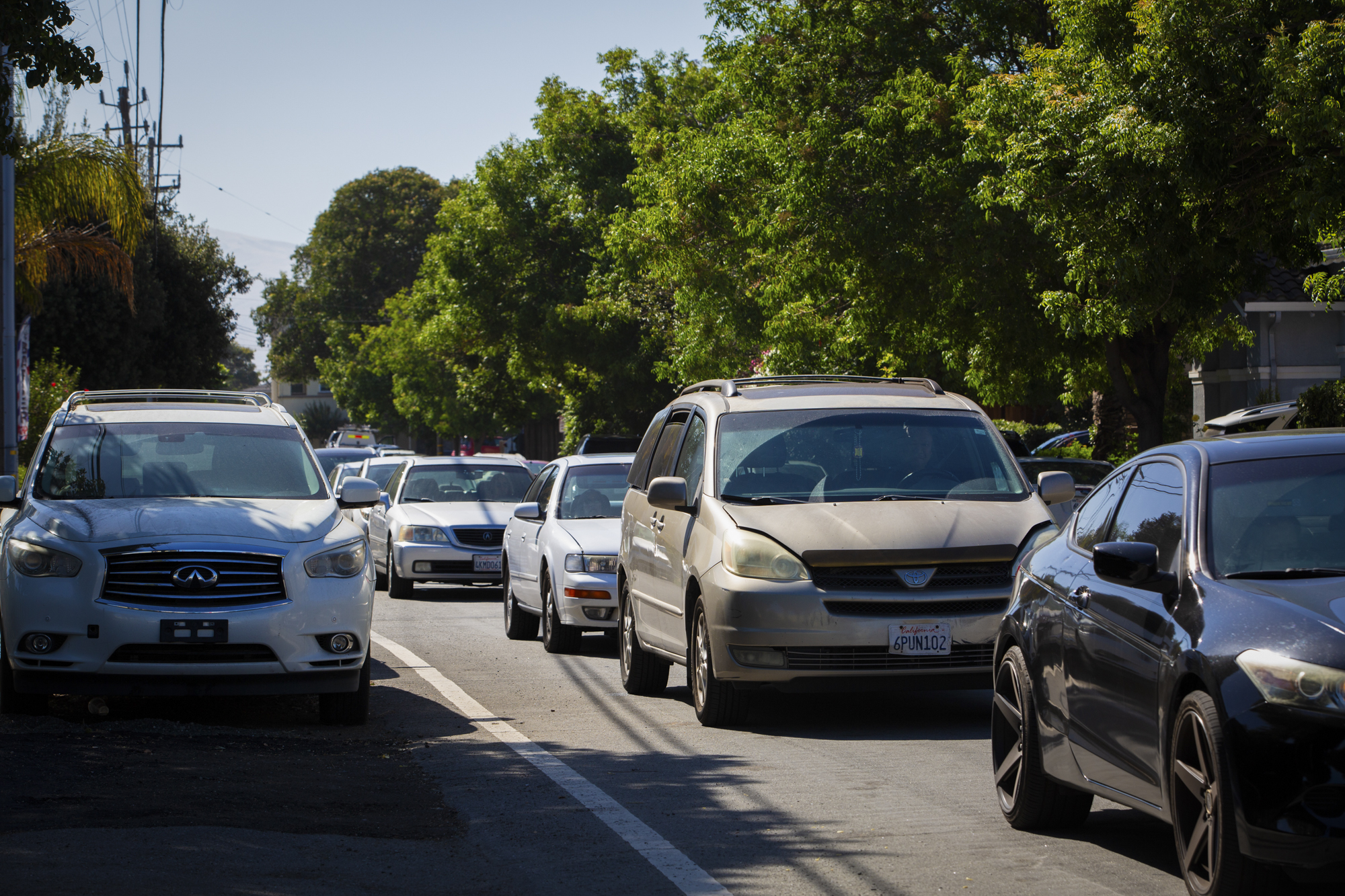 Clients wait in their cars during a drive-thru food distribution at Tri-City Volunteers Food Bank & Mobile Pantry main hub in Fremont on July 17, 2026.
“This is in some ways a throwing the baby out with the bath water type of situation, where you’re trying to solve an issue and in doing so, we’re creating layers of other issues,” Lowery said.
In Lowery’s service area, an 8,000 square-mile county, roughly 100,000 households are enrolled in CalFresh, and county officials expect about 30,000 of them to lose benefits in the coming months. About half already lean on food banks, and will likely need deeper levels of assistance, while the other half are estimated to have never used such services but may soon need them.
“The charitable food system is a safety net; it’s not designed to be the tip of the spear in hunger relief,” he said. “We just do not possess the resources that are needed to be able to make up that difference.”
But Lowery said his team will keep serving people in need.
“There is a Haitian proverb that says, if there’s food for one, there’s food for two,” he said. “It might mean that some families who are used to getting a certain level of support might be getting a little bit less in order to make room for more…But what we’re not going to do is turn people away.”
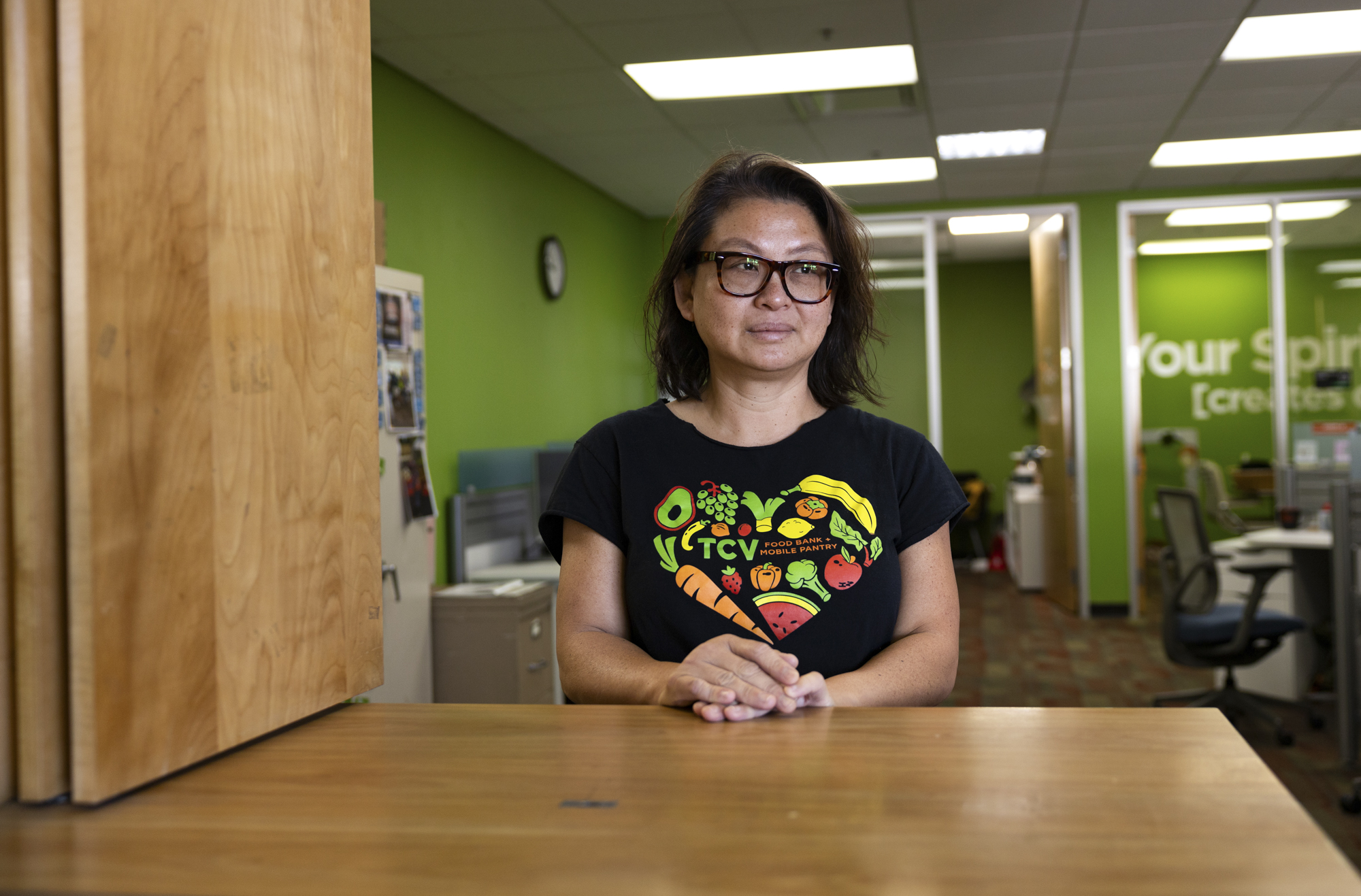 Linda Leu, executive director of Tri-City Volunteers, poses for a photo at Tri-City Volunteers Food Bank & Mobile Pantry’s main hub in Fremont on July 17, 2026.
In Fremont, one of the wealthier enclaves of the East Bay, Linda Leu runs the Tri-City Volunteers Food Bank, which the Alameda County Community Food Bank supports.
The food bank added a sixth day of distribution to its calendar this summer to meet increased need, which Leu attributes in part to the law changes affecting noncitizens that began in April.
“We only allow clients to pick up twice a month and there’s been a lot of people that come for a third time or a fourth time saying they just need more food,” she said. “We were never designed to be anyone’s sole source of food, but I think we have sort of become that.”
Ladonna Johnson, 33, has lived in Fremont for 12 years. She comes to the food bank often because of the high cost of groceries and rent.
“Just the pricing, it’s too high. It’s way too high, and I’m struggling with that. And then my mom’s not doing so well, so I have to take care of her as well, and that’s also digging into my pockets,” Johnson said on a sunny Friday morning after picking up a bag full of vegetables, chicken and eggs.
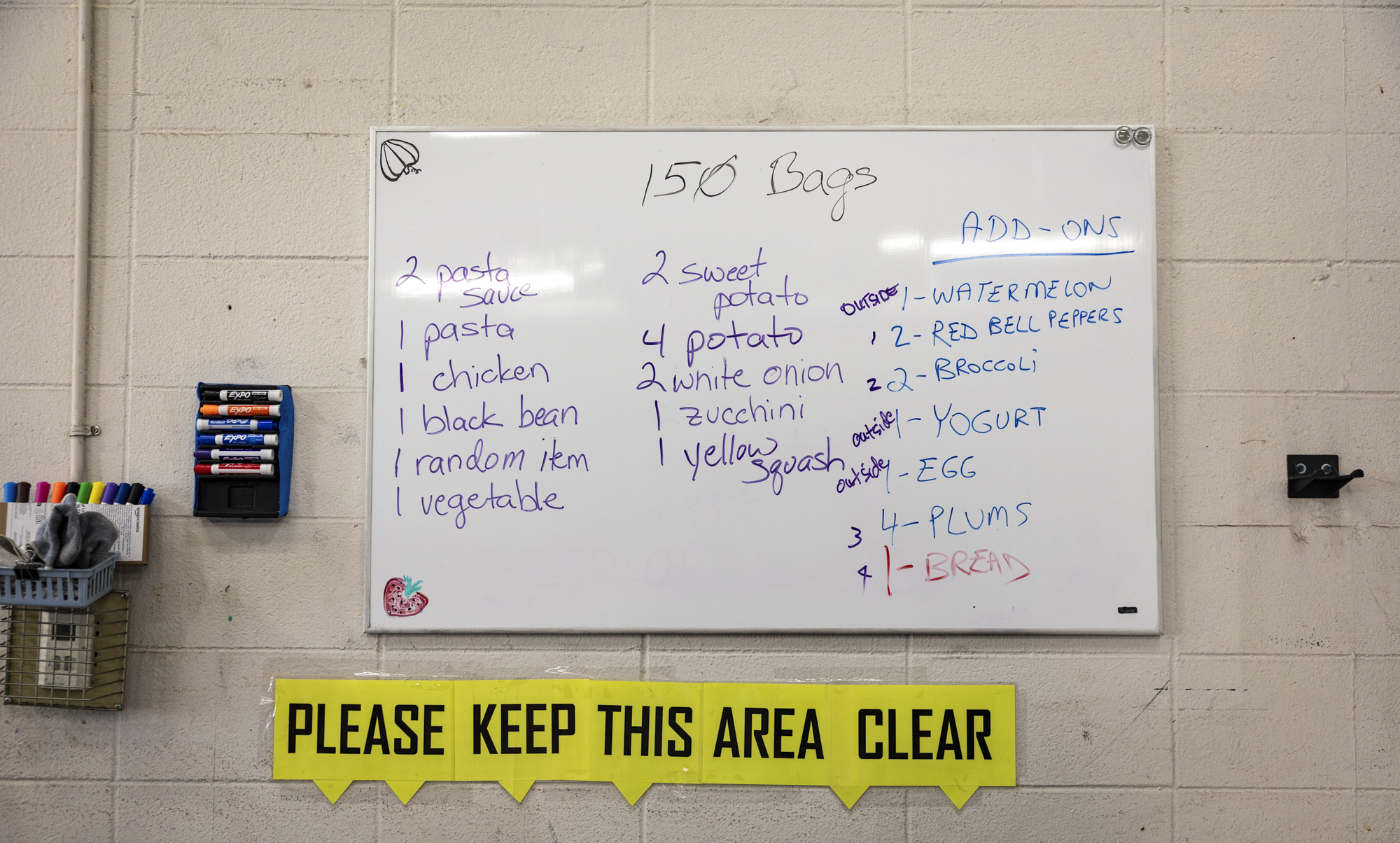 A checklist of what clients will receive at Tri-City Volunteers Food Bank & Mobile Pantry’s main hub is posted at the site in Fremont on July 17, 2026.
Her work as a veterinary technician at a spay and neuter clinic is based on demand, so her hours fluctuate, making it difficult to apply for benefits like SNAP, and even harder to plan a budget.
Billie Kallberg, 73, called Tri-City Volunteers “lifesavers,” and said she comes about once a month to ensure there is enough food at home for herself and her 80-year-old husband, who became ill in recent years.
“We live on Social Security, and it’s been extremely hard,” Kallberg said, holding back tears. “I don’t know what we would have done without them.”
The food bank is located on a small side street in central Fremont, a bit out of sight for many residents who don’t use the service, like the issue of food insecurity itself, Leu said.
“I think that most people don’t realize how easy it is to become food insecure,” Leu said. “There is this perception that we don’t have hunger here. And I think people also don’t realize that in a community like this, everything costs more. The cost of living is so much higher here that it’s harder to be poor here, and there are so many fewer resources,” she said.
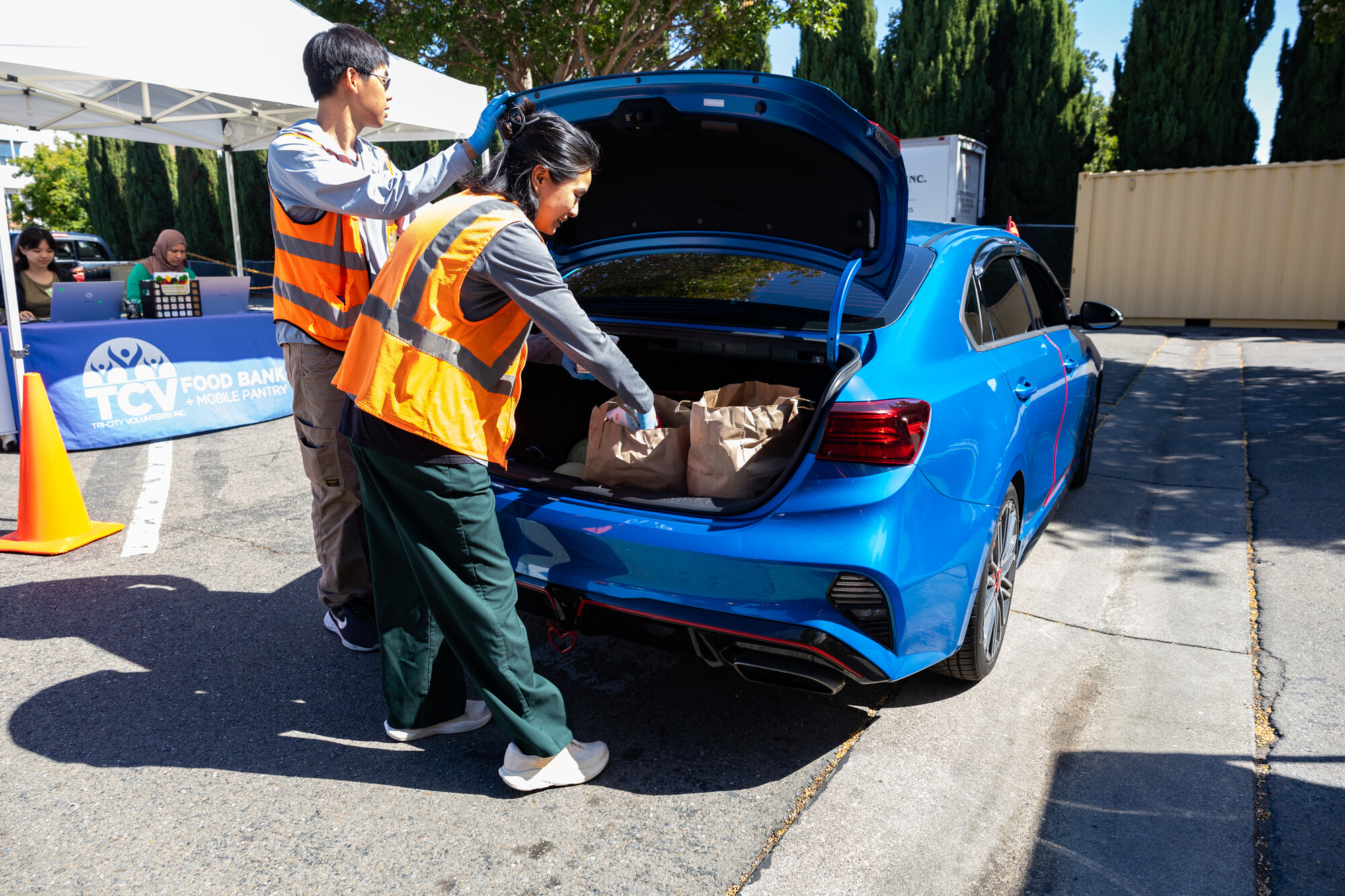 Tri-City volunteer Hillary Nguyen, right, loads food into Ladonna Johnson’s car at Tri-City Volunteers Food Bank & Mobile Pantry’s main hub in Fremont on July 17, 2026.
That need is being felt all across California, from its rural pockets to its urban centers.
In the farthest northern reaches of the state, Del Norte County has one of the higher CalFresh participation rates in the state, with about one of every four residents enrolled, compared to about one of every seven across the state as a whole, according to a UC Davis research paper. The paper found that food insecurity in places that have limited job opportunities, like Del Norte, is likely to get worse in the wake of H.R. 1.
“It’s not making my life more difficult. It’s making everybody else’s that needs this difficult because they’re already under enough stress,” said Angel Carter, who runs a food bank program in the county. “Our services are very demanding and of high necessity.”
She said her clients — including many who are homeless, have disabilities or are elderly — panicked last fall during the shutdown, and she and her small team worked to reassure them there would be food for them.
“I honestly think our government needs to come in and work at a food bank for a week,” she said, “and maybe they’ll give us some extra funding instead of just saying, ‘Oh no, we’re going to cut you.’”