
One prominent U.S. effort collapsed in 2023, when NuScale Power and Utah Associated Municipal Power Systems terminated plans for a project at Idaho National Laboratory after determining it was unlikely to secure enough subscribers.
The project had also suffered steep cost increases. An analysis by the Institute for Energy Economics and Financial Analysis found estimated construction costs had risen from $5.3 billion to $9.3 billion.
The federal government, however, is pushing aggressively to expand nuclear energy. President Donald Trump signed four nuclear-related executive orders in May 2025, and the Department of Energy in May awarded more than $94 million to eight companies working on advanced light-water SMR deployment, manufacturing and supply-chain projects. Bluecore also faces a complicated regulatory path.
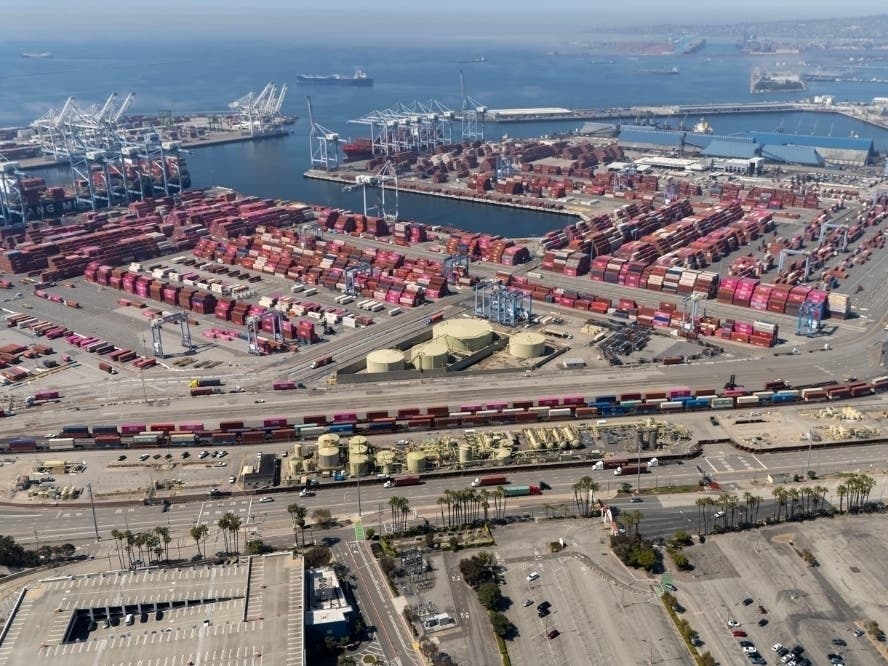
The Nuclear Regulatory Commission had received no application for a maritime reactor at the Port of Long Beach as of Aug. 7, according to the Press-Enterprise. Bluecore was scheduled to meet with the commission Monday to introduce the company, outline its regulatory strategy and present a conceptual overview of its design.
California law presents another significant obstacle. The state has restricted construction and licensing of new nuclear fission reactors since 1976 until the federal government implements a long-term solution for radioactive waste. A recent California Energy Commission report says use of SMRs in the state would require either a change in state policy or such a federal solution.