
California’s Attorney General argues the social media giant misled the public about the mental health impacts of Instagram and Facebook on its youngest users.
A phalanx of cameras surrounded Oakland’s federal courthouse today as opening arguments unfolded in a high-stakes trial against Meta, one of the world’s largest tech firms. The case, led by the California attorney general on behalf of 29 states, is considered the most significant of a wave of lawsuits targeting the social media company for the impact of Instagram and Facebook on teens’ mental health.
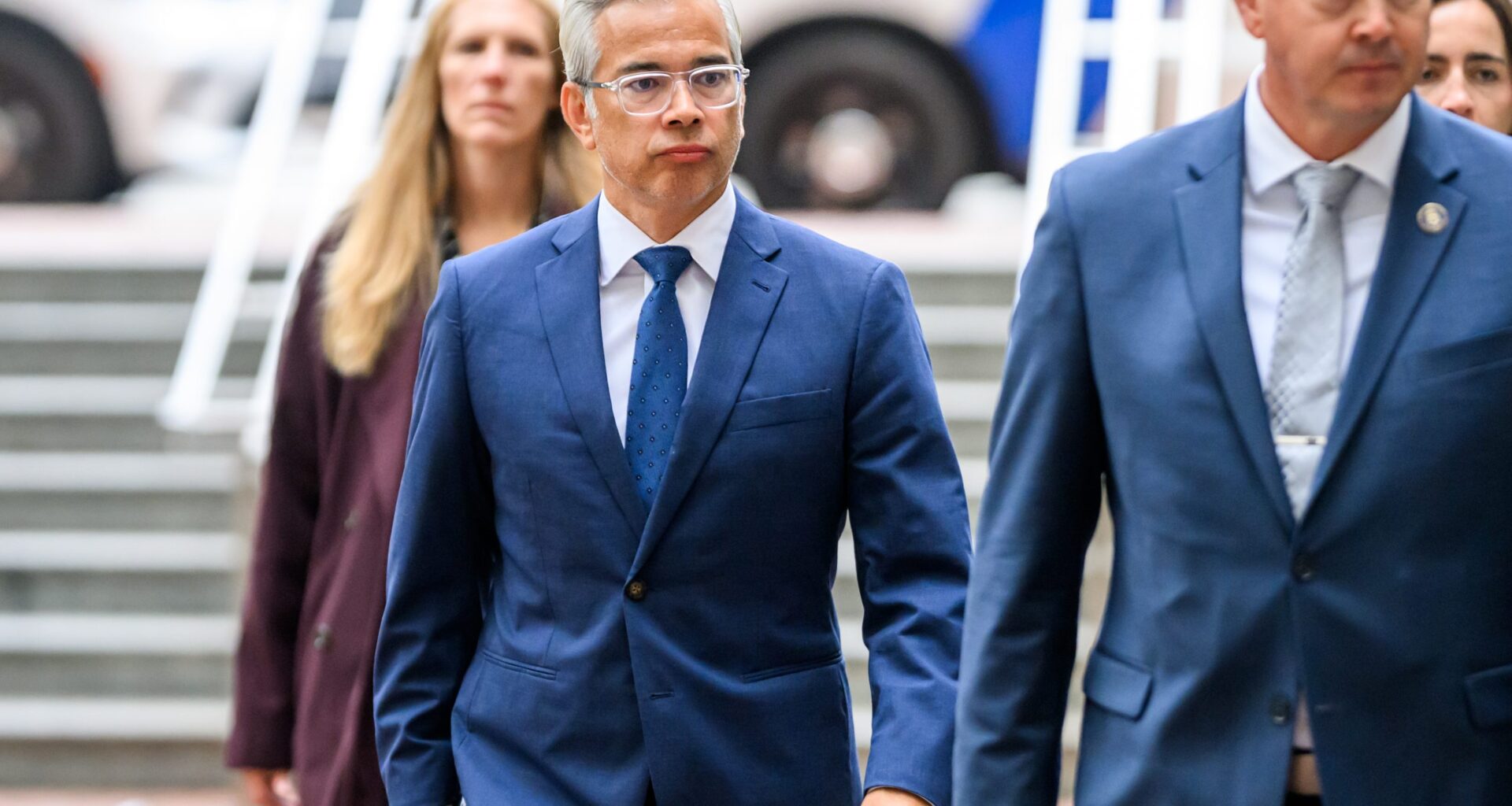
Attorney General Rob Bonta was present as one of his deputies, Megan O’Neill, outlined the states’ case before Chief District Judge Yvonne Gonzalez Rogers. The judge has presided over several high-profile tech cases in recent months, including Elon Musk’s $150 billion lawsuit against OpenAI, in which the world’s richest man appeared to testify.
Meta CEO Mark Zuckerberg and Adam Mosseri, the CEO of Instagram, are both expected to take the stand during the six- to eight-week trial. Judge Gonzalez Rogers convened an eight-person advisory jury, but the verdict and the penalties will ultimately rest with her.
The attorneys general’s complaint argues that Meta violated a federal regulation known as COPPA, the Children’s Online Privacy Protection Act, by collecting data from large numbers of children under age 13 who were allowed onto its platforms without their parents’ consent. They allege that Meta misled the public by claiming its platforms were safe for teens despite internal studies establishing user harm.
The case is modeled after the tobacco litigation of the early 1990s, when a consortium of states successfully argued that cigarette companies had misled the public about tobacco’s harms, leading to a $206 billion settlement. The AGs are seeking a similar settlement amount in this case, as well as reforms to how Instagram and Facebook work.
“We’re basically pushers”
 Press photographers and spectators crowd the entrance to the Ronald V. Dellums Federal Building and U.S. Courthouse as Rob Bonta and other attorneys enter the building, Tuesday, Aug. 18, 2026. Credit: Esther Kaplan/The Oaklandside
O’Neill, an experienced business litigator, kicked things off before a packed courtroom by arguing that Meta harvested children’s data “to keep them hooked.” She offered Gonzalez Rogers and the jury a taste of the trove of internal Meta documents that she plans to present at trial, along with the testimony of seven former Meta employees, including an internal document that said of users, “The young ones are the best ones.” Over the weekend, the judge shot down an effort by Meta to keep one of those former employees, the engineer Arturo Béjar, from taking the stand.
“Meta told the public that Instagram and Facebook were safe for kids,” O’Neill said. “But all the while it hid the truth that Meta had its own research showing how kids had bad, even traumatic, experiences on their apps — and couldn’t get off even when they tried.”
She said the company failed to take “the simplest, most obvious steps” to keep kids off while researching and exploiting the vulnerabilities in teenage brains. She presented the findings of an internal Meta study from 2019 showing that 1 in 5 teens said Instagram made them feel worse about themselves and an internal study from 2021 that found a similar number of teens had experienced bullying, nudity, violence, and negative experiences on the app in a single week — data, she said, the company did not provide to parents or the public.
O’Neill presented an internal employee email that read, “Oh my gosh lol IG is a drug,” to which a colleague responded, “We’re basically pushers.”
While O’Neill offered the court a shorthand for the AGs’ case, “Hook. Hold. Harvest. Hide” — as in hook kids, hold their attention, harvest their data, and hide the truth — the defense case could have been summarized as “We’re not lying; we’re trying.”
Paul Schmidt, a corporate litigator with Covington & Burling, began his opening statement for Meta by acknowledging that “some teens” struggle with the amount of time they spend on social media and saying that “no one disputes that children under 13 should not be on Instagram or Facebook.” He said Meta’s goal was simply to “try to improve over time.”
The studies O’Neill cited, he said, were evidence of Meta’s concerns, as were the array of time management and parental supervision tools it had rolled out in recent years. (Though O’Neill noted that the most muscular of those tools, Instagram’s Teen Accounts, with their robust parental controls, was introduced nearly a year after the AGs filed suit.)
Schmidt said every media company measures itself by the number of people engaging, from television networks to Netflix. And he said that privacy and free speech concerns had limited Meta’s ability to police child users and what they see on the apps. As for the language of addiction in the internal emails, he dismissed that by saying, “Sometimes people use loose language.”
Finally, Meta’s attorney said he’d show the jury that the public safety claims made by Zuckerberg and Mosseri weren’t materially false, due to a lack of scientific consensus on the role of social media in adolescent well being.
Meta has been on a losing streak in court in recent months. The company was slapped with more than $900 million in penalties in a case in New Mexico for failing to warn the public about the danger its platforms posed to young people, and it was hit by a $6 million verdict in Los Angeles for the mental health effects of its platforms on one young woman. The New Mexico case also resulted in a slate of court-mandated reforms to Instagram and Facebook.
Meta has said the company has done nothing wrong. “We are proud of our record in protecting teens on our platforms and the amount of effort that we’ve put into developing protections over the years,” the company said in a recent press statement.
“*” indicates required fields