
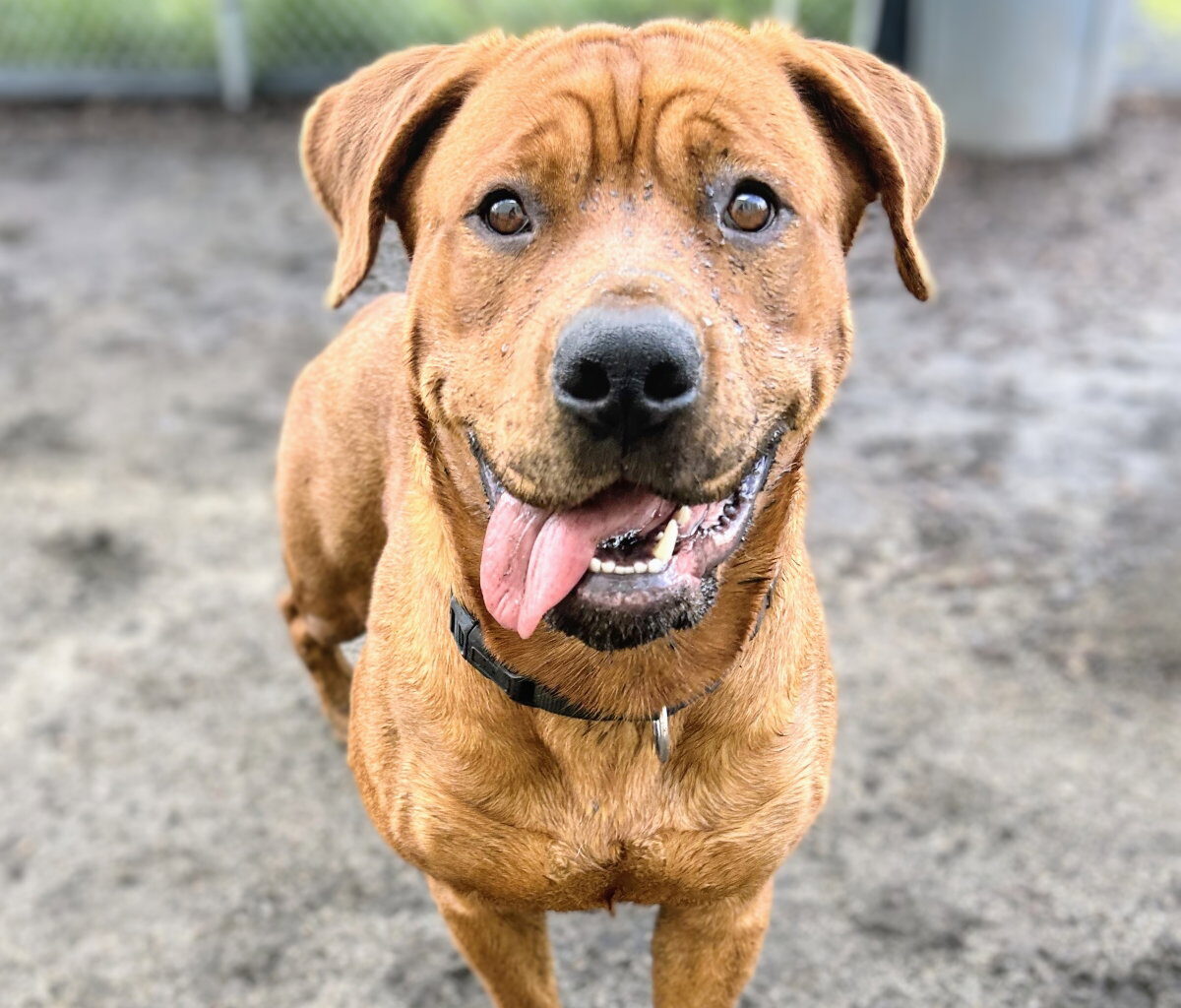
Oakland Animal Services believed it was giving difficult‑to‑place dogs a second chance when it transferred them to Miranda’s Rescue, a rural Humboldt County nonprofit long described as both a rehabilitation center and a sanctuary.
The Humboldt County Sheriff’s Office was alerted to the discovery of the eight dogs and subsequently opened an investigation on April 22, 2026, looking into allegations of animal cruelty and fraud.
On July 13, Humboldt County Sheriff’s Office investigators released microchip data to Oakland Animal Services, identifying Zora, whose body was first uncovered in the original eight dogs retrieved from the pit by concerned citizens who dug them out of a burial pit located in a field at Miranda’s Rescue.
Following the service of a multi-agency excavation warrant in late June, investigators say at least 14 additional Oakland dogs were among the 117 intact canine remains recovered from burial pits on the Fortuna property during the search. Of the 15 dogs that were identified throughout the investigation, Friends of Oakland Animal Services received text messages for eight saying they had been adopted out.
The transfers were funded not by Oakland Animal Services but by Friends of Oakland Animal Services (FOAS), the nonprofit that supports the shelter’s outcome work. Executive Director of Oakland Animal Services Joe DeVries said FOAS paid $400 to $450 per dog, depending on the case.
“We can tell you every animal that comes in here, every rabbit, snake, turtle,” DeVries said. “Everyone should be able to do that with any animal. They’re caring for a living being, so having that record should not be hard.”
Public records show the volume of transfers climbed over the years. While other rescues and shelters paid as much as $1,500 per transfer, Friends of Oakland Animal Shelter paid $400-$450 a transfer. In 2024 alone, 318 dogs were sent to Miranda’s Rescue; that means Miranda’s Rescue received at least $127,200 from the shelter. The transfers were part of a multi‑year pattern that totaled more than 800 dogs since 2020. Many were large dogs with manageable behavioral challenges such as food guarding, prey drive, or leash reactivity; only a small amount of the animals had bite histories.
“Friends of Oakland Animal Services made all of these payments. Oakland Animal Services never actually paid them a dime,” DeVries said. “I only found 22 dogs that had a bite case. The rest were big dogs, harder to manage and harder to adopt.”
The second search warrant, executed on June 23 and lasting until June 25, uncovered 117 intact canine remains, 21 skulls, hundreds of additional bones and six loose microchips, according to the sheriff’s office. Many of the dogs examined showed evidence of gunshot wounds or bullet fragments.

Sunday was one of the dogs whose microchips were found and was reportedly adopted out from Miranda’s Rescue in Fortuna. (Friends of Oakland Animal Services — Contributed)

During the investigation into allegations of animal cruelty and fraud at Miranda’s Rescue, Serendipity’s microchip was found in the burial pit during the excavation. (Friends of Oakland Animal Services — Contributed)

Weffy was one of the dogs whose microchips were found during the second warrant served at Miranda’s Rescue in Fortuna during the investigation. Weffy, was described as gentle, social and impeccably behaved. Weinberg said he walked perfectly on leash, showed no reactivity and even ignored hikers carrying cats during their outing. (Friends of Oakland Animal Services — Contributed)

Serene was one of the dogs whose microchips were recovered from the excavation site during the second warrant served at Miranda’s Rescue in Fortuna. (Friends of Oakland Animal Services — Contributed)

Wallaby was one of the dogs whose microchips were found during the second warrant served at Miranda’s Rescue in Fortuna during the investigation. (Friends of Oakland Animal Services — Contributed)

Zora was recovered by the concerned citizens who went onto Miranda’s Rescue property to dig out dogs after they believed they saw the bodies of the dogs dumped from a tractor bucket into the burial pit, leading to the investigation. (Friends of Oakland Animal Services — Contributed)

Shaggy’s microchip was found during the second warrant served at Miranda’s Rescue in Fortuna during the excavation. Miranda’s Rescue owner Shannon Miranda had sent a message claiming that Shaggy had been adopted and found a home. (Friends of Oakland Animal Services — Contributed)

Pisco’s microchip was found during the second warrant served at Miranda’s Rescue in Fortuna during the investigation. (Friends of Oakland Animal Services — Contributed)

Mai was one of the dogs whose microchips were found during the second warrant served at Miranda’s Rescue in Fortuna during the investigation. (Friends of Oakland Animal Services — Contributed)

Corvette was one of the dogs whose microchips were found during the second warrant served at Miranda’s Rescue in Fortuna and told that Shannon Miranda had said was adopted out to a home. Corvette, was a volunteer favorite. Weinberg said she was small, sweet and shy, and adored among staff and volunteers. (Friends of Oakland Animal Services — Contributed)
Show Caption
1 of 10
Sunday was one of the dogs whose microchips were found and was reportedly adopted out from Miranda’s Rescue in Fortuna. (Friends of Oakland Animal Services — Contributed)
The sheriff’s office told Oakland Animal Services in July that 15 dogs matched Oakland microchips. DeVries said eight of those dogs had been represented by rescue operator Shannon Miranda as adopted, including dogs that had arrived only months earlier. He said the rescue sent photos and text messages claiming Zora, Corvette, Shaggy, Sunday, Nubbins, Serendipity, Pisco, and Serene had found homes, even as investigators later recovered their bodies from the burial pits.
“We have a text message from him with their picture saying that they got adopted,” DeVries said. “These were all dogs that had been sent up there after December, so they were all in the first part of 2026. Several had just gotten there in March or April,” said DeVries. “It’s just sad that it does seem like a lot of people turned a blind eye earlier on, and this could have stopped sooner. The moment we had credible evidence, we shut it down.”
For Friends of Oakland Animal Services Executive Director Robin Weinberg, the discovery was personal. She had taken several of the dogs on field trips, including Weffy, a dog she described as gentle, social and impeccably behaved. She said he walked perfectly on leash, showed no reactivity and even ignored hikers carrying cats during their outing. When they returned to the shelter, Weffy climbed into her niece’s lap and refused to leave the car.
“He was just so lovely and so well behaved,” Weinberg said. “He did not want to go back into the shelter. When we learned he was one of the dogs found in the pit, it was heartbreaking.”
Another dog, Corvette, was a volunteer favorite. Weinberg said she was small, sweet and shy, and adored among staff and volunteers. Corvette was also found among the remains at Miranda’s Rescue.
“She’s like a little thing, 35 pounds, and just as sweet as can be,” Weinberg said. “A lot of us knew her, and it was very hard to see her on that list.”
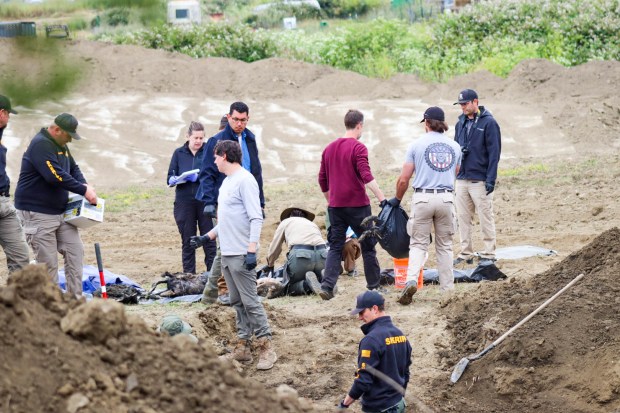 Multiple carcasses are on the ground at Miranda’s Rescue during the investigation on Thursday. (Maranda Vargas — The Times-Standard)
Weinberg said she had seen photos of all 800 dogs transferred to Miranda’s Rescue during a memorial slideshow the shelter created in May, but assembling the recent photos of the 15 identified dogs was especially painful.
“He did tell us over 200 times in our history with him that he had placed our dog,” said Weinberg. “So we, you know, we were told that they were adopted and placed from there. So we certainly were optimistic about their potential outcomes.”
Both Oakland organizations said they believed Miranda’s claims that he rehabilitated challenging dogs and operated a sanctuary for animals who couldn’t be placed. She rejected criticism that Oakland transferred dogs to reduce euthanasia numbers, saying the shelter’s focus was always on the animals’ well‑being.
“The only reason we care about euthanasia numbers is because we care for these animals so deeply,” Weinberg said. “All we wanted was what was best for the dog.”
In response to the investigation, FOAS and Oakland Animal Services have revised their rescue‑transfer agreement. The new requirements include detailed records for every transferred animal, stronger reporting and documentation standards, leadership certifications, the right to recover animals and suspend transfers, and strict limits on euthanasia. The organizations will also no longer pay rescues simply to accept dogs, a change intended to eliminate the financial incentive that may have contributed to the alleged fraud.
“We are heartbroken by the harm caused to these dogs and deeply regret our role in transferring them to Miranda’s Rescue,” Friends of Oakland Animal Services wrote in a public update. “Of the 15 dogs identified, eight were dogs Miranda’s Rescue had told us were adopted.”
The case has renewed calls for statewide oversight of rescues. DeVries said he supports a licensing and inspection system modeled after Colorado’s rescue regulations. Weinberg hopes the tragedy will push California to have transparency in dog outcomes and expand affordable spay‑neuter access statewide, noting that shelters from Southern California to the Oregon border sent dogs to Miranda’s Rescue.
“He is telling these stories about how aggressive these dogs were and how they’re like attacking people and killing cats. These were lovely adoptable dogs, largely that we sent there. Not that every single one of them didn’t have a behavioral problem, but they were largely lovely, lovely dogs. And we just have too many. We have too many lovely adoptable dogs that need a home that are coming to our shelter to adopt them,” said Weinberg. “If anything good comes of this, I hope that our state representatives (and the) legislature will take action in funding accessible spay and neuter in the state. Because this is something that has impacted Southern California up to the Oregon border. I mean, no area of the state didn’t send some dogs there. Hawaii and Nevada as well.”
Friends of Oakland Animal Services is cooperating with investigators and evaluating its legal options. Weinberg said the organization is hopeful criminal charges will be filed and is reviewing potential civil avenues.
“We are very, very hopeful that charges will be brought against Shannon Miranda,” she said. “We’re looking at our options that we could take legally.”
For both organizations, the focus now is on transparency, accountability, honoring the dogs they believed were getting a chance to start over, and preventing future tragedies like the one that has unfolded at Miranda’s Rescue in Fortuna. Both organizations have new procedures and rules in place to prevent instances like the situation unfolding at Miranda’s Rescue. They will no longer pay for transfers of animals, and if an animal needs money at transfer for care, they will require documentation and pay the third party directly for the services.
Maranda Vargas can be reached at 707-441-0504.