
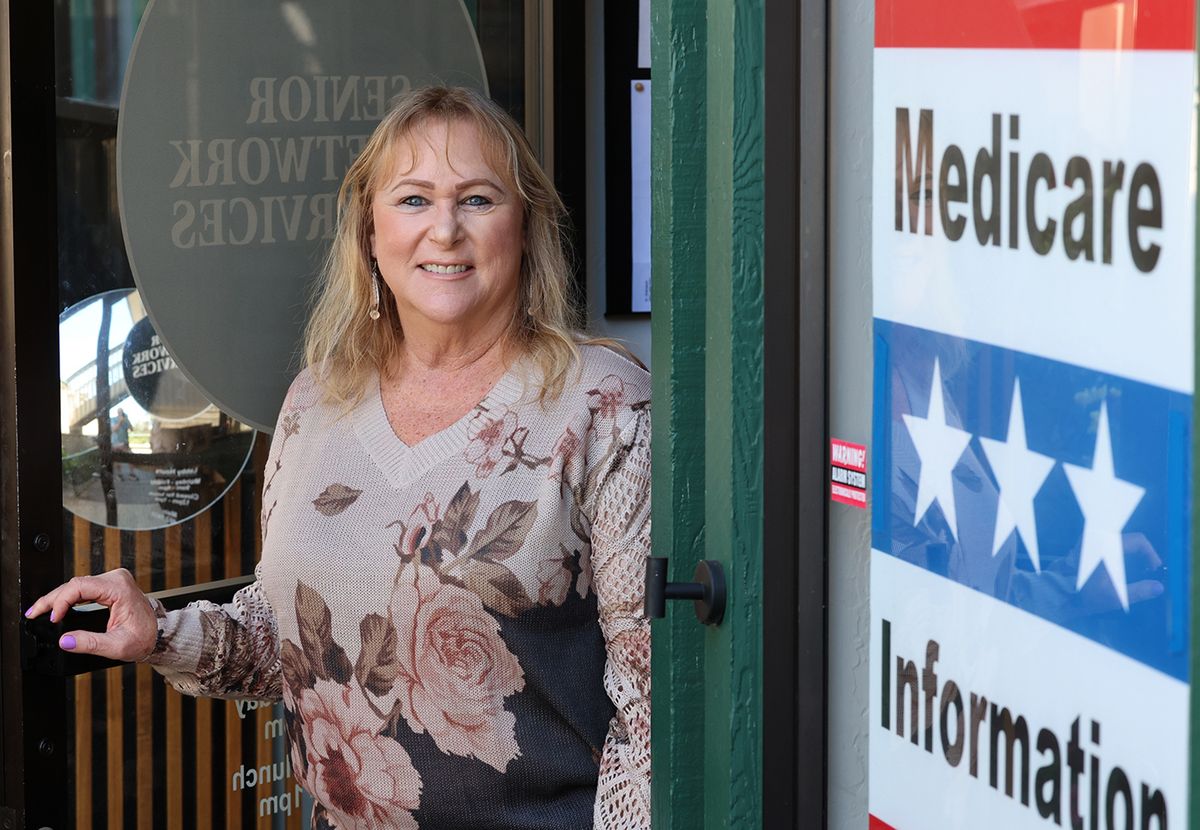
In her career as a sales executive for Medicare Advantage plans, Sandy Howell often encountered concerning stories of exploitation of older adults and the Medicare system.
She learned of rogue agents who used high-pressure sales pitches to pocket commissions for putting unwitting people in health plans that deprived them of access to their doctors. She once intervened to help a client escape a massive copay when a hospital billed Medicare $200,000 for treating an ankle sprain that should have been billed at just $2,000. She heard alarming stories, including from a retired pharmacist who got bilked by a fraudster posing as his granddaughter.
“We see Medicare beneficiaries not only becoming victims of Medicare fraud, but becoming victims of scams in general,” Howell says.
When she retired about 15 years ago, Howell decided to use her life experience in the healthcare field to provide education and support for older adults who can become unwilling pawns in massive fraud schemes. She signed up as a Senior Medicare Patrol volunteer, joining a network of more than 400 Californians who devote time to support investigations into Medicare fraud and counsel seniors on how to avoid becoming a victim.
The Senior Medicare Patrol (SMP) is a nationwide program funded by the U.S. Department of Health and Human Services (HHS), Administration for Community Living (ACL). Through grants to organizations and agencies in each state, ACL supports SMP programs that empower and assist people with Medicare and Medicaid to prevent, detect, and report health care fraud, errors, and abuse.
In California, the program is administered by California Health Advocates (CHA), a Medicare education and advocacy organization.
The California SMP trains and supports volunteers who help protect Medicare beneficiaries and taxpayers from health care fraud. CHA also partners with 26 regional Health Insurance Counseling and Advocacy Program (HICAP) agencies, supported by the California Department of Aging, to help older adults navigate the complex Medicare system.
It is a system all too frequently targeted for abuse by criminal actors. As an SMP volunteer, Howell helps CHA’s California SMP staff investigators by taking reports from victimized seniors. She cringes over what she has seen and heard.
“Our community-based volunteers often have experienced Medicare fraud themselves, or their family members have. Often they come from healthcare or related field and have expertise to lend.”
Morgan Grabau
Statewide Manager, California Senior Medical Patrol program
In one of her first cases as a volunteer, for example, she responded after van drivers suspiciously showed up at a senior center in Stanislaus County, offering to transport elder residents for a free lunch. They were driven for five hours to offices in Irvine, where fraudsters got their Medicare card numbers to bilk Medicare for motorized wheelchairs that they had neither requested nor needed.
When Howell visited the affected residents to gather information, some were too terrified to cooperate. After an unsolicited motorized wheelchair was sent to one couple’s house, they feared they would be charged with fraud.
“They were embarrassed that they had allowed themselves to become a victim,” she says. “They hid the wheelchair, covered it up and wouldn’t talk to anyone.”
Medicare fraud is a huge business for criminals, with the Medicare system losing an estimated $60 billion annually due to fraudulent billing, errors and abuse, according to the national Senior Medicare Patrol network.
Sherri Rodrigues, an SMP volunteer coordinator for the Santa Cruz and San Benito county HICAP, responded to another case when locals were promised a free lunch in San Jose only to be transported to medical offices to get their Medicare information for bogus orders of shoes for people with diabetes.
“They came back without food, without care—and it was not good,” she says.
She also responded to inspect packages and track shipping details after an older man called her, reporting $10,000 in charges on his Medicare statement for unrequested knee and back braces arriving at his home.
“I got all the details; then sent his case to the California SMP at California Health Advocates, and they took it from there,” she says. “And I reached out to Medicare to make sure his record was clear. He got his charges reversed.”
Under a five-year grant from the federal Administration for Community Living, California Health Advocates employs a 10-member Senior Medicare Patrol team that investigates Medicare fraud and provides education and outreach.
Two of CHA’s SMP investigative analysts probe cases that may be referred for federal prosecution and work with Medicare to reverse fraudulent charges that could cost Medicare recipients thousands of dollars in unwarranted healthcare copays. The team also recruits and trains SMP volunteers across California to lead seminars for seniors on fraud awareness and help take reports on suspicious cases.
“Our community-based volunteers often have experienced Medicare fraud themselves, or their family members have. And often they come from healthcare or related field and have expertise to lend,” says Morgan Grabau, the statewide volunteer manager for the California Senior Medical Patrol program. “And a lot of our volunteers just have a desire to help their community.”
Howell is now 80 and still puts in several hours weekly as an SMP volunteer. She makes presentations at senior centers on Medicare fraud awareness, and counsels people about often-deceptive sale practices employed by callers pitching Medicare Advantage plans during open-enrollment season.
Howell once took a report that helped a woman avoid a hefty Medicare copay from back surgery she never received from a hospital she never visited.
She also helped an older man with Alzheimer’s disease obtain Medicare Part B coverage after taking a report from the man’s ex-wife about a son pocketing his Social Security checks and refusing to pay his premiums. The case was referred to California Adult Protective Services for investigation of elder fraud and abuse.
Howell has also worked with people who were fraudulently enrolled in hospice care—a growing scheme to bilk the Medicare system and beneficiaries—when they thought they were signing up to receive free protein drinks at home.
She determinedly takes reports and educates Medicare beneficiaries often ill-equipped for predatory tactics of fraudsters. And she is not quitting any time soon.
“I consider this a mission,” she says.