
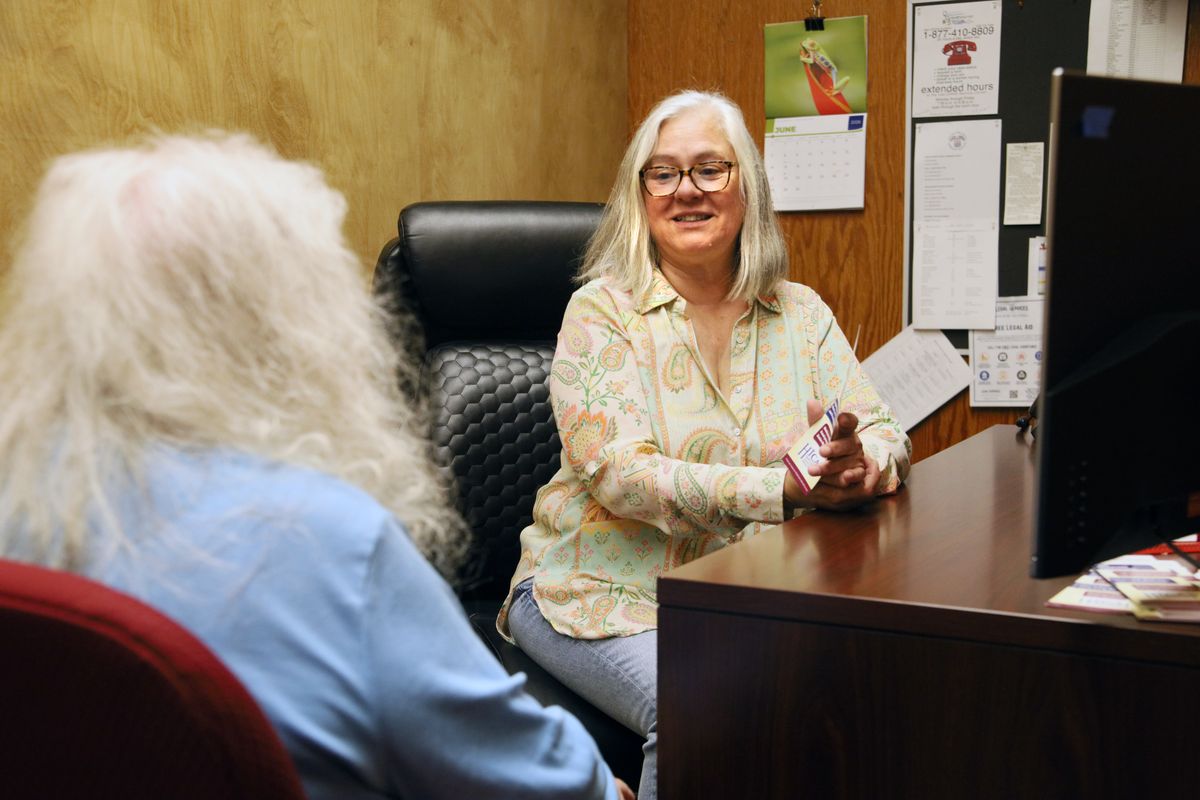
In May, Rosana Bruhnke, a Health Insurance Counseling & Advocacy Program (HICAP) manager in Eureka, received an urgent call: A woman on the line was frantic with fear and confusion.
Bruhnke is one of five counselors and nine volunteers for the local HICAP serving rural residents in Humboldt and Del Norte counties under supervision of the California Department of Aging. They help people navigate the labyrinth of obtaining Medicare coverage and critical medical services, thanks in part to training from California Health Advocates, an education and watchdog organization for Medicare in California, which provides support throughout the state.
For Bruhnke, this was clearly an emergency. And she needed to intervene quickly.
The woman calling was the daughter of a Medicare beneficiary in Eureka. Her father had just suffered a massive stroke and had been airlifted to Shasta County for life-saving surgery. But there was a problem with his Medicare Advantage plan. The hospital in Redding wouldn’t accept it to pay for his costly procedure and inpatient recovery.
“She didn’t understand about Medicare coverage. All she knew was that the hospital had denied coverage,” Bruhnke says. “She was extremely stressed and she came to us at the right time.”
“We as staff and volunteers can navigate Medicare rules and help clients. And everyone has their unique stories on how they have helped somebody.”
Bill Proulx
President, California Health Advocates Board of Directors
Bruhnke and her regional Health Insurance Counseling & Advocacy Program—one of 26 HICAP networks in California—went to work. She discovered that the father’s Medicare Advantage HMO plan had falsely indicated he had full coverage. On his behalf, the Humboldt County HICAP took action.
“We filed a complaint with Medicare for misleading marketing because he was enrolled without any explanation,” Bruhnke says.
She was also able to quickly disenroll him from his Medicare Advantage plan and enroll the father in Original Medicare Part A and Part B coverage instead. Part A then covered the full surgery and hospitalization costs, providing a huge relief for his family.
“It’s a wonderful feeling,” Bruhnke says.
Day to day in California, HICAP networks provide information, counseling, and often intervention on behalf of Medicare recipients and applicants, family members and medical providers. California Health Advocates supports these networks with policy research on improved rights and protections for Medicare beneficiaries. It provides educational materials, training and technical assistance.
“We as staff and volunteers can navigate Medicare rules and help clients. And everyone has their unique stories on how they have helped somebody,” says Bill Proulx, president of the CHA’s board of directors.
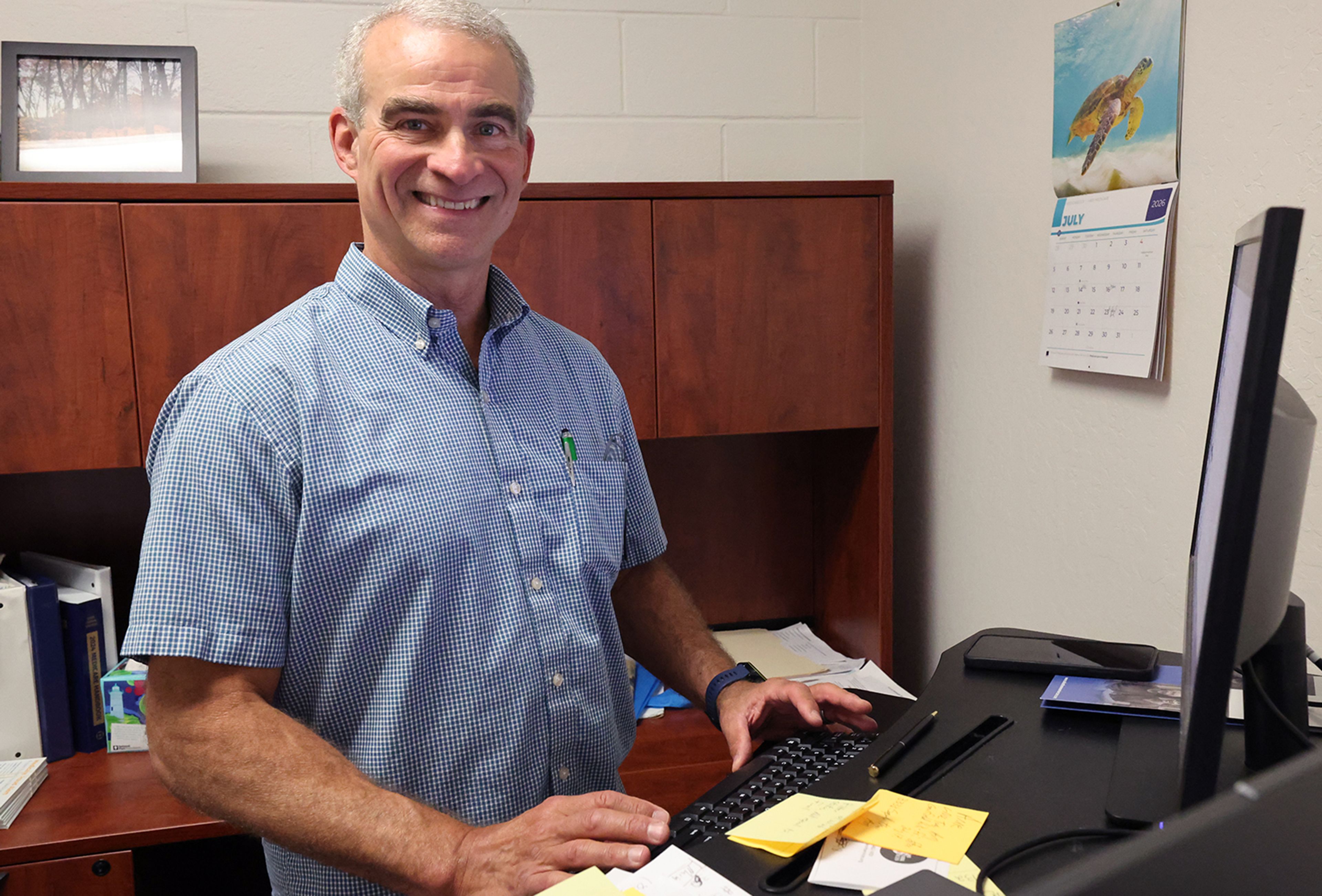 Bill Proulx, the Santa Cruz and Benito Counties HICAP program manager and president of the California Health Advocates’ board of directors, says his agency has helped numerous older adults understand Medicare coverage and costs.(Photo by Shmuel Thaler)
Proulx, the Santa Cruz and Benito Counties HICAP Program Manager, for example, has many stories about people helped, thanks to California Health Advocates’ resources and support. He recalls one older adult denied Medicare coverage for a $200,000 hospital bill. He resolved the matter after discovering that the hospital and doctors had used an incorrect Medicare billing code.
Bruhnke says her HICAP team members have received training on Medicare enrollment, coverage options, prescription drug plans, assistance for low-income beneficiaries and filing appeals of coverage denials. In addition, she has received CHA training on preventing and detecting Medicare fraud and waste.
Sophie Exdell, San Diego HICAP program manager whose program provides support for Medicare beneficiaries in both San Diego and Imperial counties, turned to research materials from CHA for additional help as she investigated solutions to help Medicare recipients being denied access to in-network doctors.
“They have an amazing team with technical expertise in challenging Medicare subjects,” Exdell says. “And they publish great information online on some of the more intricate Medicare rules.”
In 2024 and 2025, thousands of participants in Medicare Advantage plans in San Diego County lost access to in-network doctors when two major medical providers stopped accepting those plans or severely restricted coverage. In one network alone, 32,000 older adults were affected.
The San Diego HICAP team identified strategies to access Medigap insurance plans that could be coupled with Original Medicare Part A and Part B to provide beneficiaries with full coverage and access to their doctors. Medigap plans cover deductibles, copays and coinsurance not covered by Part A and B, including a 20% coverage gap in Part B plans.
Responding to the crisis, San Diego County HICAP published and distributed thousands of fact sheets and hosted webinars as it counseled affected people on options to continue seeing their doctors.
“It was very hard for them to get through to their providers or their health plan,” Exdell says. “Getting information to people helped defuse some of that stress.”
Back in Eureka, Bruhnke recalls some quick work to ease some stress for a young man with failing kidneys who just had surgery for end-stage renal disease. He was frustrated over a $1,200 fee he had to pick up for coverage through Medicare and the state Medi-Cal program. She learned that he had received a small amount of money from his mother for helping her manage household bills. That enabled her to get him a Medi-Cal exemption, which waives the fee for disabled people who work.
“I’m not sure if he was initially aware of the implications, because he just had surgery two days prior,” Bruhnke says. “All he knew was that he was going to have to pay $1,200. But we were able to reverse that—and he didn’t have to pay anything.”