
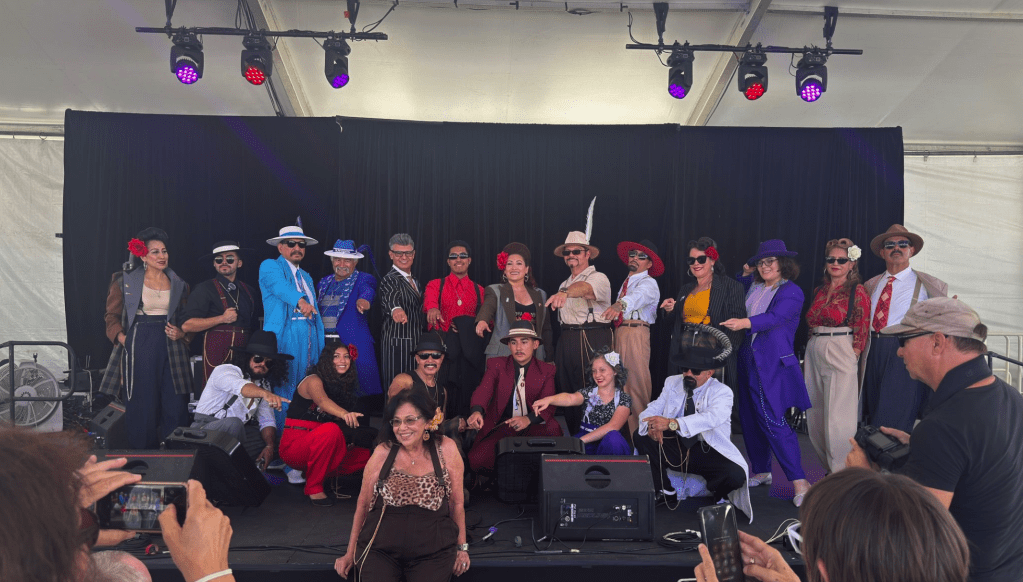
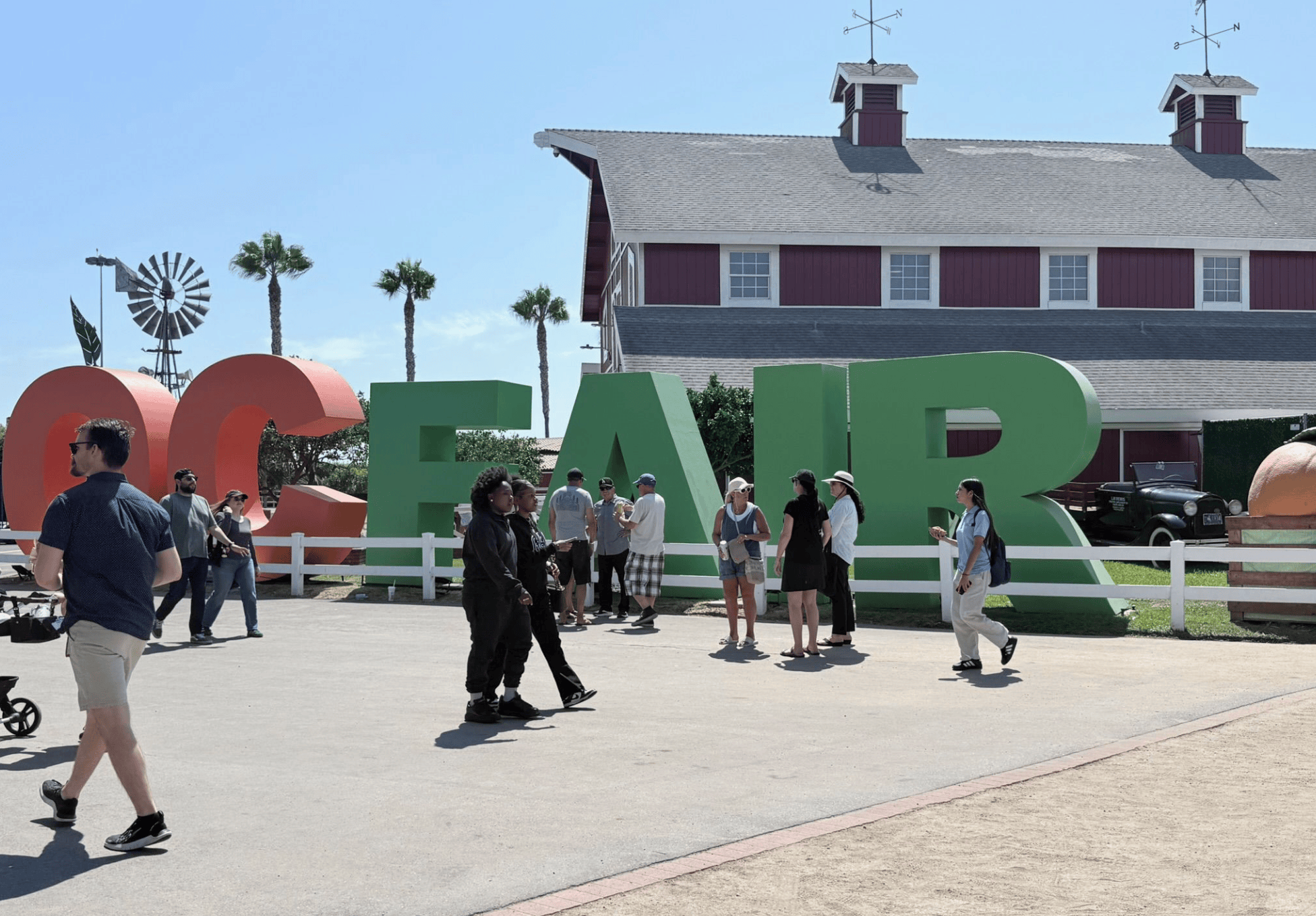
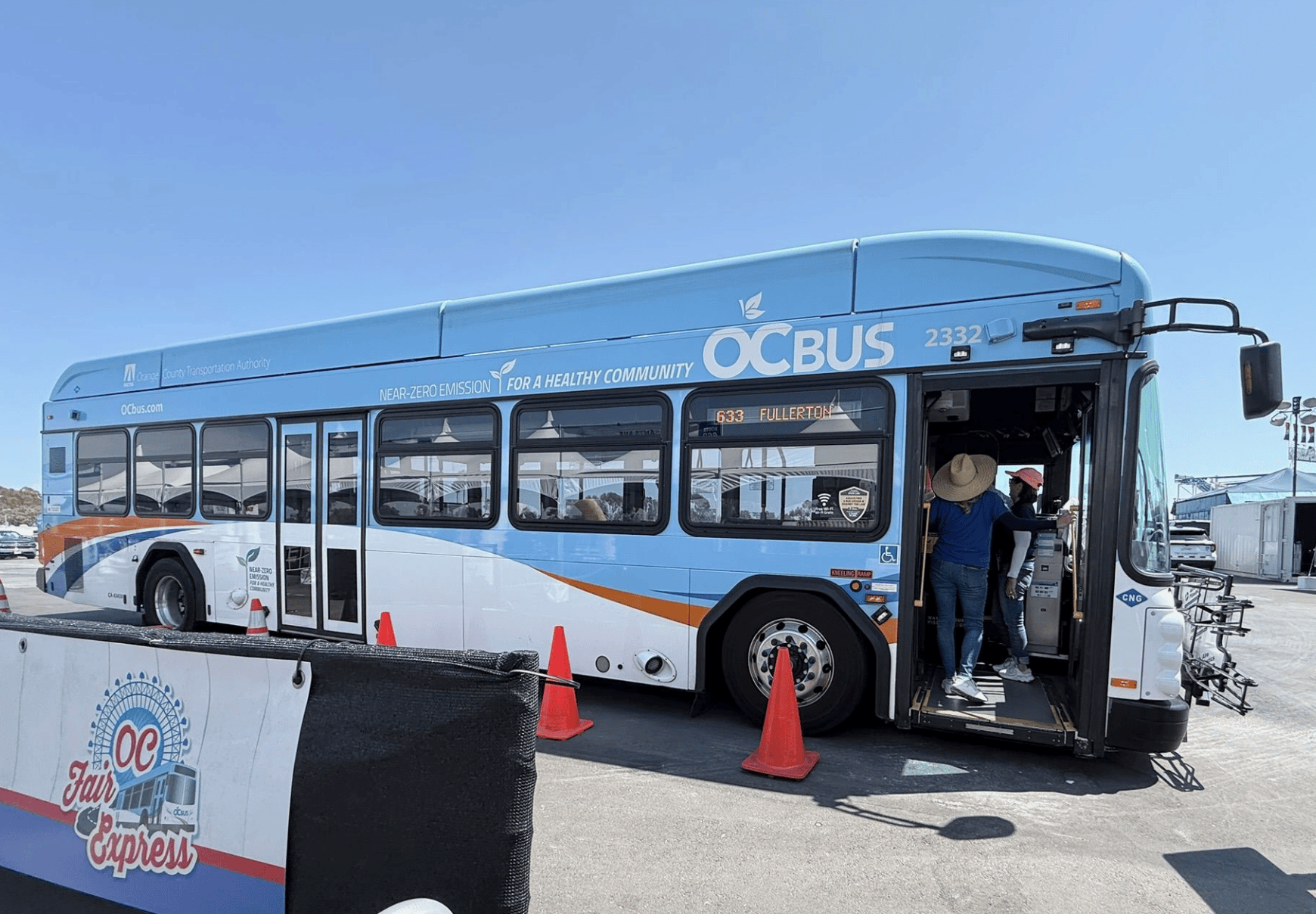
My first trip to the OC Fair was inspired by Instagram posts: one announcing the El Pachuco Zoot Suit Fashion Show & Lowrider Exhibit on Sunday, August 9th, and two promoting the OC Fair Express, with a stop in Fullerton and a promise of a 35-minute, hassle-free ride. I knew I had to go; I deeply appreciate our cultural history and, as a fifth-generation Californian, I also have an often-elusive dream of efficient public transportation.
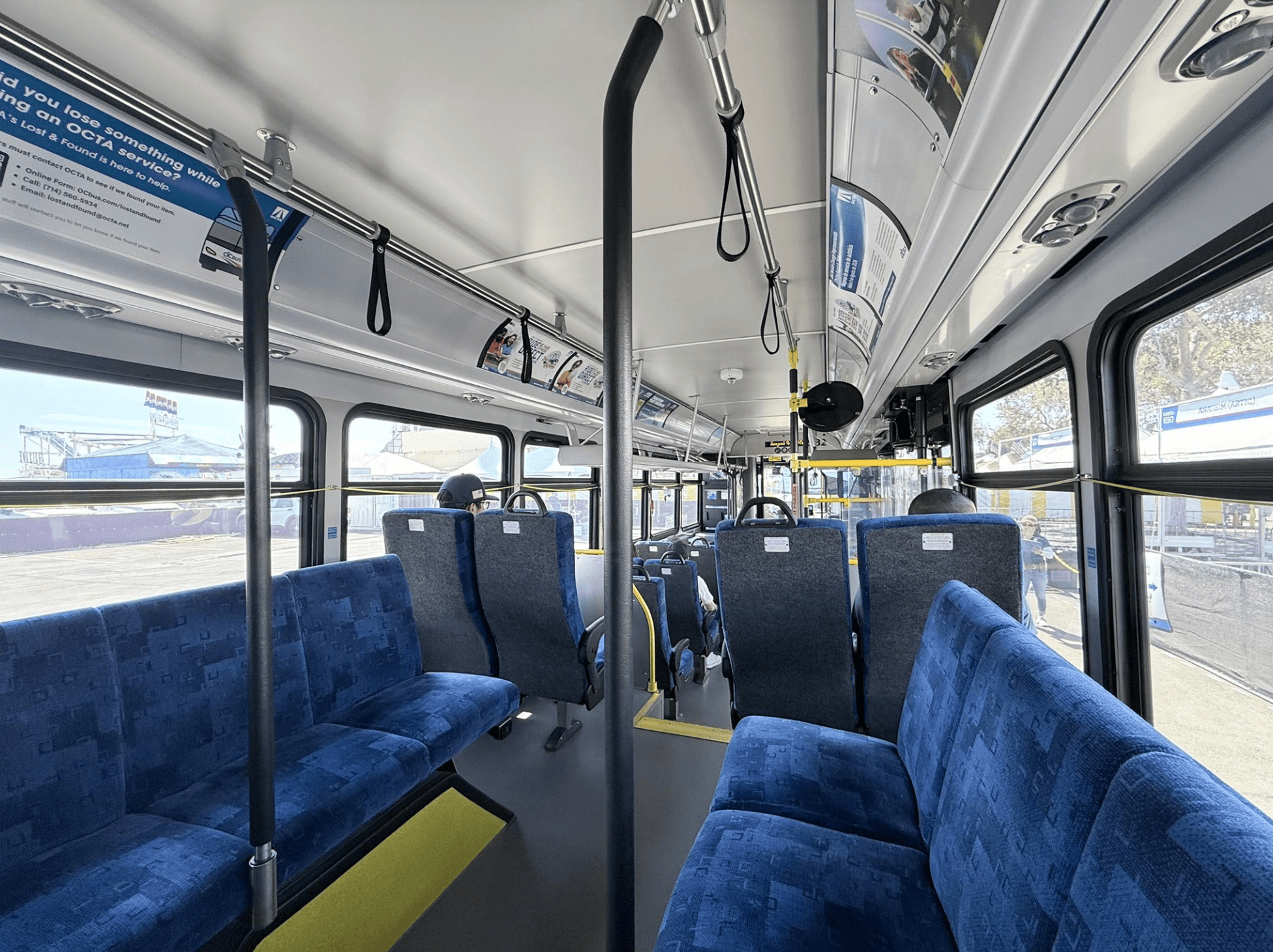
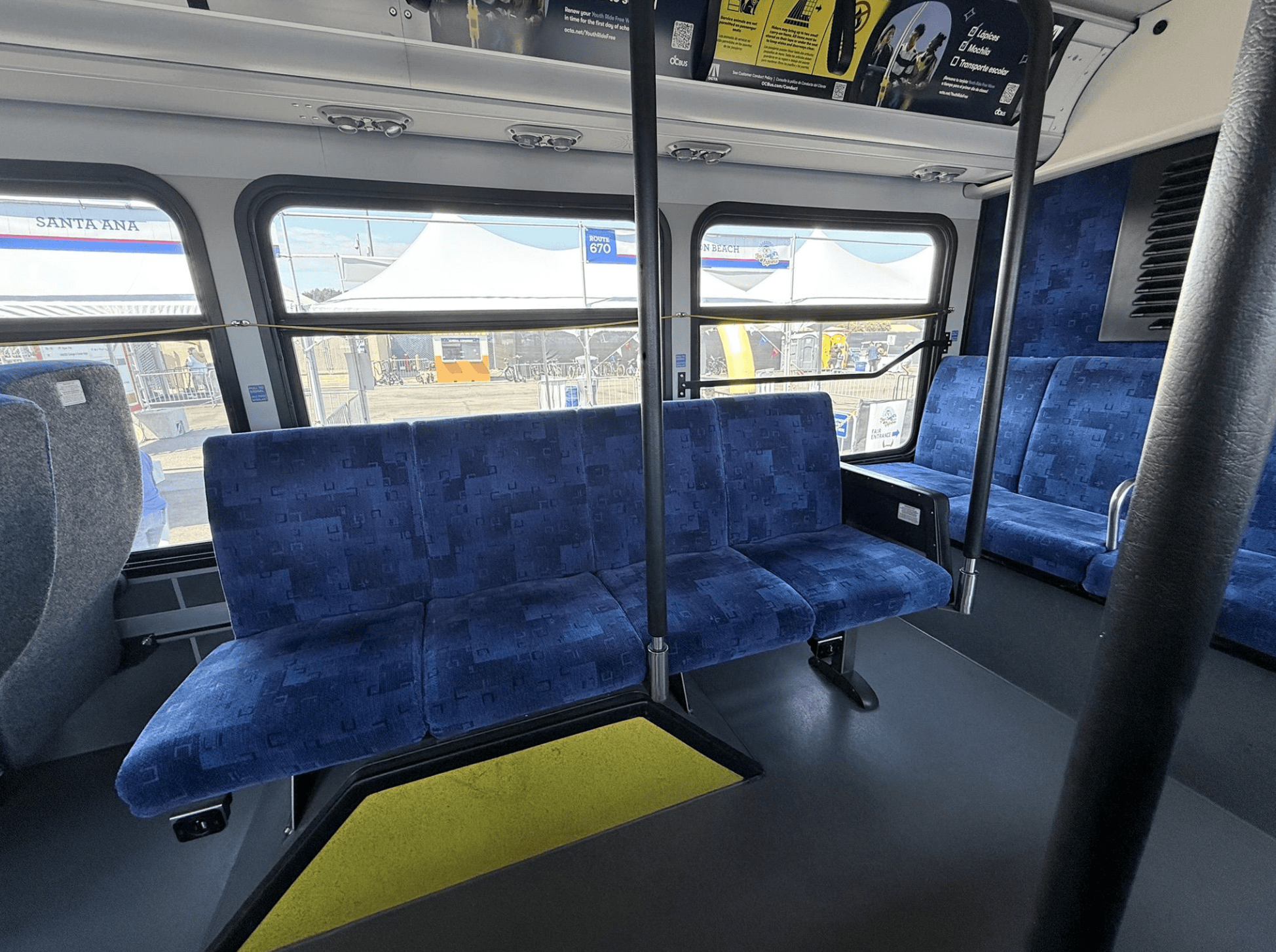
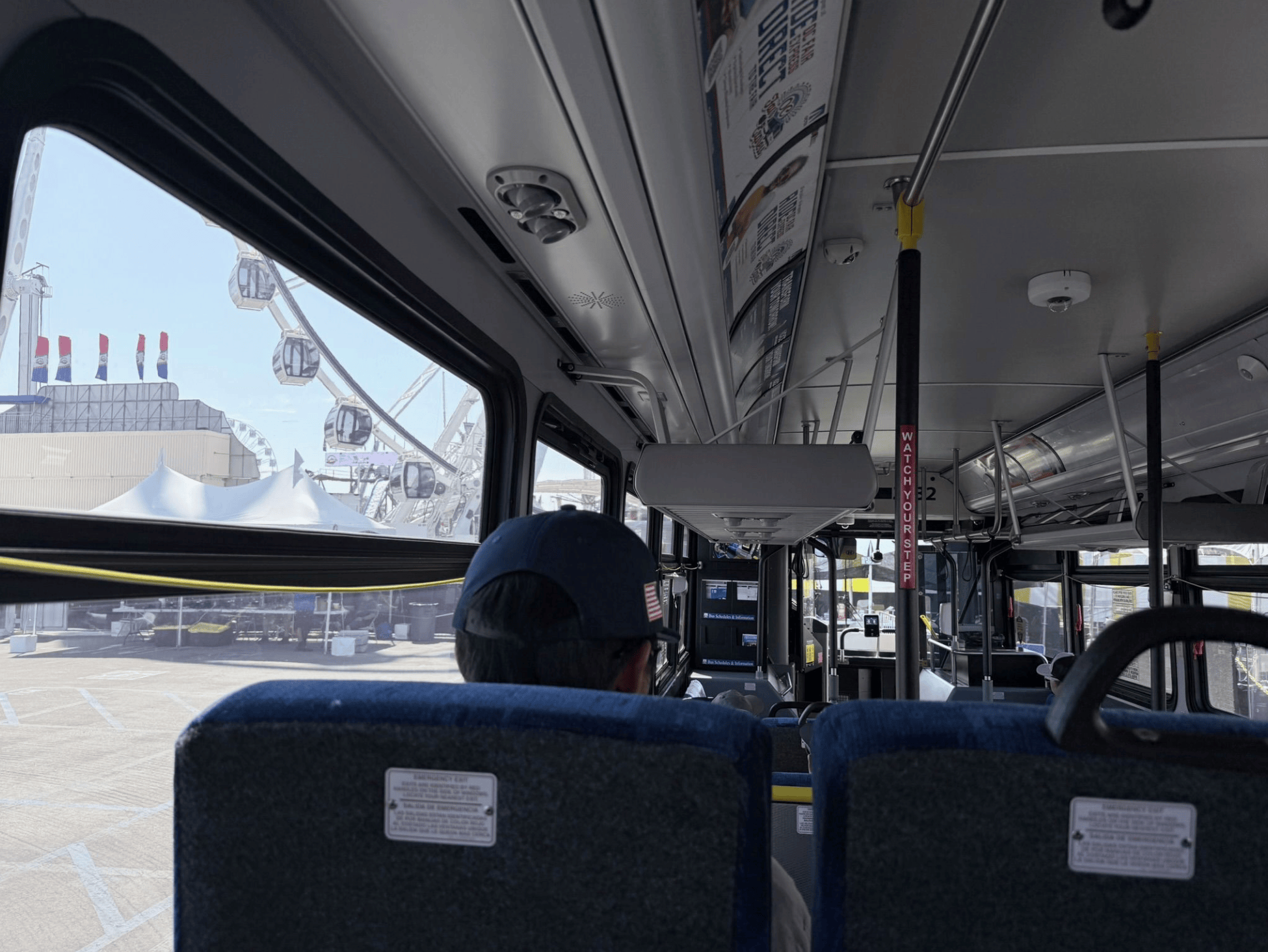
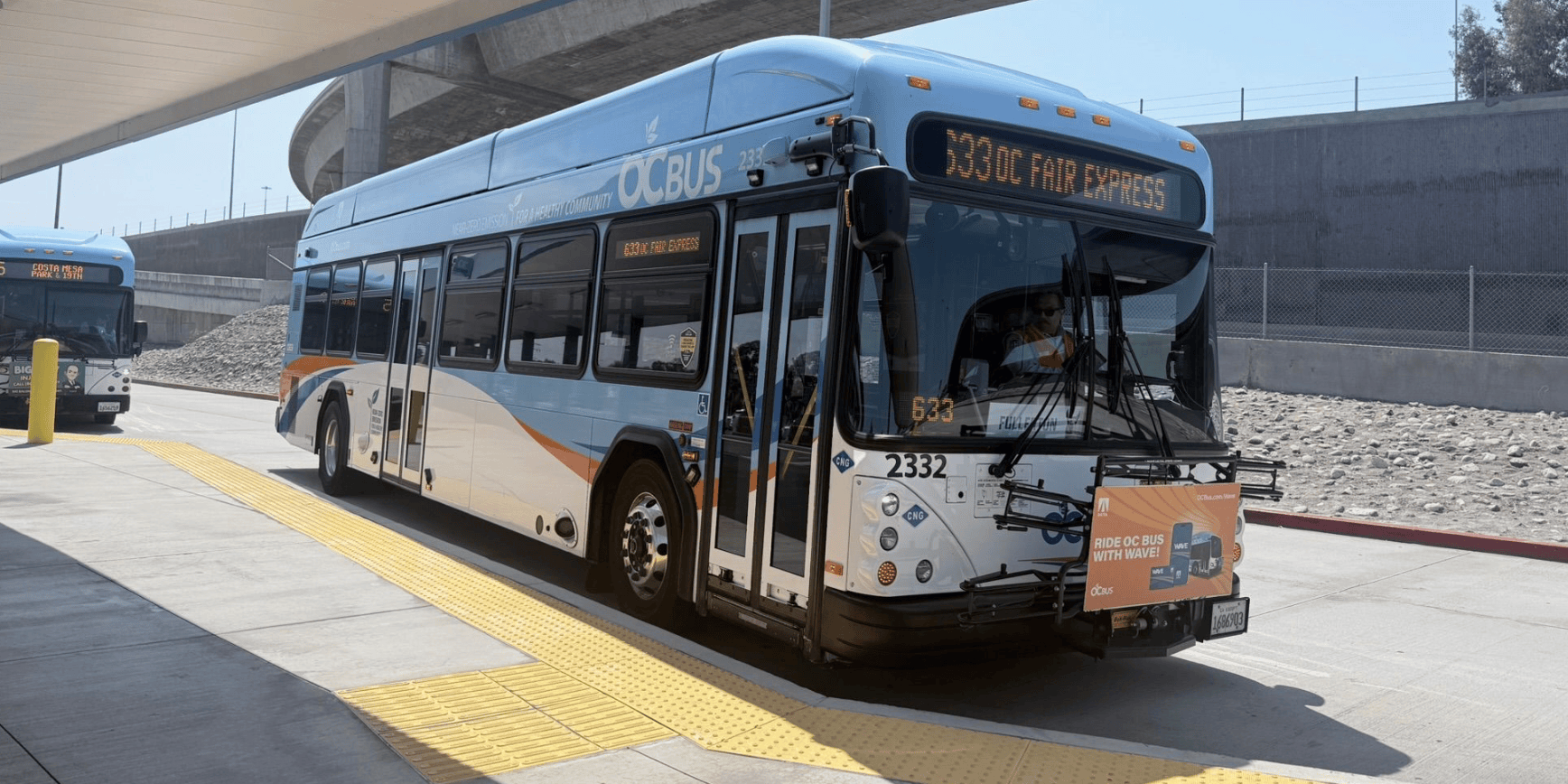 When I boarded the 11:30 am. OC Fair Express at the Fullerton Park & Ride, 3000 W. Orangethorpe Avenue, this past Sunday, I noticed it was pristine with ample seating. Once the handful of riders boarded, the platform attendant stepped onto the bus to thank us for riding and said we need to share the resource with the community, or it could be canceled in the future because of low ridership. The bus round trip cost $4, but avoiding the parking lot and the confusion of trying to find my car or the rideshare pickup spot was priceless. It runs every Saturday and Sunday during the fair from 10 am to midnight.
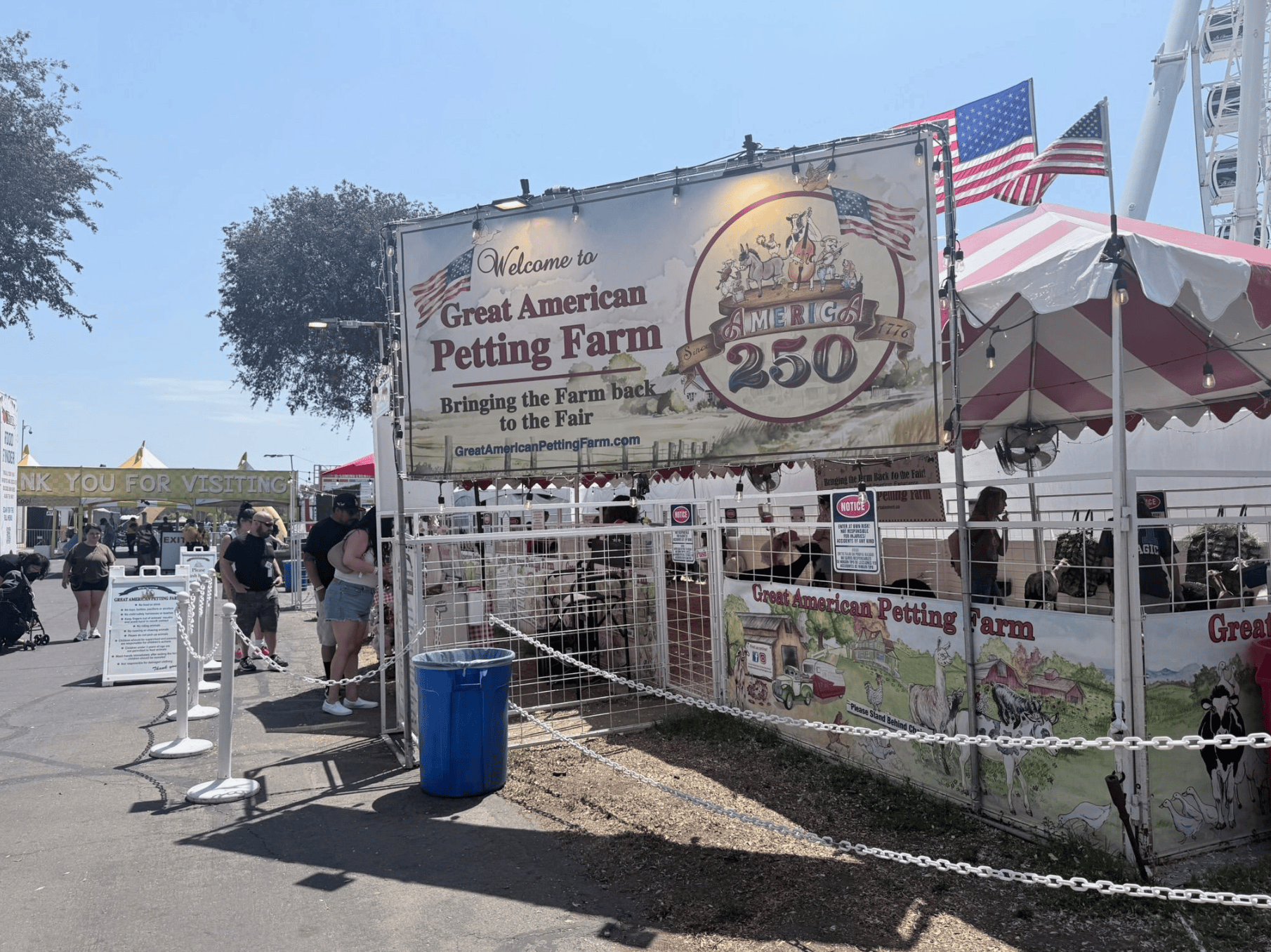
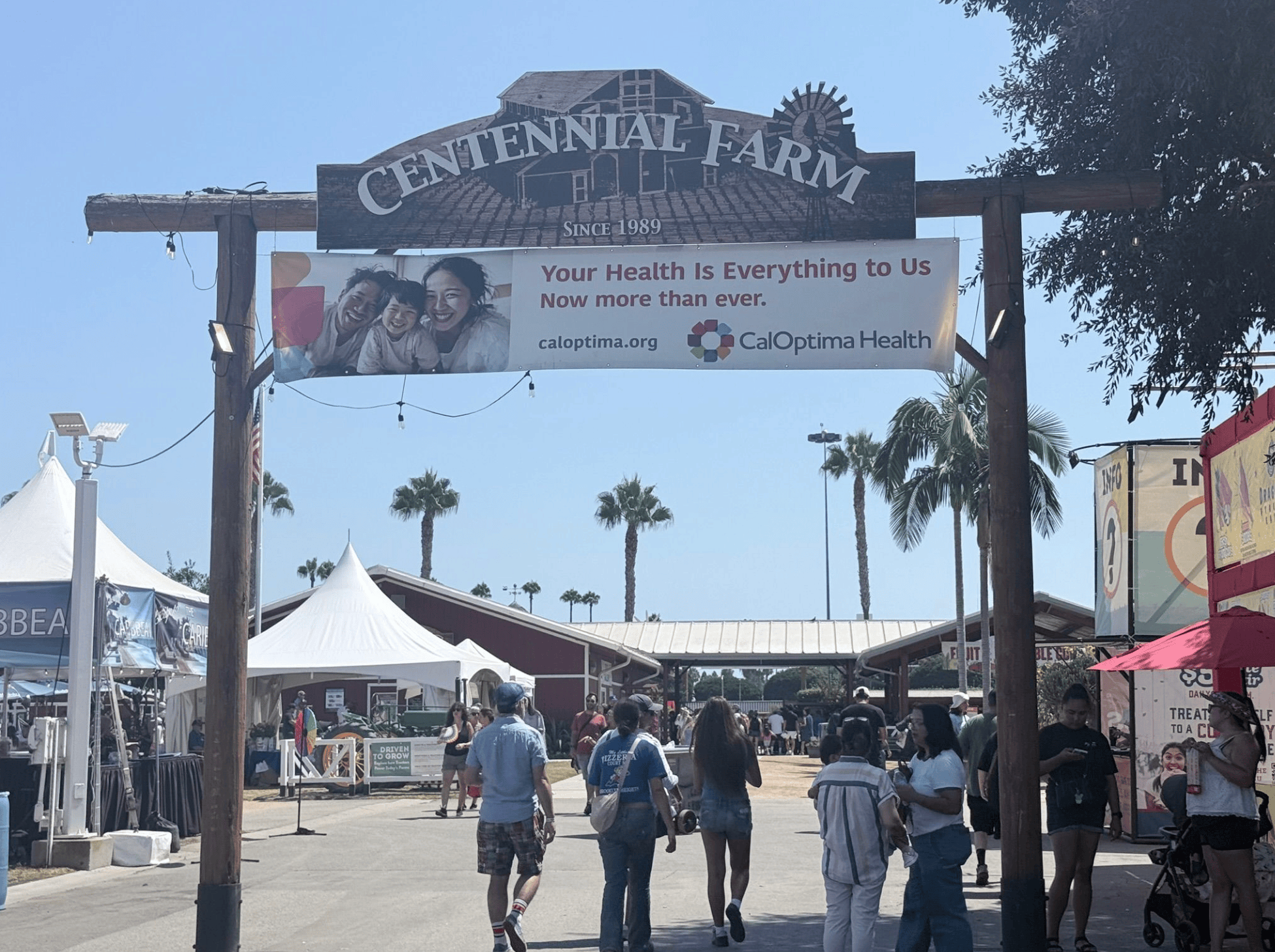
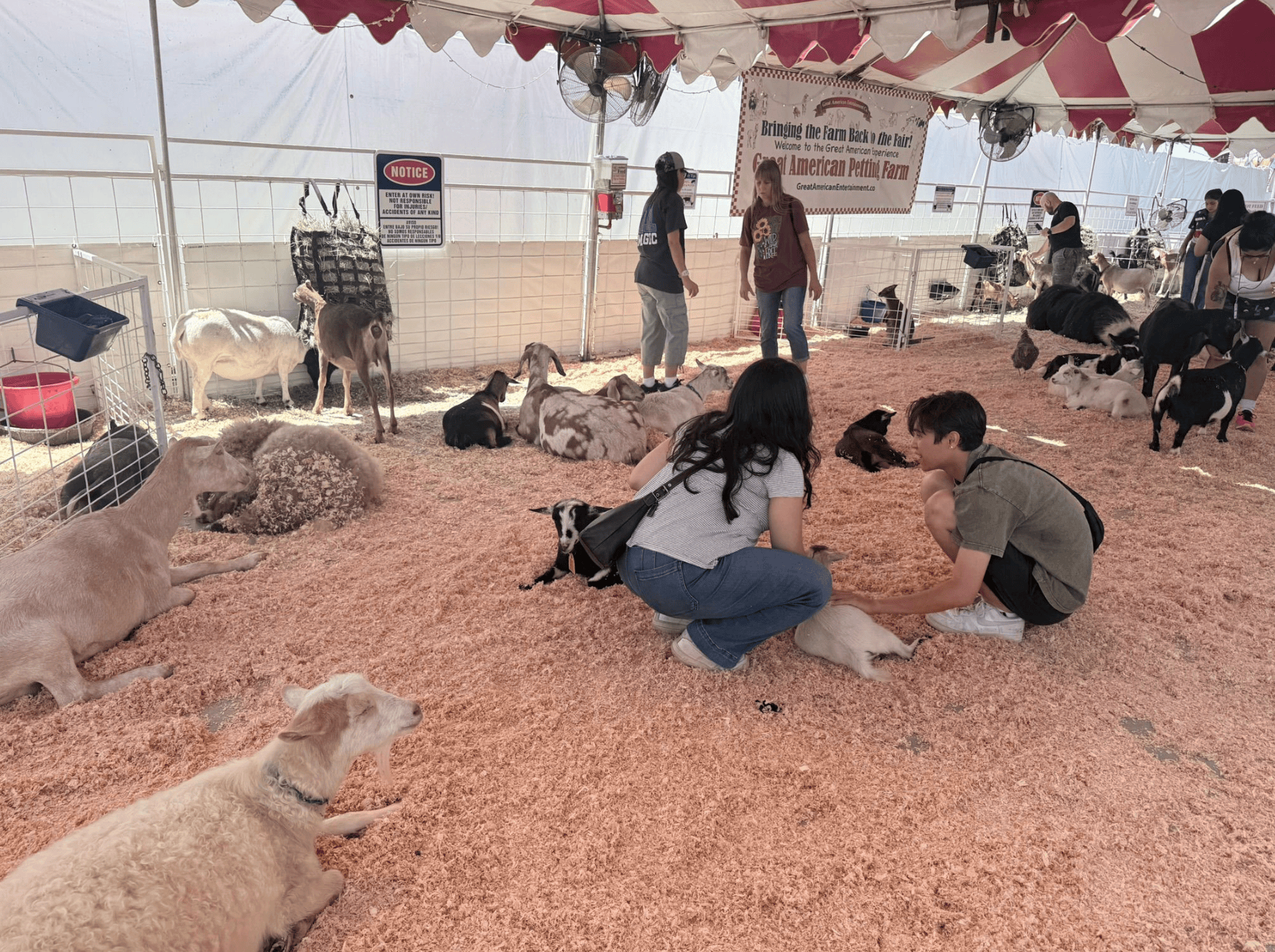
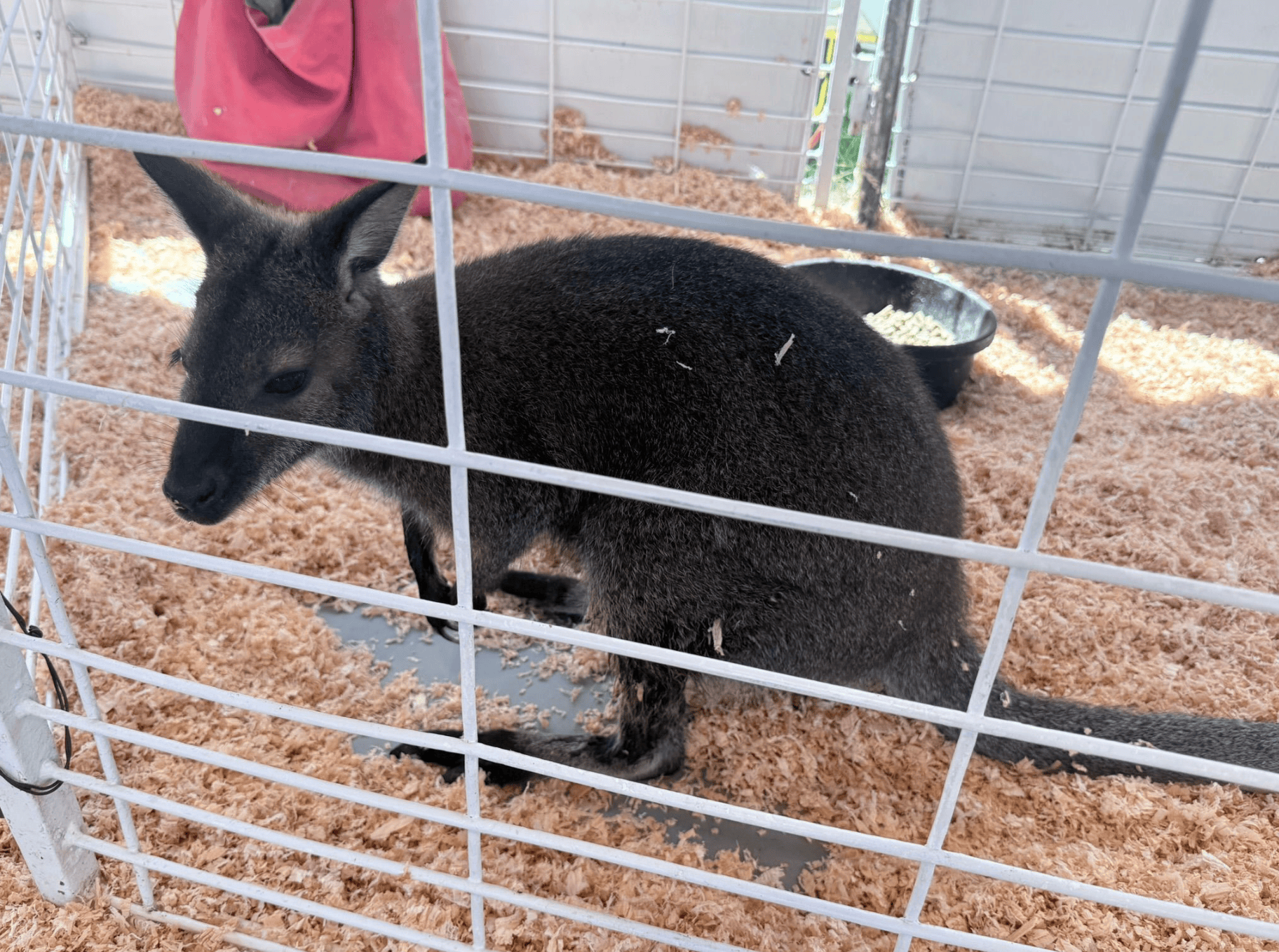
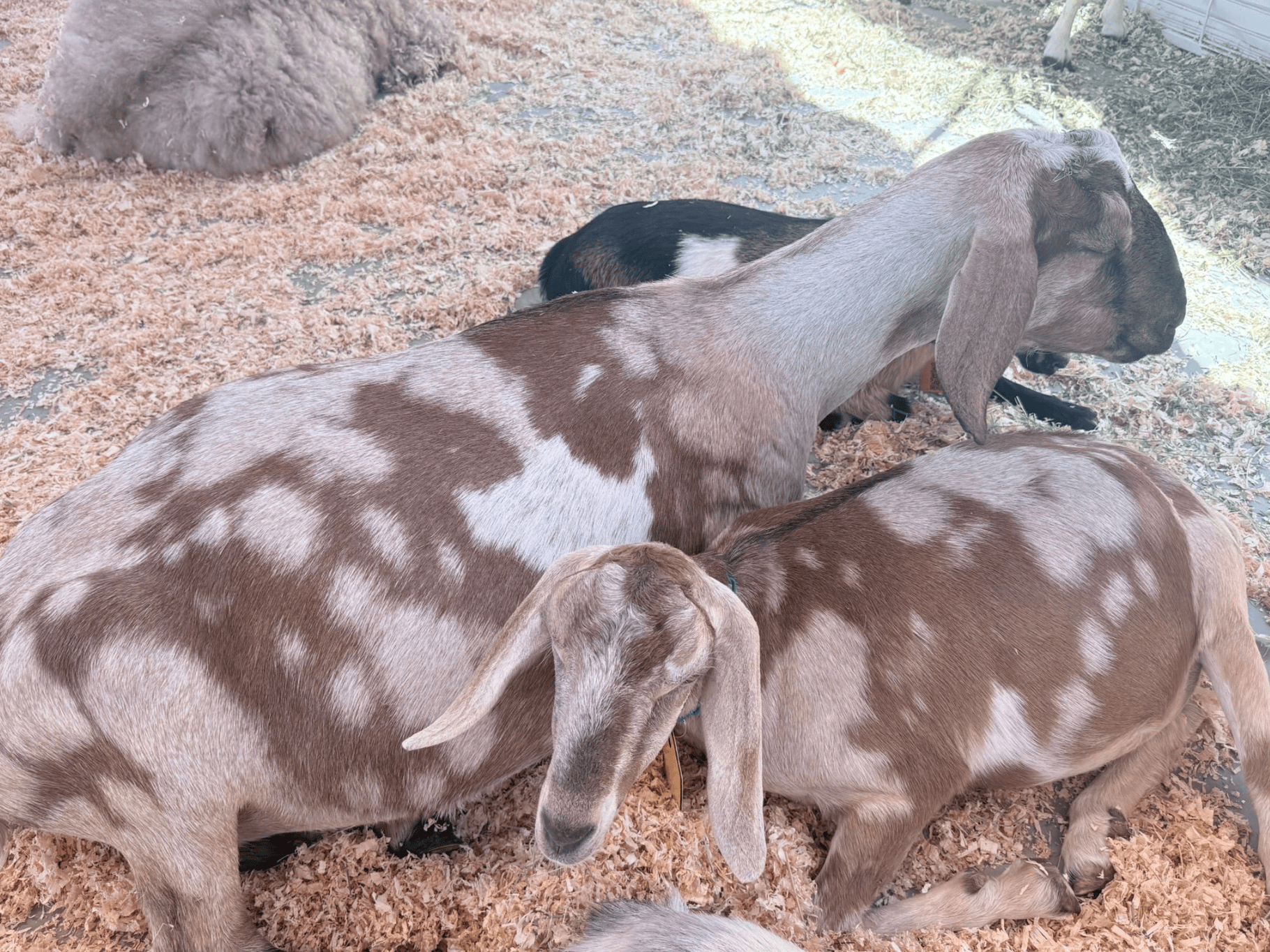
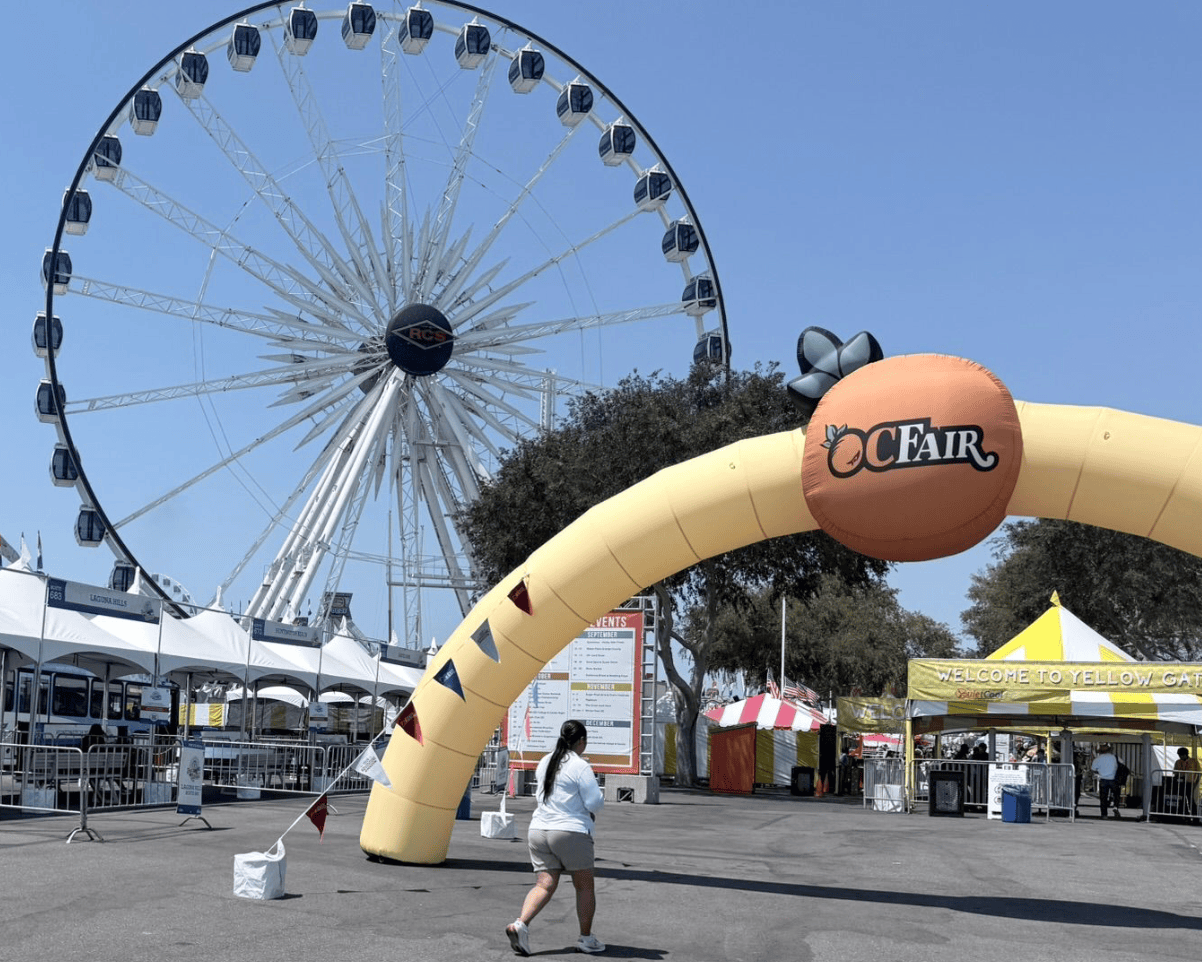
The bus let us off at the yellow gate. Walking through the bright yellow arch, the first thing I spotted was the Great American Petting Zoo. The enclosure had goats, sheep, pigs, and a wallaby. It was a hot day, and like me, it seemed to zap most of the petting zoo animals of their energy and social abilities. A few of the animals seemed to enjoy the attention, but I think their real motivation was the snacks being fed to them from ice cream cones filled with pellets.
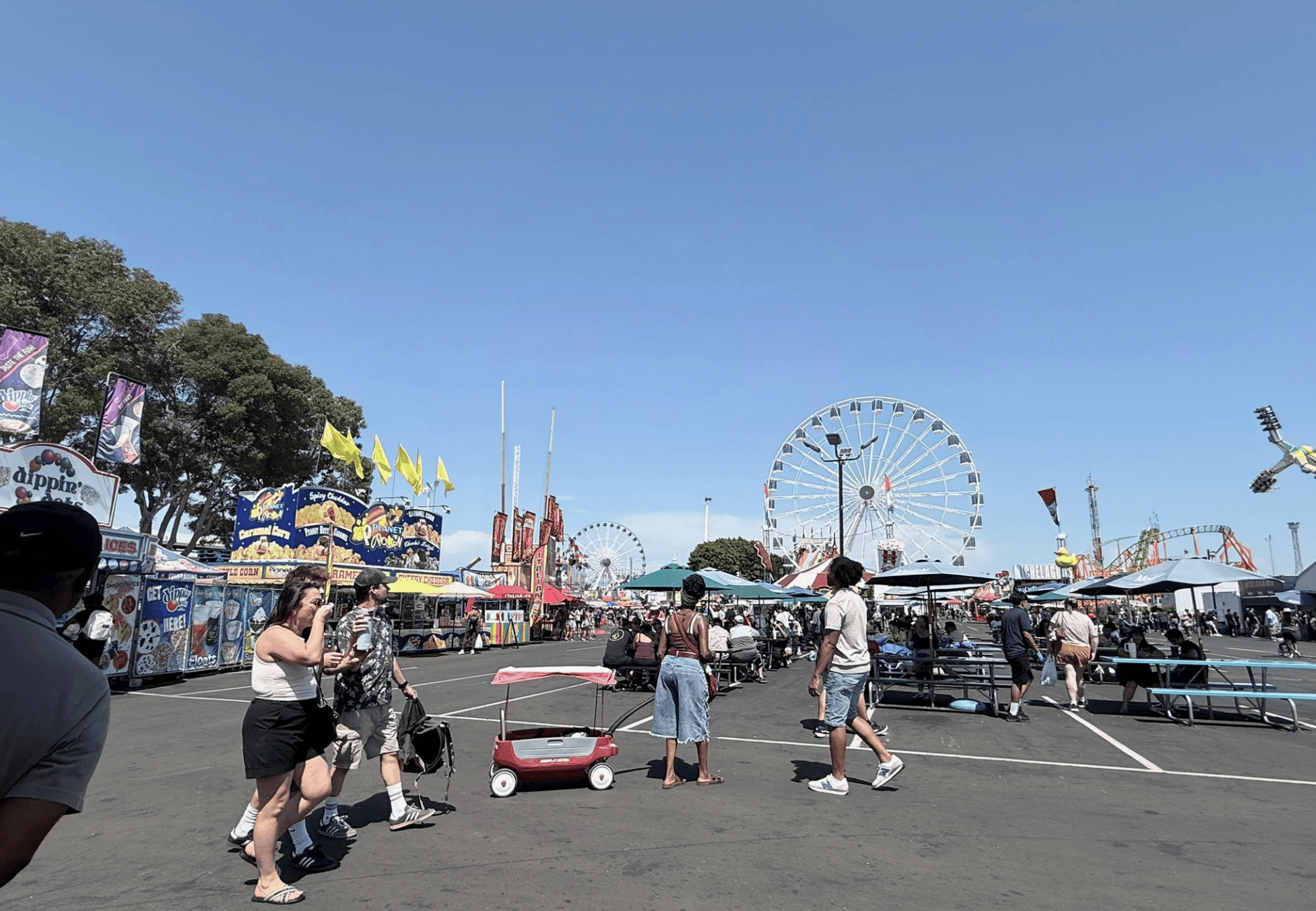
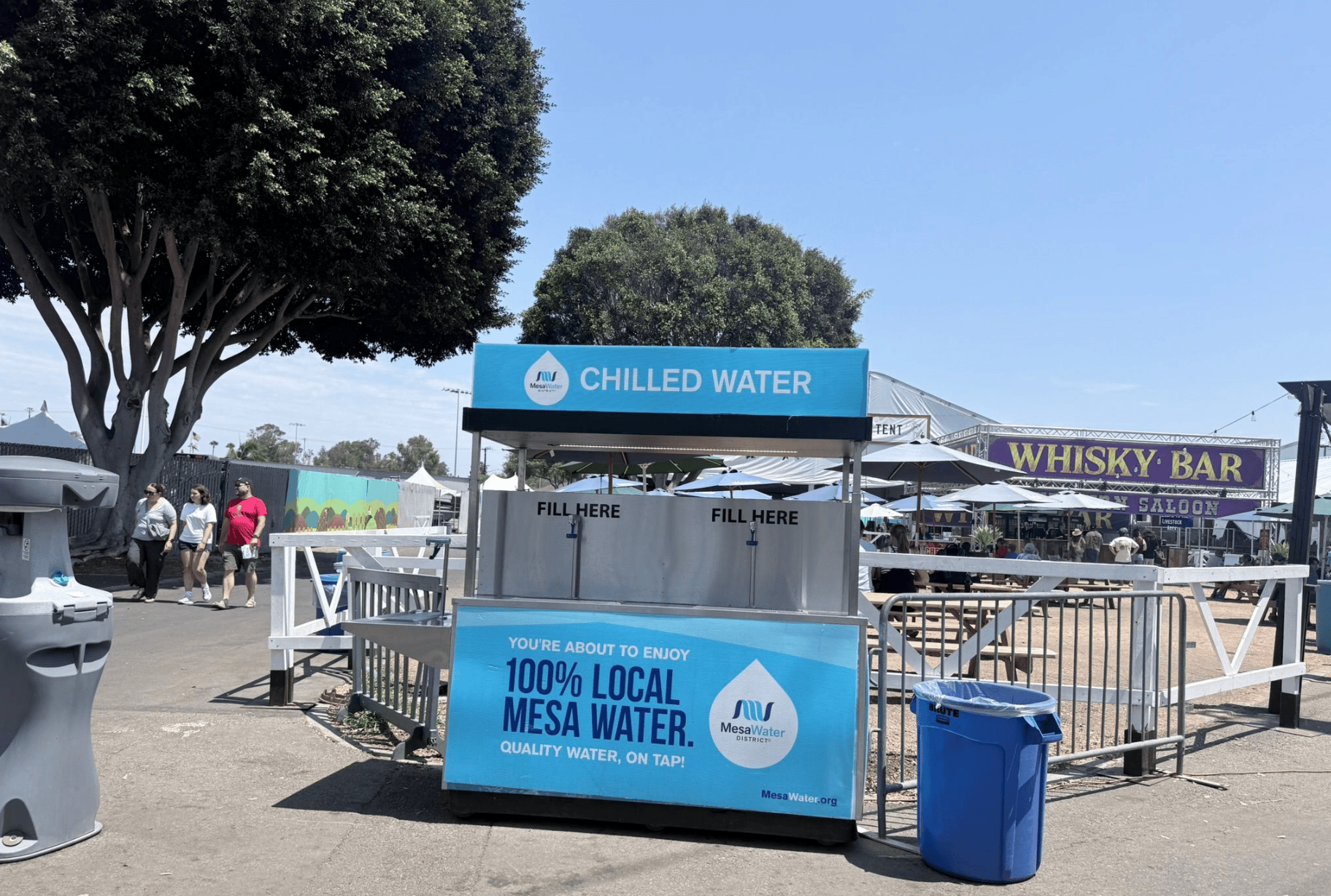
 It was close to noon, and the sun was bright. The heat radiated off the asphalt, and there wasn’t any shade other than the livestock area near me. I walked through it to break the direct sunlight, but the smell, along with knowing the fate of the farm animals, led me back into the heat. I found one of the six Chilled Water Stations to fill my empty water bottle. The cool, fresh water felt like a respite.
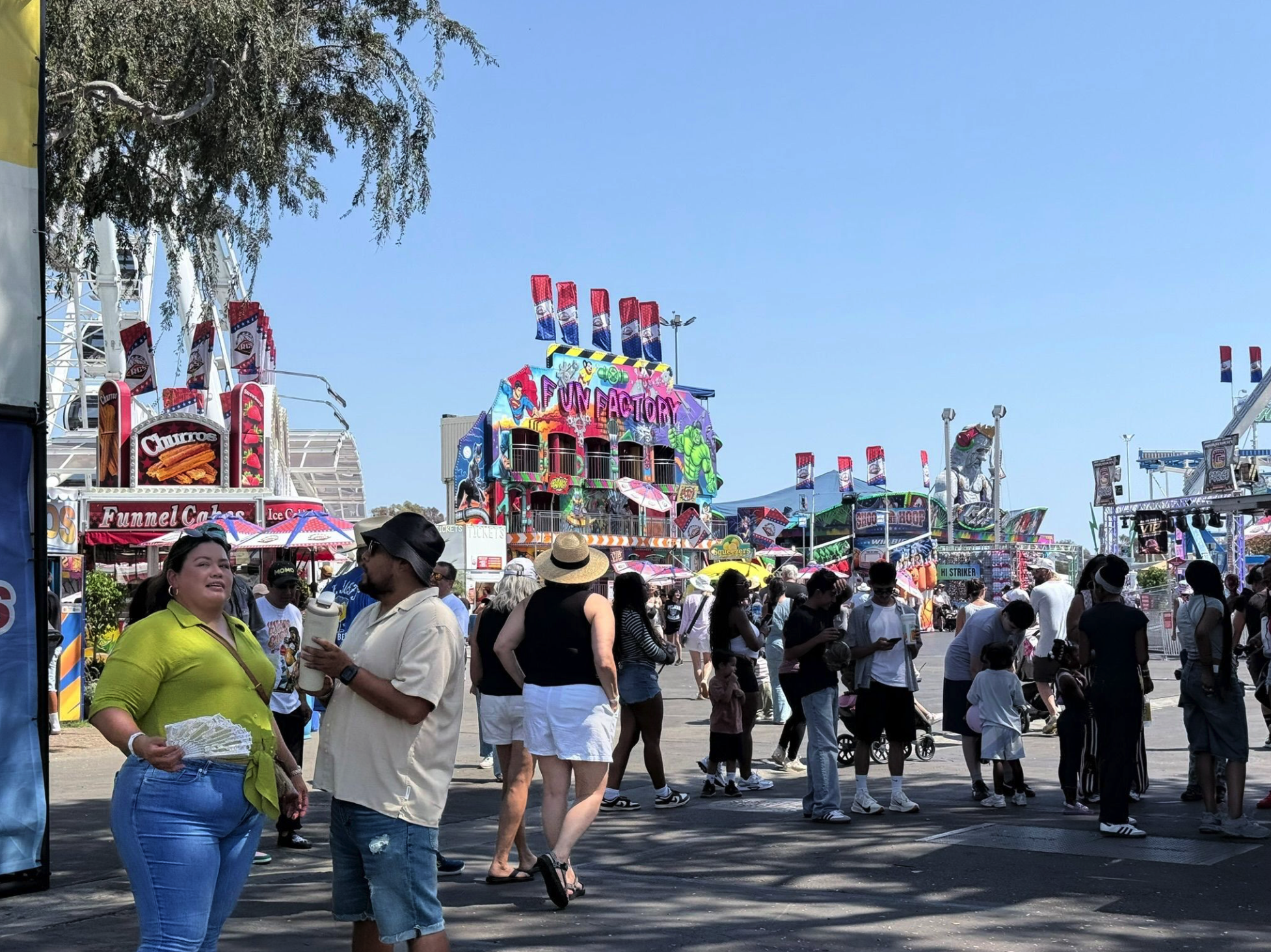
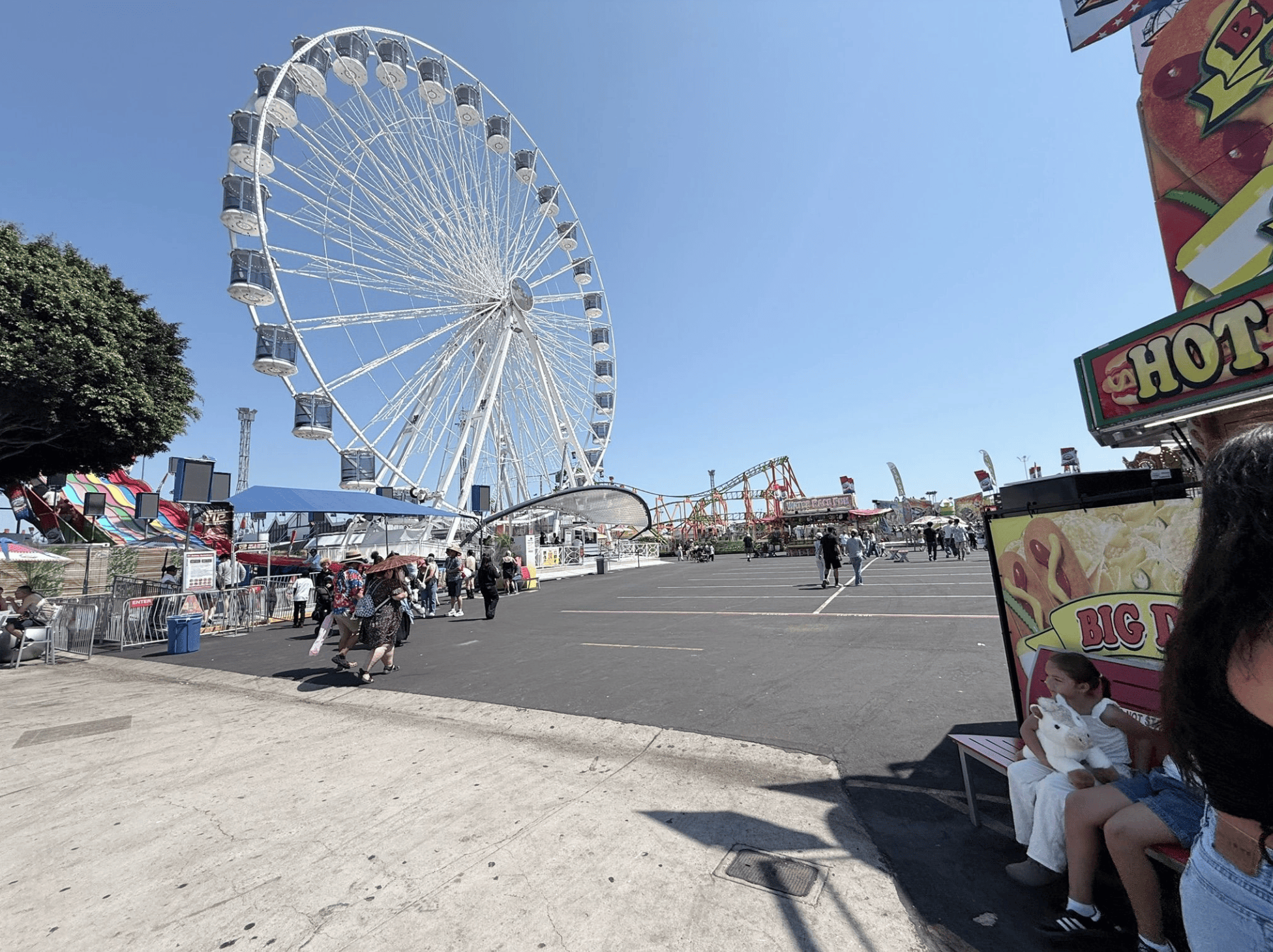
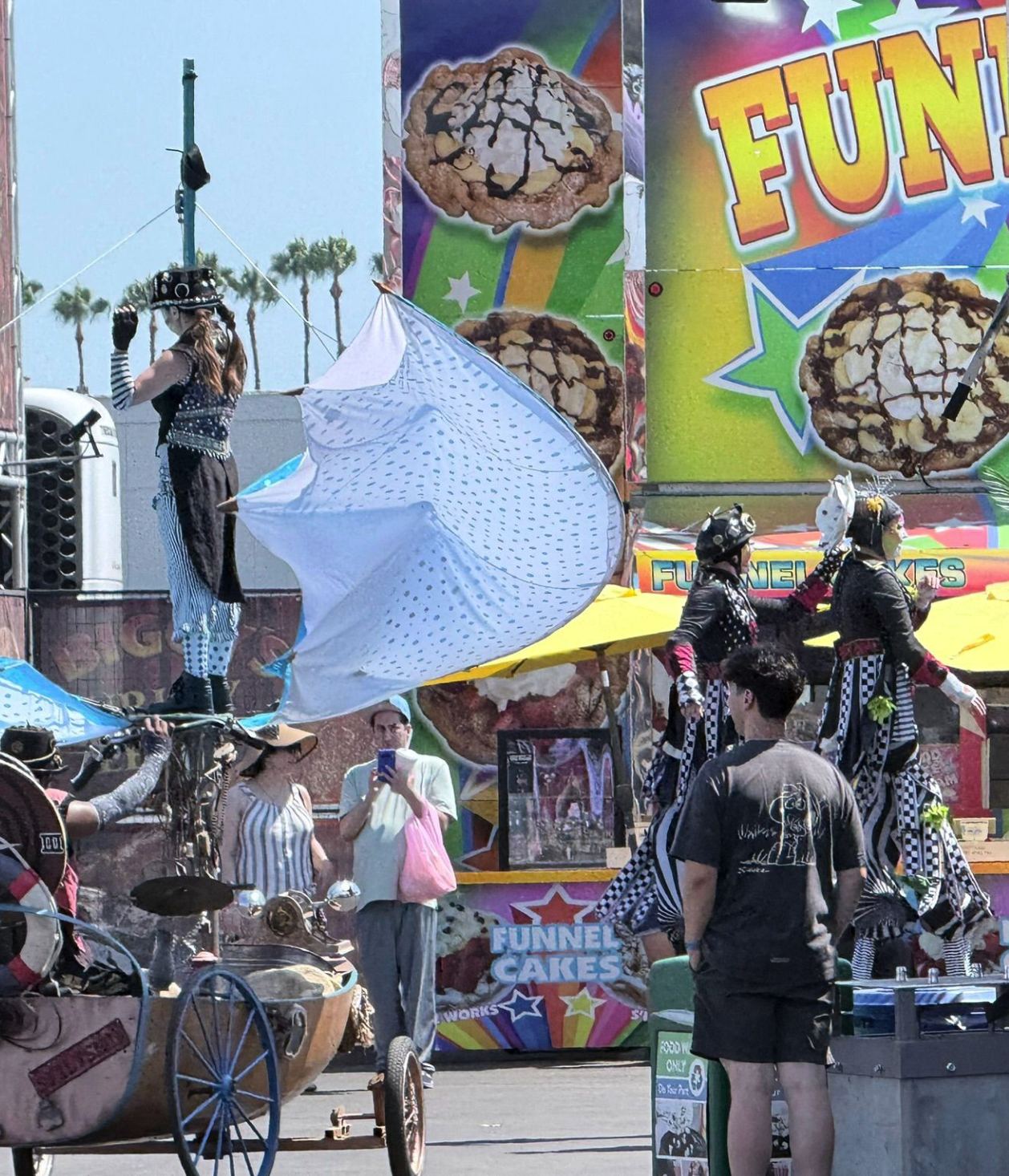
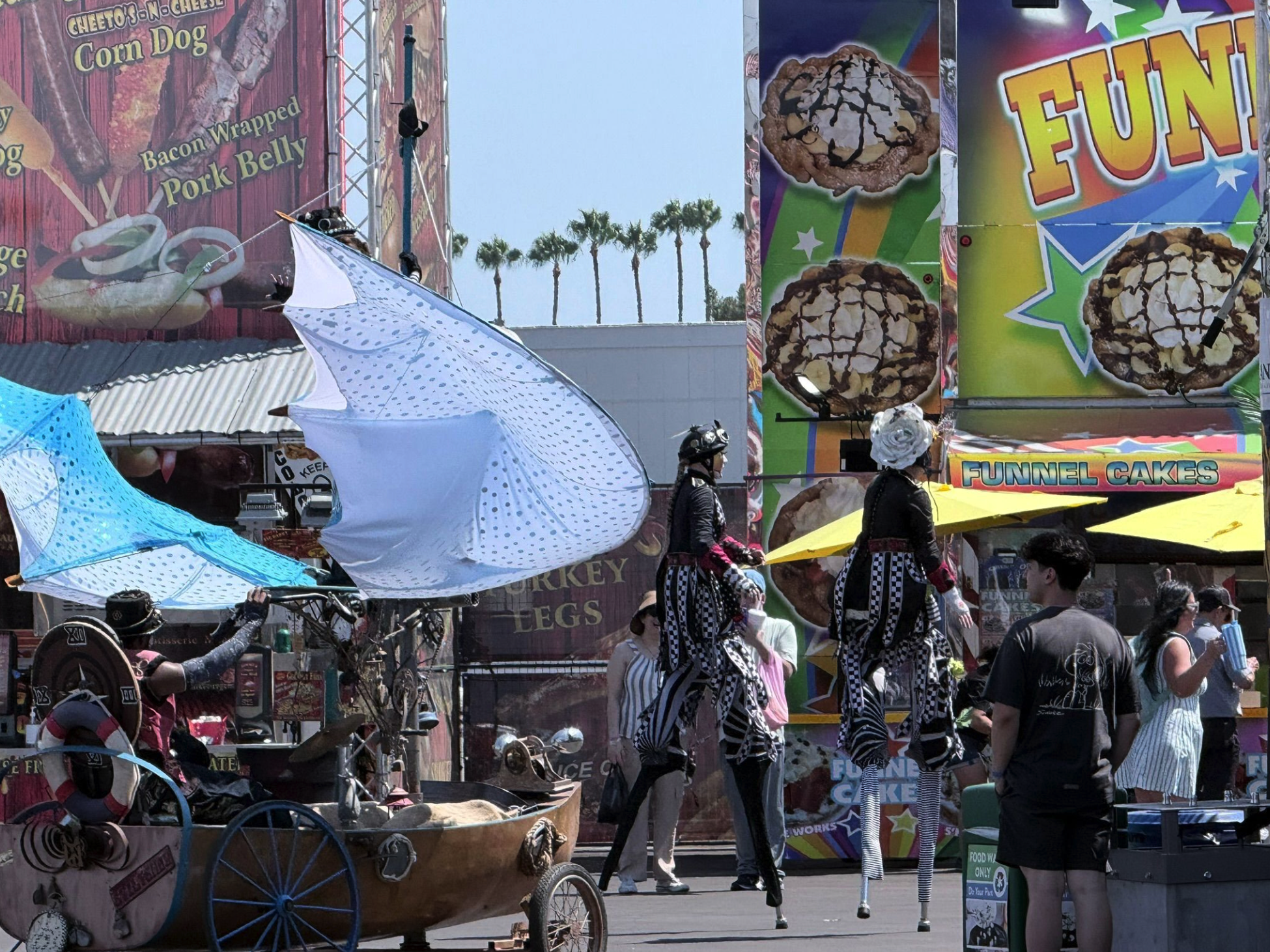
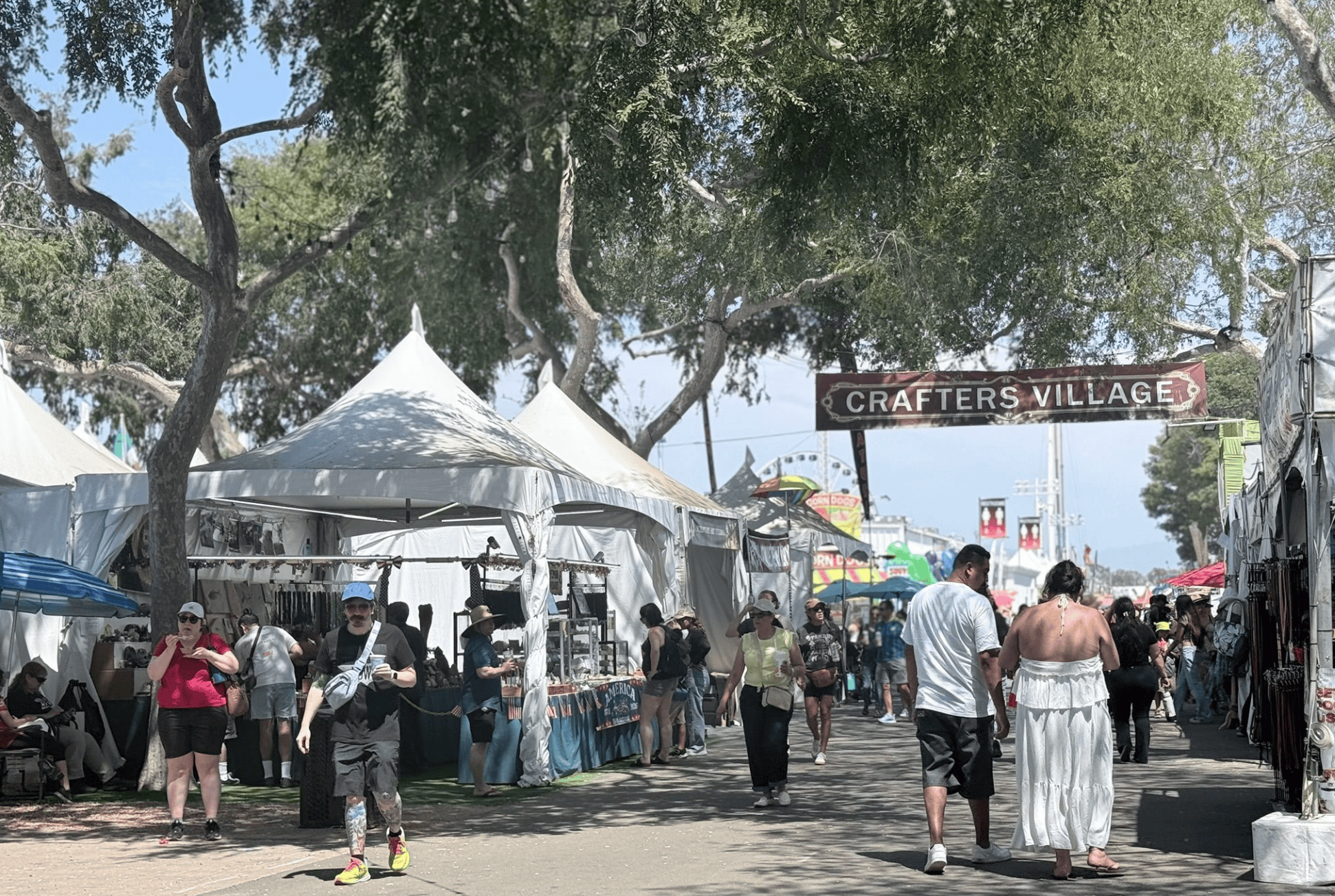
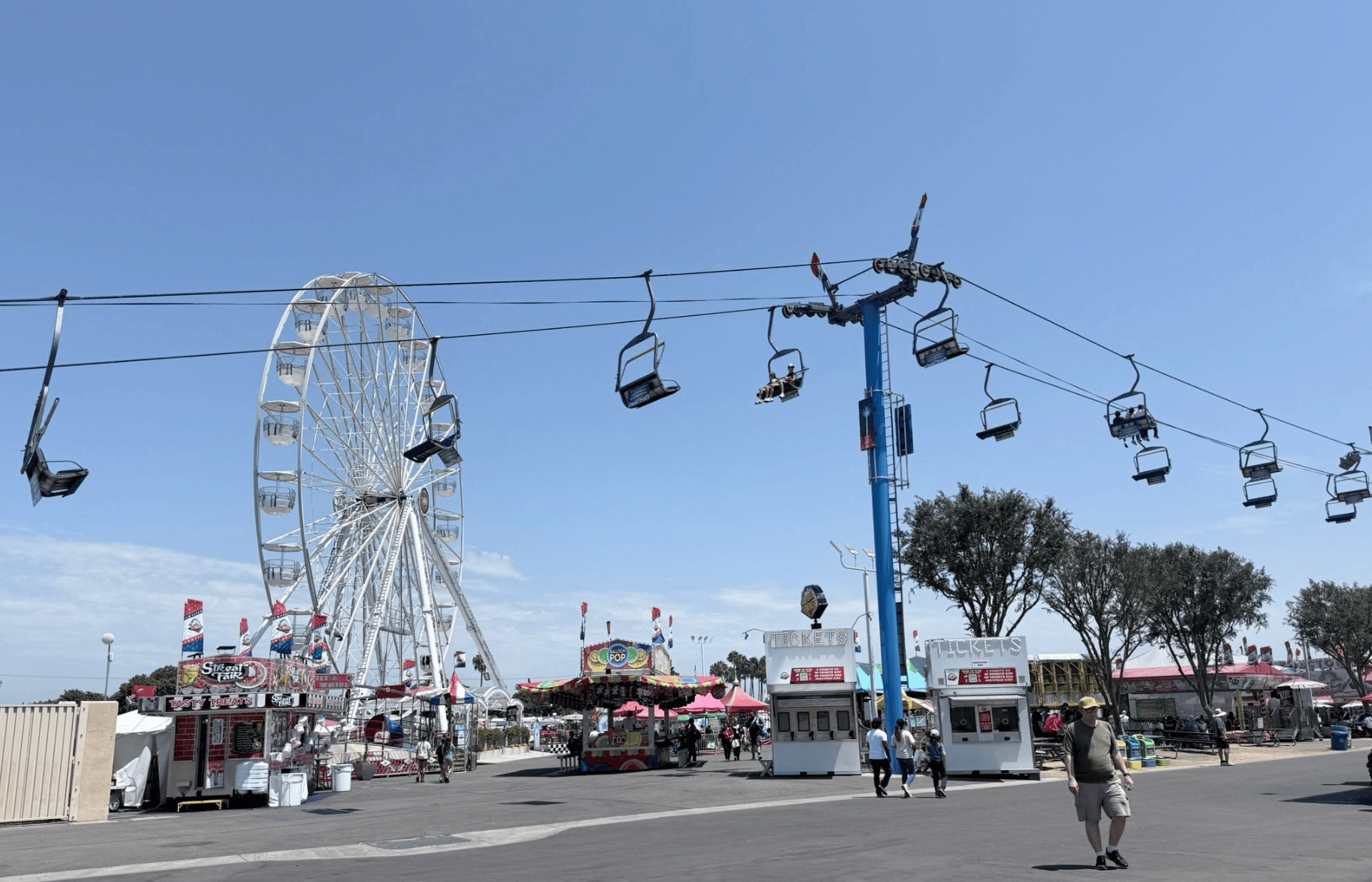
I decided to find the Plaza Pacifica Stage early and hopefully bask in its AC. I walked past several rides, most of which were running. Carnival performers walked through on stilts. Some young families and mixed-age groups milled about. I overheard one little girl trying to negotiate with her father for an ice cream.
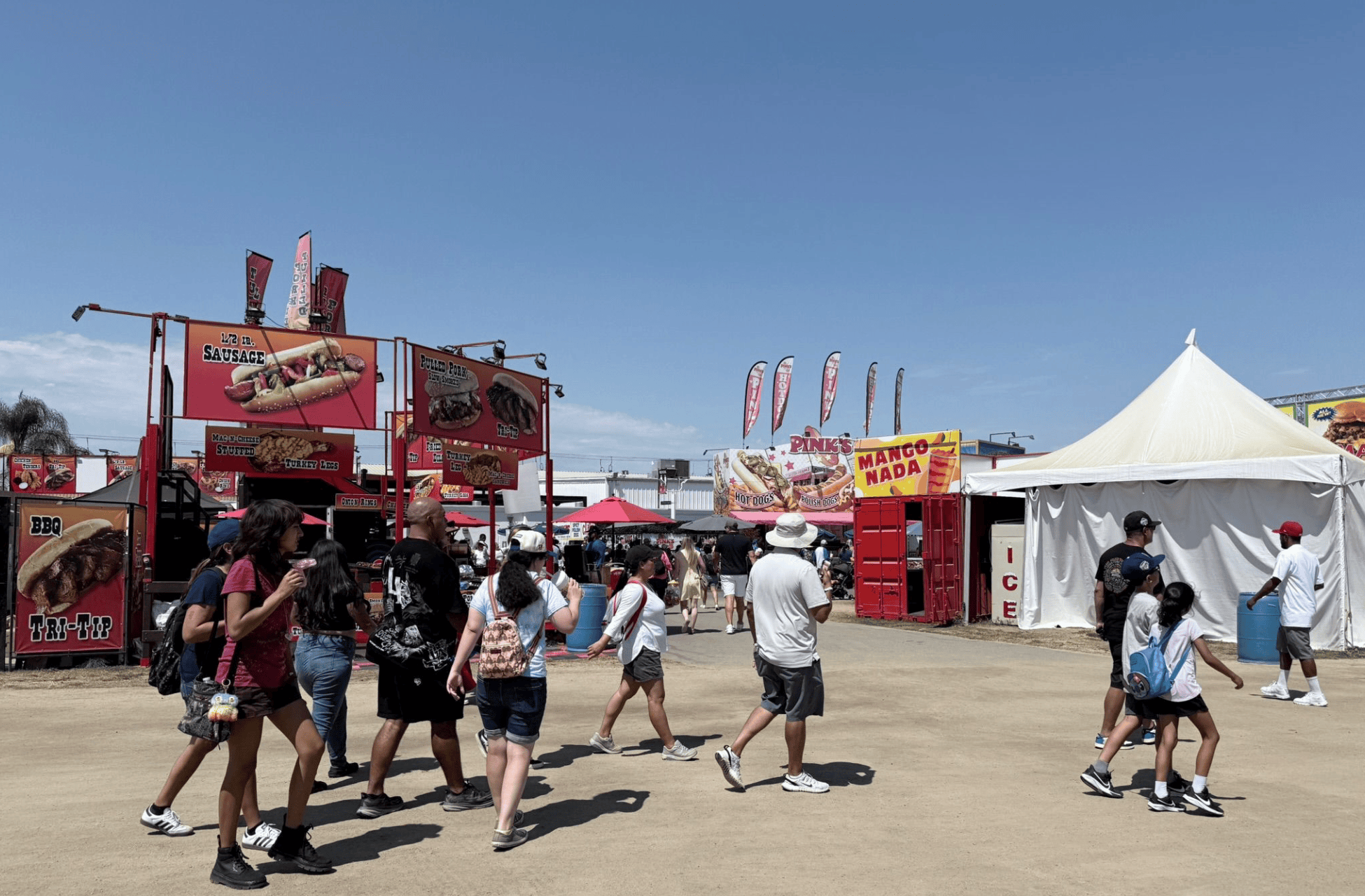
Several food stalls offered everything from aguas frescas and turkey wings that made you wonder if they belonged to a dinosaur to BBQ and fried everything. Unfortunately for me, the only vegan food item I saw advertised was a Dole Whip. I kept looking for the stage without success.
The fairgrounds are 130 acres, and I didn’t want to walk out of my way. I approached an information booth and looked at the map hanging on the wall. It seemed off. An information attendant stood by the kiosk. I asked if it seemed right to her. She replied that it looked a little weird. Then I realized the buildings and gates were inverted. The numbering was correct, but the gate that should have been at the bottom of the map was at the top. I was heading in the right direction.
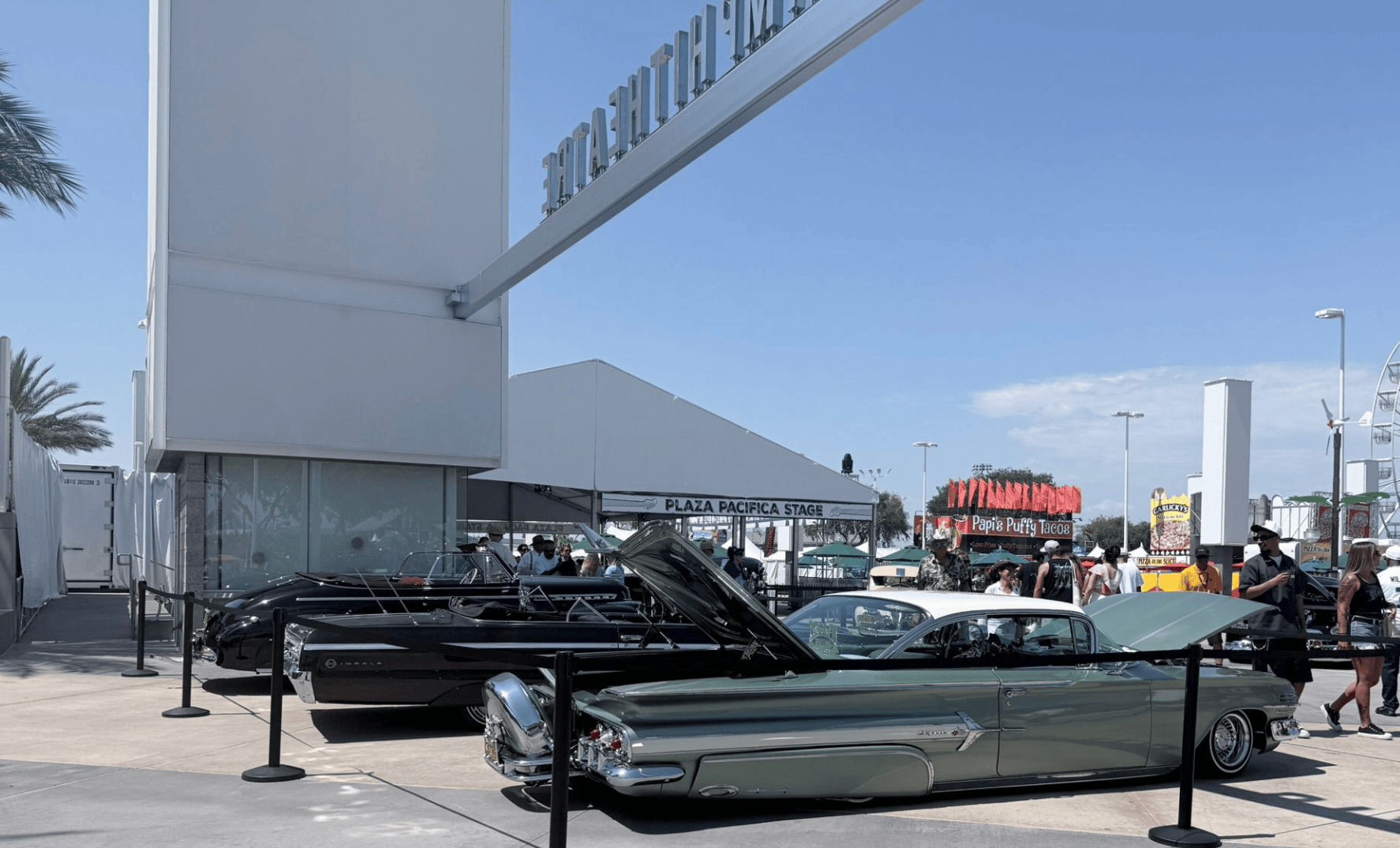
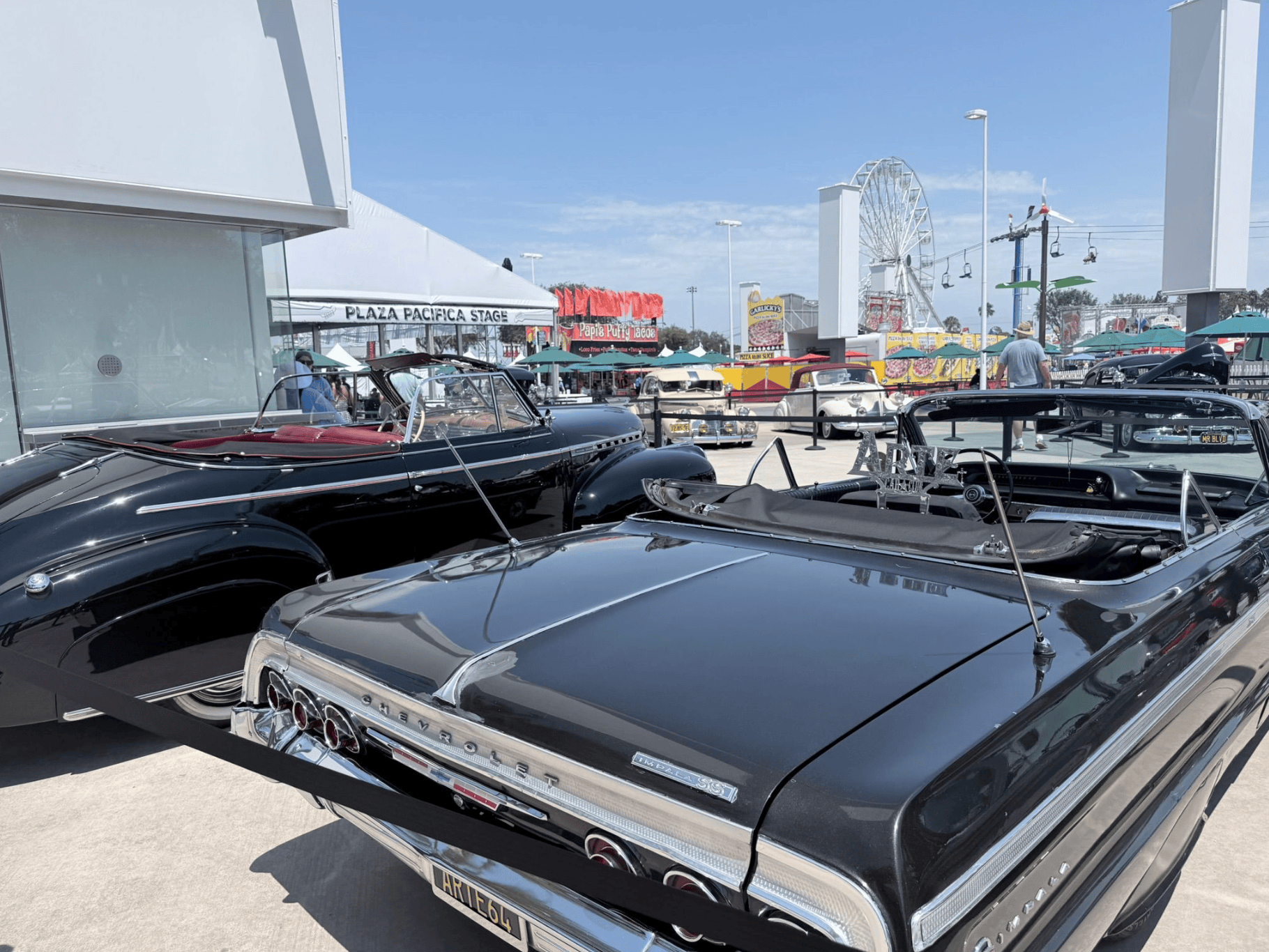
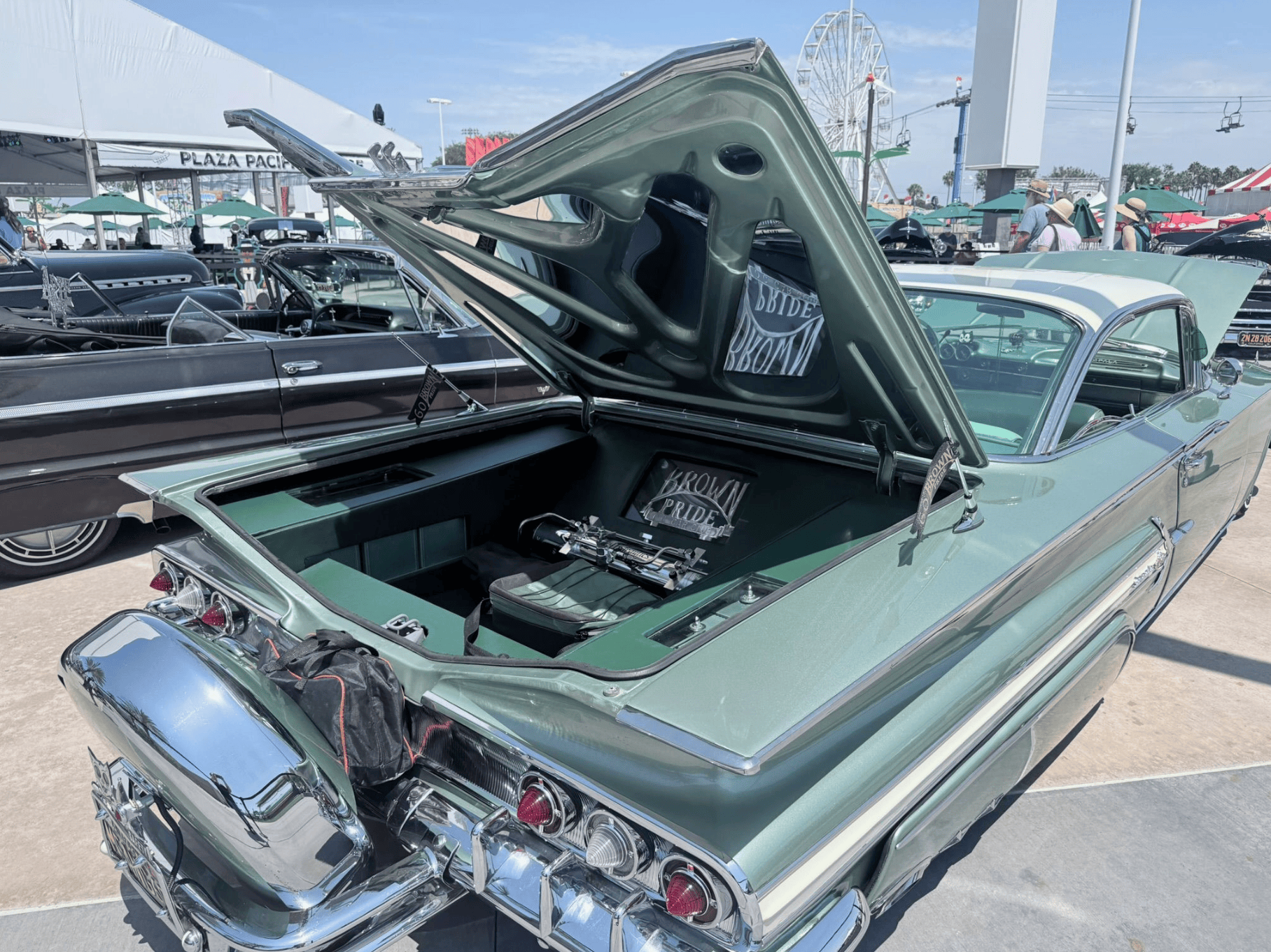
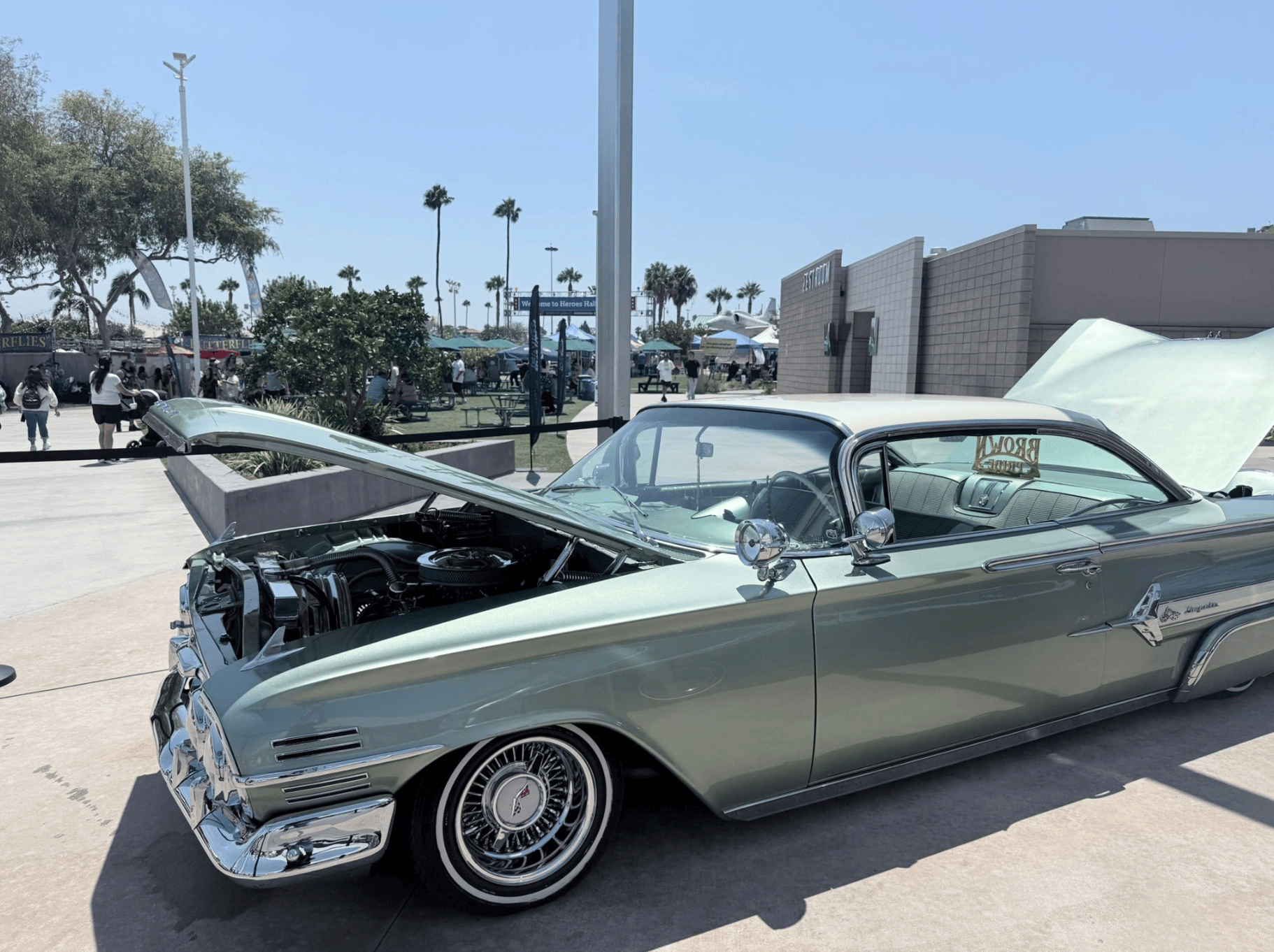
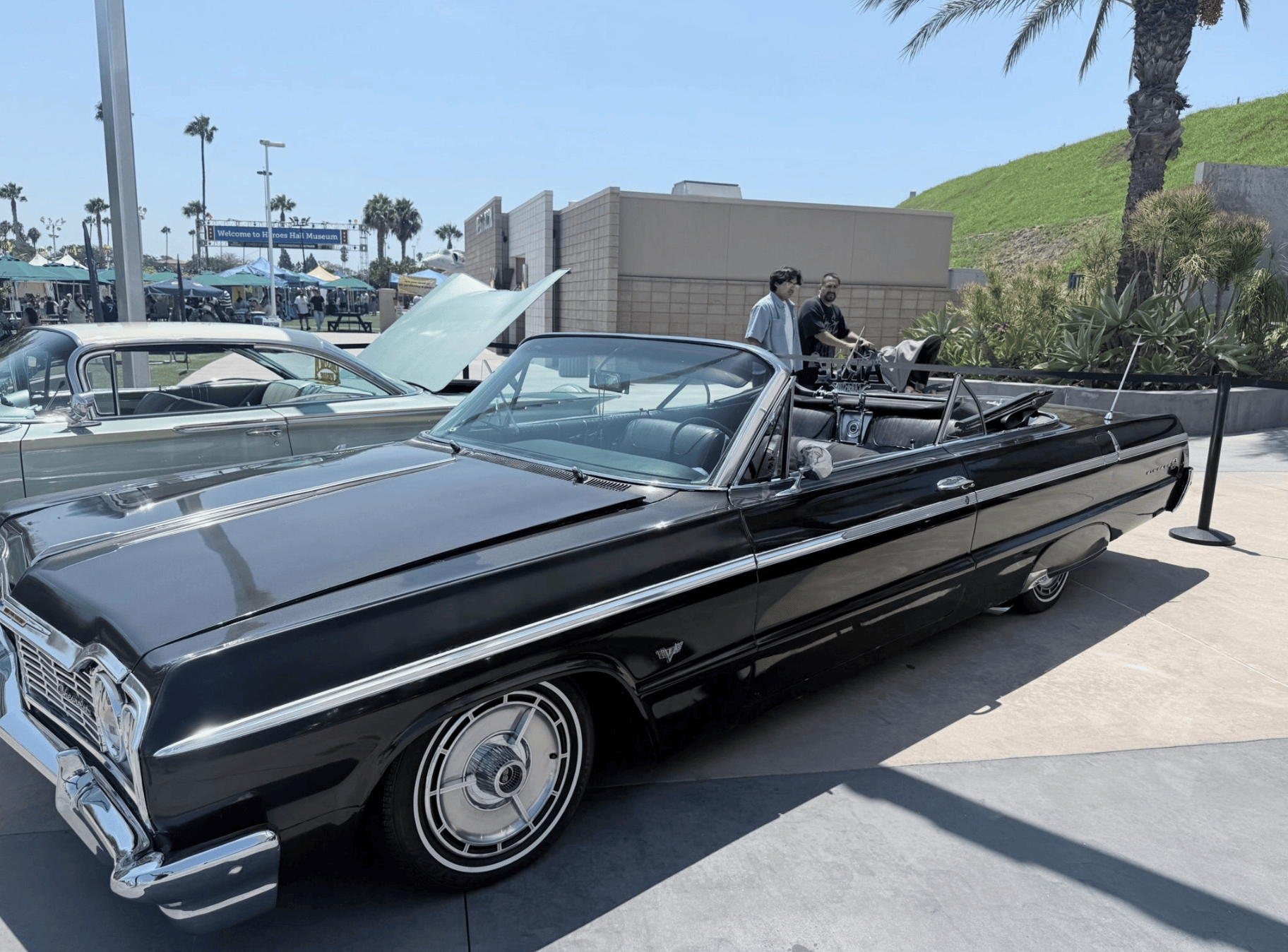
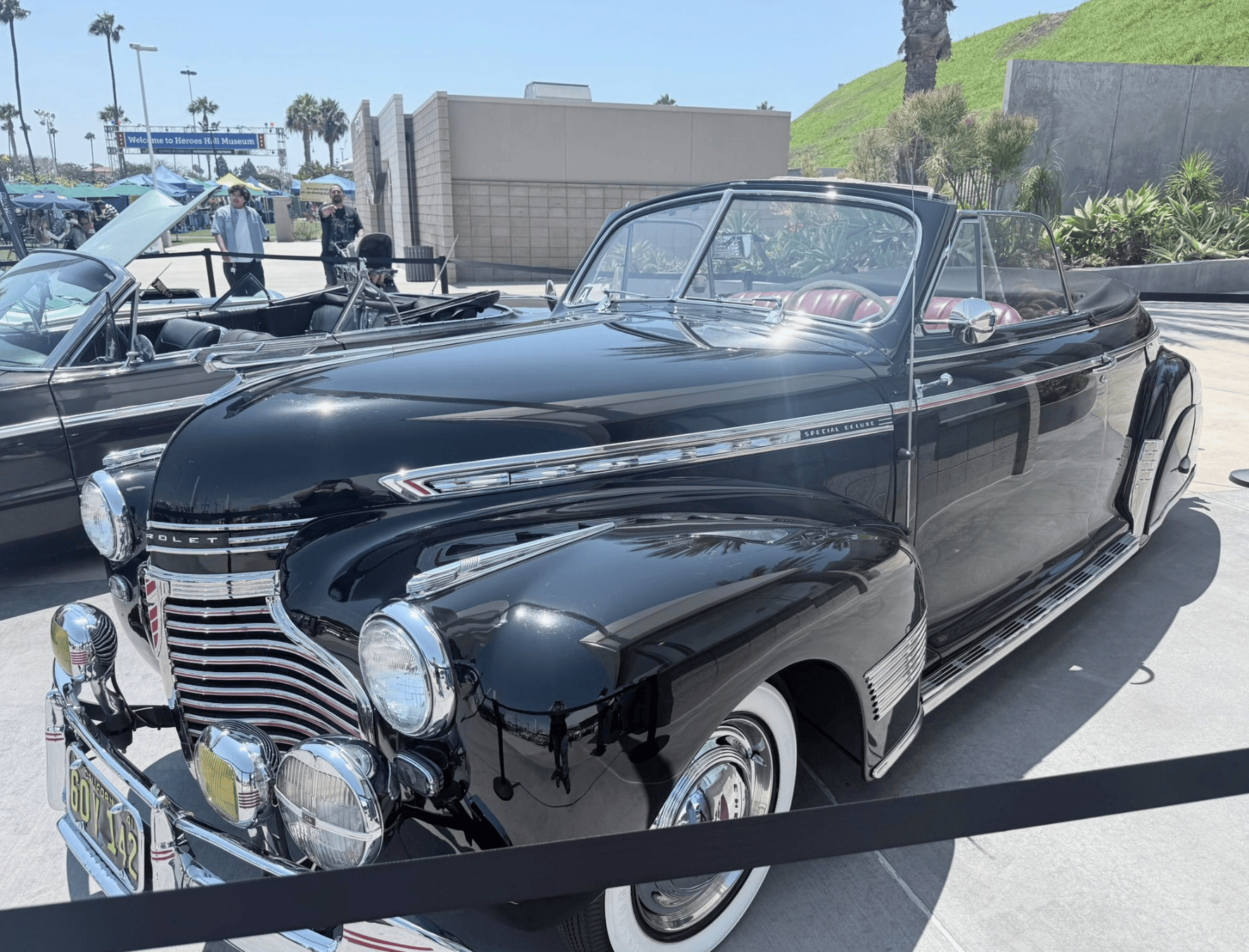
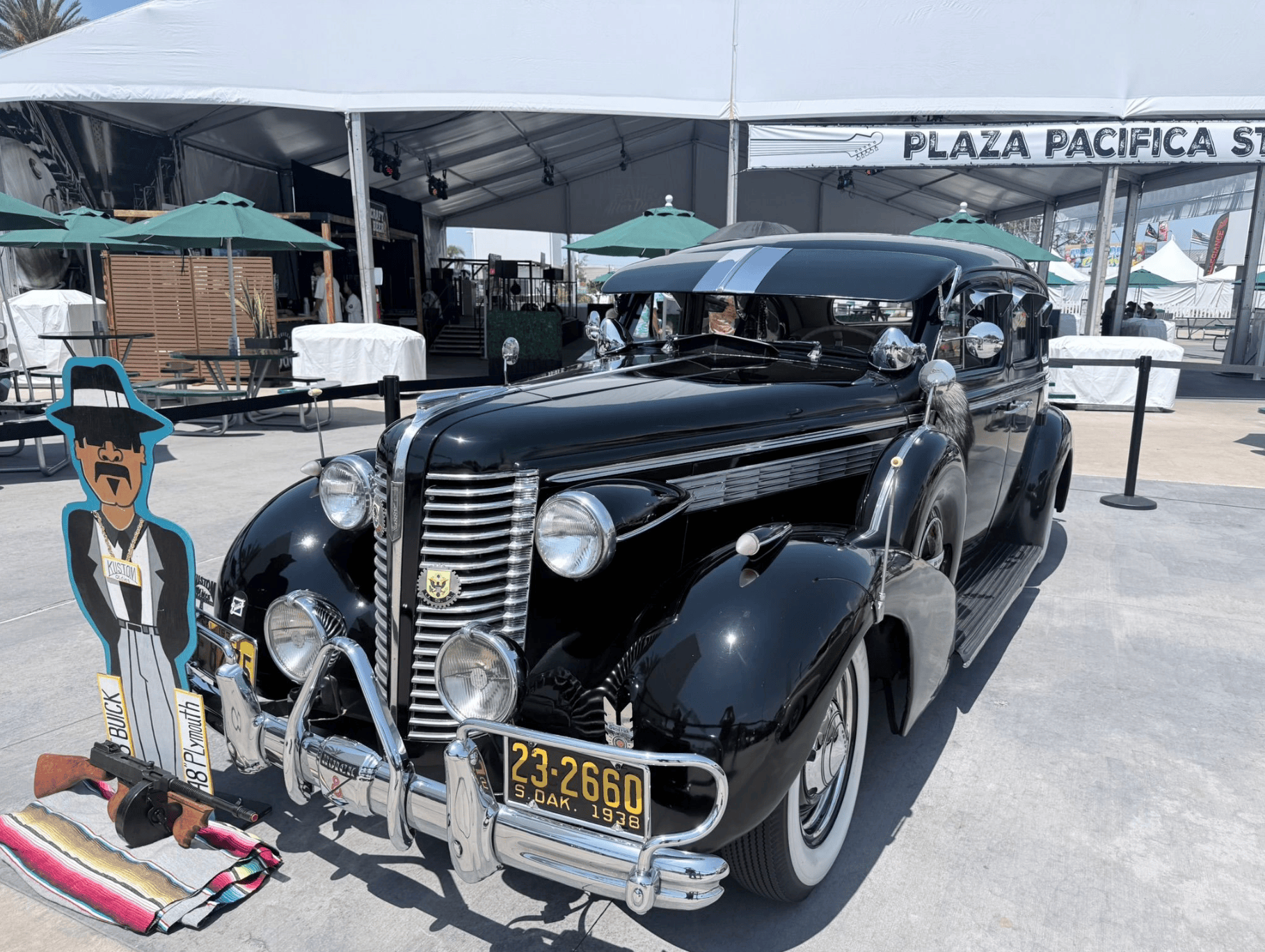
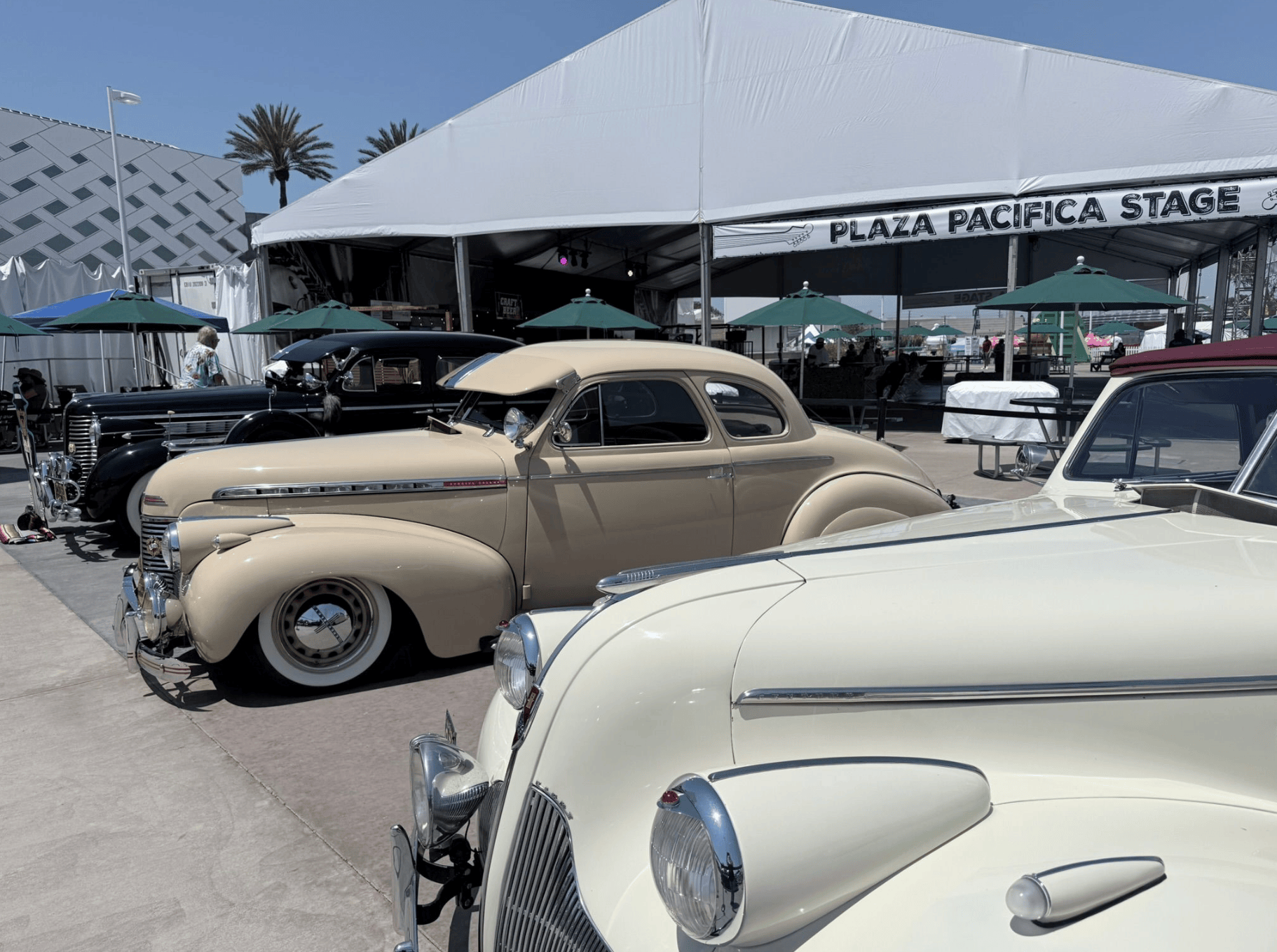
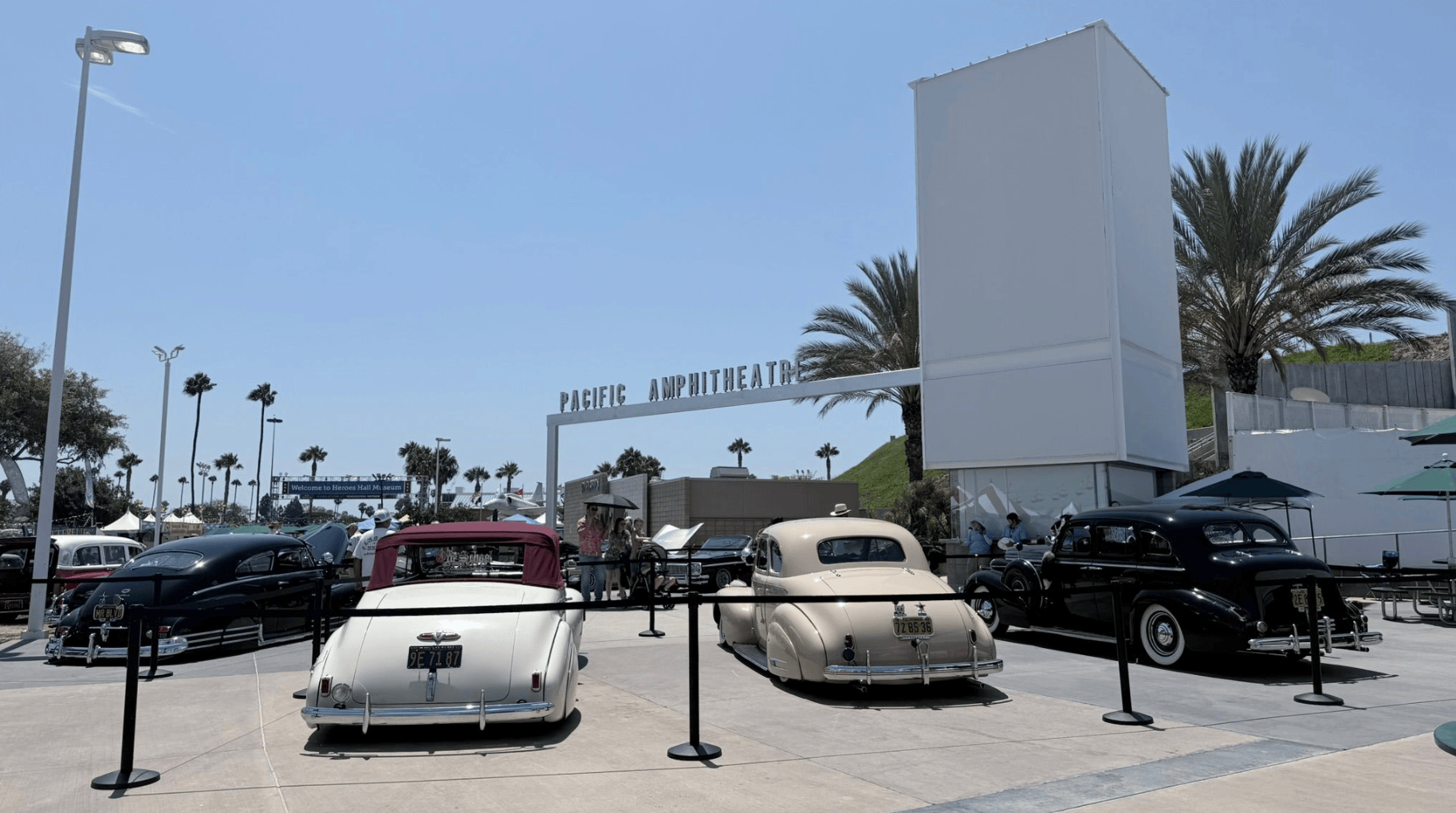 There were 10 classic lowriders belonging to the Brown Pride, Viejitos Car Club, Arte Car Club, Old School Bombs, and the Zoot Kings to the side of the Plaza Pacifica Stage. They ranged in color from black to pale green and cream. The most popular make among the car clubs seems to be Chevrolet. Each car was well polished and gleamed in the sunlight, and the chrome sparkled. A few had their hoods up and trunks open, revealing even more chrome and specialization. A team of stanchions with black barrier elastics kept viewers 3 feet away from the vehicles. Even from that distance, I could spot the detail in each custom tuck and roll job in each car.
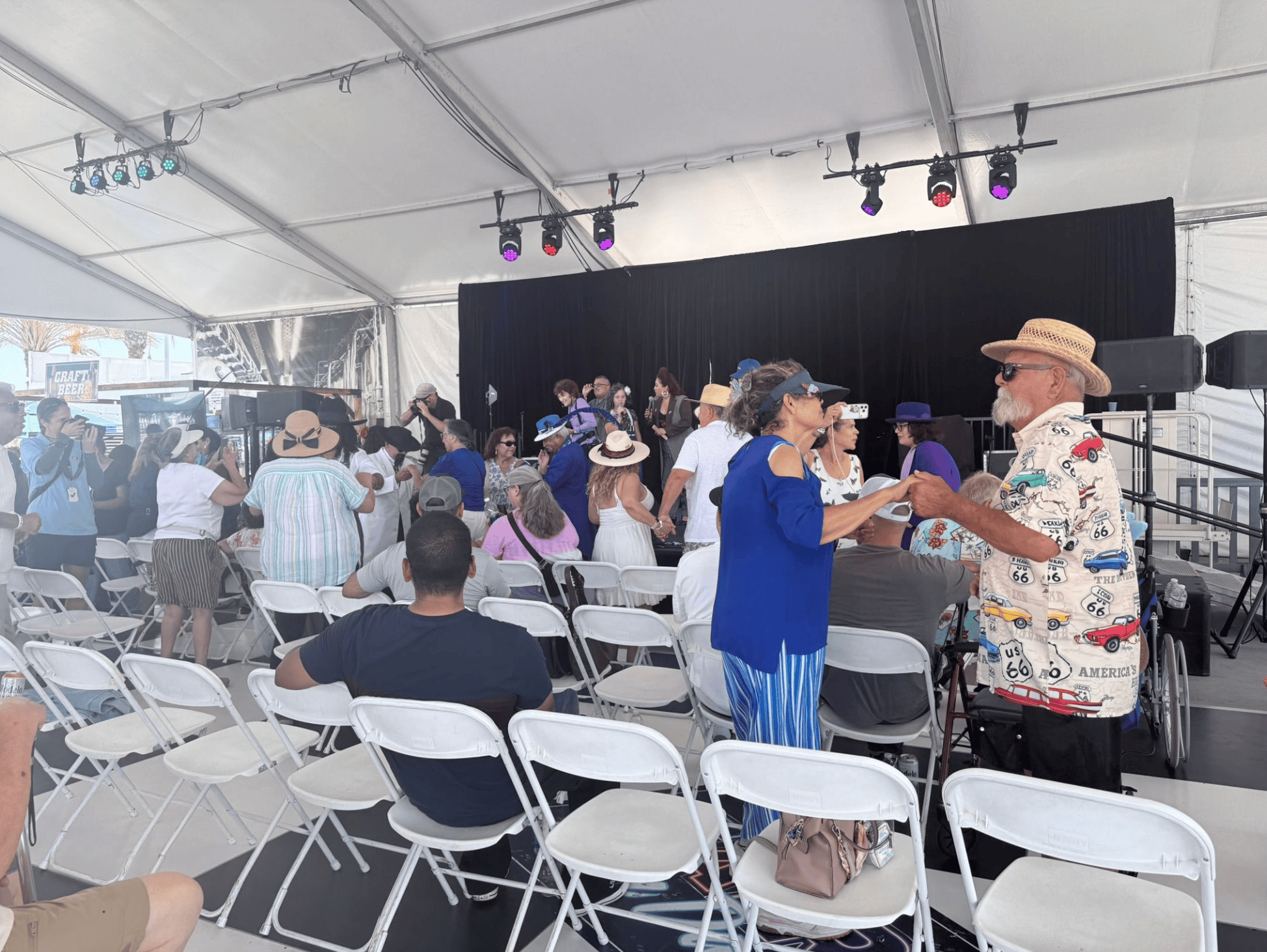
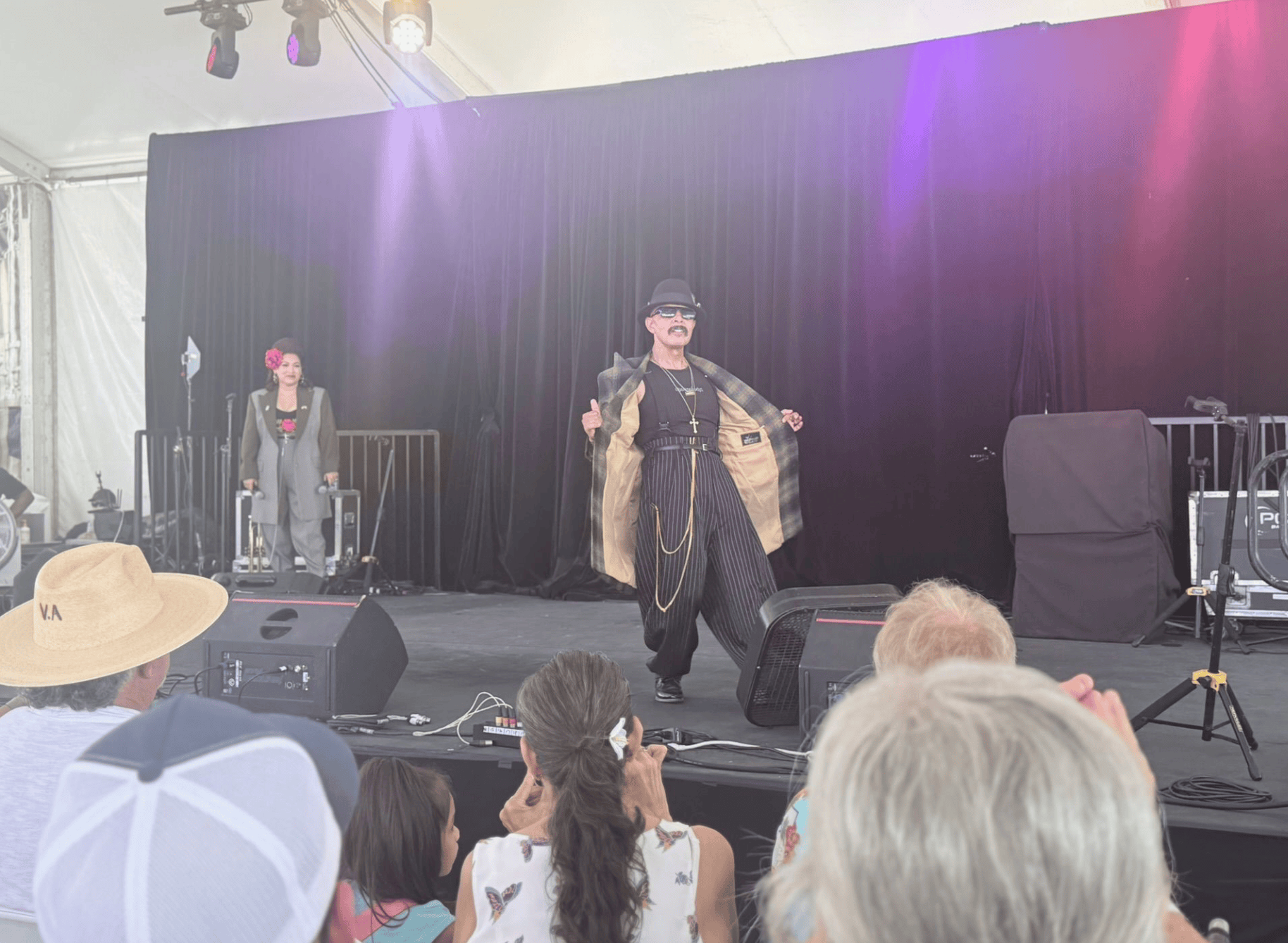
To my dismay, the Plaza Pacifica Stage was under a large canopy and not indoors as I had hoped. It was much cooler than I expected, and there was some form of air conditioning. An older couple sat next to me. The woman, Virginia, leaned over and said to me, “I was so excited to see la cultura having representation at the OC Fair. I never thought it would happen.” She then informed me that Latinos and Mexican Americans were considered white by the military and federal government during World War II, the Korean War, and the Vietnam War, and this is why there aren’t memorials commemorating them in Washington, DC. We discussed the importance of representation and how Mexican history and culture are often left out of the conversation, even though they are part of California’s cultural roots and the fabric of American history.
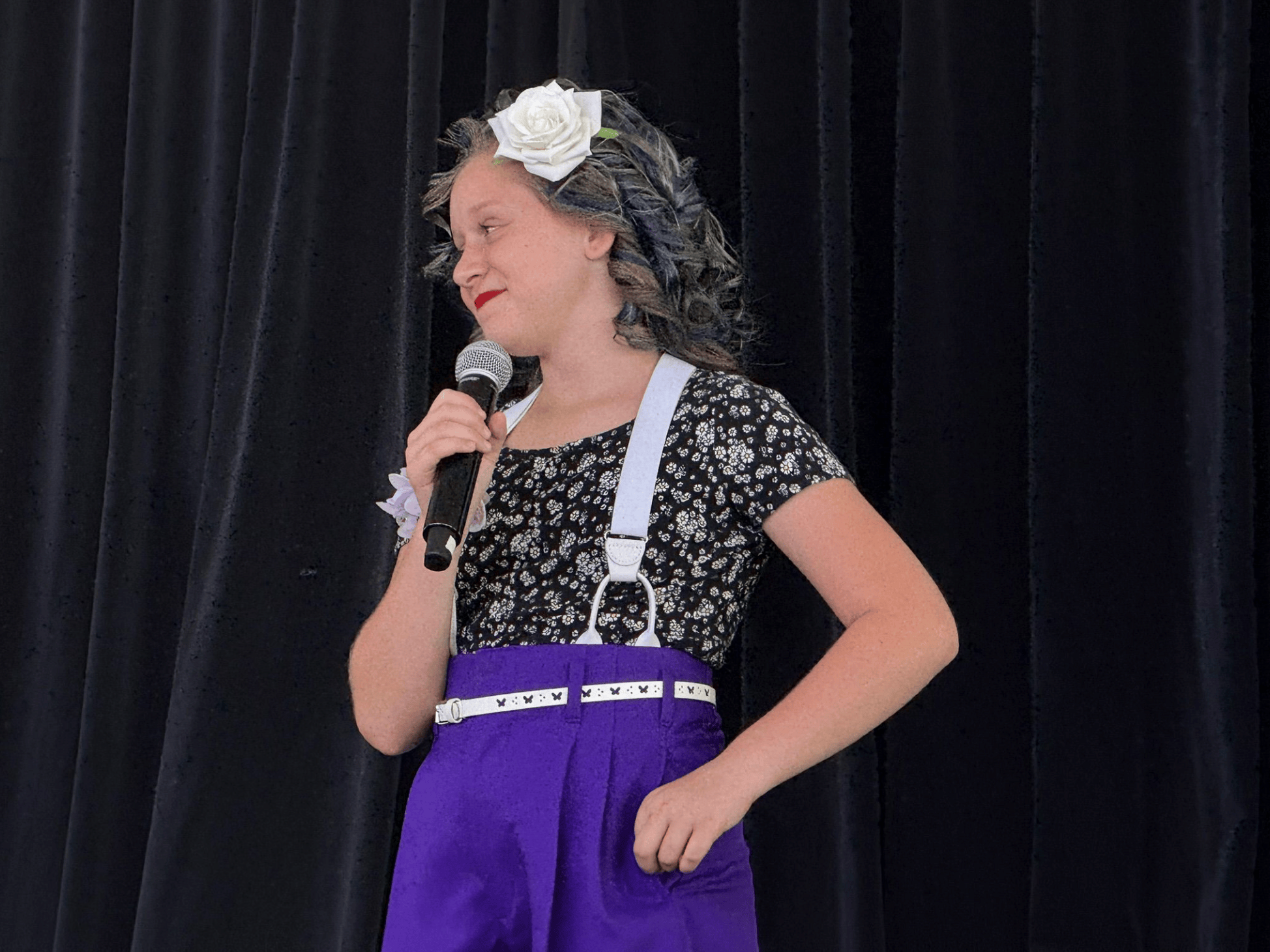
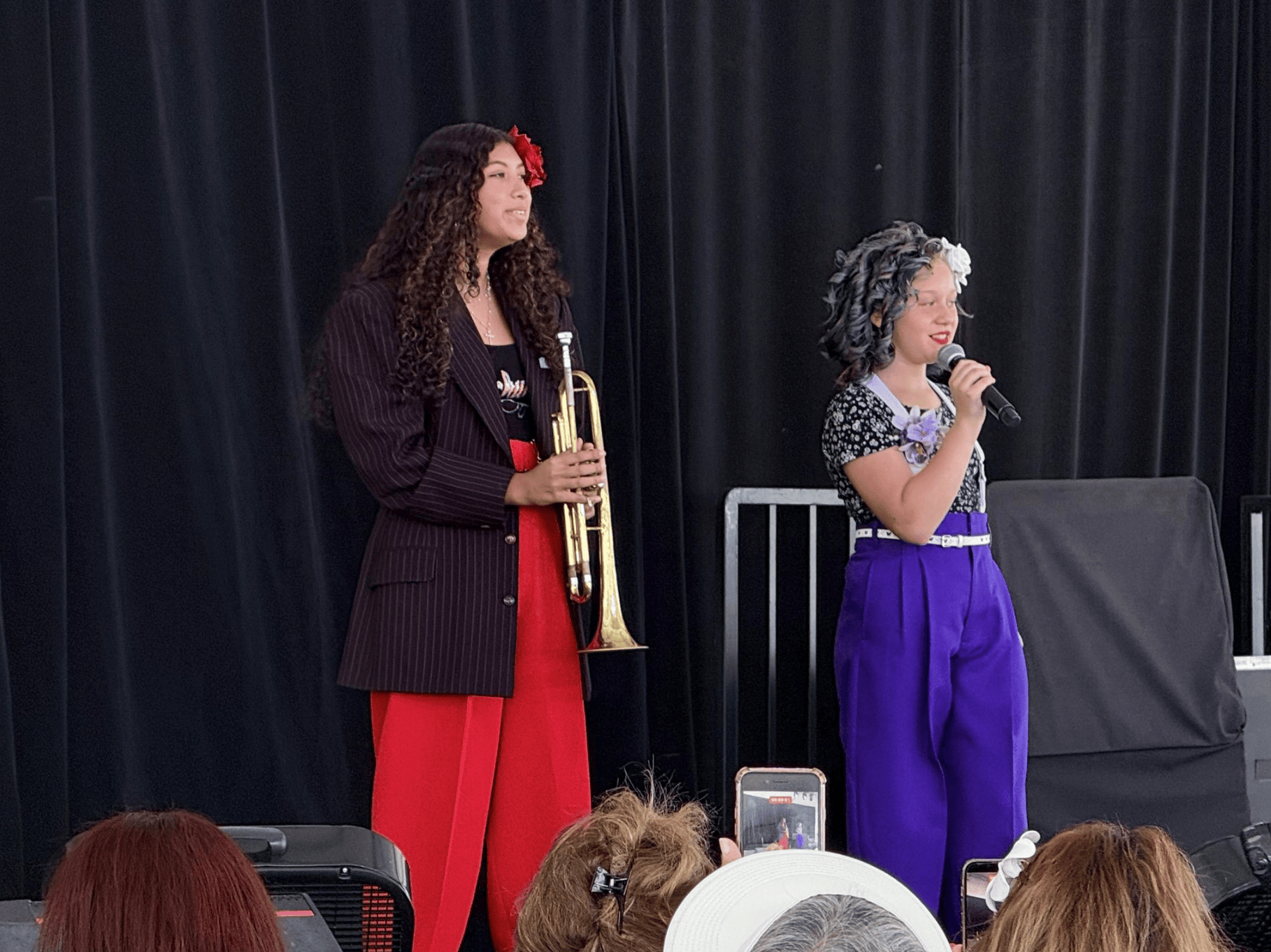
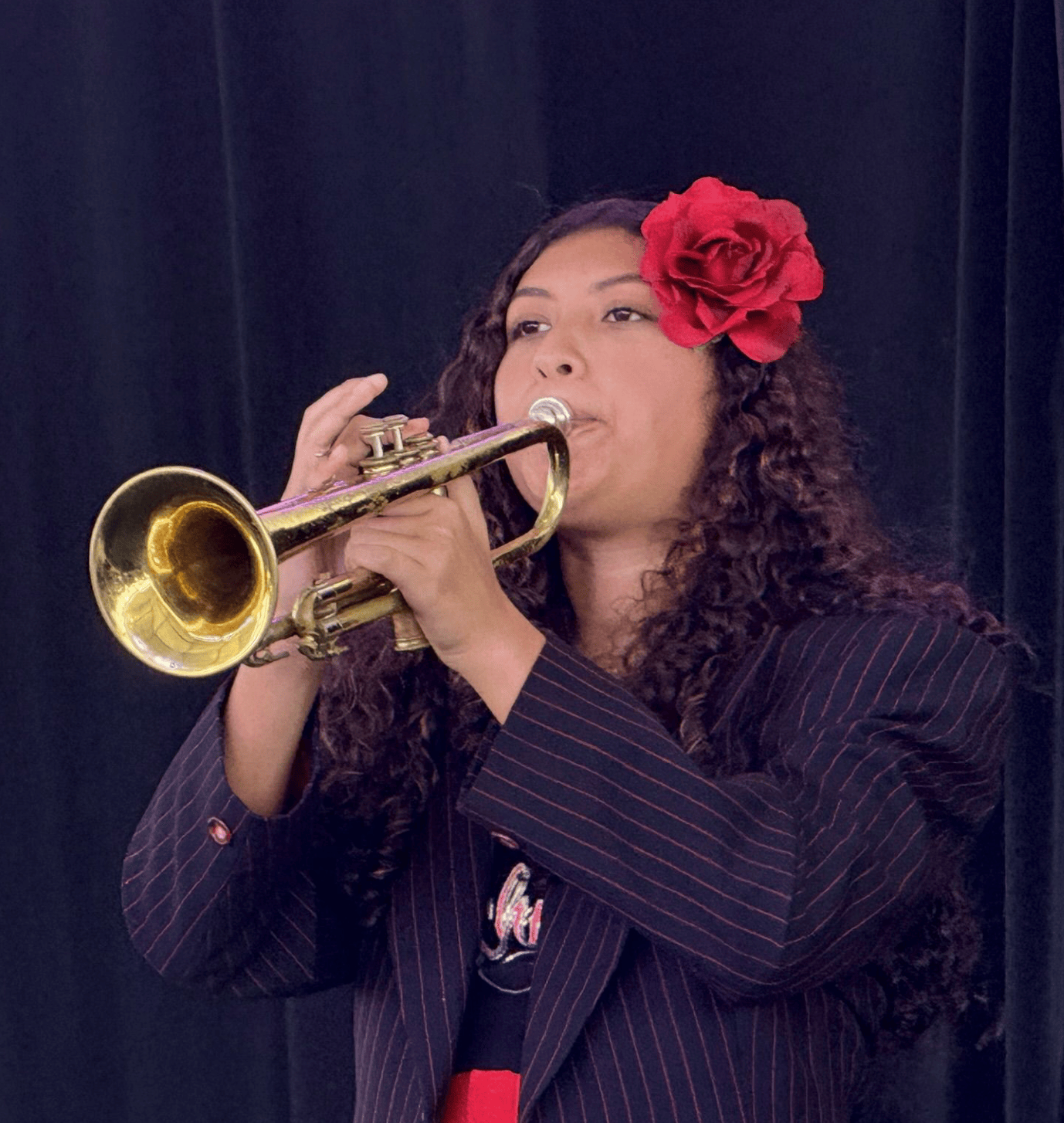 A mixture of oldies and Latino music played overhead as I sat and chatted with the couple; more attendees made their way to chairs. By the time the fashion show started at 1 pm, there was only standing room left. It started with the song “Low Rider,” written by War and Jerry Goldstein, performed by 10-year-old Elsa Estrella singing and 14-year-old Reylinda Estrella playing the horn. The two girls are the granddaughters of company founder Phyllis Estrella and the daughters of Vanessa and Raymond Estrella.
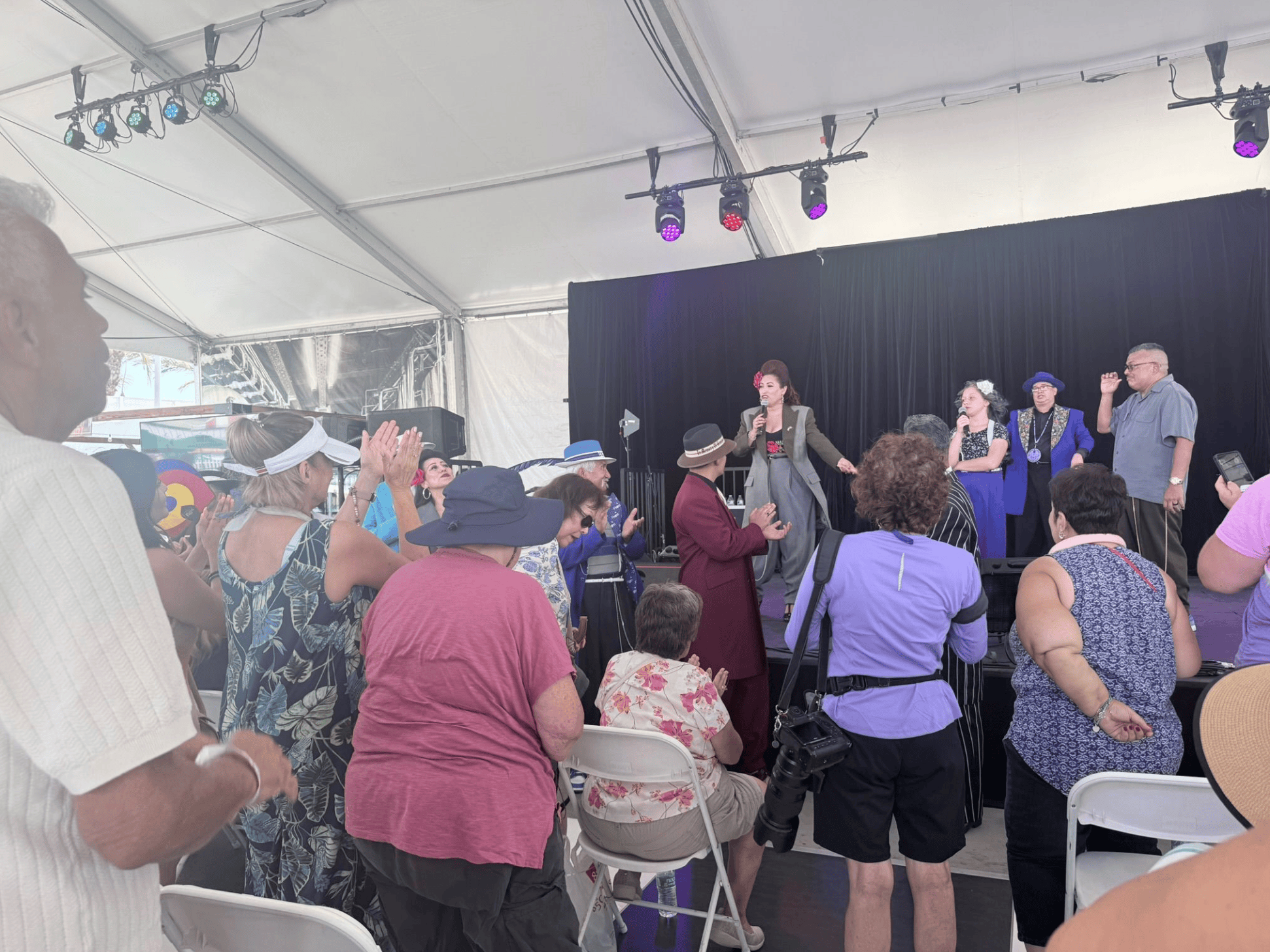
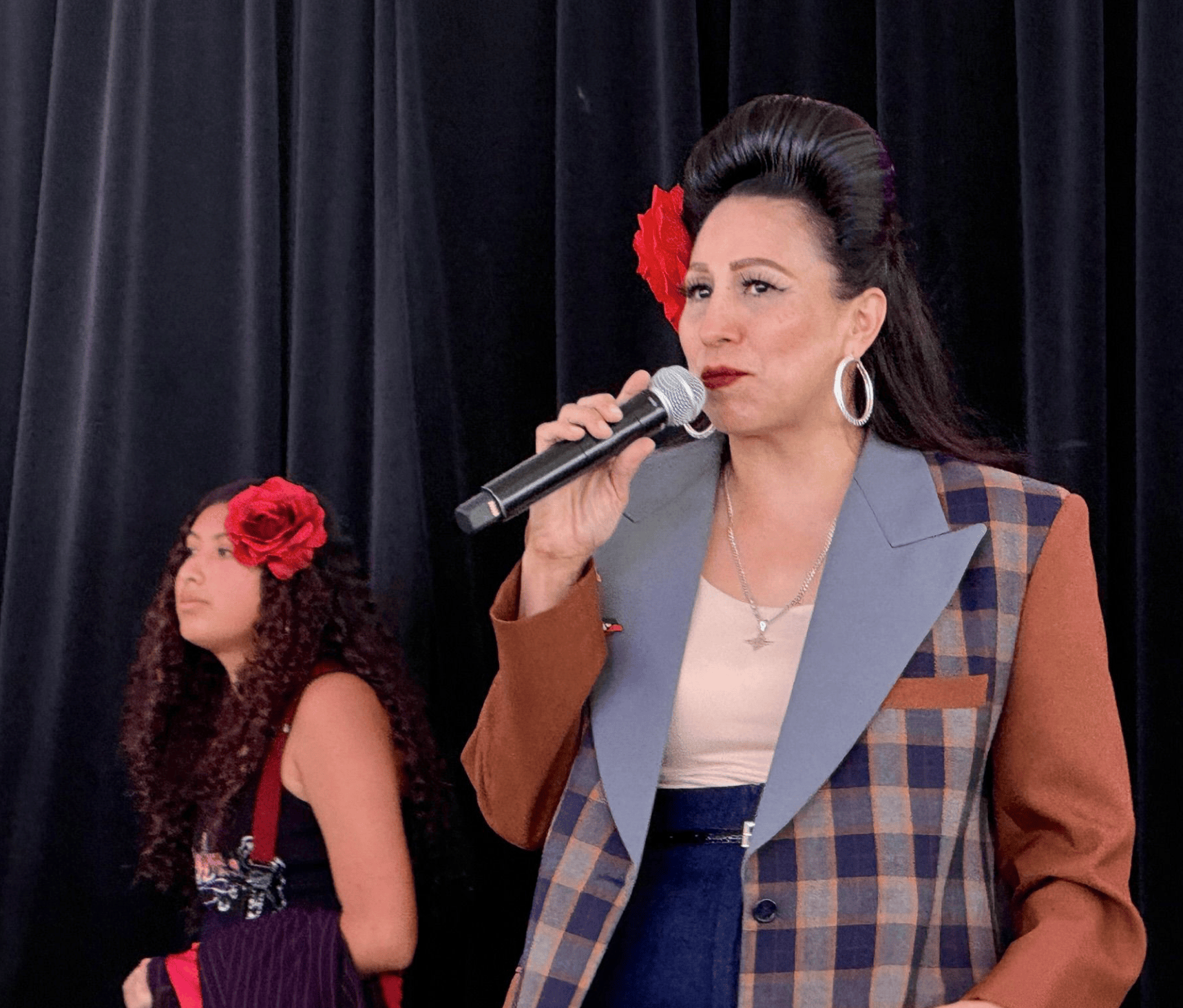
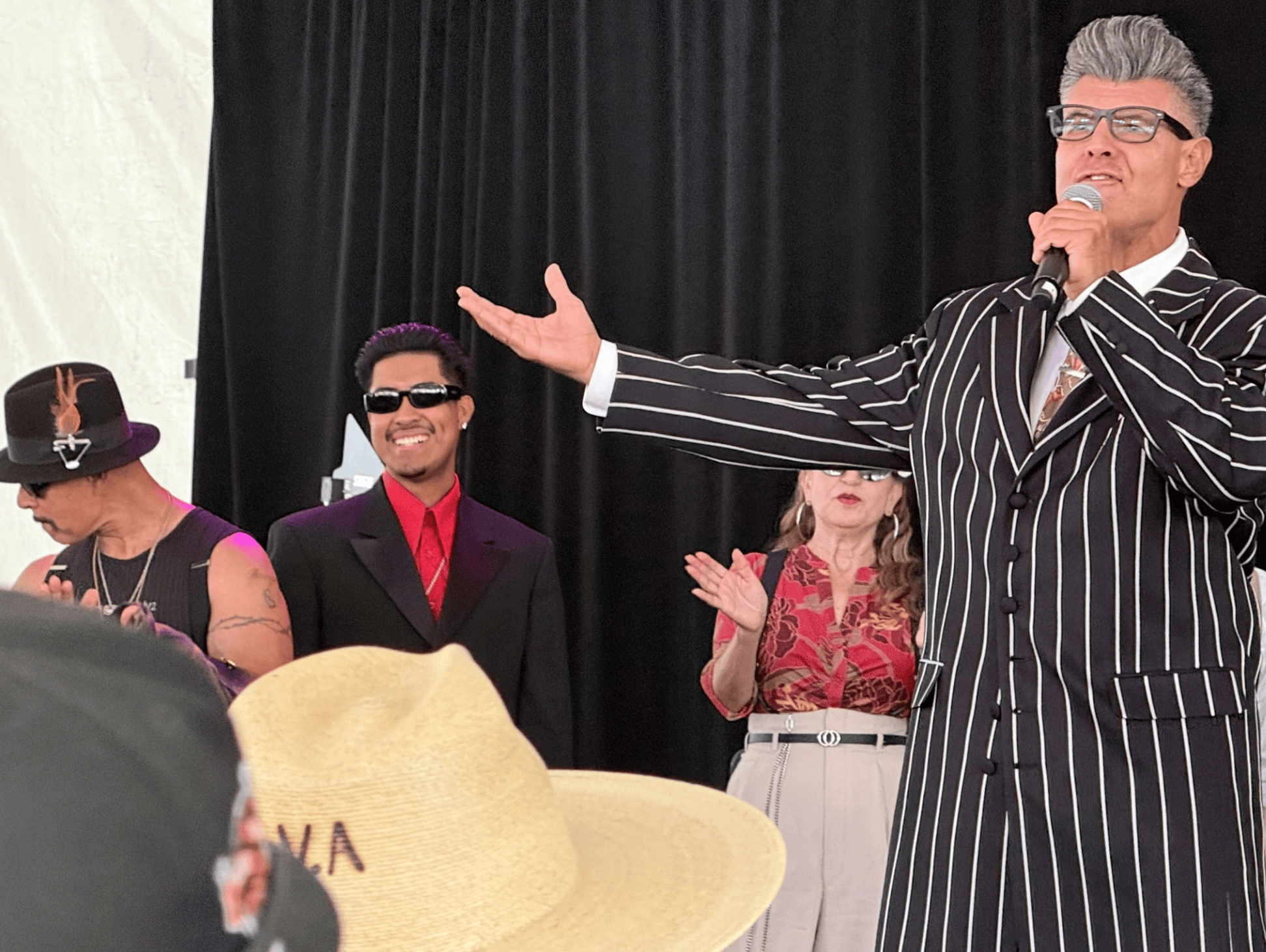
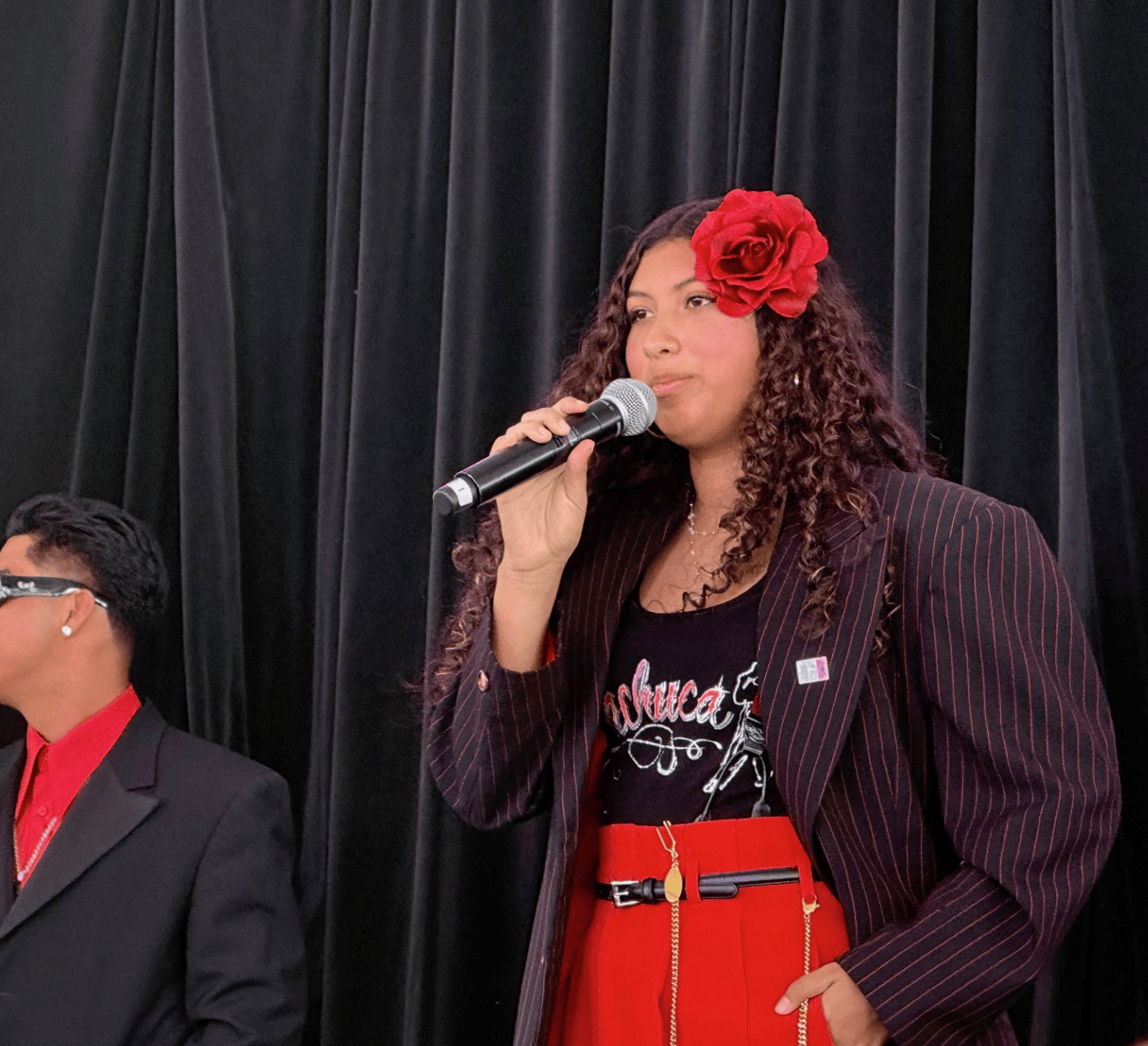
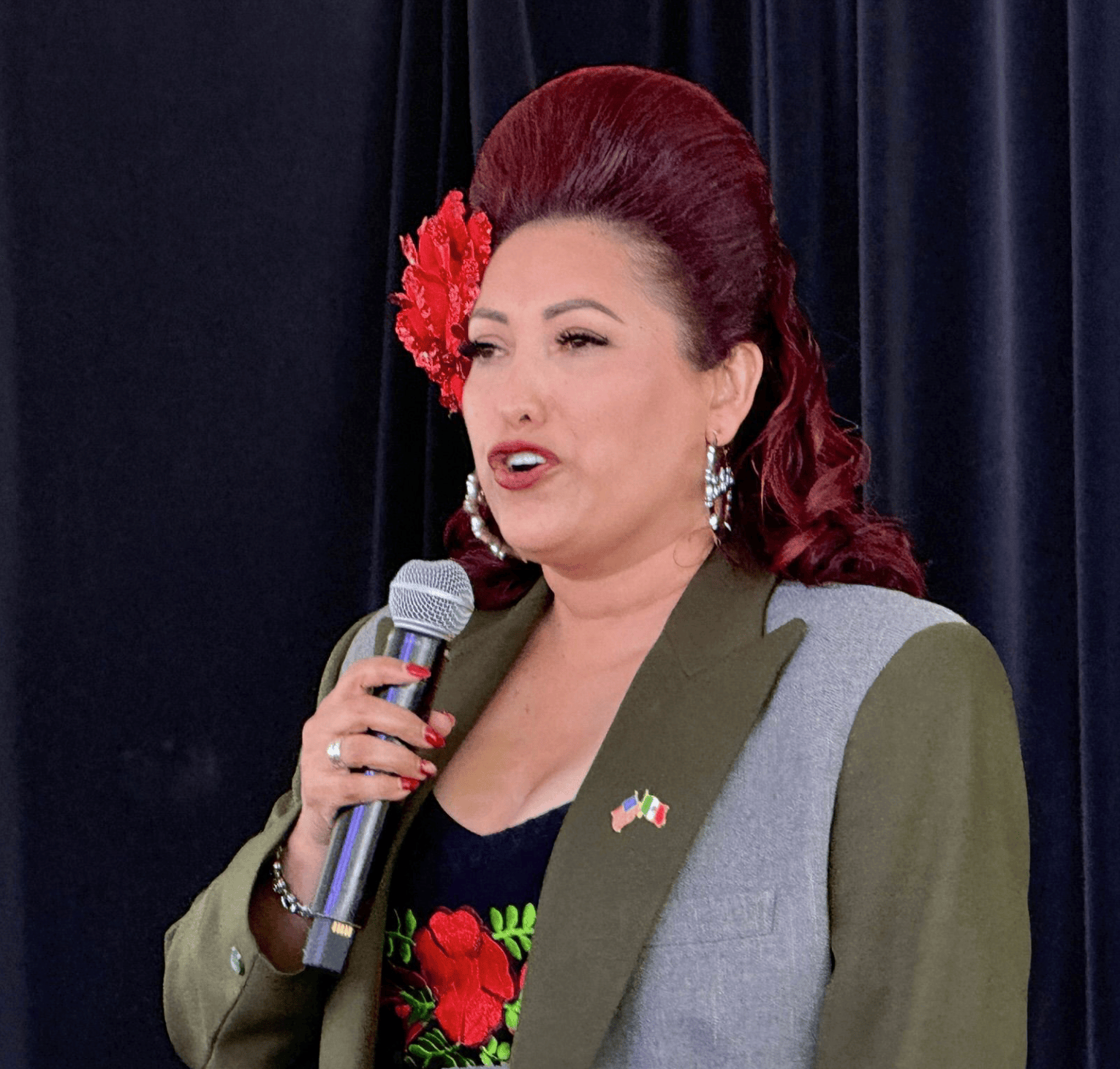
Vanessa Estrella of El Pachuco Zoot Suits took the stage to MC the event. She shared that three years ago the OC Fair contacted her to borrow some mannequins because they had a cultural exhibit scheduled at the fair and wanted to showcase some zoot suits. When the OC Fair organizers learned El Pachuco was doing fashion shows throughout the USA, they invited them to do a zoot suit fashion show. She responded, “You want me to come to Orange County in Irvine and do a fashion show?” They told her she had 45 minutes to talk about whatever she wanted. It was then that she shared she wanted to talk about the history of zoot suits.
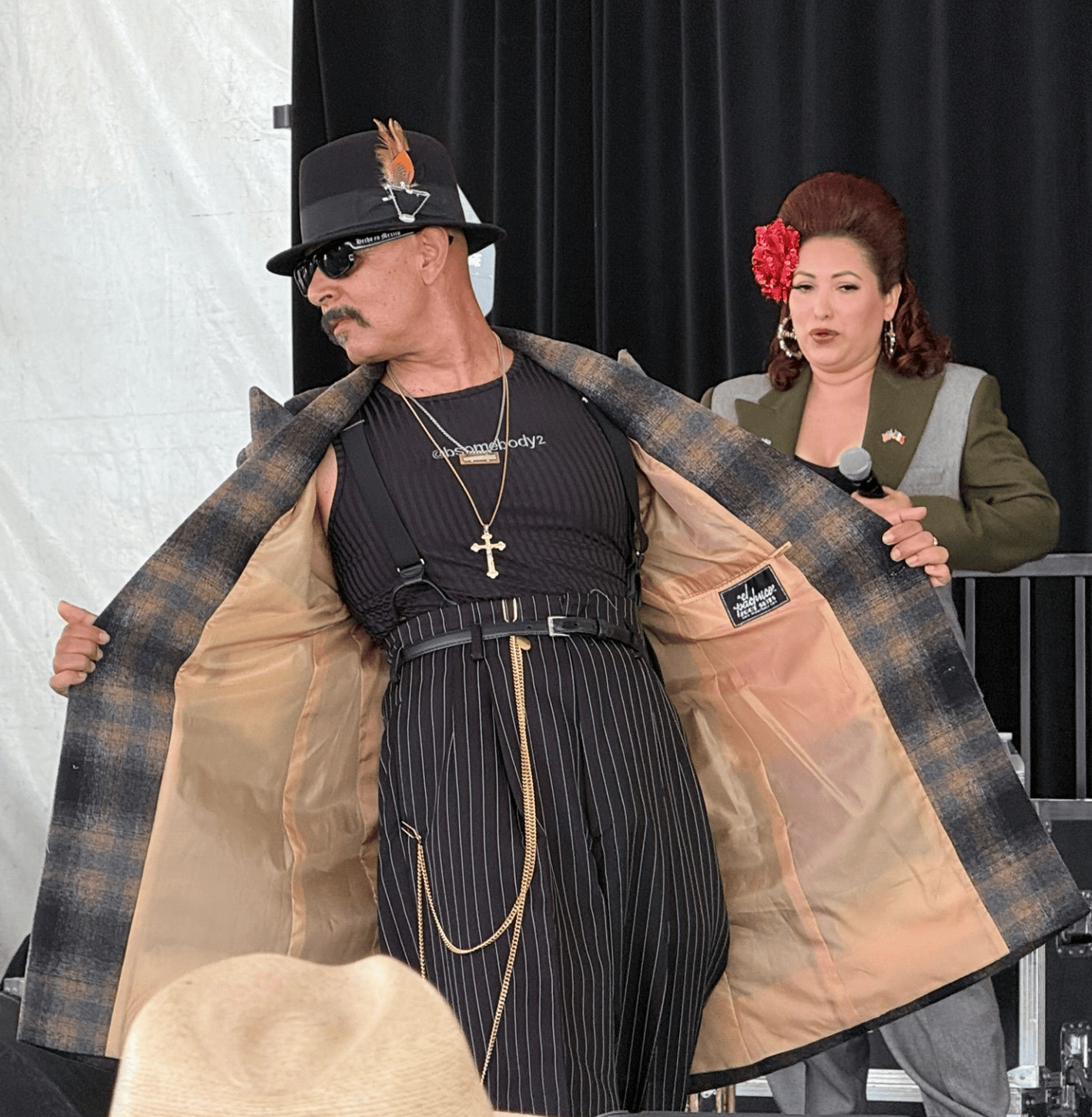
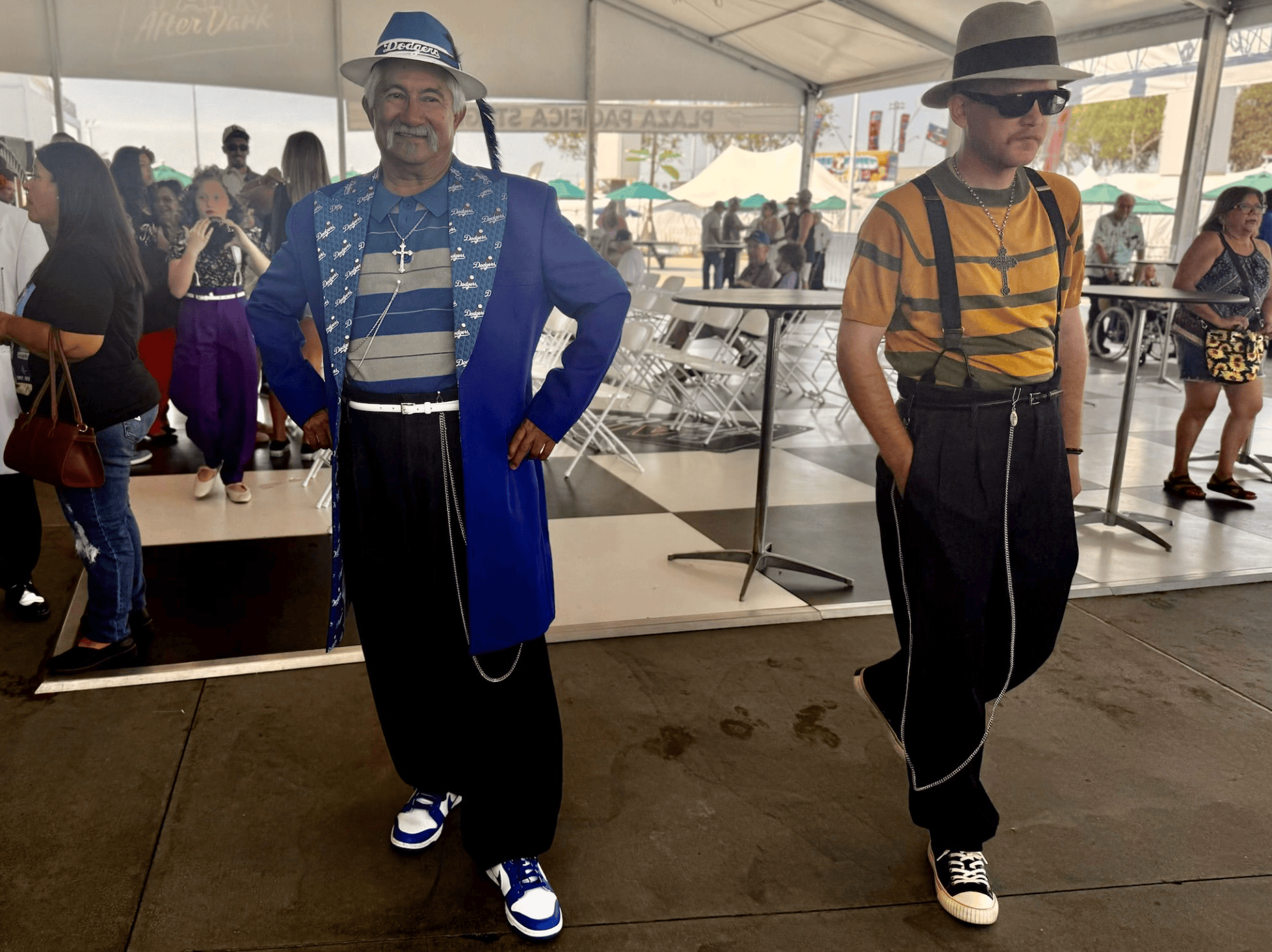
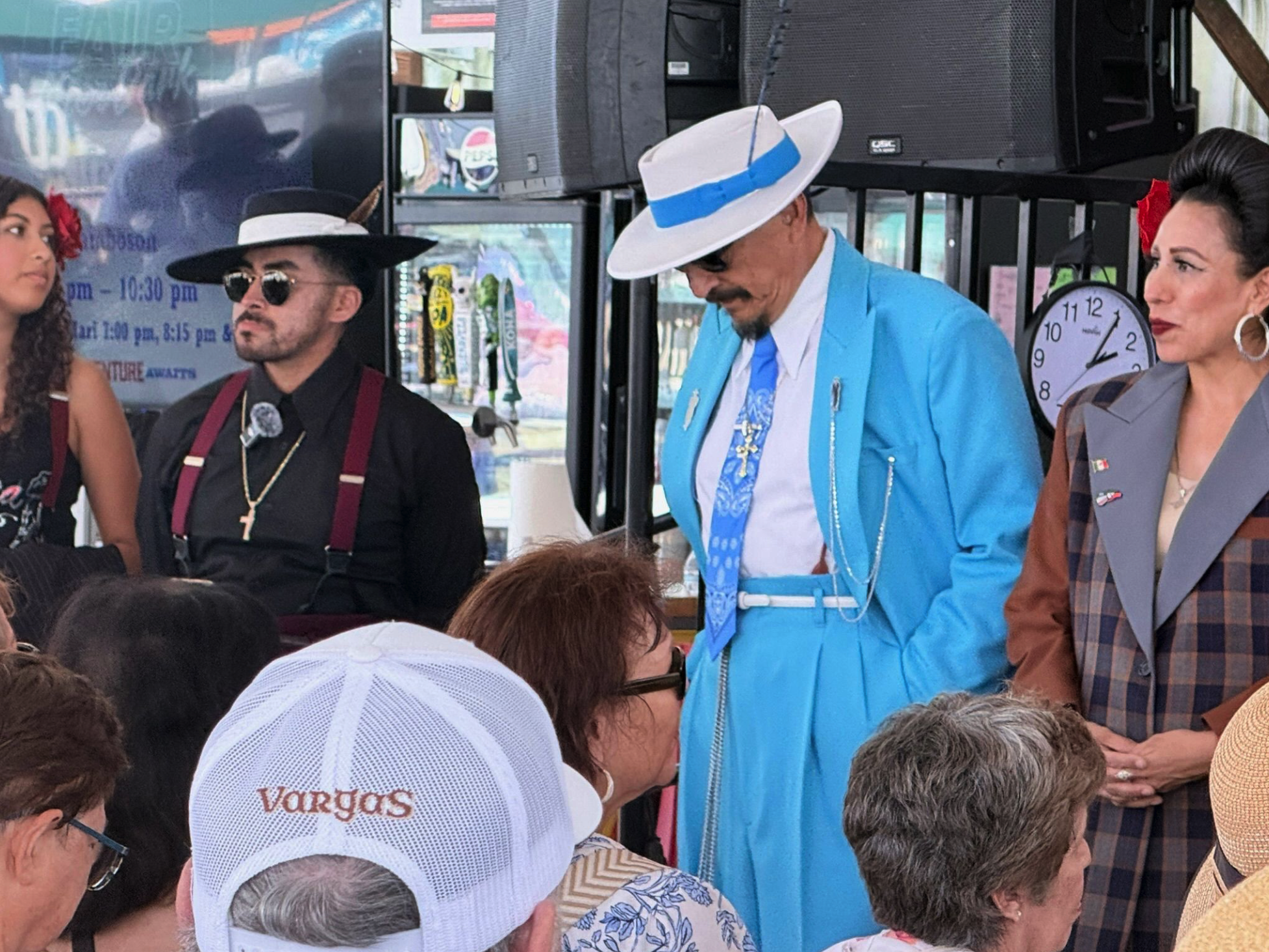
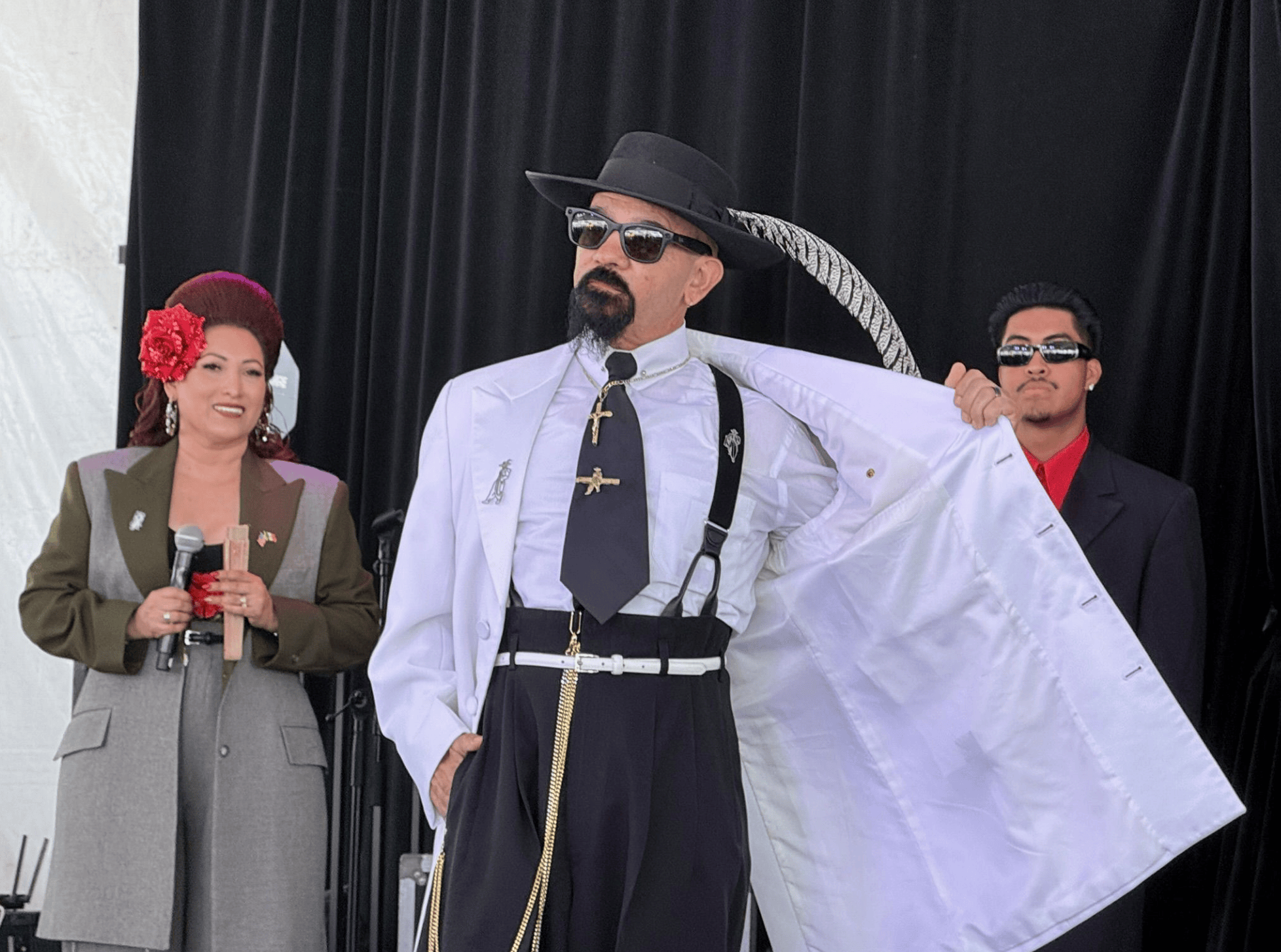
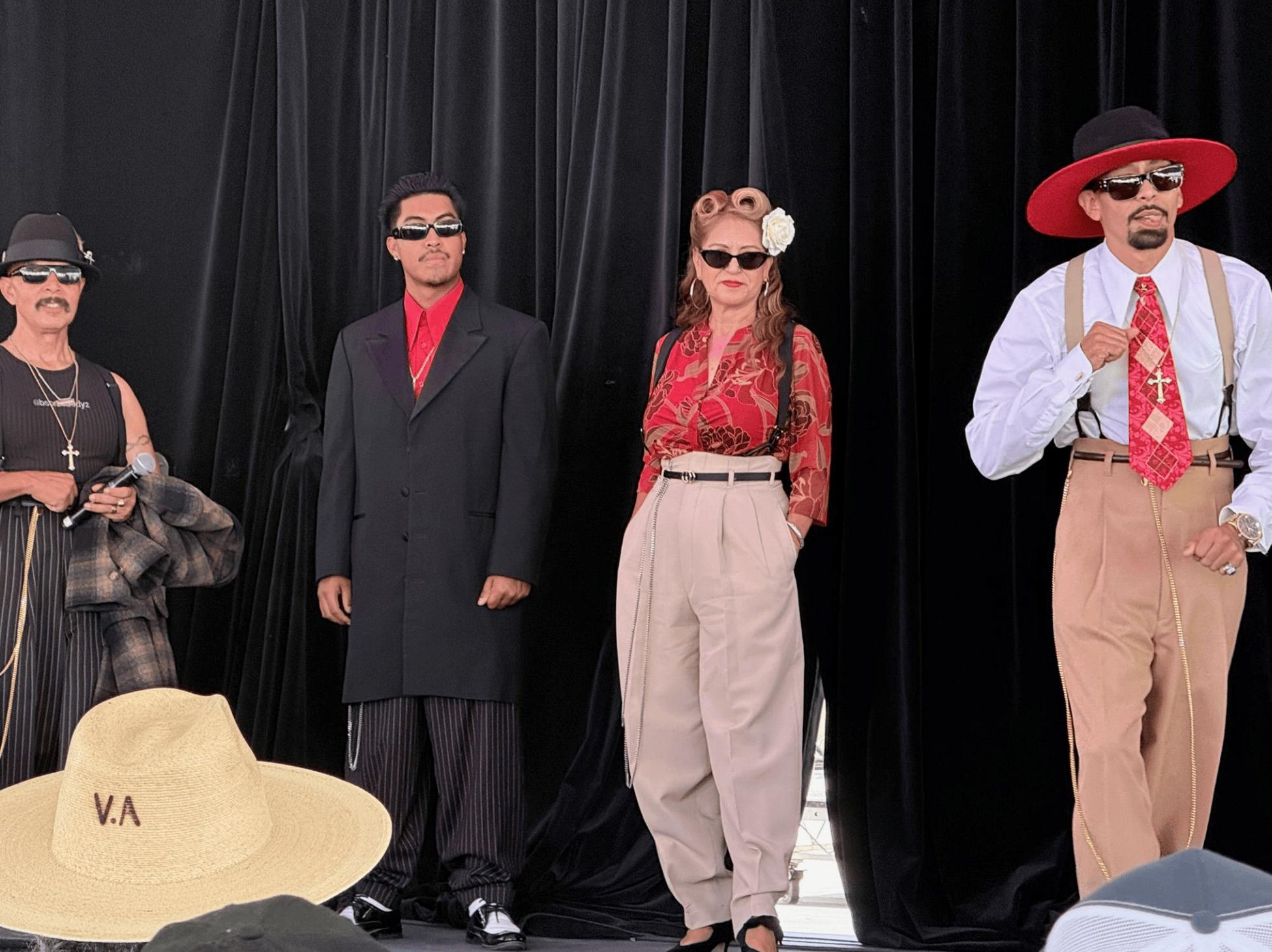
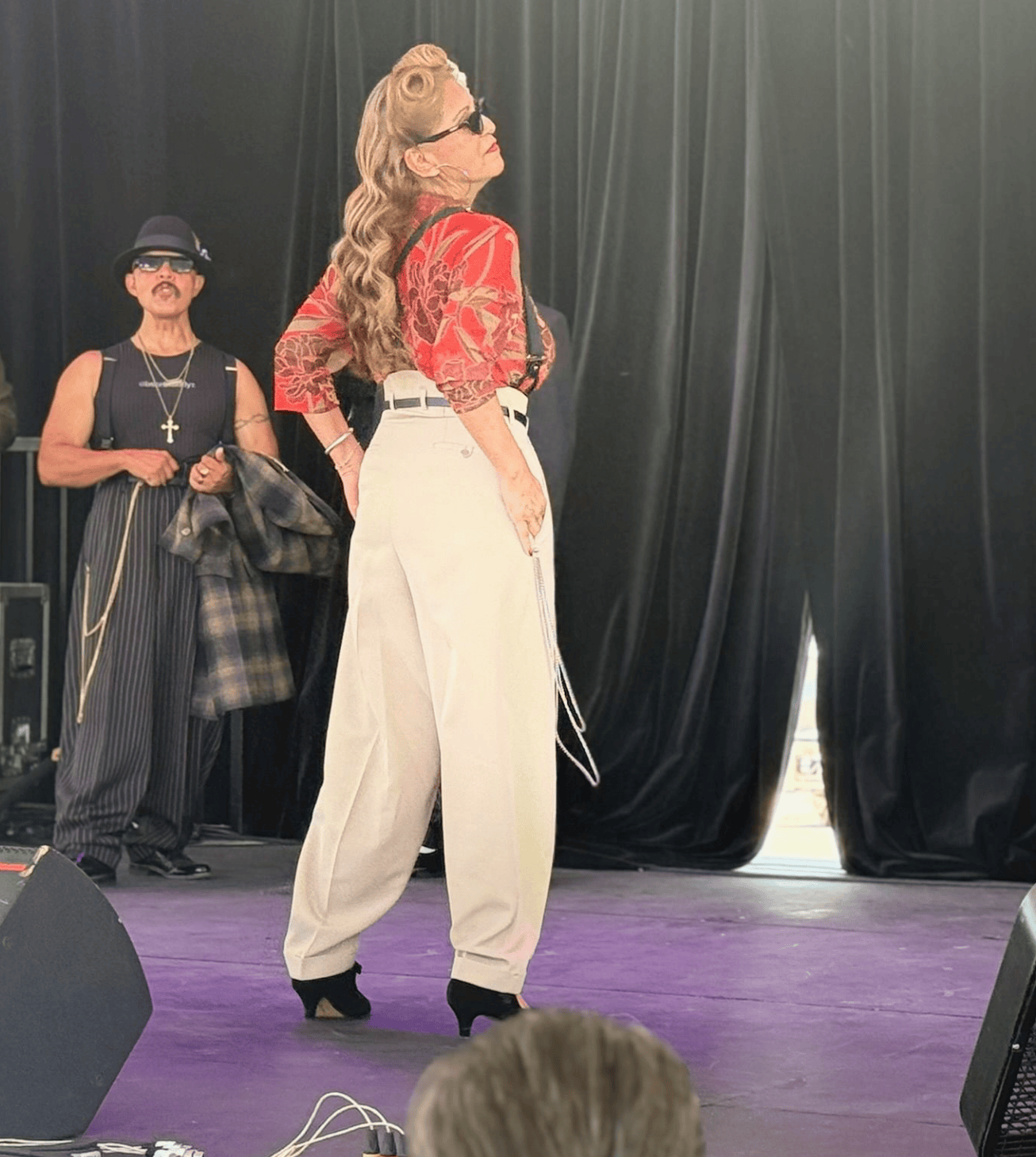
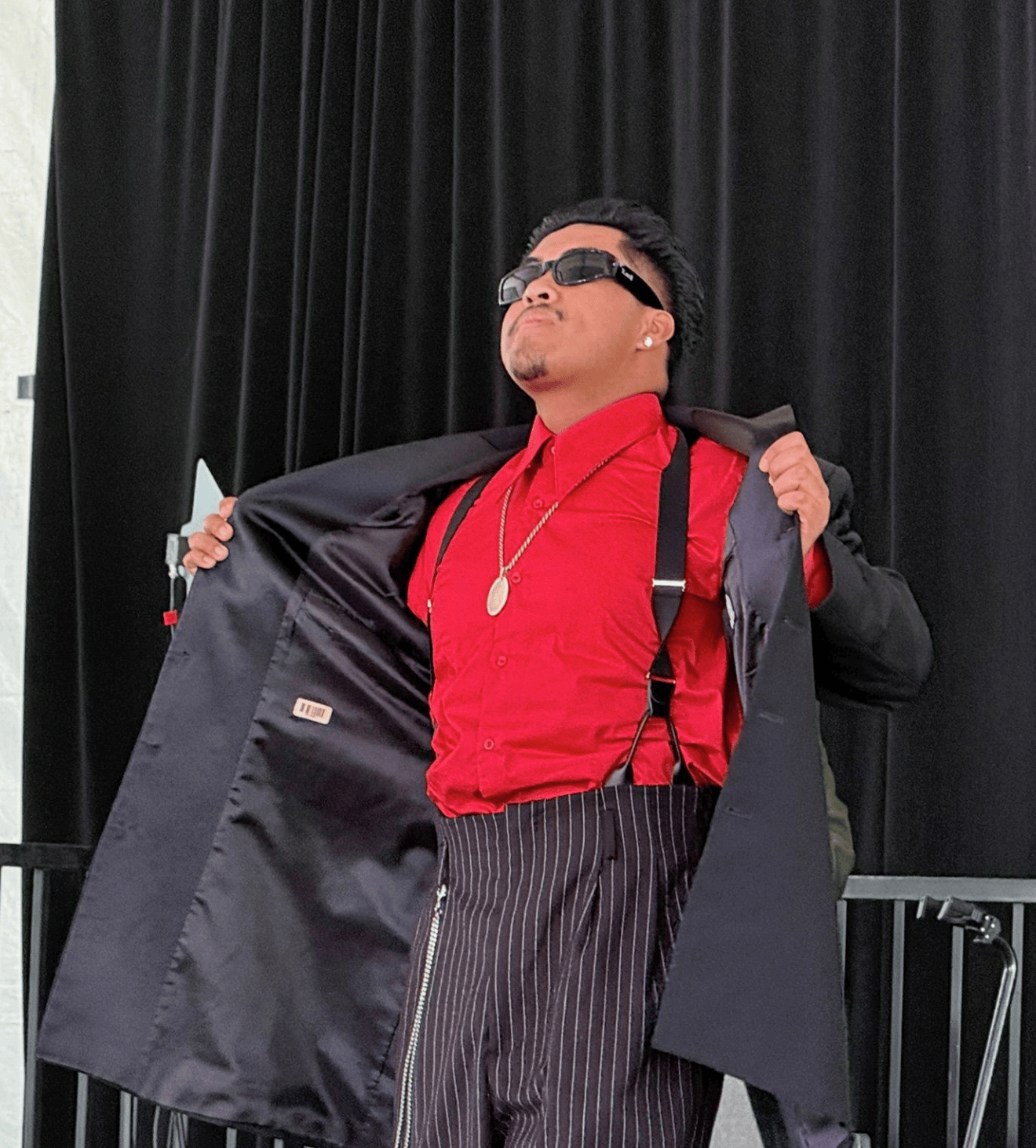
She summarized the company’s history and her mother-in-law, Phyllis Estrella, starting the business in 1978, and how the suit was worn by African Americans, Filipino Americans, Japanese Americans, Jewish Americans, and Mexican Americans. She explained that zoot meant an oversized suit. It is characterized by a long jacket, big shoulder pads, and wide lapels, paired with high-waisted pants, a thin belt, long watch chains, and a large brimmed hat. El Pachuco specializes in authentic 1940s-style zoot suits.
 Vanessa explained how the Zoot Suit Riots resulted from the imposed fabric rations of World War II and returning soldiers reacting to “yellow journalism or, as a lot of you know it today, as fake news.” The LA Times ran articles “on these Pachucos, zoot suiters being hoodlums and gangsters because they were not rationing fabric.” Zoot suits were not only worn by Mexican Americans, but they created the lifestyle, the lowriders, the bombitas, and caló (slang). A lot of the pachucos of the era were enlisted in the military and were very patriotic.
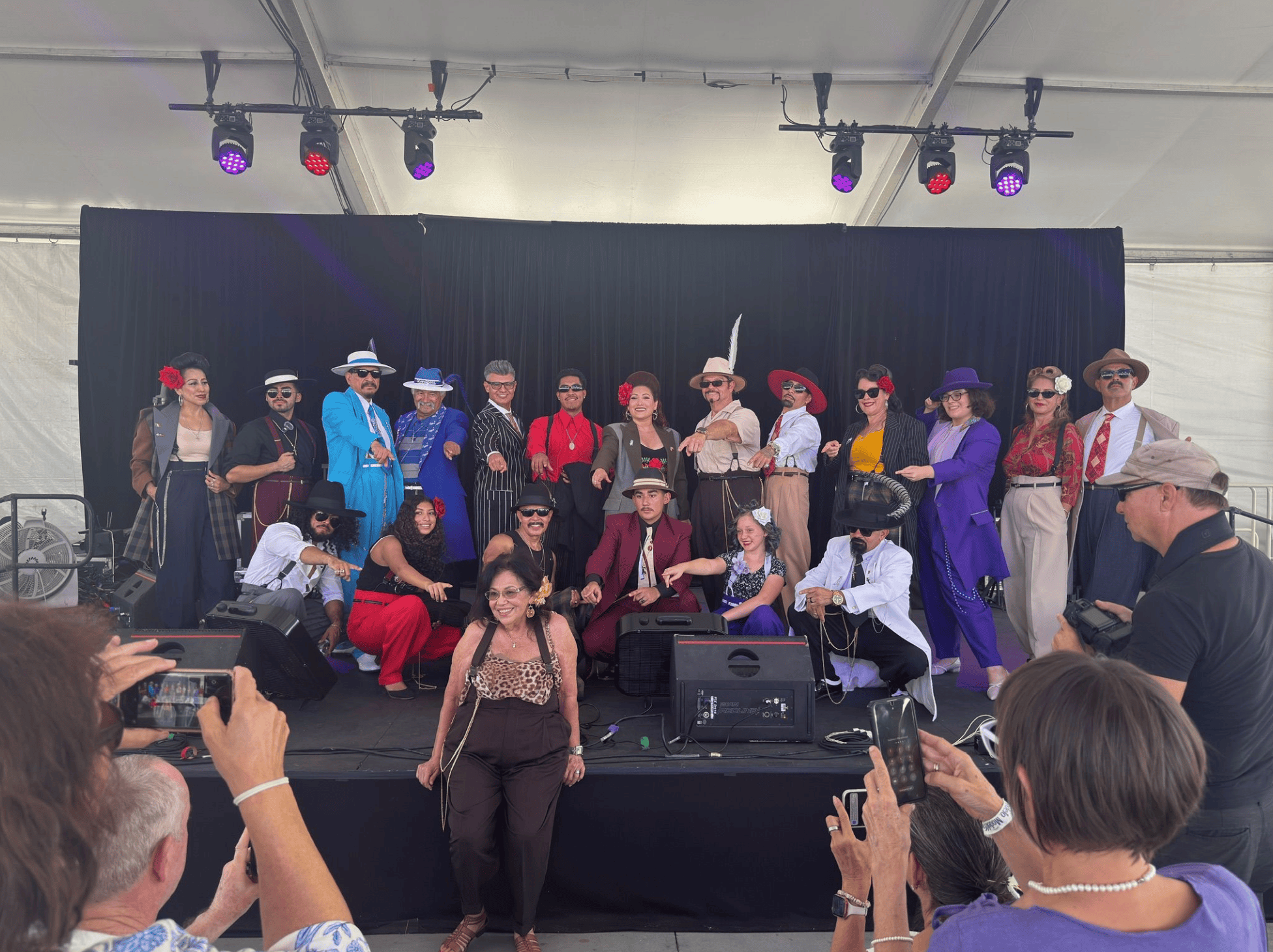
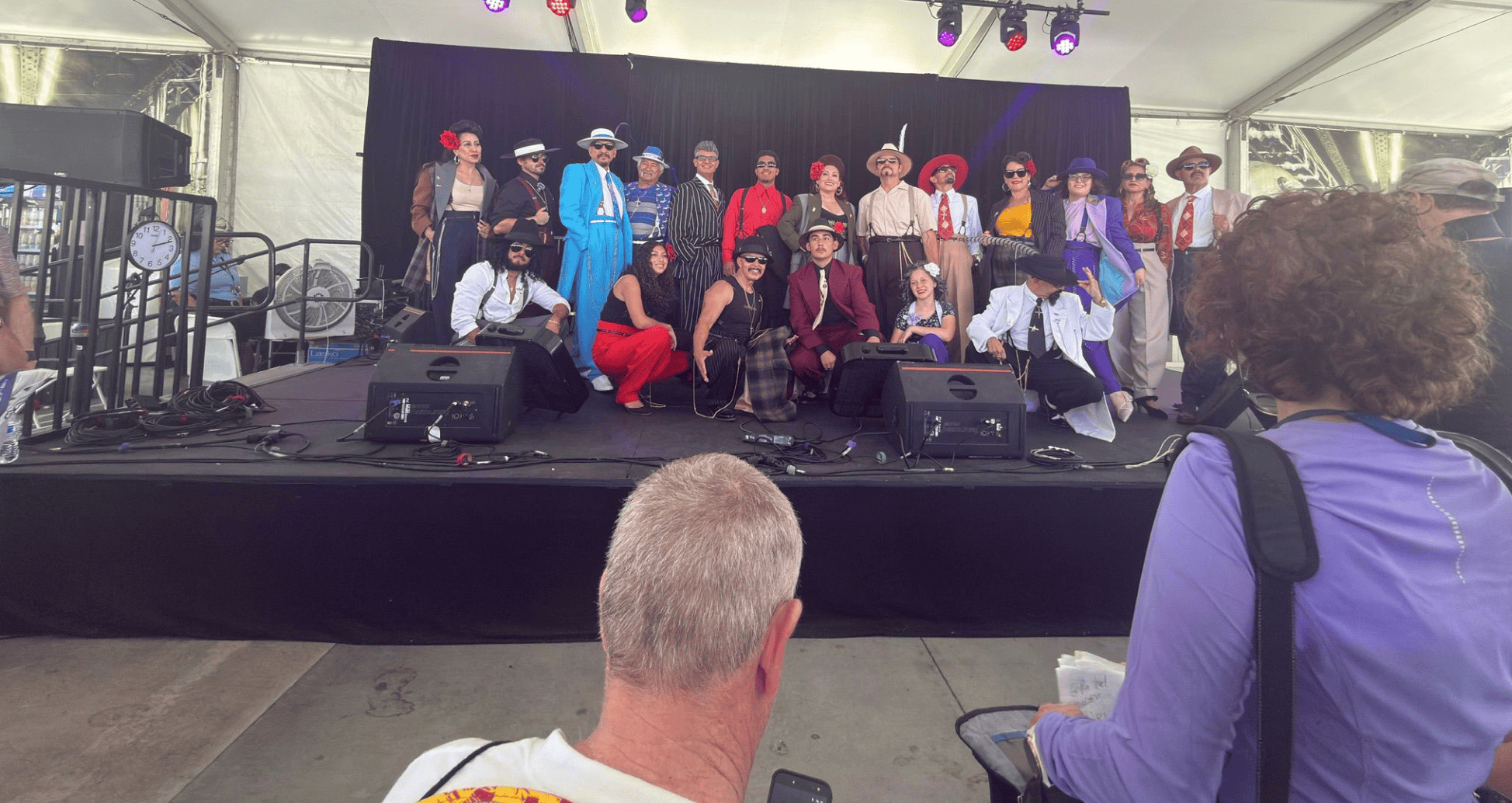
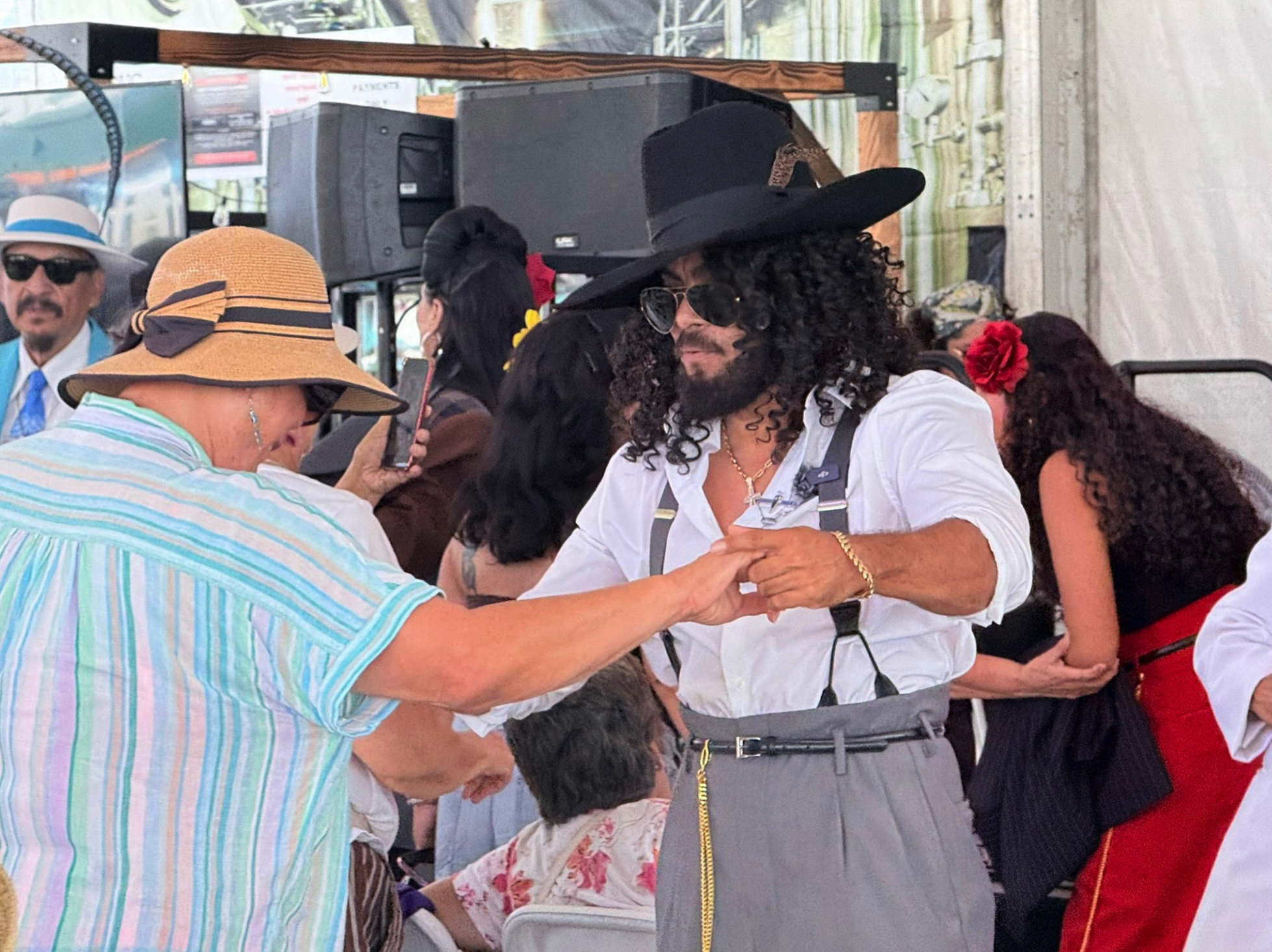
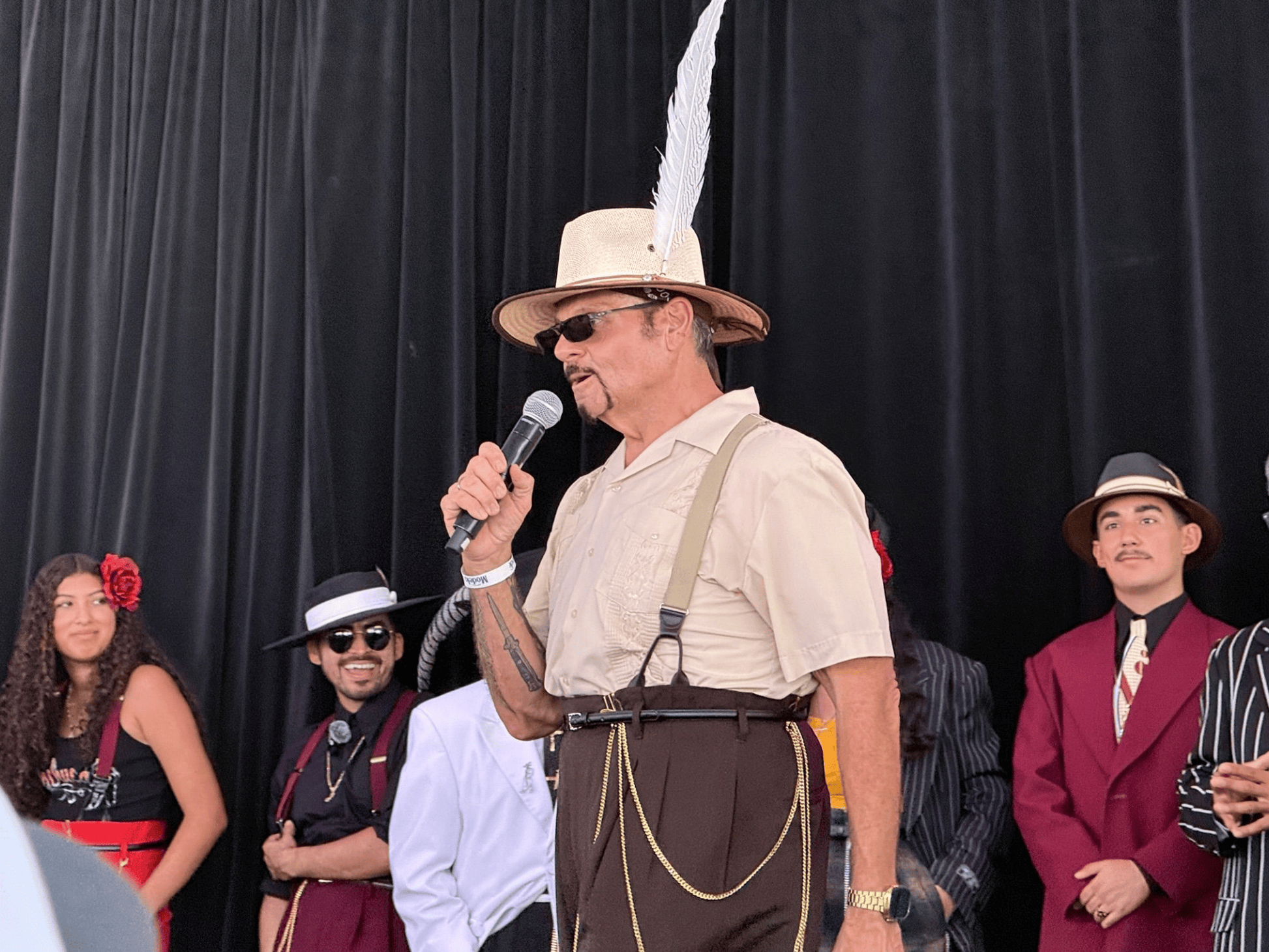
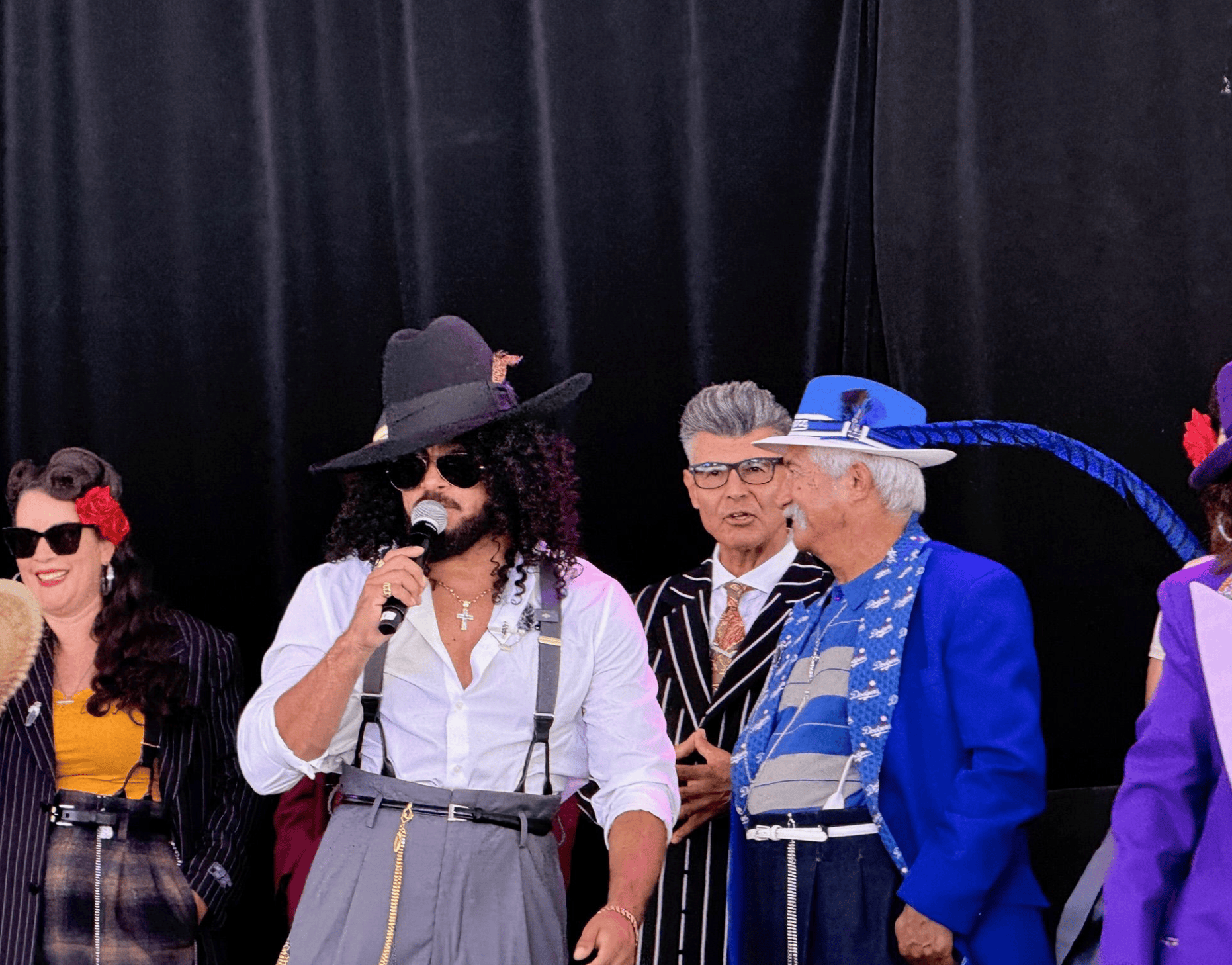
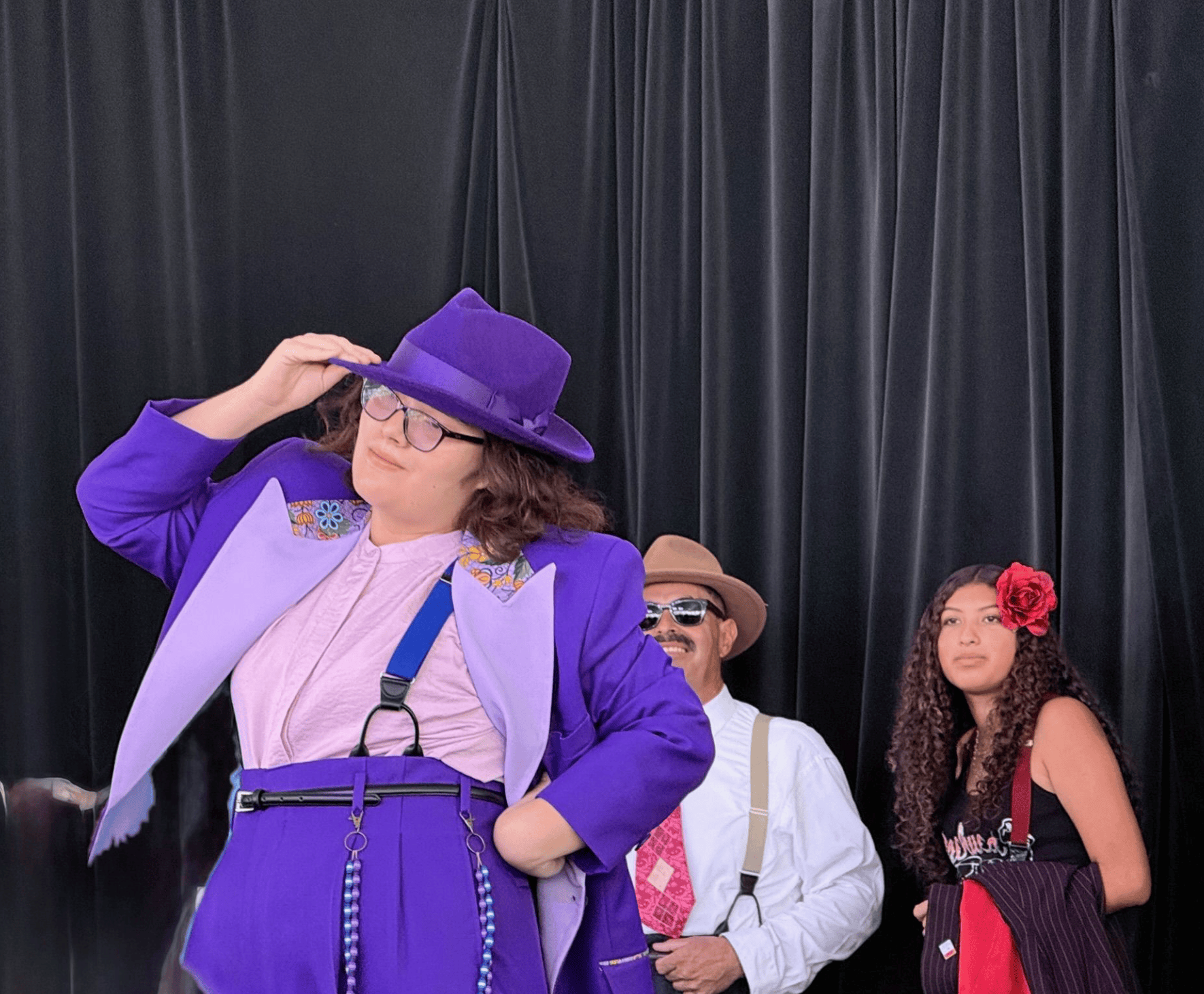
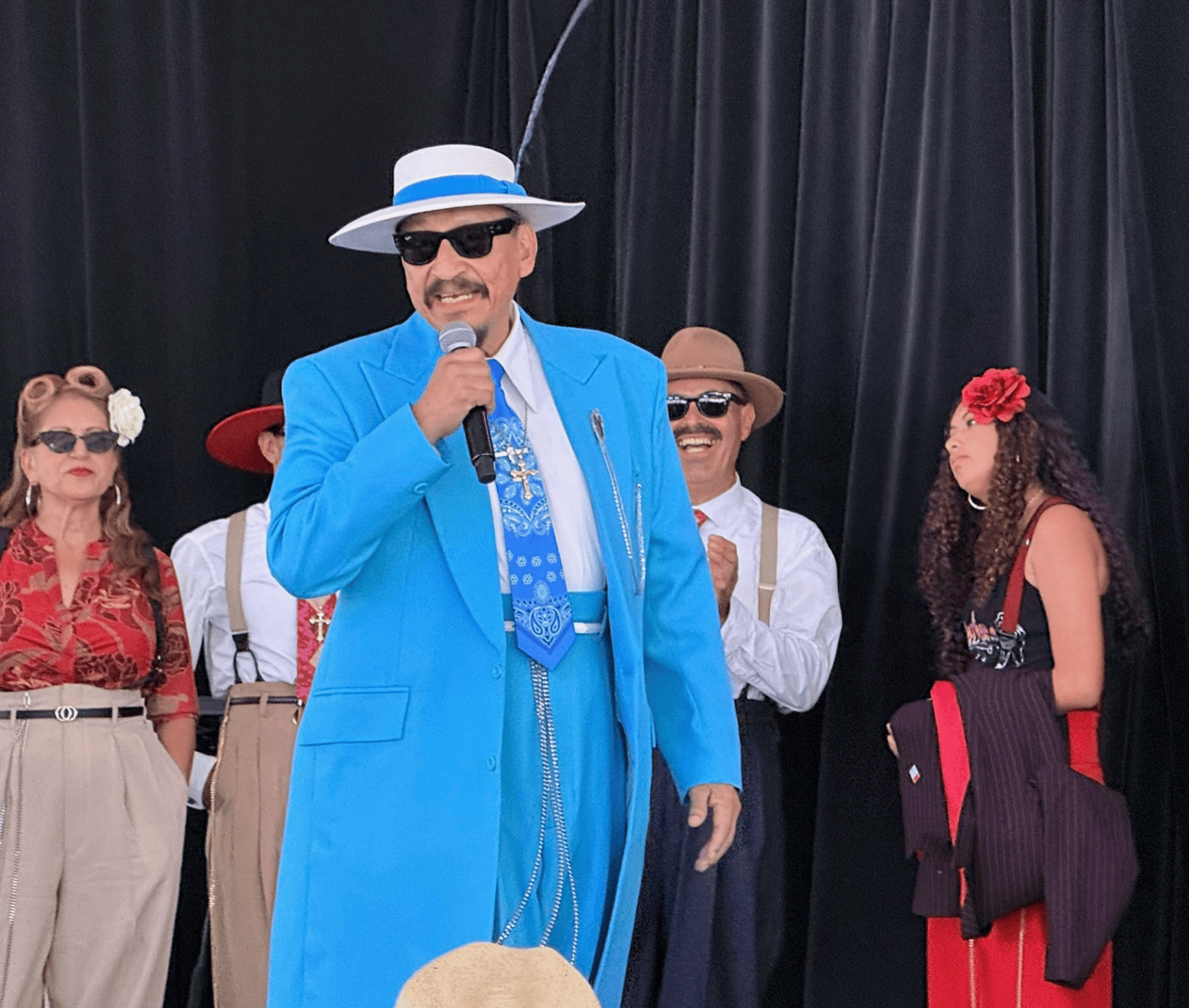
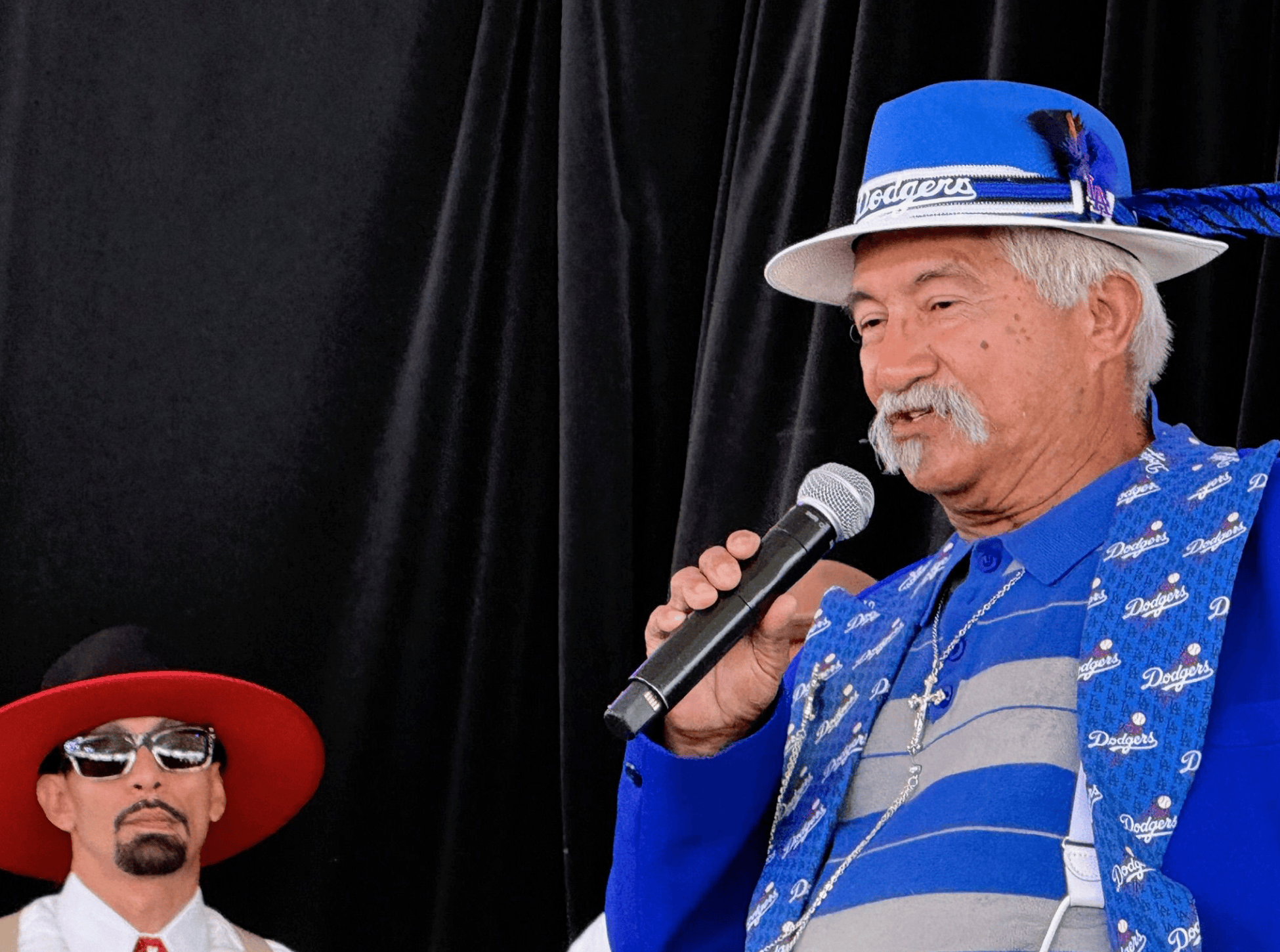
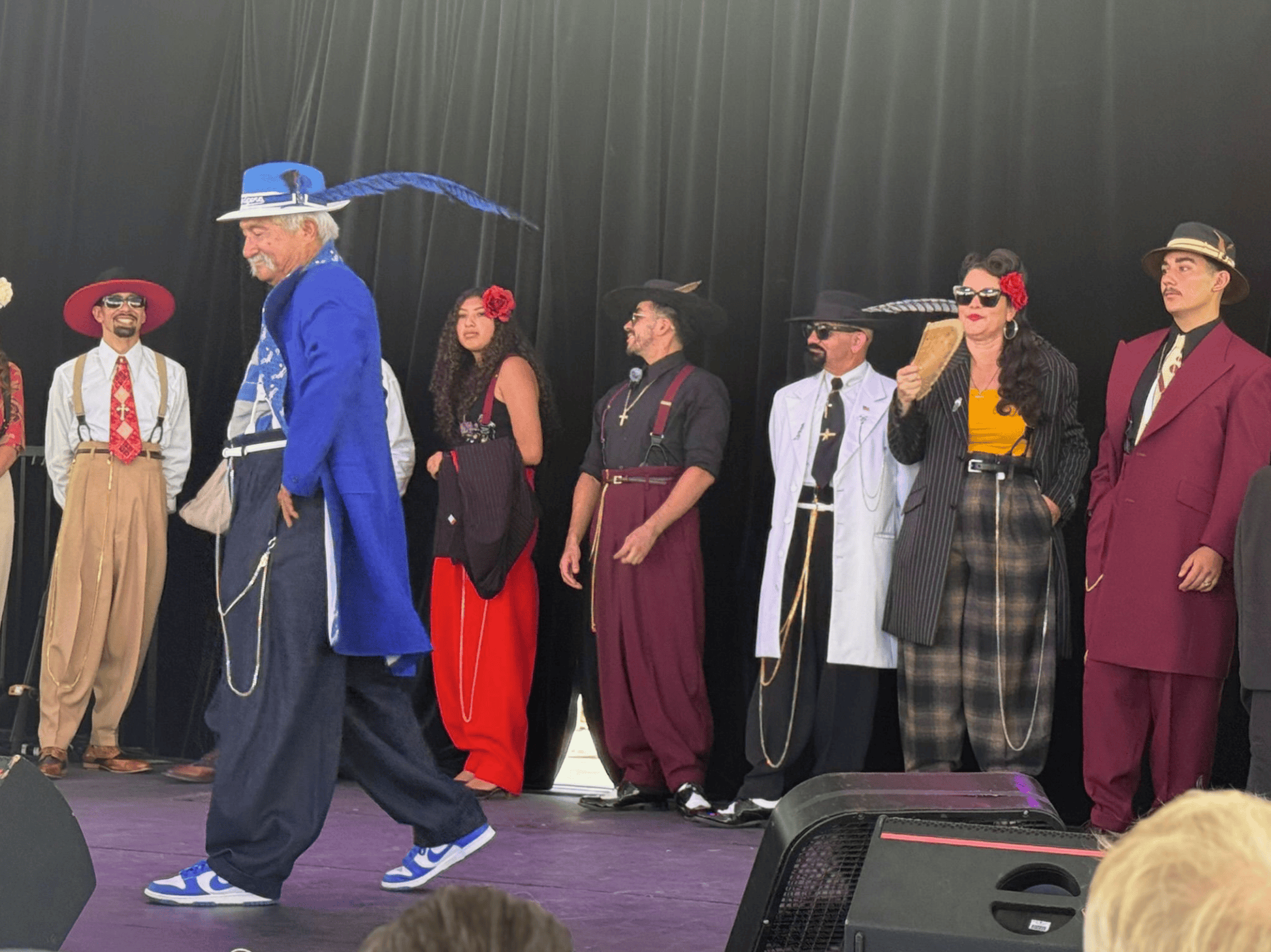
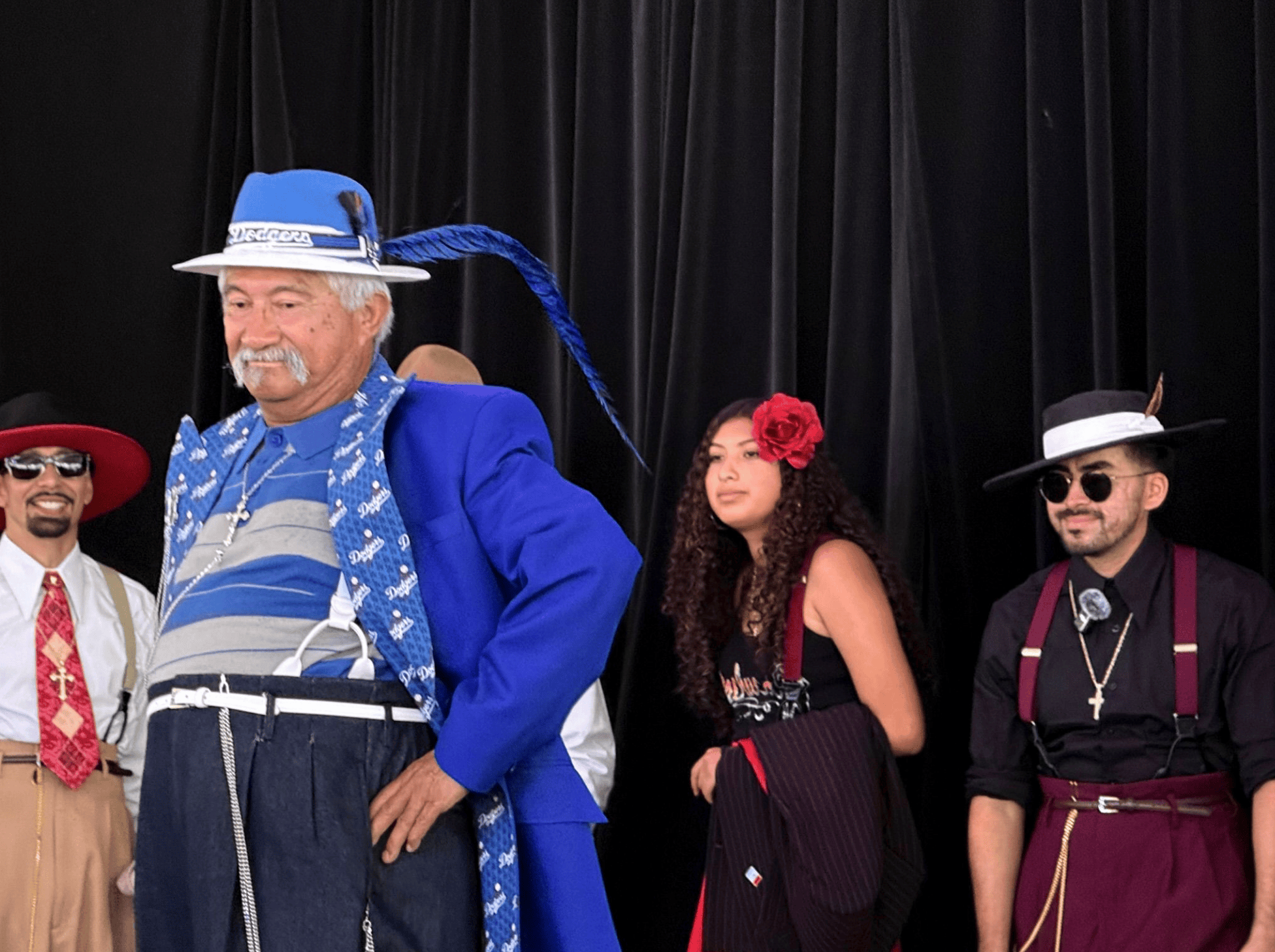
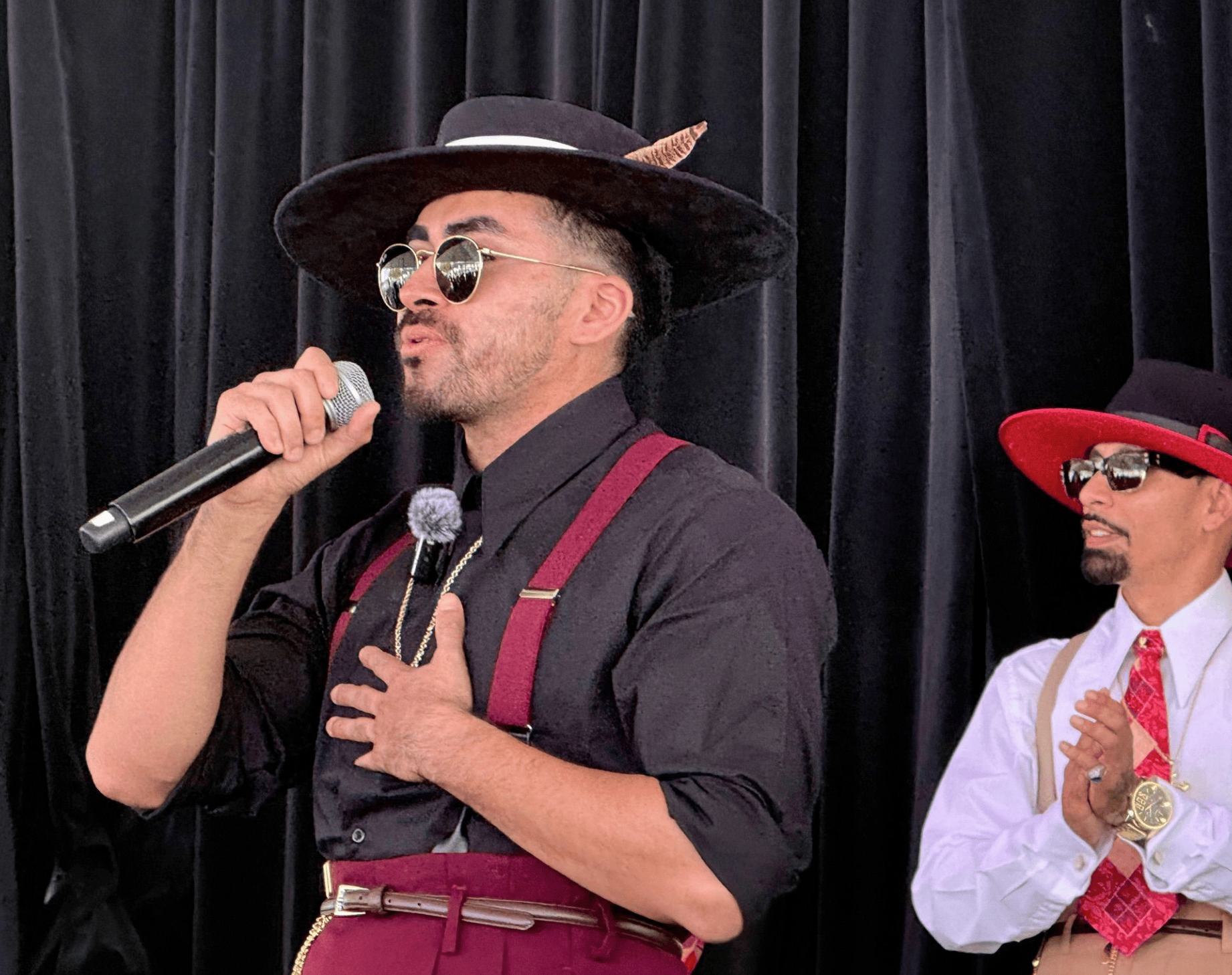
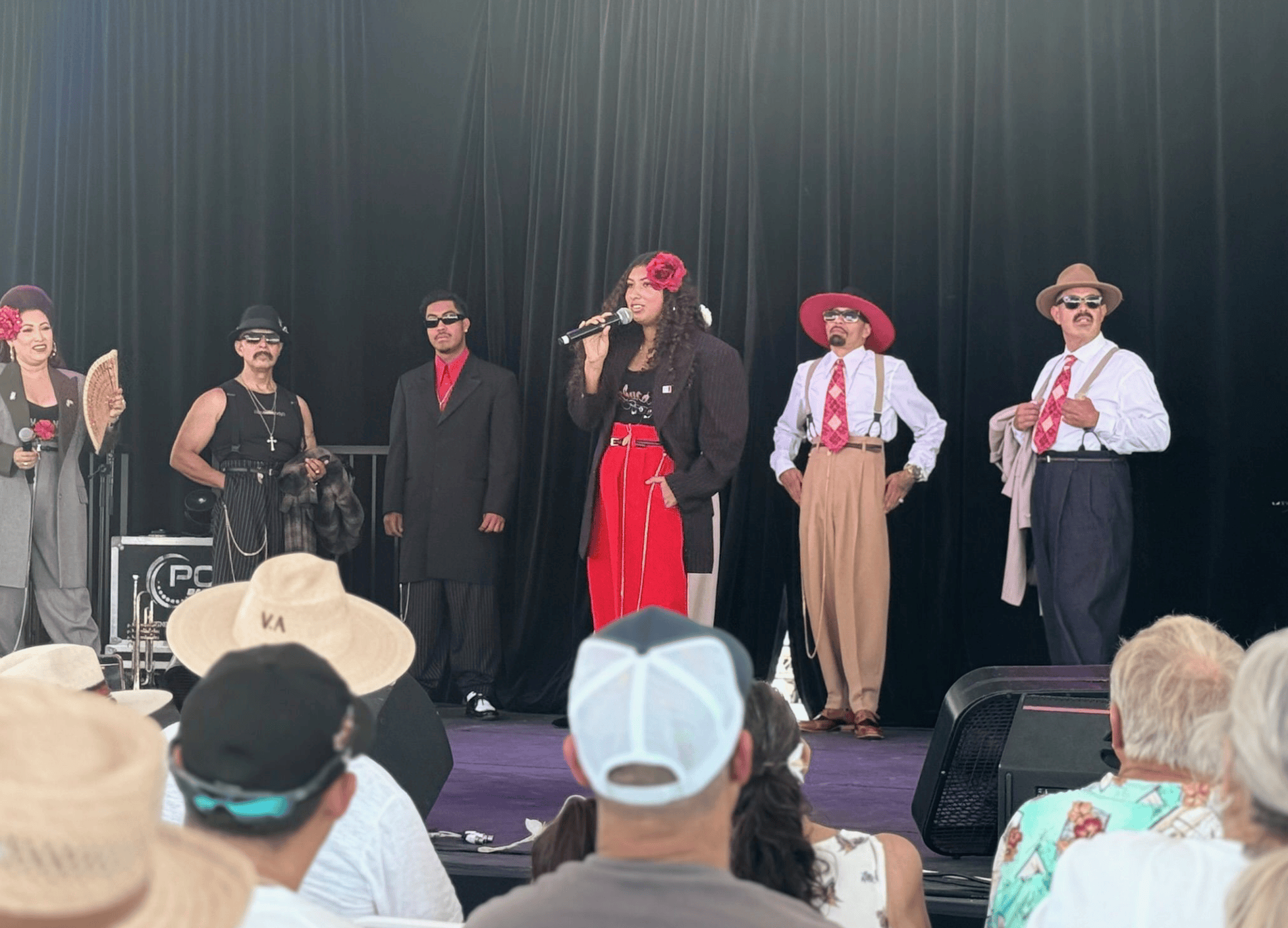
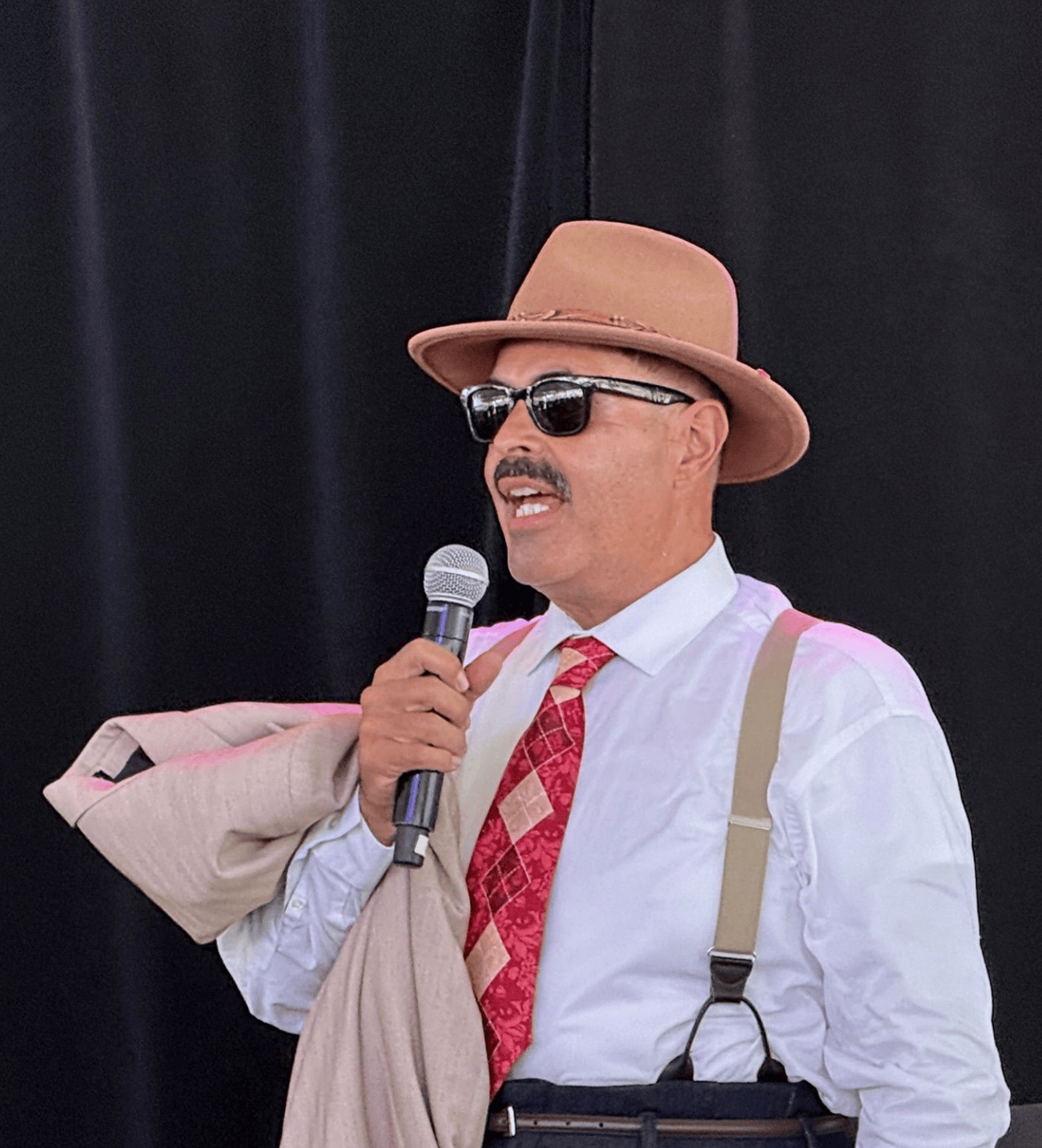
Eighteen models wearing their own custom-made zoot suits sauntered across the stage, twirling, swinging watch chains, and moving their jackets to showcase the style, the attitude, y la cultura. Each model had a few minutes to speak to what zoot suits meant to them. Model Randy shared that he owns 19 zoot suits, all custom-made by El Pachuco. The running theme was la cultura, la familia, and lifestyle. The audience was encouraged to give an enthusiastic “órale,” which has a variety of meanings depending on context, such as “right on,” “okay,” “let’s go,” or simply “wow.”
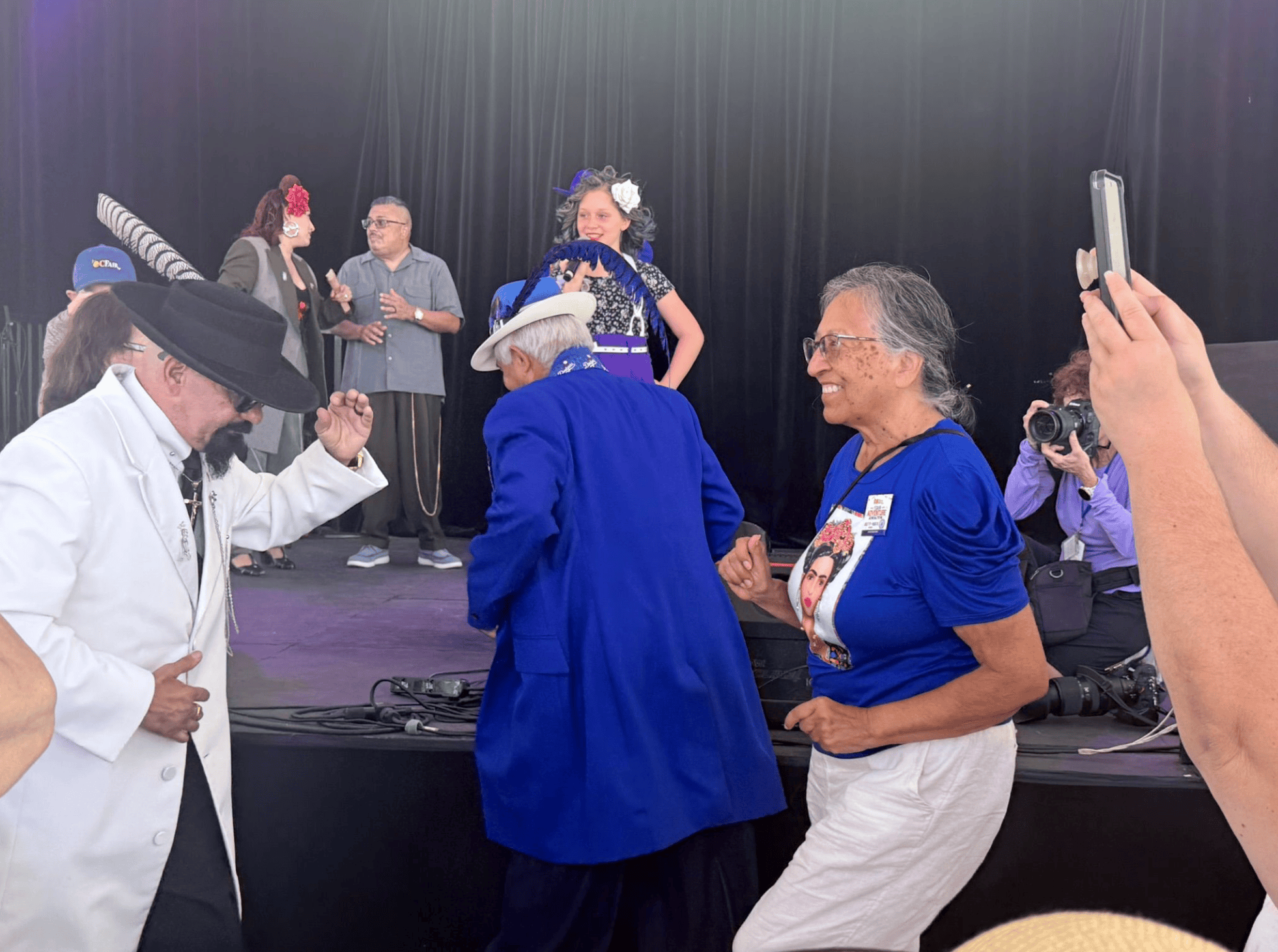
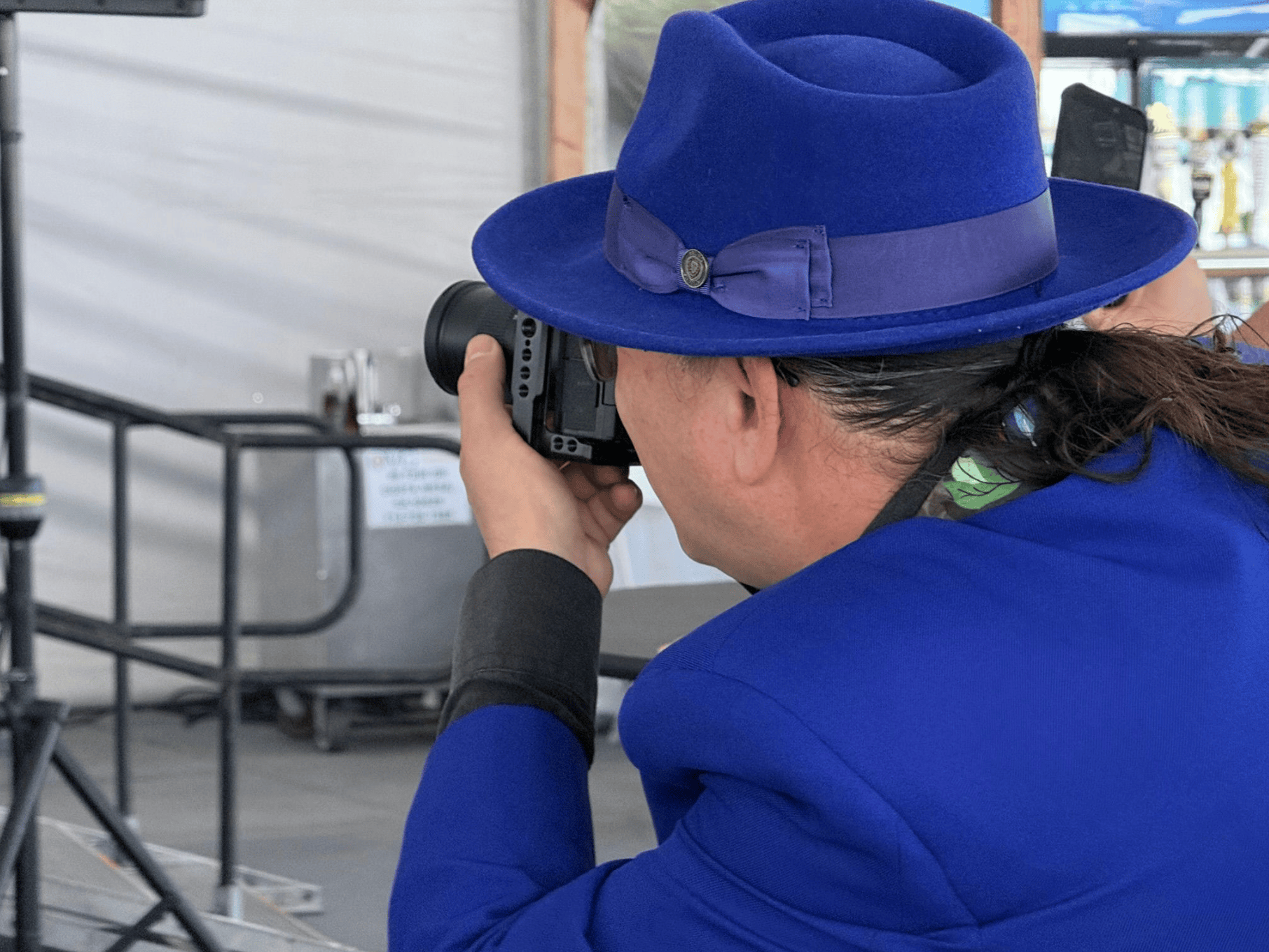
Each model wore their own custom-made zoot suit, all well-tailored and crafted. “My mother was an old Pachuca, my three tías were old Pachucas from the Road Queens,” said Filipino American and retired longshoreman of 44 years Eddie. He donned a bright blue Dodgers-inspired suit. Later, Vanessa shared that some question whether women wearing zoot suits is historically accurate. In the scene, they did. It was an act of rebellion and an expression of style.
The show ended with a call for everyone to get up and dance. People rose out of their chairs and danced with each other and the models to songs like Los Tucanes de Tijuana’s “La Chona.” The sense of community and the love of la cultura and la familia were strong.
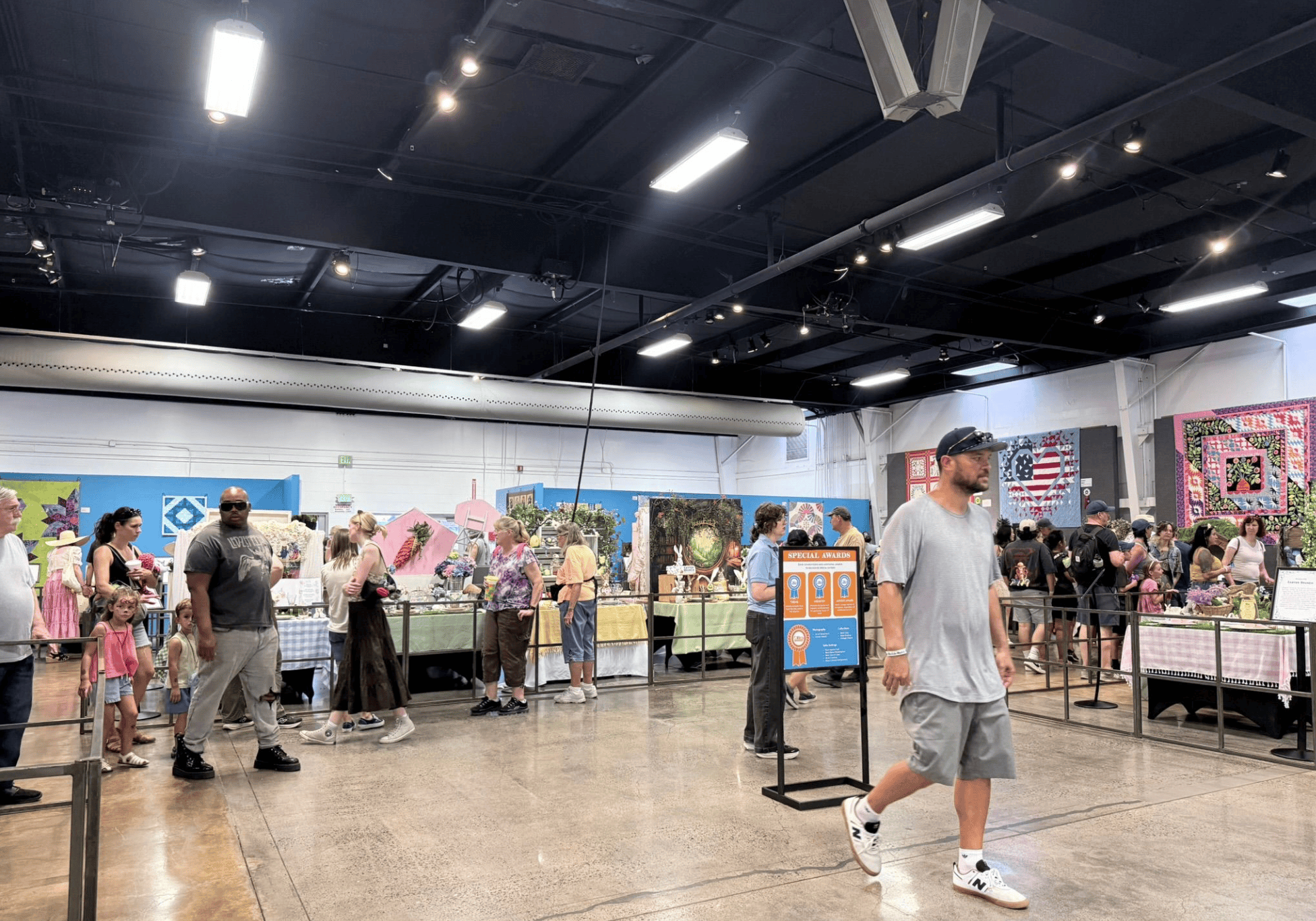
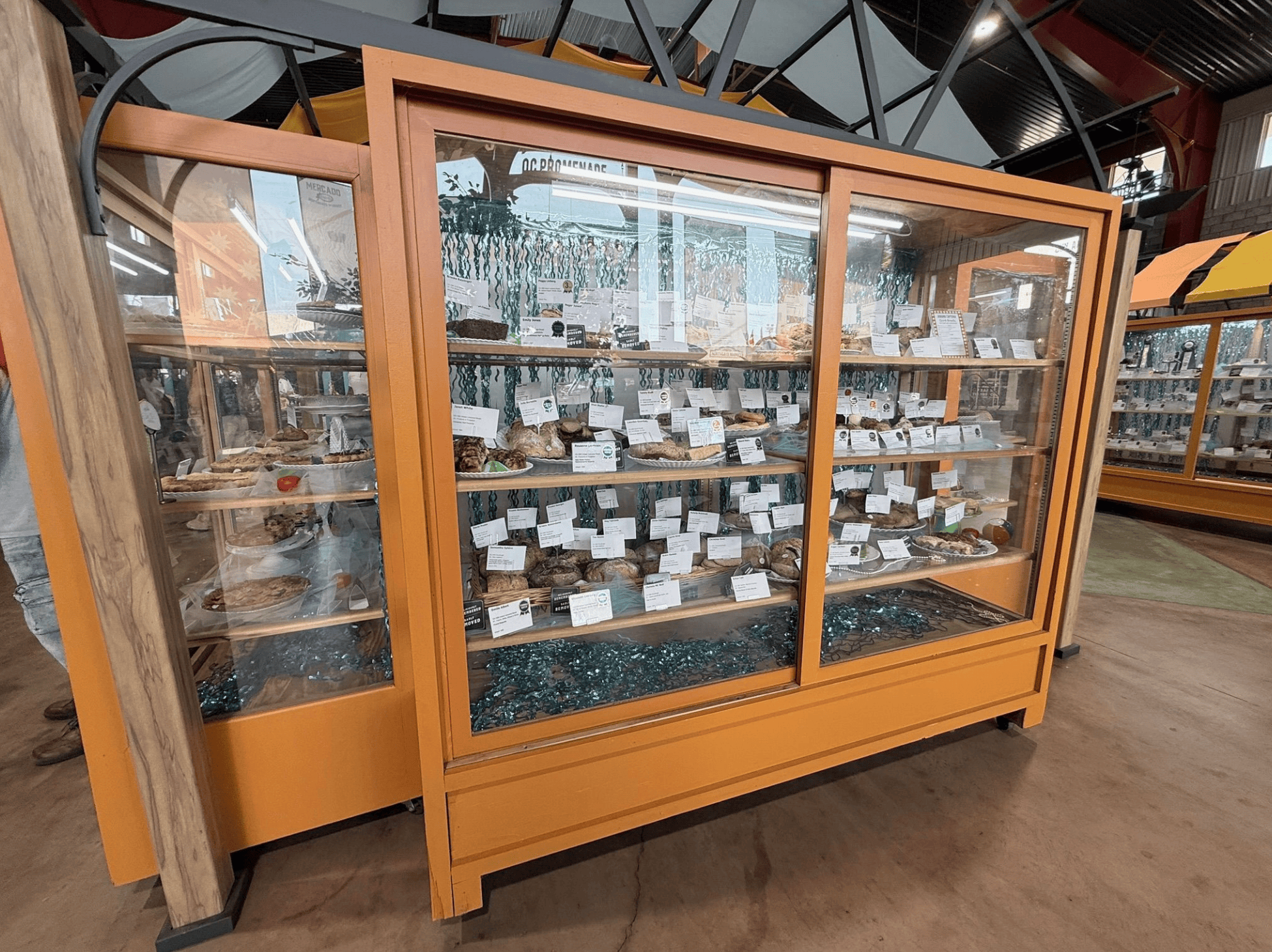
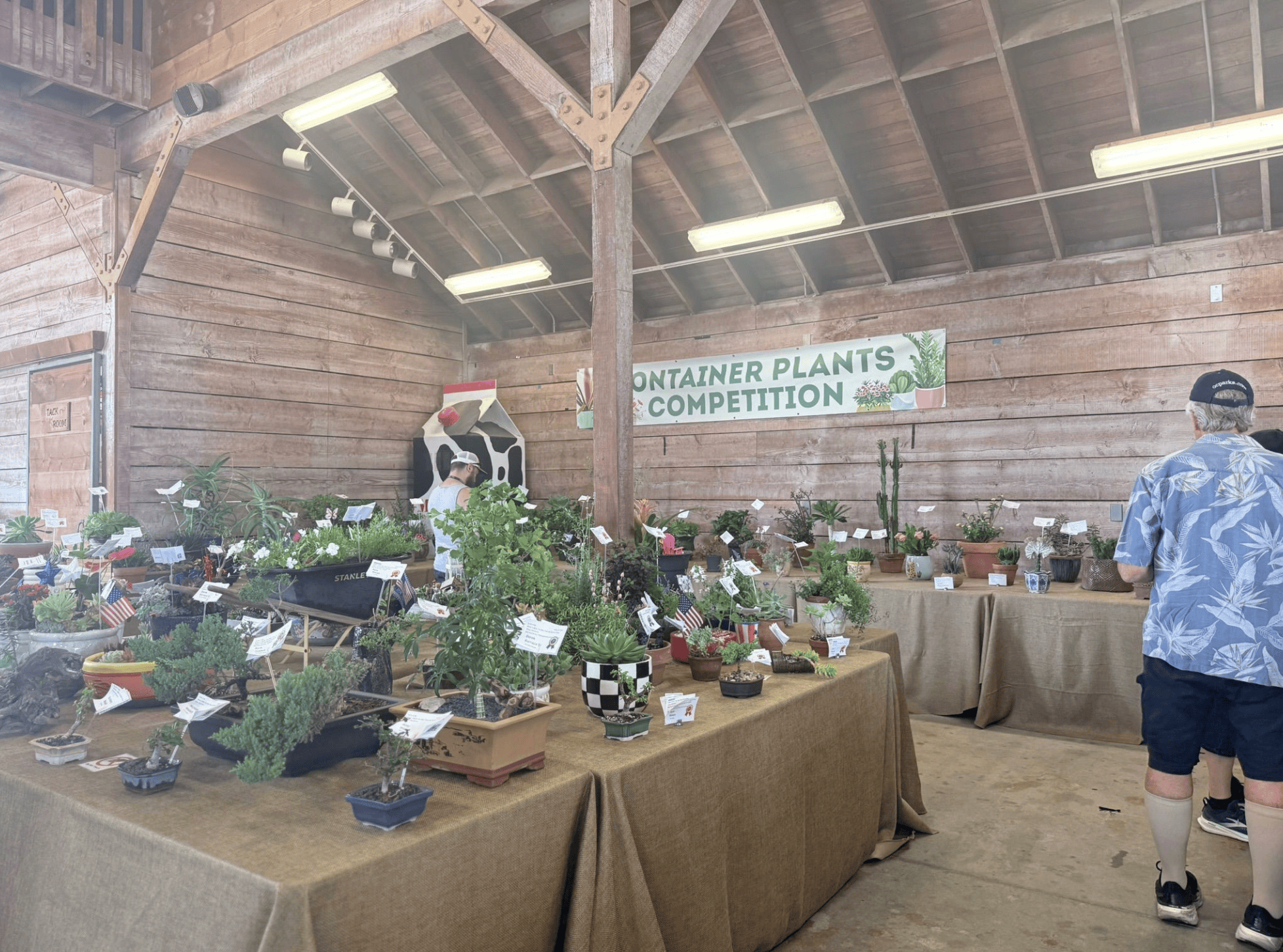
Afterward, I wandered through a few of the buildings, checking out the horticulture, baking contests, and arts and crafts, mainly for the AC. Feeling it was too hot and that I had gotten what I came for, I headed back to the yellow gate and boarded the OC Fair Express at 3 pm back to Fullerton. The return trip was equally comfortable, and the bus was nearly empty.
See upcoming events: https://ocfair.com/events-calendar-view/









Related
Discover more from Fullerton Observer
Subscribe to get the latest posts sent to your email.