
The first poetry collection by Colleen Morton Busch, board president of the Berkeley Zen Center, published after winning a national poetry competition; Thomas Farber’s wry take on the current moment, touching on President Trump’s relation to the inner self; and a new translation of the last book by Tamiki Hara, a survivor of the Hiroshima bombing, by Liza Dalby, are among six new books with Berkeley connections.
A column on books in Berkeley.
Nonfiction
“Reckonings” by Thomas Farber
El Leon Literary Arts/Manoa Books, 70 pages, $20

Thomas Farber does not count how many books he’s published, only that it’s in the 20s.
A former lecturer in UC Berkeley’s graduate creative writing seminars, Farber’s latest book, “Reckonings,” is made up of what could be called, in contemporary parlance, “flash” pieces, short meditations or vignettes. Farber doesn’t care much about categorization either and simply calls the book a work of creative nonfiction.
“Since I started writing, I never thought about genre at all,” he said. “I just wrote what I needed to say and found a way to say it.”
Farber has had much to say across several genres since E.P. Dutton published his first book, “Tales for the Son of My Unborn Child,” in 1971. In “Reckonings,” Farber explores two ideas that came to him when he turned 80 and was sitting outside what North Shattuck residents call “the former French Hotel” (now the Sens): nobody asked to be born; and people can’t help being what they are.
Such ideas formed the backbone of his explorations — about American politics, personal accountability, mortality and the hunger for immortality, the functions of satire and the meaning of art. Along the way, he namechecks many historical, political and literary figures, including Benito Mussolini, H.L. Mencken, Stephen Miller, Annie Dillard, Colette and Jonathan Swift. Because Farber writes about the current moment, many of these meditations are about President Trump.
“Trump seems to be a person, among other things, who’s denying death in a major way. That is to say, denying accountability,” Farber said. “I couldn’t not include him. He’s inescapable for all of us. He’s in the air we breathe.”
In one entry he begins by asking: “What can/should a writer do/with an autocrat-in-process who’s survived a Big Mac diet, lawsuits, bankruptcies, Covid-19, impeachments & assassination attempts? DJT didn’t ask to be born, can’t help being who he is? But no comeuppance?” He ends the piece with a sign he sees at a Yoga studio near his home: “Learn to welcome others with the awareness that they are your own inner self.”
The book’s editor, Frank Stewart, came up with the idea of illustrating the book with the work of Renaissance painters like William Black and Hieronymous Bosch, whose hellscapes warn of a reckoning for one’s sins. Farber thought they were perfect.
“That is the counterpoint to the kind of profane aspects of our political world right now,” Farber said. “I don’t happen to live in the world of Bosch, but we’re all imagining what’s going to come of all this madness.”
Farber will participate in a book chat with UC Berkeley English professor Sam Otter at noon on Sept. 30 in the Geballe Room, 220 Stephens Hall. Registration is requested.
“Ecocivilization: Making a World that Works for All” by Jeremy Lent
Melville House, 400 pages, $33
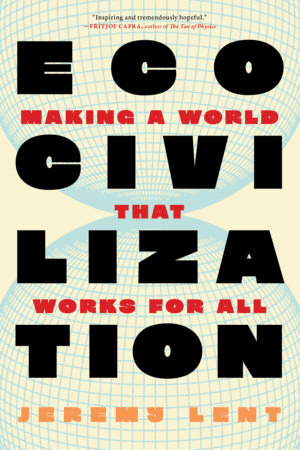
Species extinction. Billionaire capture of governments. Inequality so extreme it’s destabilizing democracies. A return to large-scale war. Such events have combined to create an everything-all-at-once situation in the world that is no coincidence, according to a new book, “Ecocivilization,” by Berkeley resident Jeremy Lent.
“There are deeper, underlying causes to these things that are making them happen at the same time,” said Lent, who has spent the past two decades building the framework that explores why civilization is fracturing — and what could replace it.
The book’s title is shorthand for “ecological civilization,” the notion that we need to change not just one part of our civilization, but create an entirely different kind of civilization, Lent said, one that allows humans to live in harmony with the natural world and each other.
Lent, the co-founder of Ecocivilization Coalition, with members from around the globe, and founder of Deep Transformation Network, is considered a leading authority on the subject. The Guardian’s George Monbiot described Lent as “one of the greatest thinkers of our age.”
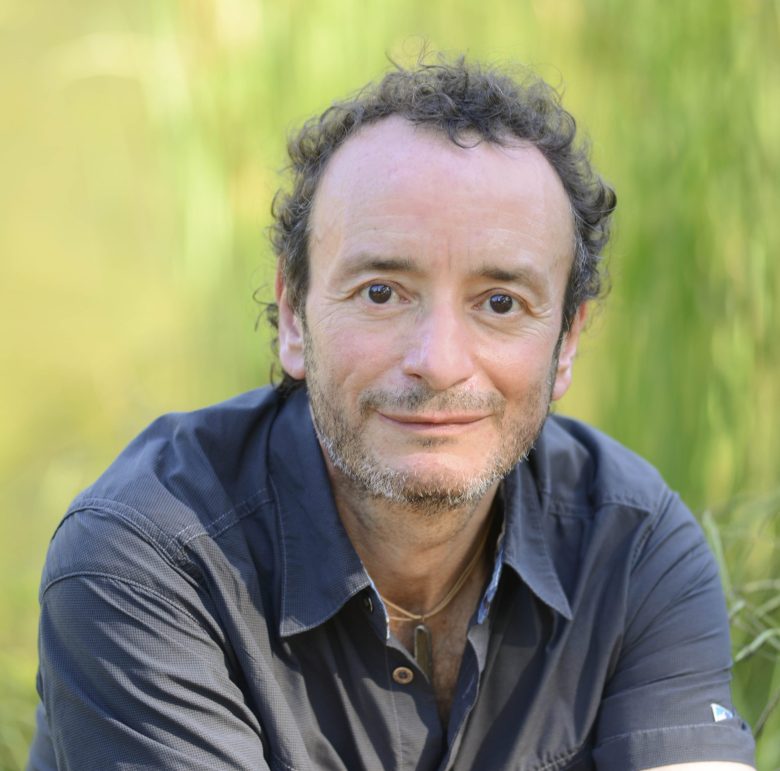 Jeremy Lent. Courtesy of the author
Right now, “our whole global system is all about growing the economy as fast as possible, having markets determine everything, having the wealth go to whoever is able to come up with the most successful product and using technology that we have no control over,” Lent said.
He aims to show readers how bad things actually are right now but also provide hope. He proposes the idea of a life-affirming society, “a civilization that is simply based on setting the conditions for all beings to thrive on a regenerating earth,” he said.
In the book, Lent highlights five necessary changes for humanity’s flourishing:
A universal basic income framed not as welfare but as a citizen’s share of wealth built from generations of shared knowledge, infrastructure and natural resources.
Meaningful corporate charter reform with renewal tied to proven social and environmental accountability.
The expression of deliberative democracy — with citizens’ assemblies and sortition-based governing bodies making binding decisions, from local planning to national climate policy.
Legal rights for nature: giving oceans, land and their inhabitants standing as entities, not just property for human use.
Replacing GDP as the main measure of success with models like Doughnut Economics, which tracks whether people’s needs are met without exceeding planetary limits.
“These ideas are not in the utopian world but actually being done,” Lent said. “It will take a huge amount of effort and work, but a different kind of future is available to us if we all pull together to actually make it happen.”
“My Deepest Desire” by Tamiki Hara
New VillagePress, 41 pages, $20

Not long before his death, the Japanese writer and poet Tamiki Hara describes being at a train station and watching “those who gaze despondently at the tracks. I see the shadows of broken spirits, those who struggle in vain, loitering at the edges. And it occurs to me that I myself, standing here ruminating at this crossing, may well be one of these shadows.”
Hara, who survived the 1945 Hiroshima bombing and spent the rest of his life writing about its repercussions, died from lying on the tracks of an oncoming train in Tokyo in 1951. Liza Dalby, a Berkeley anthropologist who specializes in Japanese culture, has done a new translation of Hara’s last work, “My Deepest Desire,” a collection of meditations, with full-page ink drawings by the Oakland artist Sandy Walker.
The project began when Walker, a friend of Dalby’s, asked her to do a new translation after he crafted drawings to accompany Hara’s short pieces. Dalby, who is fluent in Japanese, has written five books about Japanese culture, including “Geisha,” “Kimono: Fashioning Culture” and a best-selling historical novel, “The Tale of Murasaki,” which has been translated into nine languages.
Dalby had never been happy with the previous translation. She felt it was too literal and literary. “It wasn’t ‘wrong’ in any sense,” she said. “It was an academic translation.”
In her interpretation, Dalby tried to make the writing as strong and punchy as Hara’s, a difficult challenge given that Japanese uses a lot of passive constructions. “So I concentrated on trying to make it how the Japanese would feel so that a Western audience would feel it in the same way,” she said.
The meditations are written in a Japanese literary style called “zuihitsu,” which means “following the brush,” a non-linear approach in which one idea leads to another. Within these brief paragraphs, Hara describes a desire to live a different, fuller life, free from pain, isolation and the haunting tragedy he experienced. Dalby found Hara’s writing to be the best illustration of post traumatic stress syndrome she’s ever read.
“You can see what’s going on in this man’s mind and how being in Hiroshima affected everything,” she said. “For me it was like, oh yeah, that’s what it must feel like to feel a trauma like that and how it warps how you feel the world.”
Royalties from the sale of the book benefit the Western States Legal Foundation, an NGO founded in 1982 to abolish nuclear weapons.
“Groundbreaking: My Unmapped Path as an Academic, Mother and Gardener” by Clare Cooper Marcus
New Village Press, 354 pages, $27.95
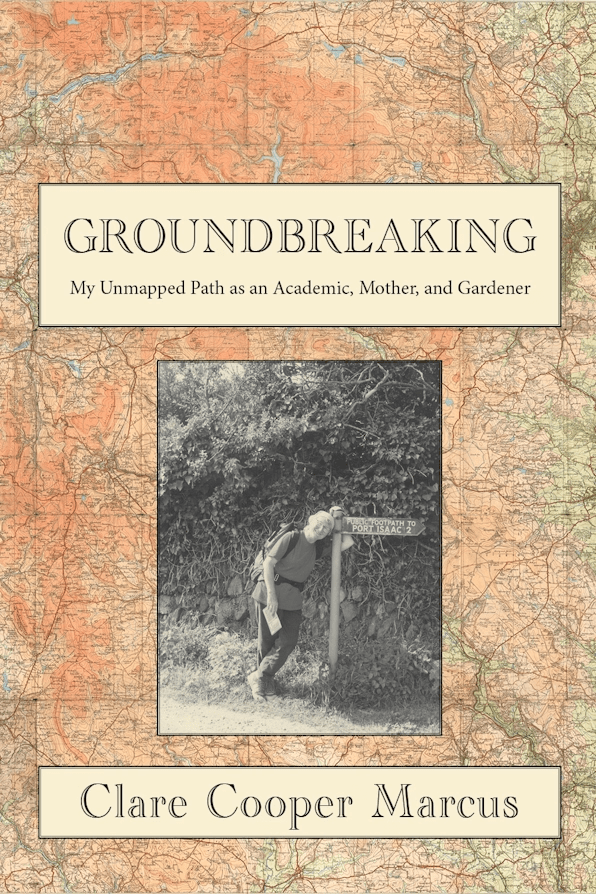
UC Berkeley professor Clare Cooper Marcus experienced the California of the 1960s to its fullest. She participated in anti-Vietnam War marches, free speech marches and rallies led by Ram Dass and Alan Watts.
At Esalen, she “enjoyed many erotic encounters with others while sitting naked at night in the hot spring baths on a cliff top.” In Bolinas, she spent weekends doing “LSD, peyote, psilocybine, MDMA and perhaps others I have forgotten.”
These are a few of the details from Marcus’ iconoclastic life she revealed in her second memoir, “Groundbreaking,” published in May, a few months after her Jan. 19 death.
A former professor in Berkeley’s architecture and landscape architecture departments, Marcus was internationally recognized for her teaching, research and publishing on the social and psychological implications of design on urban open spaces and housing, and outdoor spaces in healthcare facilities. She co-authored two books on therapeutic landscapes in healthcare, and one for a more general audience that received national attention, “House As a Mirror of Self” in 1995.
“She was a pioneer, through and through,” said Wendy Sarkissian, an ecological activist and environmental ethicist who co-wrote “Housing As if People Mattered” with Marcus in 1986. Sarkissian had known Marcus for 52 years and helped edit “Groundbreaking.”
Within her field, Marcus was known for the concept of “post-occupancy evaluation,” a process that involves going to places like public housing or parks and asking people if it worked or if they enjoyed being in the space, Sarkissian said. She would then use that information to inform the brief for designers.
“Although that might seem incredibly obvious today,” Sarkissian said, “when she was doing this in the 1960s and ’70s, it was very radical.”
The book’s 28 chapters dig into the details of her life, like raising a family as a single mother, teaching at UC Berkeley and a defining experience of her UK childhood: being sent to the country estate of the Rothschilds during the blitz, where she first found solace in landscapes both cultivated and wild.
Planted within the chapters are “Garden Stories,” reflections on her Berkeley garden that serve as metaphors for growth, loss and renewal.
Although Marcus advised architects, landscape designers and planners, she herself was not a designer.
“The one thing she designed is her Elmwood garden,” said Sarkissian, which she called “idiosyncratic” and included fruits, vegetables, English varieties and an aging-in-place design. “She planted only what she liked,” Sarkissian said, “for beauty and their meaning to her.”
Photography
“And So We Moved to Petaca” by Lynn Adler
University of New Mexico Press, 144 pages, $30 (paper), $50 (cloth)
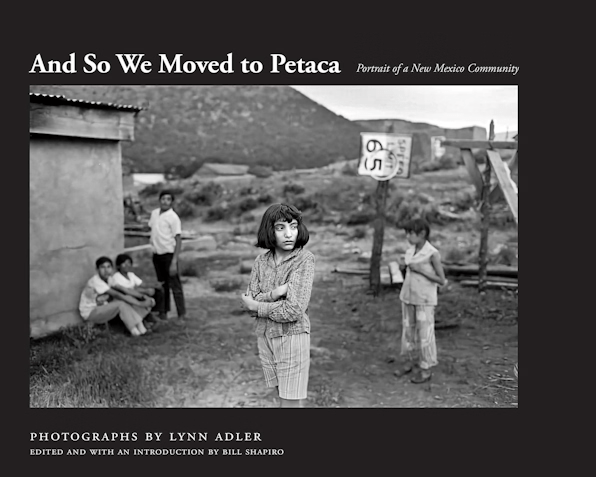
Lynn Adler is a Berkeley-based documentary filmmaker who, through the collectives Optic Nerve and Ideas in Motion, has made community-based documentary films and videos around the world, including for PBS/NOVA and PBS. While she has worked primarily in film, her still photography has remained a constant — ever since she inherited her mother’s 35mm camera in 1968.
In 2021, when Adler’s son perused her archive of still photography, he stumbled upon a series of images she had taken from 1971-74 in Petaca, New Mexico, home to about 50 traditional Hispano families whose roots in the region went back more than 100 years. Her son suggested that she put the photos on Instagram.
“One thing led to another,” Adler said.
When she noticed that a man named Bill Shapiro kept liking her images, she reached out to him and learned that he had been an editor at Life magazine. That led to Shapiro examining Adler’s trove of Petaca images and suggesting that she bring them together in a book.
“And So We Moved to Petaca,” a portfolio of 96 black-and-white images, was the result. Shapiro, who lives in Taos, edited the book and wrote its introduction. The launch coincided with a Santa Fe exhibit of the photos in May.
Adler discovered Petaca after two of her friends who were looking for an affordable place to live moved there with their young children. Even in the early 1970s, the community was “frozen in time,” Adler said, with no schools, no hospital, no stoplights. There was one church, one bar, one dry goods store and a single gas pump. Spanish was everyone’s first language and the only real employment had been a nearby mineral mine that shut down in the 1950s.
“Most of these families survived by having small gardens and a few animals,” Adler said. “What struck me immediately was how very supportive they were to my friends. They taught them the most basic things, like working a wood-burning stove. That was their source of heat. A few people had electricity but not many.”
Many of the photos in the book are portraits: from a wide-eyed girl to the deeply-lined face of an elder. Chickens and goats roam in the dusty terrain.
After returning to the community, Adler found that many of her subjects are no longer alive, even those who had been young at the time. Still, she got word of the show out to members of the community, one of whom showed up and told her, “I had never seen pictures of my great great grandmother.”
Adler said that Petaca’s population is smaller now, but little has changed from her first visit 50 years ago: “Having access to healthy food and employment are issues that are ongoing for everyone in poor communities.”
Poetry
“Smolder,” by Colleen Morton Busch
Ex Ophidia Press, 89 pages, $18

Colleen Morton Busch was with her husband, John, when he received a diagnosis of smoldering multiple myeloma 20 years ago. As the doctor talked, the word “smolder” stood out to her.
“It’s so evocative,” she said. “I bookmarked it in my mind.”
“Smolder” became the title of Busch’s first poetry collection, which examines “the many kinds of fire blazing inside life.” Its publication was the result of a national poetry book contest by Ex Ophidia Press. “Smolder” was selected from more than 300 entries through an anonymous, multi-tiered review process.
“With ‘Smolder,’ Colleen balances profound personal grief with a fierce devotion to being present, crafting a collection that is equal parts heartbreaking and triumphant,” said Amy Haddad, a poet and retired professor who owns the press.
Busch, who received an MFA in poetry from Penn State in the 1990s, has had a long history with poetry but focused on “other things” for decades. For one, she became a lay-ordained Zen practitioner who serves as board president of the Berkeley Zen Center.
In 2011, she published “Fire Monks: Zen Minds Meets Wildfire,” a nonfiction account of the monks who stayed behind to defend the Tassajara Zen monastery in Carmel Valley during the massive Basin Complex Fire of 2008. Both Publishers Weekly and the San Francisco Chronicle named “Fire Monks” a best book of the year.
Busch thought she was “done with fire” and went on to write fiction and memoir, but returned to poetry over her “deep sorrow” about the state of the world. “I think the times call for poetry,” she said.
Fire, it turned out, turned out to be the perfect metaphor “for anything unpredictable and powerful and potentially life changing.” Many of the poems were written during those difficult early days after her husband’s diagnosis.
Being Zen practitioners helped both Busch and her husband cope, but didn’t protect them from “all those difficult painful emotions that anyone would have given such a diagnosis,” she said. Twenty years later, her husband’s doing incredibly well, she said, not in remission, but in a controlled state not unlike a chronic illness.
“In Zen you get close to how little you can actually control,” she said. “There’s a kind of comfort and support in embracing that uncertainty.”
Busch will be the featured reader at San Francisco Zen Center’s monthly poetry night at 7:30 p.m. on Friday, Sept 25.
“*” indicates required fields