
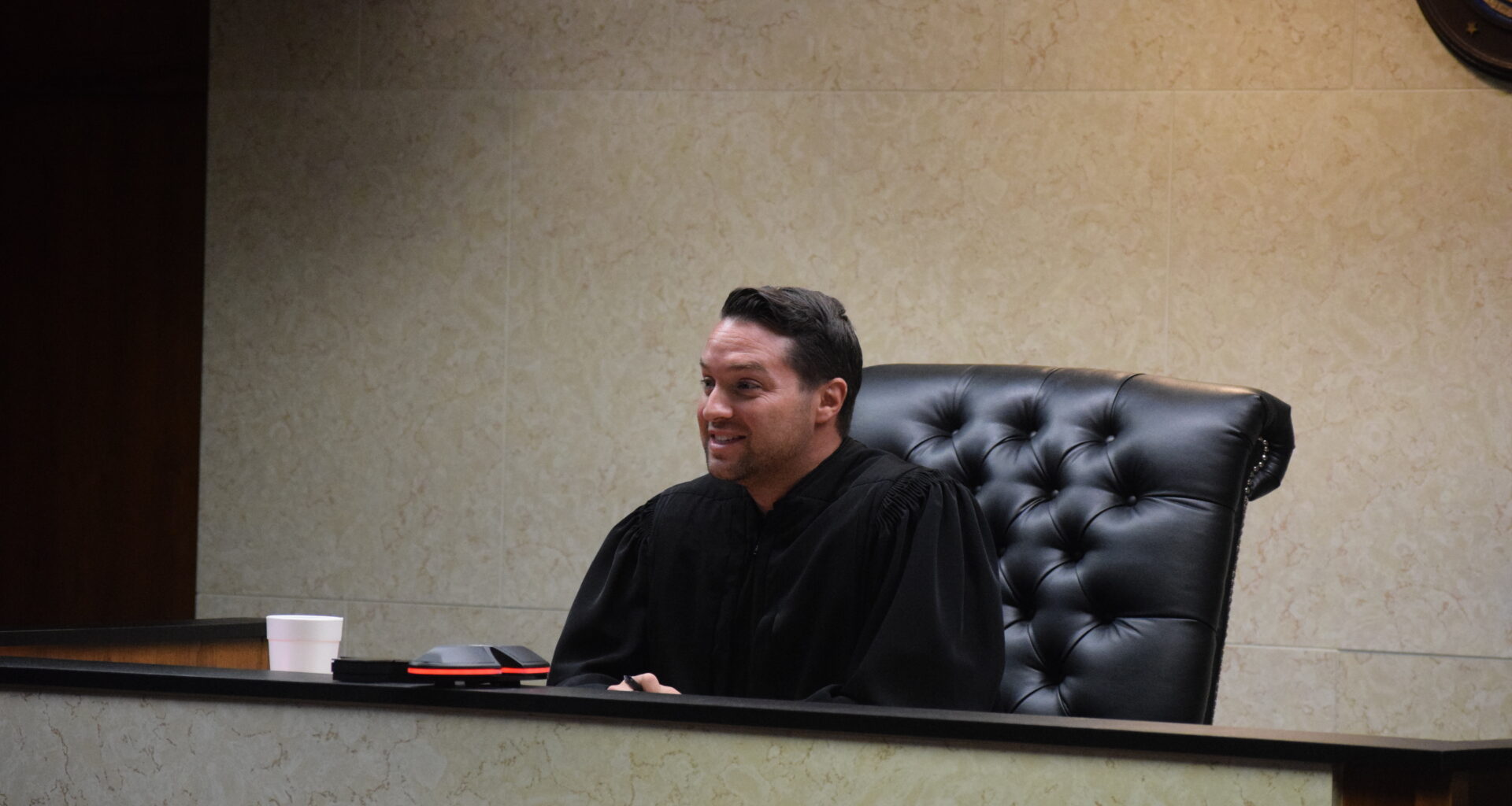
The ongoing Holly Hotel lawsuit will be retried in December in front of the same judge.
On Wednesday, Oakland County Circuit Court Judge Jacob Cunningham denied a motion to remove himself from the case.
Alexander Reuter, attorney for Jeremiah Roberts, who is being sued by the owners of the Holly Hotel, filed a motion on Aug. 3 requesting Cunningham be reassigned or transferred from the case due to bias and lack of impartiality.
“The motion is respectfully denied,” the judge said on Wednesday as he ended a 20 minute hearing. “If you want to schedule a settlement conference or schedule something to talk about this further, you know where to find me.”
Reuter had requested that if the motion was denied the matter be referred to the chief judge for Oakland County. Cunningham did not address that issue during Wednesday’s hearing.
A discussion during a July 20 settlement hearing led to the motion to have Cunningham removed.
“Judge Cunningham made numerous references to his belief that defendant, and/or his counsel, were unreasonable because defendant was not willing to enter into a settlement containing contingency language suggested by the judge.” Reuter said in his motion.
Cunningham directly addressed the issue on Wednesday.
“The motion seems to paint a picture – from the defense’s perspective – that the conversation created some sort of appearance of bias or partiality on behalf of the court,” Cunningham said. “The reason why I started with that is because if there really was an intent to try and resolve this short of trial, the discussion regarding an engineering report was the crucial piece last time.”
At the July hearing, Reuter said the two sides could not reach a final settlement agreement because an engineering report on shifting a wall within the hotel was not available.
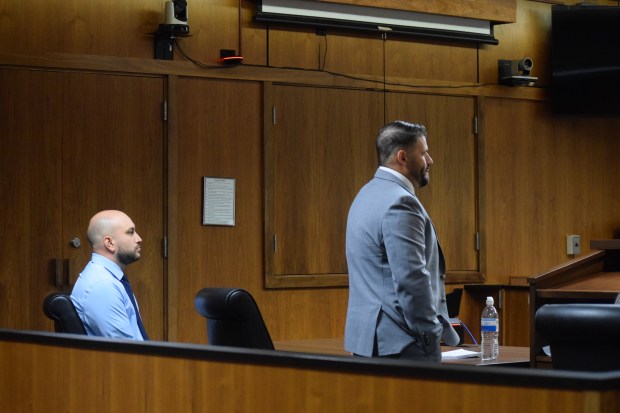 Alexander Reuter, attorney for Jeremiah Roberts, addresses Judge Cunningham.
photo by Matt Fahr
That ended the latest settlement effort in the case, which has now stretched over three years. Cunningham then set a December date for a retrial.
But the judge voiced his frustration with Reuter for not putting contingency language in the settlement to acknowledge not having immediate access to the report and ending the case.
“There are ways to draft around this. There’s ways to do it. What I’m getting right now is obstructionist from your side of the room on this issue,” Cunningham said to Reuter. “It is about two attorneys being able to draft an agreement that has contingency plans about what to do with competing engineering reports.”
After the July hearing, Reuter considered the judge’s request coercive after later being told by Cunningham that he was being unreasonable and obstructionist.
The judge returned to the issue on Wednesday.
“The sole issue of whether there was a timely report available shouldn’t be something that prevents a settlement if folks truly want to settle,” he said. “If you don’t have an inclination to settle and just want to go to trial, that’s okay, too.”
“That conversation was not about me forcing a settlement. I try to impress upon people that settling your own case is better for folks, better for litigants, better for citizens, for them to be in charge of their own settlement first rather than having me do it,” he said.
“The one thing I’ll say, judge, is you’re the only one that knows what’s in your heart and mind to make a decision whether or not you can be impartial,” said Reuter on Wednesday. “All I can do is say what it looked like from our perspective.”
Cunningham later repeated why he was intent on trying to get the two sides to reach a deal four weeks ago.
“The point I’m making is that if I can prevent someone from touching the hot stove – the hot stove being a trial and all the things that come with it – I want to try,” he said.
Cunningham also addressed a claim made by Roberts in an affidavit accompanying Reuter’s motion saying he felt Cunningham’s perceived bias could lead to him being unfairly judged at the December retrial.
“Once openings begin anew, everything that has happened is out of my mind,” said Cunningham. “What’s in front of me is just the evidence and what the claims/rights of the parties are. My job is to adjudicate them appropriately. Everyone is going to have a fair trial in this case.”