
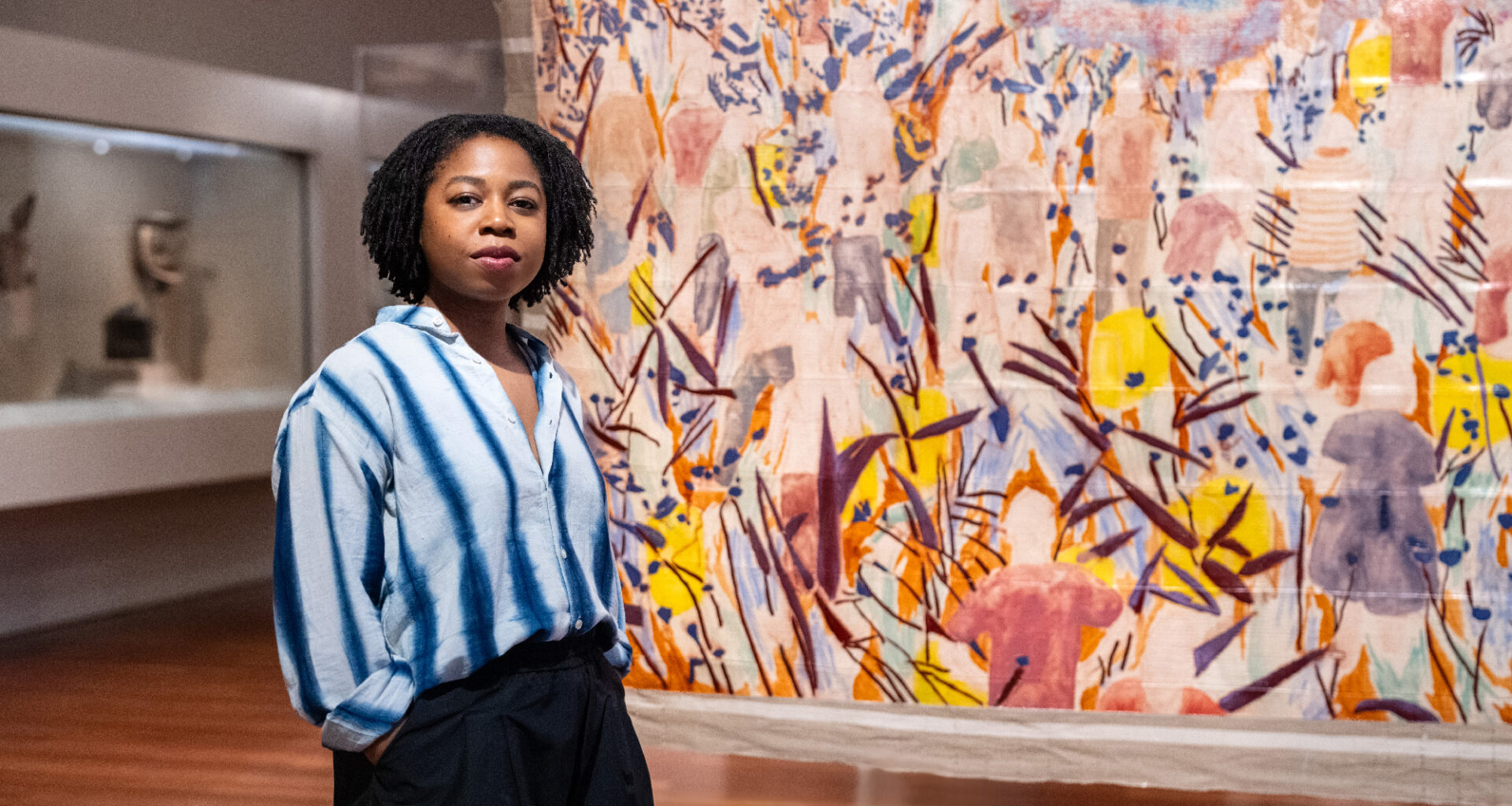
Nengi Omuku’s de Young exhibition ‘The Gathering’ is staged within the museum’s African art collection.
Aug 20, 2026
Updated 9:07 am PT
Letha Ch’ien
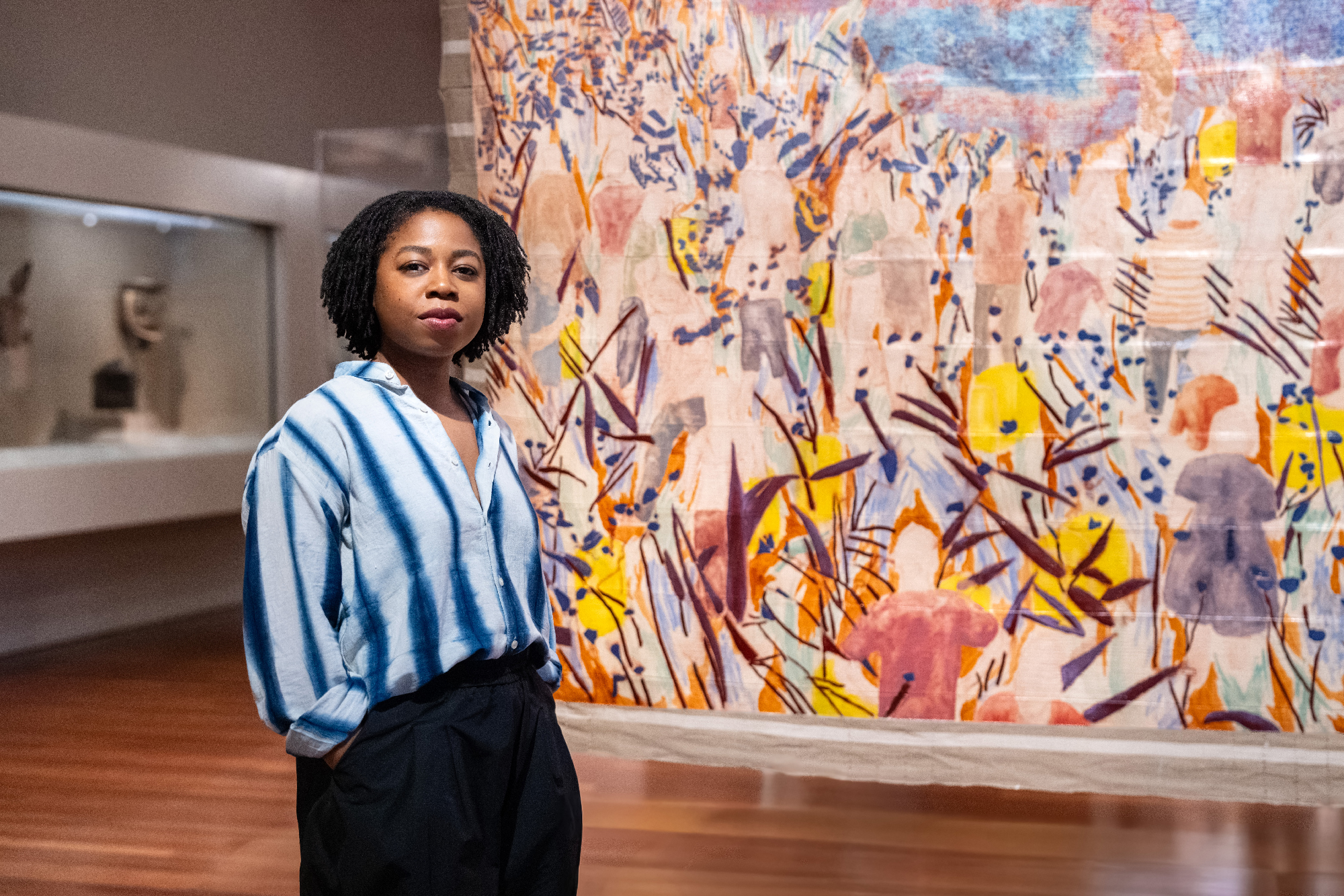
Nengi Omuku in ‘The Gathering’ at the de Young. (Gary Sexton/Fine Arts Museums of San Francisco)
Nengi Omuku: The Gathering is the third contemporary art exhibition staged within the de Young Museum’s permanent African collection, and it’s the best one yet.
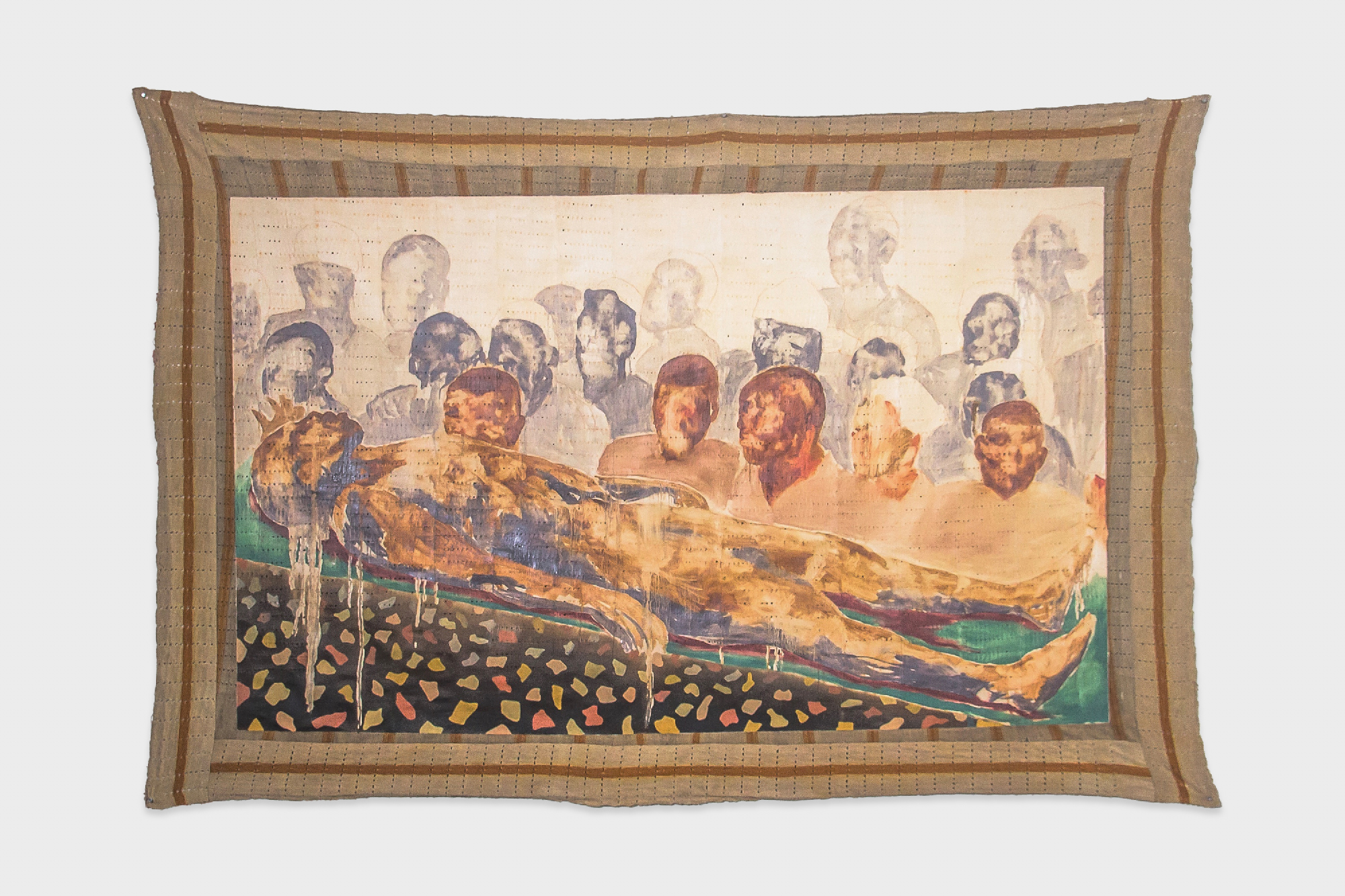 Nengi Omuku, ‘The Gathering, 2020; Oil on sanyan.
The Gathering is also the title of an arresting painting in the show. Made in 2020, it depicts a nude figure stretched out in the foreground, surrounded by a concerned crowd at least three figures deep. Omuku painted this scene after newspaper reports of a building collapse during the COVID-19 pandemic exposed the lack of government emergency services. Though people were not supposed to gather at the time, they came together to care for the victims.
Viewers can clearly see art historical similarities to Christian Pietà scenes of the dead Christ and ancient Greek funerary kraters depicting mourning, but Omuku’s painting is also very specific to her own heritage. “I was thinking about collective experience, collective mourning,” she told KQED, “and viewing it through a Nigerian lens.”
New Haven, inspired by Impressionism’s bold showcasing of nature, dwarfs the people scattered throughout the tall flowers. Each figure carries a bright yellow form that might be mistaken for foliage, but is actually a jerry can, carried by people queuing for fuel. These containers are a common sight in Nigeria, an oil-producing country that nevertheless experiences fuel shortages. In reality, people crowd tightly in lines such as these, but in Omuku’s painting, they space out like naturally occurring trees among the beautiful landscape.
 Nengi Omuku, ‘New Haven,’ 2025; Oil on sanyan.
No sanitizing of government failure is happening here; the problem is acknowledged, but Omuku proposes an alternative to the status quo. “When I was thinking about the bodies and protests, at first I didn’t see how it could sit with the landscape,” Omuku said. “And I realized that this is the world we’re protesting for.”
Placing her work within the context of the de Young’s collection, she added, gave rise to even more realizations. “I thought it was a new world I was building in the paintings,” Omuku said, “and then [Becker] showed me this is a very ancient world, the world of your ancestors and forefathers.”
The continuity of gathering is most powerfully embodied by the Paka Egungun, a proper house of a ceremonial dance garment made of innumerable fabric flaps. The bright textile lappets twirl from the movements of the dancer who literally becomes an ancestor during the masquerade, a Yoruba religious festival during which masked figures provide a body for the deceased, who return to bless the community.
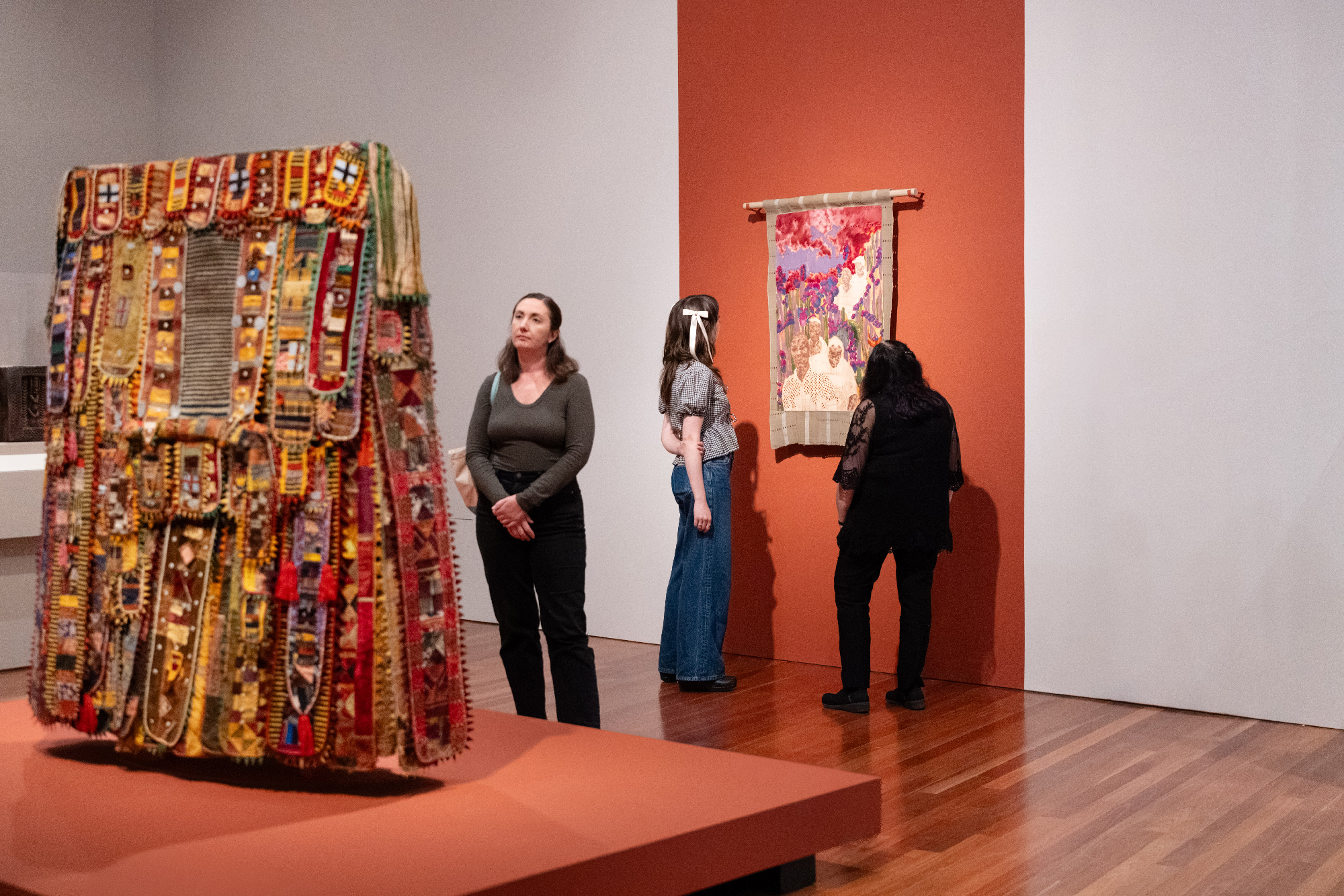 Installation view of ‘Nengi Omuku: The Gathering’ at the de Young, with ‘Paka Egungun,’ 1930–1970 at left.
A less obvious, but equally beautiful connection to Nigeria’s heritage is found in the very material of the paintings themselves. Born in Warri, Nigeria in 1987, Omuku studied painting in London at the Slade School of Fine Art, where she sometimes used canvas, a traditional European painting support. When she returned to Nigeria, she could not find the type of canvas she was used to painting on. Frustrated by the cost of importing it, Omuku instead began investigating traditional textiles.
A friend introduced the artist to sanyan, a robust western Nigerian fabric that predates colonialism. Woven from wild moth silk and cotton, sanyan is used for special-occasion clothing. Omuku now commissions her painting surfaces from a family of weavers who maintain the artisanal tradition in the face of competition from cheap fast fashion. The result is a textured, striped, slightly stiff fabric — interesting as an object within its own right.
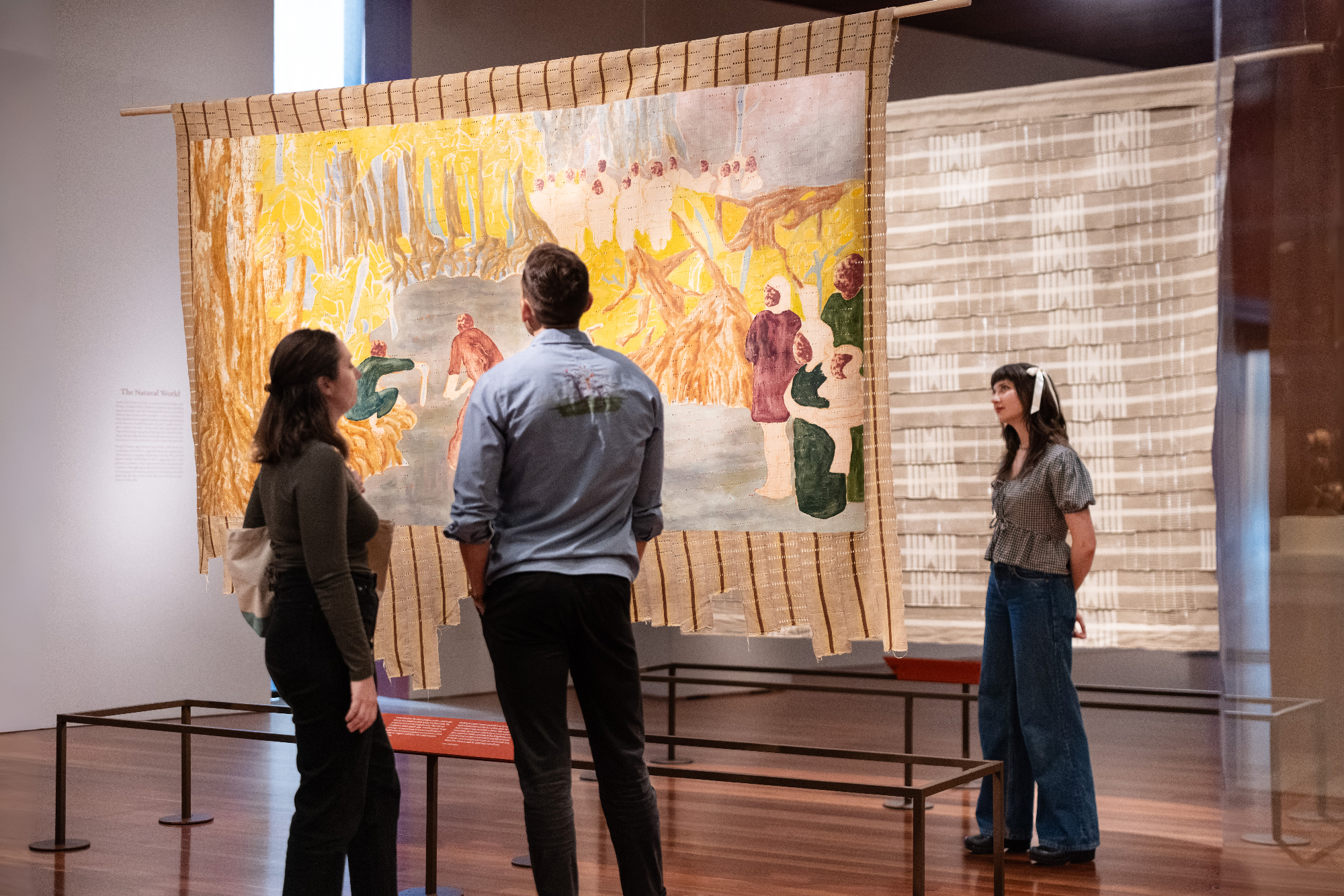 Installation view of ‘Nengi Omuku: The Gathering,’ at the de Young.
When I visited the de Young, I watched people circumambulate the paintings, hung away from the walls so the fabric can be fully appreciated. And happily, Becker, the curator, has supplied visitors with a sample to touch. Three of us gathered around it, fingering the sanyan’s fine threads before turning back to the paintings enlivening the museum’s second floor galleries.
Thanks to its incorporation with the de Young’s historic collection, The Gathering will tell you more about 2026’s place in history than an exhibition with only new art ever could. Plus, the paintings are beautiful. Why not go see for yourself (with a friend) and create a gathering of your own?
‘Nengi Omuku: The Gathering’ is on view at the de Young Museum (50 Hagiwara Tea Garden Dr., San Francisco) through May 14, 2028.