
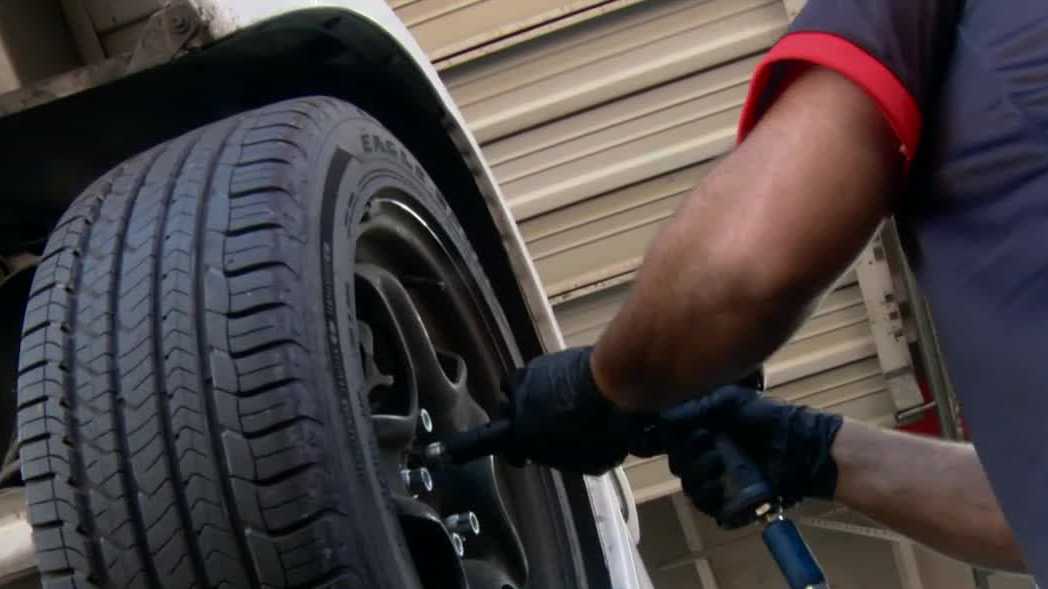
California tire efficiency rules raise concerns over cost and safety
California’s new tire efficiency standards aim to improve energy efficiency but could phase out budget-friendly options, sparking concerns about affordability and safety
 SACRAMENTO, Calif. —
California regulators have approved new efficiency rules for replacement tires, prompting concerns about affordability and safety from industry professionals.
Junior Tariq, owner of A-1 Auto Tire & Wheel, who has worked in the automotive industry for about 20 years, advised drivers, “Save up money. You’re going to need it to buy these tires.”
Tariq said the changes will lead to the removal of some tires from the market.
“Most of our budget-friendly tires today are going to be phased out,” he said. “Like I have a sample of here. These do not meet the first phase requirements.”
The first phase of the regulations begins in 2029, requiring tires to have a maximum rolling resistance level of 9.1 newtons per kilonewton. By 2033, phase two will lower the limit to 7.2 newtons per kilonewton. Tariq explained, “Low tire rolling resistance basically means if you were to roll something, how far will that item roll? So if you were to roll a tire, how far will it go before stopping on its own.”
The changes could mean fewer affordable tire options for drivers on a budget. Tariq said that most of the tires currently sold will be phased out.
The California Energy Commission stated the goal of the regulations is to ensure replacement tires sold in the state are energy efficient. It estimates the cost difference per tire will be $1.50 in phase one and $6.50 in phase two.
Tariq disagreed with the commission’s cost estimates, saying, “On average, about $10 to $20 per tire will go up, we are expecting. But tier four tires generally do not have that technology. So we don’t know how much more it’s going to cost them.”
Regulators claim drivers could save $79 in gas or electricity costs within four months under phase one and $153 within seven months under phase two. Tariq said those savings will depend on the price of gas and electricity.
Tariq also raised concerns about the safety of energy-efficient tires, saying, “They are a little more lighter weight, which means they take material off to make them so could make them weaker. In other words, just depending on the material they use.”
He emphasized that the regulations will most affect average commuters and households already struggling financially. “Households are struggling as it is. Tire retailers are struggling as it is, especially in the budget tires. So it will impact the cost significantly,” Tariq said.
KCRA 3 asked Tariq if by 2029 and 2033, he expects to have fewer tire models and brands to choose from and if that could create availability problems for certain vehicles?
Tariq said, “Yes, definitely, and we do not have many tires in the industry that meet that requirement, unfortunately.
Tariq said it will be harder for people to get tires depending on their car.
Tariq said, “It will be a lot harder because it’s up to the manufacturers to build these brand new tires now. So if this mandate goes into effect, especially the second phase, a lot of our tires that we have here now, more than 70% are going to be gone.
See more coverage of top California stories here | Download our app | Subscribe to our morning newsletter | Find us on YouTube here and subscribe to our channel.