
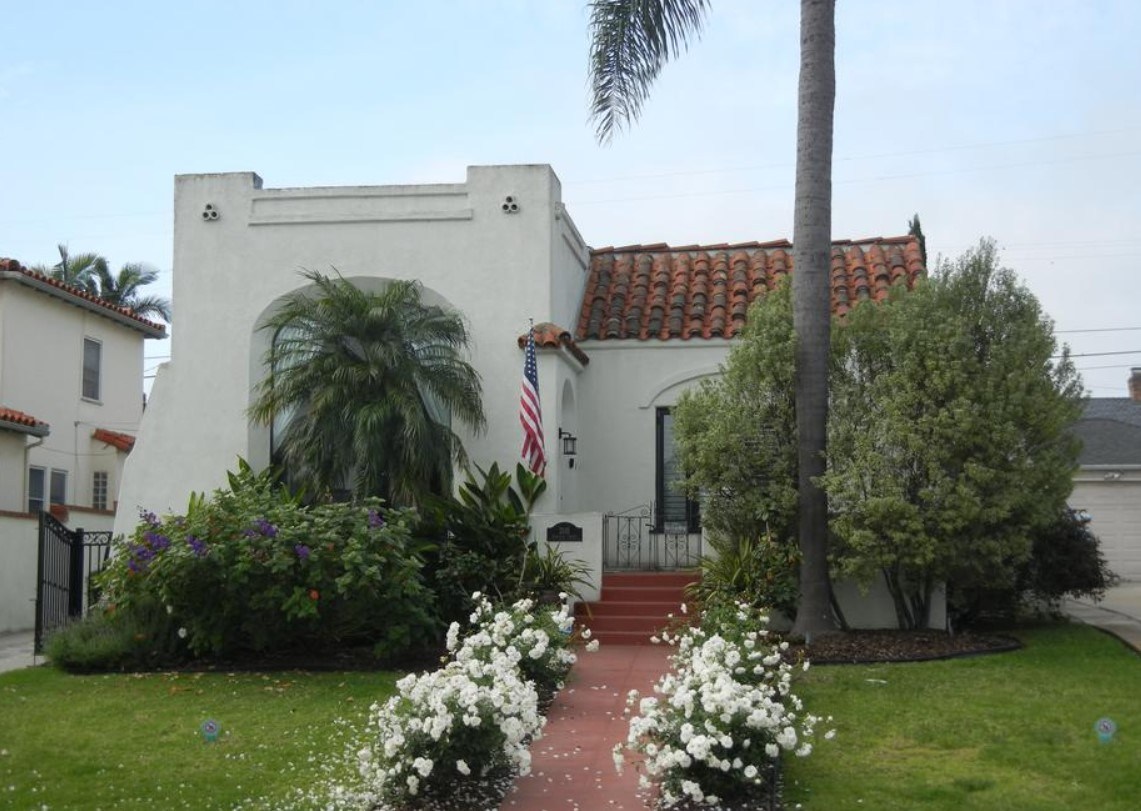
A nearly 100-year-old property in the Loma Portal area that started as a spec house was recently designated a historic property, serving as an example of Spanish Colonial Revival architecture.
During its May 28 meeting, the San Diego Historical Resources Board unanimously voted to designate the property at 3111 Kingsley St. as historic. The item was approved on the consent agenda, so there was no presentation or discussion.
Known as the Union Trust Company of San Diego Spec House #3, the property was designated under Criterion C, indicating the property embodies distinctive characteristics of a style, type, period or method of construction or is a valuable example of the use of natural materials or craftsmanship.
In this case, according to a report associated with the nomination, “The resource embodies the distinctive characteristics through the retention of character defining features of the Spanish Colonial Revival style and retains integrity from its … period of significance. Specifically, the resource features an asymmetrical front façade, a flat crenelated parapet and a medium-pitch side gabled roof with mission barrel tile and minimal eave overhang, medium-sand stucco cladding, stucco wing walls, single-lite wood casement and fixed windows, large single-lite arched wood focal window, clay attic vents, and decorative stucco features including an arched entry-door surround, window brows, and niches.”
A spec — short for speculative — house is a move-in-ready property built without a buyer in mind. The Union Trust Company of San Diego Spec House #3 was built in 1927, with developers drawing architectural inspiration from the Spanish and Latin American styles that had re-emerged following the 1915-1916 Panama-California Exposition.
During the exposition, the HRB report continues, “The romantic ideal of Spanish and Latin American architecture was revived. What resulted was the Spanish Eclectic style which was the predominant style in Southern California between 1915 and 1940, significantly altering the architectural landscape until the Modernist movement took hold during and after (World War II).”
The style is known for its “decorative details borrowed from the entire history of Spanish architecture … and unusually rich and varied series of decorative precedents,” the report states.
Although the property was modified since its construction — including changes to the rear porch, replacement of windows, the addition of a coat of stucco to the exterior, the addition of a wooden gate, additions to the backyard and more — city staff determined these modifications were minor and consistent with the Secretary of the Interior’s Standards for the Treatment of Historic Properties.
Furthermore, the report states these changes “do not impact character defining features.”
Thus, the board ratified the staff’s recommendation to designate the property as historic.
Benefits of historic designation include availability of the Mills Act program for reduced property tax for owners to help maintain, restore and rehabilitate historic properties; use of the California Historical Building Code and the historical conditional use permit, which allows flexibility of use; and flexibility in other regulatory requirements. However, houses cannot be modified significantly once they are designated as historic.
The San Diego Historical Resources Board meets monthly. To learn more, visit sandiego.gov/development-services and click on “Public hearings, meetings and notices.”