
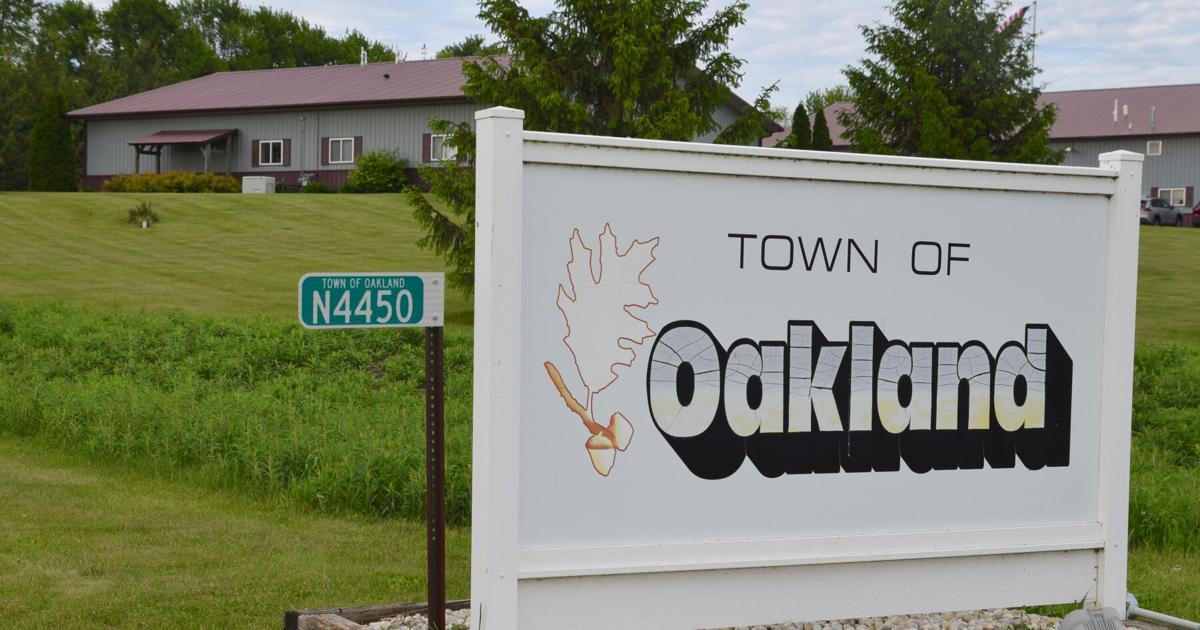
After a heated discussion, Oakland Town board voted to leave the joint Cambridge cable commission, which currently records its meetings, to consider other alternative recording methods.
Oakland and Cambridge have a joint cable commission operated by a joint board from both municipalities.
Oakland Town Board Chair Laura Payne said at the Aug. 18 town board meeting the cable station was previously the only way for residents to access meeting videos. She said it makes no sense to keep paying for the commission when there are easier ways for the town to record meetings.
“Technology has changed dramatically,” Payne said. “There are now more cost effective methods to record meetings and allow residents to review.”
Payne presented an ordinance drafted with the town’s attorney.
Town Board Member Joy Graffin asked if Payne put together the ordinance herself without asking the town board because they hadn’t voted on it.
Payne admitted she had, but said this was the beginning of the discussion.
“My problem is, the entire board didn’t discuss ending the commission,” Graffin said. “And how can you end the commission without talking to the village or cable commission?”
Graffin added that Oakland should be talking to Cambridge before leaving the commission.
Payne said the town was under no obligation to discuss its intentions with Cambridge or to have a certain video recording.
Graffin also took issue that that the no previous discussion was held regarding the cable commission. She said she had tried to have it on the agenda all of this year, but Payne did not put it on until this meeting where the ordinance was introduced.
Payne argued that the current method is not cost effective, and with fees to the commission, the recordings cost the town over $1,000 per meeting.
Town Board Member Joan McGowan-Merlin said it’s not the cable commission’s fault the finances are not working, but the town should consider more cost effective and efficient ways to provide video recordings of meetings.
Graffin and Payne raised their voices in the discussion about whether Oakland should leave the cable commission that night.
Graffin argued that leaving the commission with discussing it with Cambridge would be unfair.
Payne argued that Graffin and other Oakland representatives on the commission hadn’t addressed the financial issues.
“You have had an opportunity over many meetings to explain our concerns and try to fix them at the commission level,” Payne said.
The town board voted to leave the commission with all but Graffin voting yes.
The town board then discussed other options for recording meetings. Town Clerk Wendy Tanguay said there are many inexpensive ways to record meetings with some equipment.
Payne said she spoke with the town of Koshkonong to hear what they did, and the town board can look at other potential sources going forward.
Tanguay said she would put together options and share them with the town board for feedback and consideration.
Other discussion
Also at the meeting, the board reviewed language on the road agreement for the 35-acre solar farm planned off Hope Lake Road.
The board approved in July the conditions and stormwater agreement for the solar farm at Kornstedt Farms.
Payne said the town has no control over whether the solar farm goes in, so the road agreement protects the town in the case of potential road use and damage.
The road agreement included guidelines on what roads construction workers could drive on, in this case only County Highway A and Hope Lake Road.
Payne also said the solar company must be done with construction by the time the town starts its project on Hope Lake Road, which is March 1, 2028.
The solar company will also need to repair any roads if they were damaged during construction and will do an inspection ahead of starting construction to see the state of the roads beforehand.