
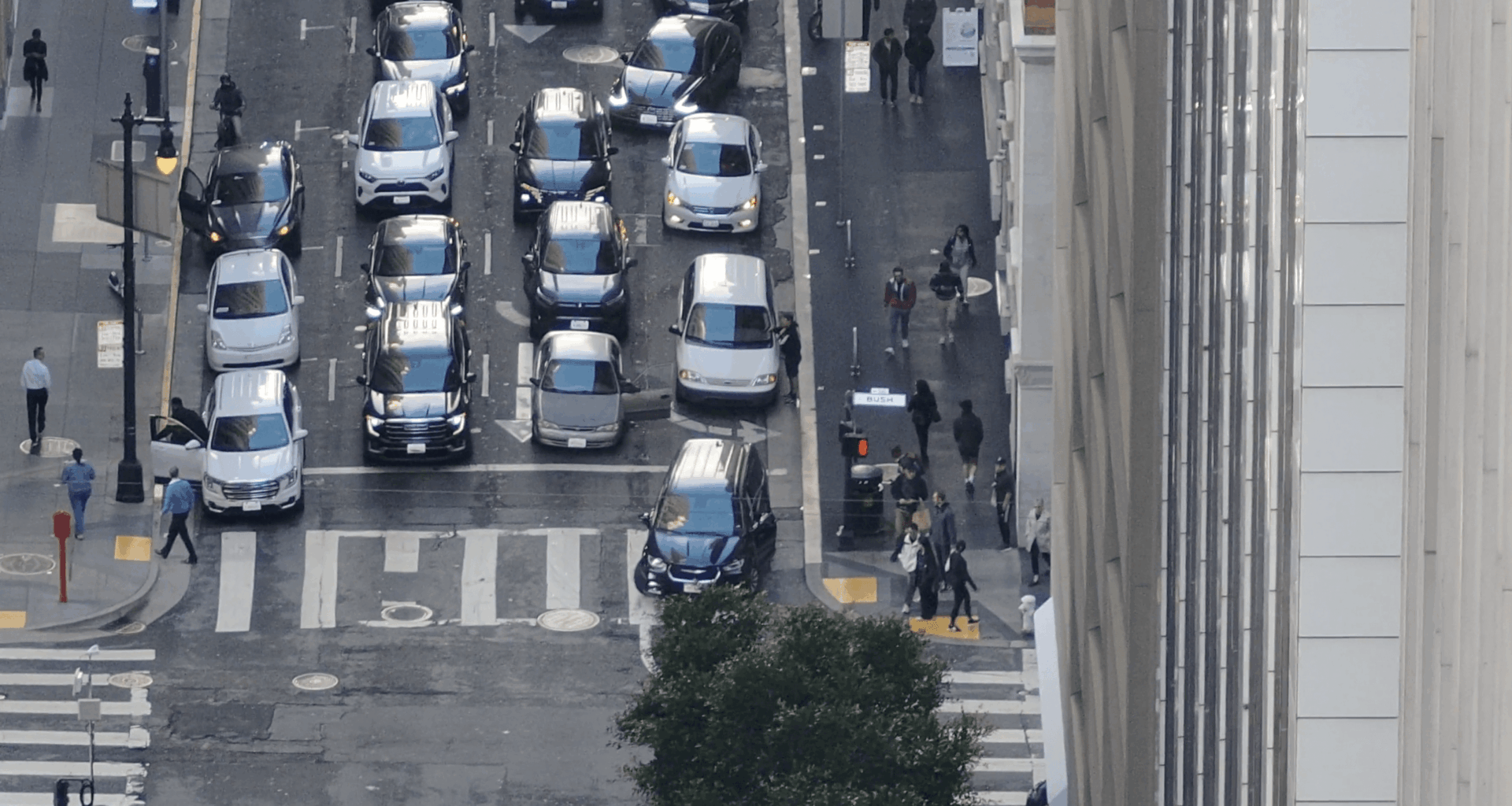
Last year, defense attorney Will Helvestine hit “play” on San Francisco police drone footage tracking one of his clients through downtown streets. The feed showed his defendant — who was charged with possessing narcotics for sale — locking hands with a man on Powell Street on March 6, 2025, before walking off with another man.
What Helvestine said he did not see, as officers had claimed, was a hand-to-hand drug transaction.
Instead, he said he saw a handshake.
The next few days, said Helvestine, were spent flagging down the district attorney prosecutor in court. “I told him, ‘Take a look at the drone footage. I don’t think it shows what you think it shows,’” Helvestine recalled.
DA officials did not say whether they agreed with Helvestine’s argument that the footage showed only a handshake. But the DA’s office subsequently motioned to dismiss the case ahead of its preliminary hearing, records show. That motion was granted on May 8 last year by Superior Court Judge Michelle Tong.
On this much, both sides of the bench agreed: The video did not support the charge.
“After further review of the video footage, we determined that we could not proceed with the prosecution,” the DA’s office wrote in its statement, even though a police incident report had quoted officers saying they had identified drugs on the defendant, and witnessed multiple hand-to-hand drug transactions. The DA’s office did not respond to questions about why it dismissed the case despite the police report.
Helvestine’s client was released after four days in jail. Court records indicate the defendant had no prior charges at the time, but has since picked up other drug charges and was booked into jail again this month.
The public defender’s office has highlighted the case amid broader concerns about San Francisco’s growing reliance on high tech surveillance evidence.
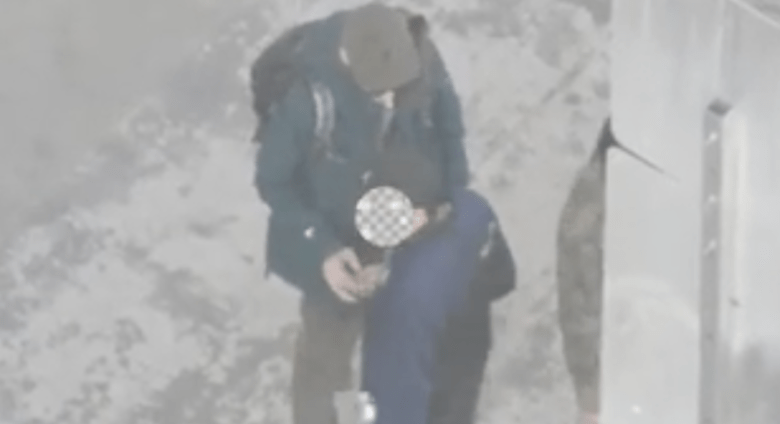 The feed showed the defendant (whose face was blurred in footage obtained by Mission Local) locking hands with a man on Powell Street on March 6, 2025, before walking off with another man.
“I am not necessarily opposed to the idea that drones could be a useful tool in some cases, but there is a disconnect between the drone and the people on the ground that doesn’t exist in the same way between officers on the ground and civilians,” Helvestine said.
Deputy Public Defender Brian Cox, the head of the office’s Integrity Unit, argued police officers regularly mischaracterize normal interactions as drug transactions, and that drones amplify those risks.
“SFPD interprets otherwise innocent behavior as criminal because to a hammer, everything is a nail,” said Cox. “Drones and other surveillance technologies simply give police more power — and greater reach — to do that.”
San Francisco prosecutors pushed back, arguing drones have served as an effective force multiplier to investigate crime and yield prosecutorial evidence. The DA’s office did not respond to requests for numbers behind the prosecutorial evidence statement, but the police department last year touted making over 500 arrests with the help of its Real Time Investigations Center, which deploys the drones.
“The Public Defender’s comments are overbroad and seek to undermine the value of the SFPD’s drone as first responder program that has been a game changer for law enforcement over one dismissal ignoring the numerous times that drone footage has been essential to prosecutors,” the DA’s office wrote in its statement. “In this case, the defense requested a more careful review of the video footage, showing just how important that video footage can be.”
Evan Sernoffsky, a spokesperson for SFPD, declined to comment on the case but said drones are only used for active criminal investigations, not to look for crime.
“Cracking down on drug sales and drug use in our neighborhoods has been hugely popular with people who live, work and visit those neighborhoods, and the feelings about the work we’re doing — the support for police — have gone up significantly,” said Sernoffsky, referring to polls such as one conducted by the billionaire-backed advocacy group GrowSF, which found 72 percent of voters supported police using drones and live cameras to aid in active investigations.
The police hub that deploys San Francisco’s police drones is also backed by billionaires. The Real Time Investigations Center — which helps the police department find suspects on the streets and aids arrests using drones and Flock Safety automatic license plate reading cameras — has bulked up through benefactors including Ripple co-founder Chris Larsen, Reddit CEO Steve Huffman, former Y Combinator partner Michael Seibel, and Michael Moritz’s family foundation Crankstart.
Much of the surveillance hub’s upgrades came the year after voters approved Proposition E, a ballot measure championed by then-Mayor London Breed, which expanded police authority to use drones and facial recognition cameras without approval from the police commission or Board of Supervisors.
Saira Hussain, a senior staff attorney at the Electronic Frontier Foundation, said the March 2025 drug case is concerning amid more recent reports about officers in San Francisco and across the country misusing high-tech crime tools, such as Flock license plate readers.
“The eyes in the sky are not all-knowing,” said Hussain.