
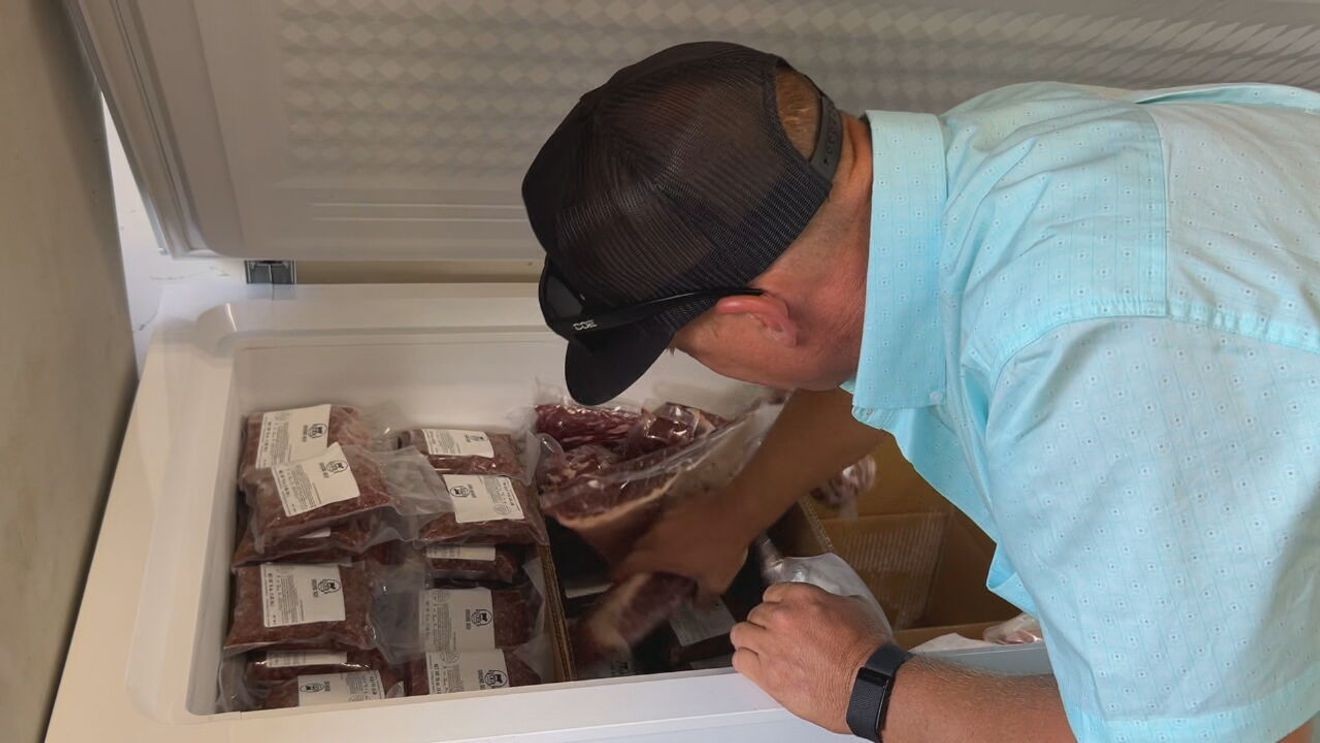
REDDING, Calif. — At Rockin’ H Cattle Company, owner and operator Kyle Hill says soaring costs are forcing California ranchers to make difficult choices about how to stay in business.
“You either raise your prices or you suck it up and you don’t make as much,” Hill said.
Hill said the rising costs touch nearly every part of raising cattle.
“The cost of everything is just going through the roof right now. The inputs on everything you do to raise cattle from fuel, to feed, to land. The price of land right now is crazy,” he said.
In California, the average cost of pastureland was $2,780 per acre in 2017. By 2021, the price had climbed $320 to $3,100 per acre. Over the next four years, the average increased by nearly $1,000, reaching $4,080 per acre in 2025.
A grazing cow can require anywhere from one to 10 acres of pasture. At the high end, that means the land needed to support a single cow could cost a rancher nearly $10,000 more today than it did four years ago.
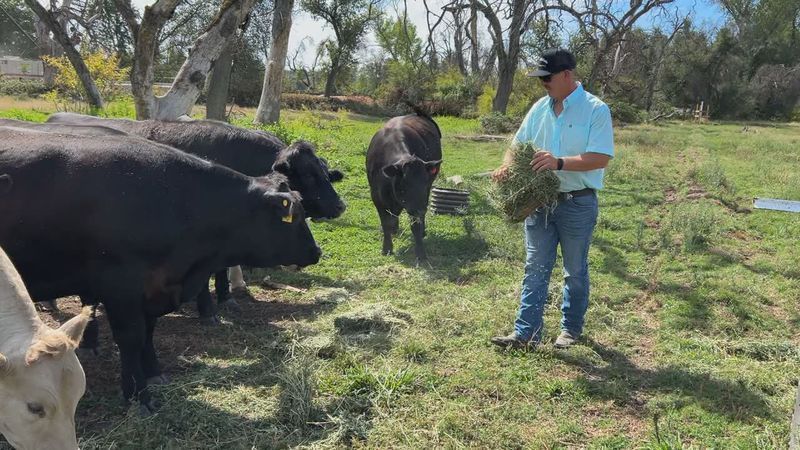
Kyle Hill feeds the cows. Aug. 21, 2026. (KRCR)
Fuel is another major expense.
“Gas prices affect everything that you do, from running a tractor, to taking the steers to the butcher shop, to picking up feed, picking up hay. I mean everything you do relies on fuel,” Hill said.
In California, ranchers can face added travel costs because of rules tied to meat processing. If ranchers want to sell their product individually packaged into items such as steak or ground beef, California requires the meat to be butchered by an official USDA shop.
Hill said that despite being surrounded by local butchers, he has to bring his meat about two and a half hours away to be butchered, adding time and fuel costs.
With that rule in place, Hill said that even when people think they are buying from a local butcher, the meat is usually not from a local rancher. He said the best option, when possible, is to buy directly from ranchers.
—