
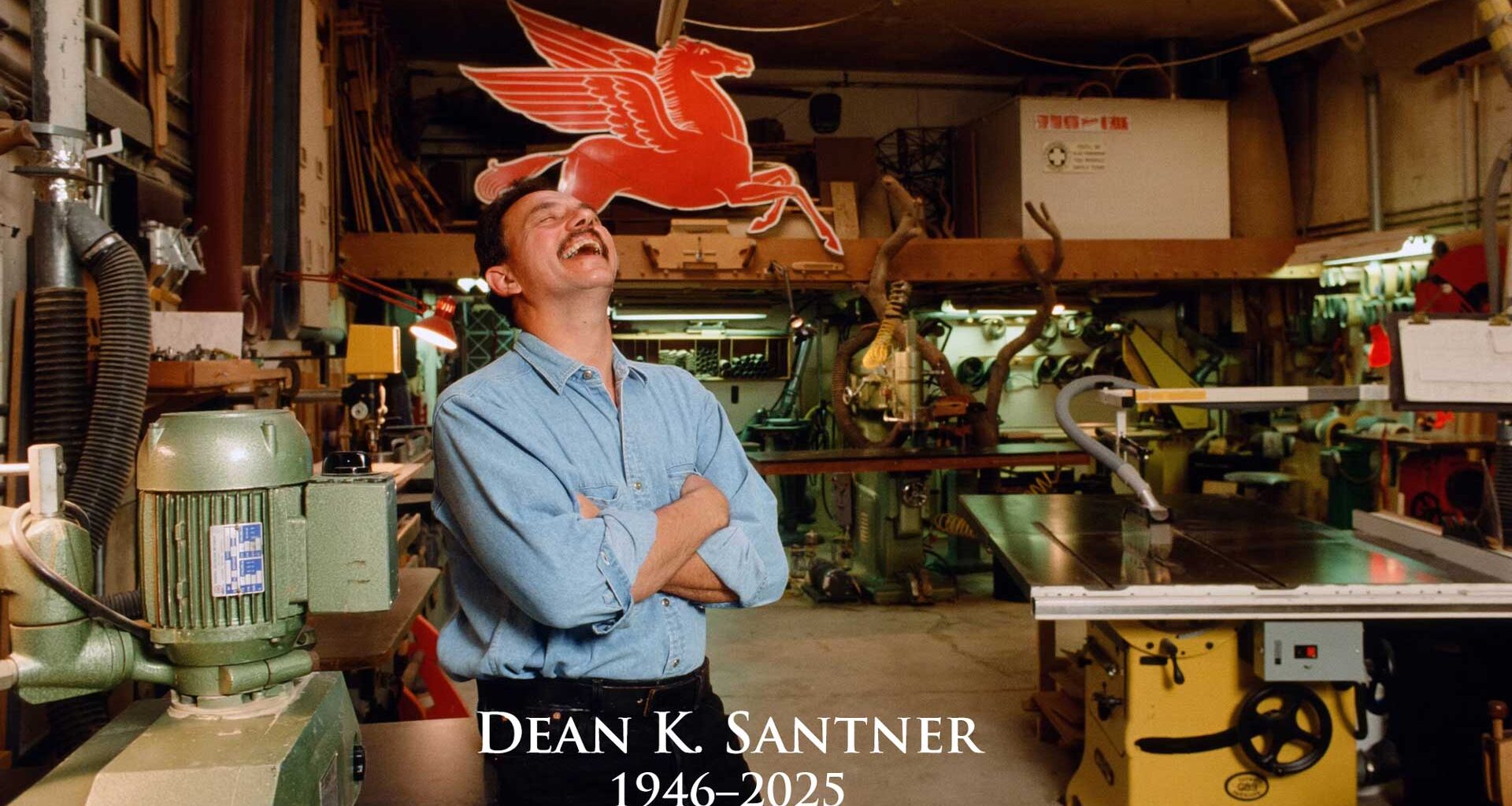
Dean K. Santner, a master woodworker, furniture designer and entrepreneur who spent 45 years at the Emeryville Artists’ Cooperative, passed away May 30, 2025, at his Mountain Ranch home. He was 79.
Santner is remembered as a Master Wood Artisan, Furniture Designer, Entrepreneur, longtime Emeryville Artists’ Cooperative resident and the co-founder of Alameda Point Studios.
Dean had a hearty laugh, was generous with his neighbors and was beloved by those who knew him. He loved his profession and woke each morning ready to tackle a new design, creative endeavor or enjoy the simple pleasure of grilling a hearty steak for dinner.
Early Life and Education
Dean was born Oct. 16, 1946, in the Cleveland suburb of Parma, Ohio. His family left Parma when he was 7, but the city remained a lifelong influence on his work and sense of humor. Years later, he created a whimsical body of work called the “Parma Series,” drawing on his memories of his distant hometown.
Early in his career, Dean worked in advertising in New York. He next attended the Rochester Institute of Technology and earned a degree in Typography and Graphic Design. After graduating, he briefly taught high-school-level industrial arts in New York city.
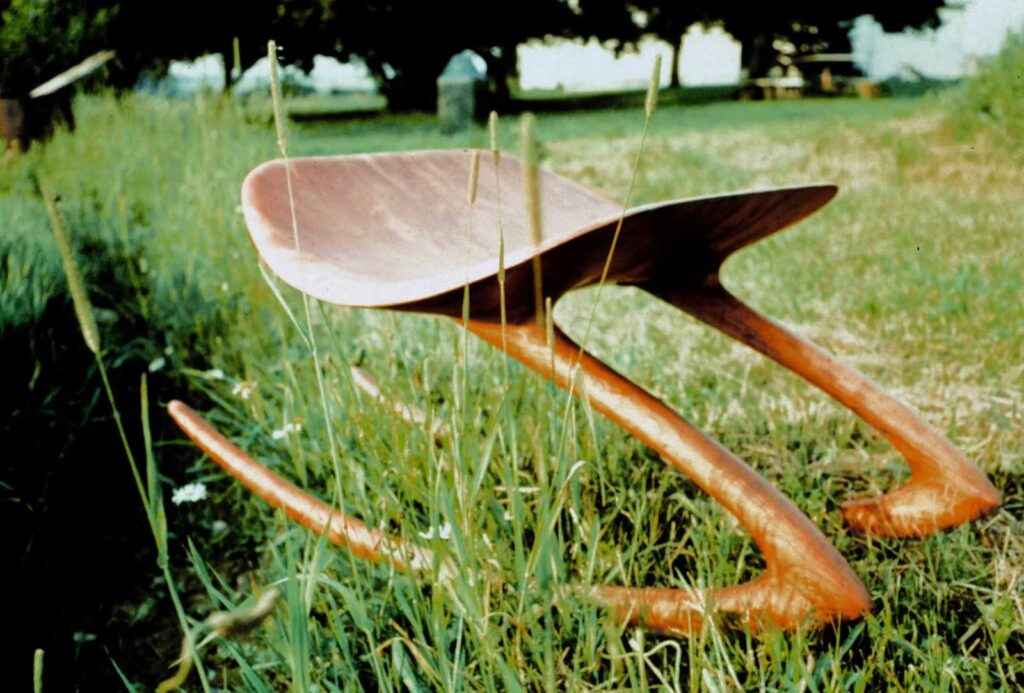 One of Dean’s first “serious” woodworking pieces that he created in the 1960s while working as a teacher (Photo: dsdwoodworking.com).
In 1969, Santner began his woodworking career making boxes and cutting boards and selling them on the streets and at craft fairs.
Dean was drawn to the growing community of artists and craftspeople in Northern California. He was also looking to avoid being drafted during the Vietnam War and needed to maintain his student exemption.
Heads West in Pursuit of His Craft
Dean arrived in the Bay Area in 1970, enrolling at the San Francisco Art Institute. Santner later reflected that he was “unprepared” for the experience and ultimately dropped out, turning his attention to woodworking as a profession.
He reunited with his east coast girlfriend, Christina Hubert, a native of Belgium. They married soon after and started a family, having two sons.
With a family to support, Santner slowly established and grew his business, renting shop space at a nearby Holden Street warehouse previously used by the Morehouse Mustard Company.
The Emeryville of the 1970s was a very different place. Dean recalled large industrial buildings with broken windows, deteriorating roofs and grass growing inside. Cheap rents allowed artists and craftspeople to occupy spaces that otherwise might have remained empty. Painters, sculptors, craftspeople and performance artists all found room to work. Santner became part of the loose community of artists and craftspeople occupying the city’s inexpensive industrial spaces.
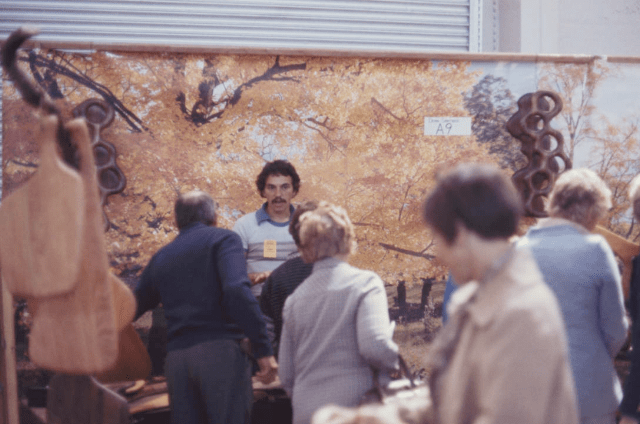 Dean in his booth at the 1976 American Crafts Council Pacific States Crafts Fair at Fort Mason (Source: American Crafts Council).
In 1979, he moved into the 45th Street Artists’ Cooperative, where he built out his live-work space.
After his first marriage ended, Dean was raising his two sons while working extraordinarily long hours. His neighbors at the Artists’ Cooperative became an extended family, providing rides, food and other help.
At one point, Dean fell several months behind on his rent. Rather than evicting him, his neighbors gave him additional time to get back on his feet. He later described their support as “low-budget kindness in a big way.”
Santner began making a name for himself, eventually selling his work through hundreds of galleries. For roughly a decade, he produced smaller wooden goods before turning increasingly toward furniture, component design and ergonomics.
Around this time, Dean began a relationship with textile artist Sharon Wilchar. The two lived together for nearly a decade and remained close friends and neighbors after their relationship ended.
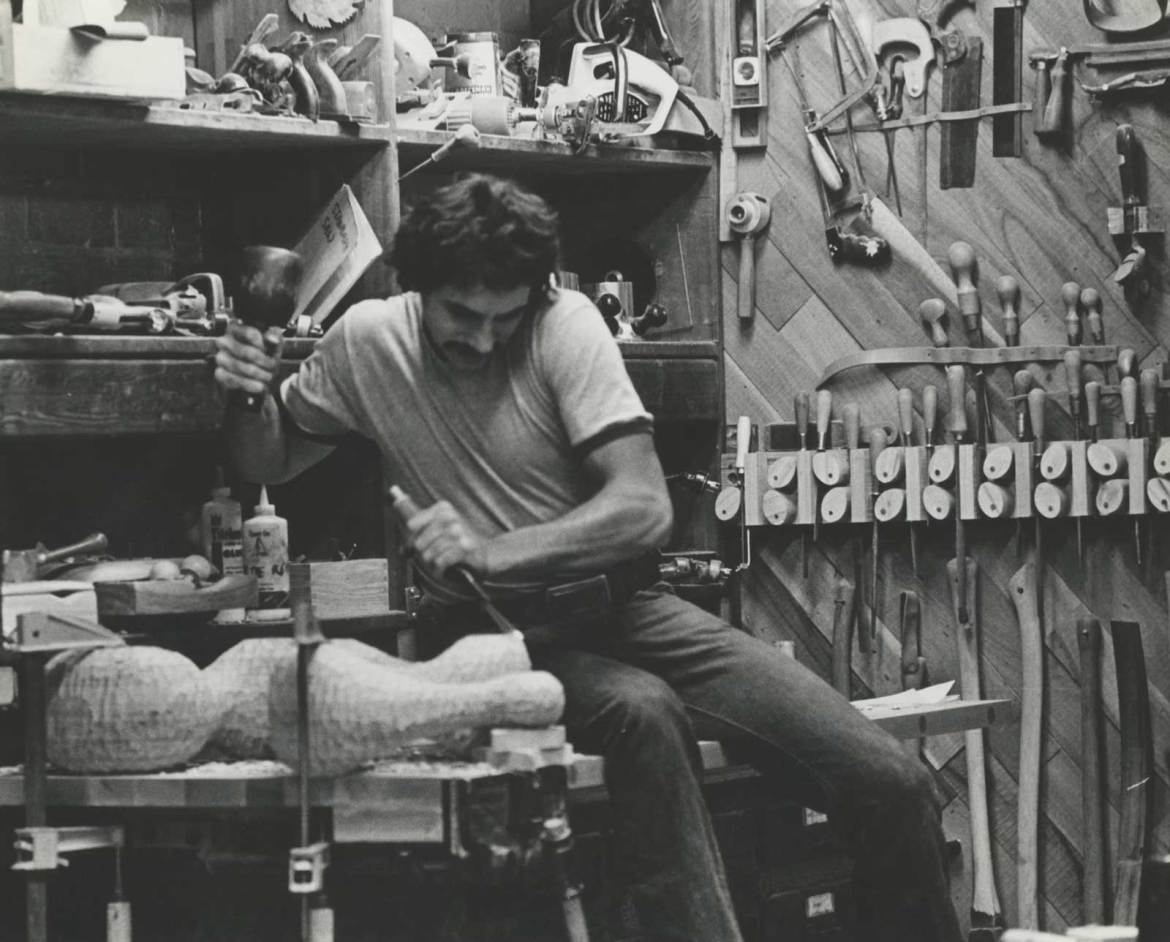 Dean hand sculpting his rocking serpent (Photo: dsdwoodworking.com).
From Woodworker to Entrepreneur
In the late 1980s, Dean increasingly focused his talents on ergonomic furniture and component systems.
Long before adjustable desks became commonplace, Santner pioneered ergonomic desk systems and keyboard platforms informed by biomechanics, occupational therapy and human-centered design.
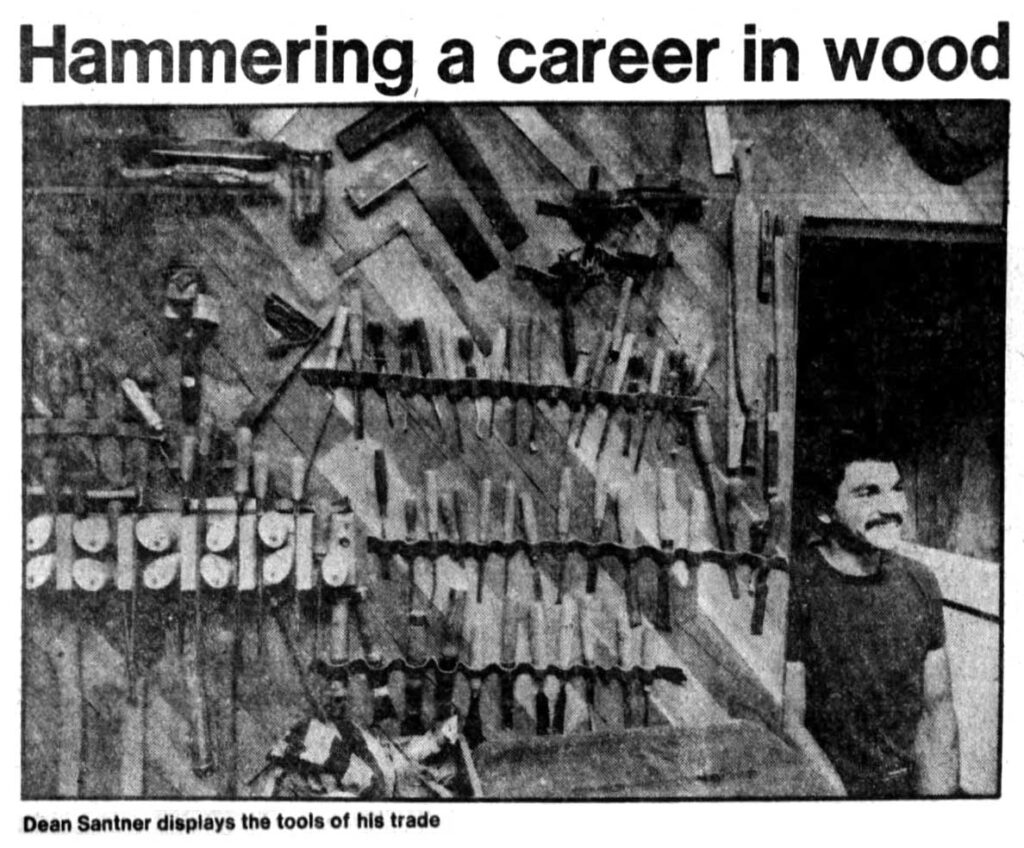 A 1978 San Francisco Examiner profile of Santner.
His interest went considerably deeper than simply designing furniture. Dean studied research from medicine, physics, biomechanics, anthropometry, kinesiology, physical therapy, psychology, engineering and occupational therapy, incorporating what he learned into his designs.
His Navigator Desk Systems products earned a reputation for innovation, combining fine woodworking craftsmanship with functional industrial design.
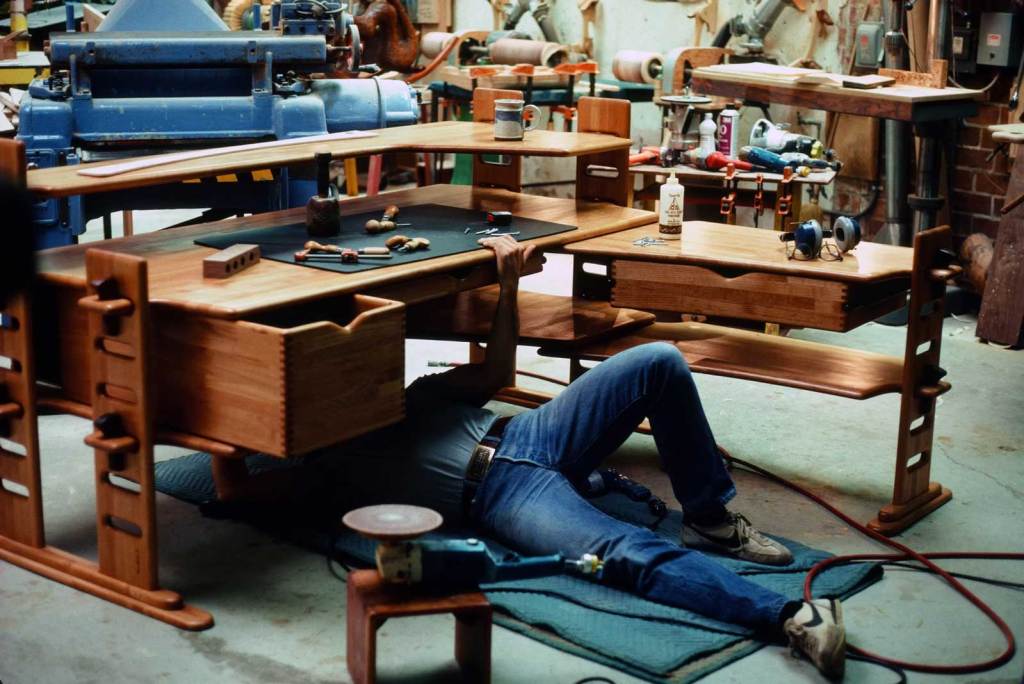 Dean working on one of his many desk system designs (Photo: dsdwoodworking.com).
A New Home at Alameda Point
One of Dean’s most enduring legacies may have been something that began as an attempt to expand his furniture business — and ultimately created a home for generations of artists and craftspeople.
Dean met Tom Toldrian in 1989, when Toldrian was doing a feature on him for Woodwork magazine. The two became business partners and close friends.
As Dean’s furniture operation grew, he looked for a larger manufacturing facility. His close friend Leon Paulos alerted him to a space at the former Alameda Naval Air Station.
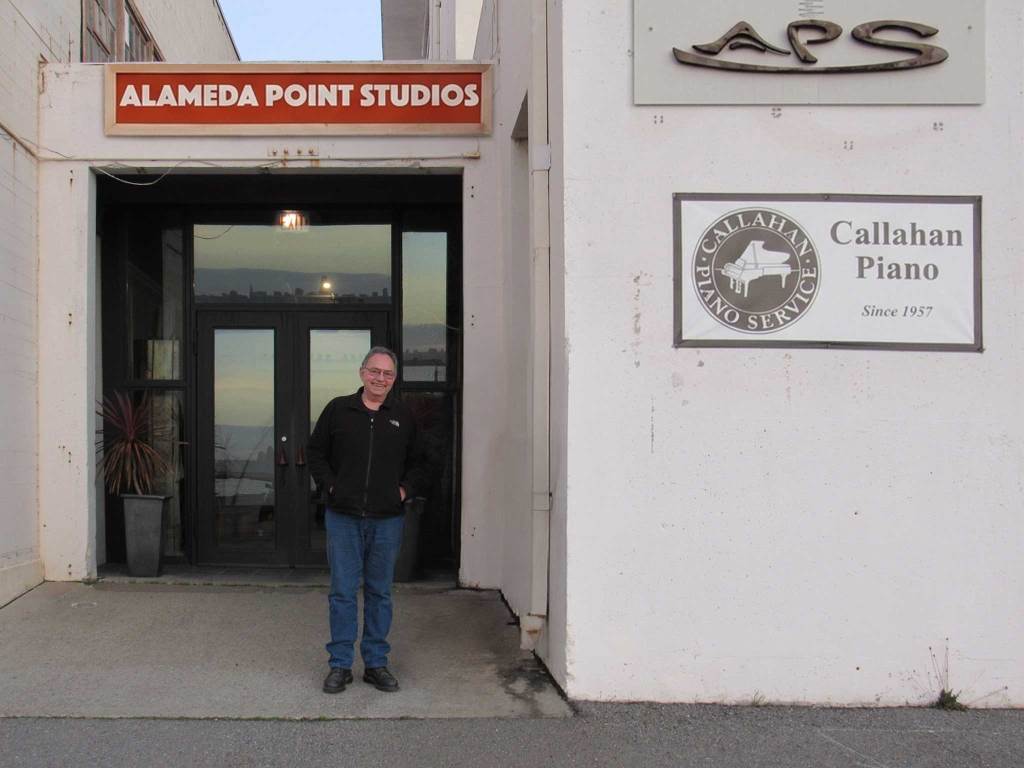 2018 photo of Dean in front of the entrance to the Alameda Point Studios.
In 1997, Navigator Systems Inc. signed a lease on a 60,000 square foot building at the base once used as a jet-engine testing facility with massive concrete walls and thick metal doors. Dean recalled that it took another 18 months of work before they obtained a certificate of occupancy and could begin using the building.
Converting the unusual structure for civilian use proved to be an enormous undertaking. An initial $100,000 estimate eventually ballooned to approximately $240,000, not including more than $100,000 worth of labor contributed by Santner and Paulos. Paulos also maintained a shop in the building.
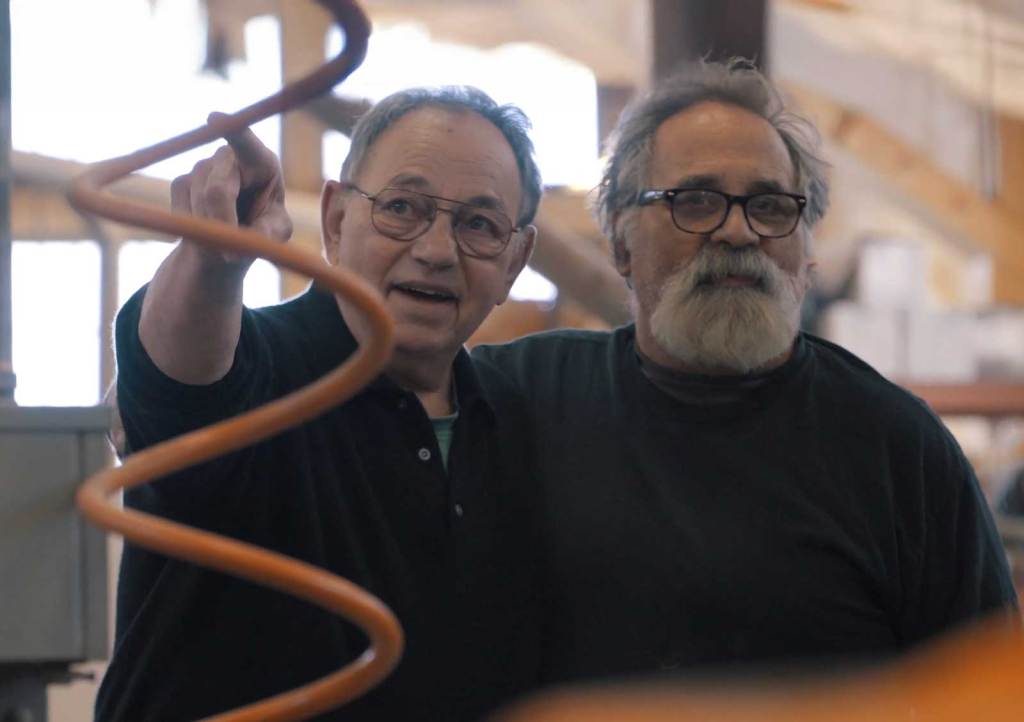 Alameda Point Studios co-founders and buddies Dean Santner and Leon Paulos (Video Still from 2019 Meet the Makers documentary by Tyler Young).
Dean established a large shop there and began manufacturing his furniture line. Other portions were rented to craftspeople with complementary skills. Although customers responded positively to Dean’s furniture, the company never attracted enough customers to achieve financial stability. The downturn following the dot-com meltdown also affected demand, and manufacturing gradually gave way to leasing more of the building to other craftspeople.
What began as a manufacturing facility eventually evolved into Alameda Point Studios.
A key to its success was Dean’s idea to create a large shop where woodworkers and other craftspeople could share tools and equipment. Alongside smaller spaces throughout the building, it became a magnet for highly skilled artists and makers.
Dean jokingly described himself as the “accidental and reluctant landlord” of an enormous building filled with independent designers, craft workers, engineers, artists and piano builders.
Toldrian remained one of Dean’s closest friends. Reflecting on him, Toldrian singled out Dean’s willingness to help anyone in need, along with his honesty and integrity.
“You could loan him money with a handshake, knowing he would never forget the debt.”
A 2019 documentary captured the founders and some of the artists behind Alameda Point Studios.
Newly single, Dean reconnected with Sally Maxwell, whom he had met at the inaugural Emery Art celebration in 1986, when she was working at Summit Bank in Emeryville. They had stayed in touch and eventually reunited after Sally’s first marriage ended. Their first date was at Eli’s Mile High in 1997, and they married in 1999.
Every year, Dean handcrafted a wooden heart for Sally for their anniversary and other special occasions.
 One of Dean’s hand-crafted hearts titled “Love Bite Heart” (Photo: dsdwoodworking.com).
Mountain Ranch Refuge
In his later career, Dean continued developing furniture and woodworking designs through Mountain Ranch Wood, working from a custom fabrication studio and vacation home in Mountain Ranch, California. His later work continued his longstanding interest in component furniture, ergonomic desk environments, art furniture and high-quality craft fabrication.
The Mountain Ranch workshop was a substantial working studio. After Dean’s death, nearly 400 lots of woodworking equipment, tools, materials and shop infrastructure from the studio were offered at auction, providing a glimpse of the scale of the workshop where he continued working late into his career.
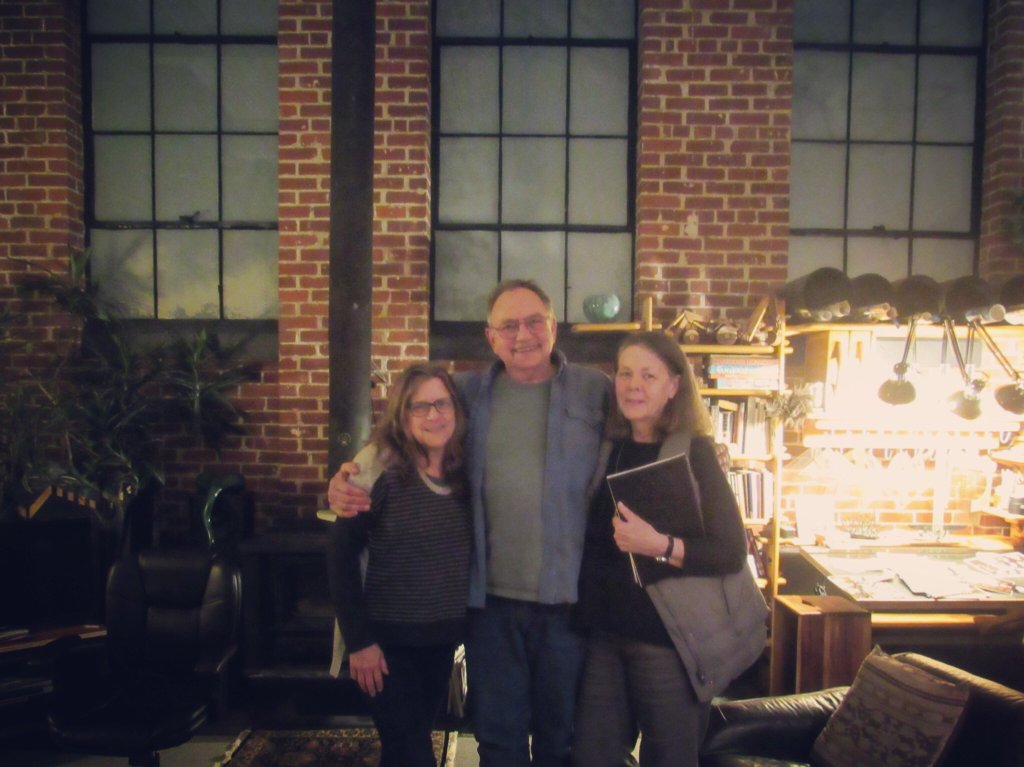 2018 photo of Santner at his home with other longtime Artists’ Cooperative residents Kris Peterson and Sharon Wilchar.
A Legacy of Craftsmanship
During his career, Dean received numerous awards, including the Outstanding American Craftsman Award, Alameda Manufacturer of the Year, the Mead Presentation Award, American Design in Paris 2021 and numerous “Best of Show” awards. His work appeared in galleries and juried art and craft exhibitions around the world.
His woodwork is represented in the Historical Collection of the Oakland Museum of California, the San Francisco Collection and the Ranch Collection of President and Mrs. Ronald Reagan.
One of his final pieces, “Sonrisa Love in Baja Parma,” was a gift to his wife Sally Santner Maxwell celebrating their time spent on holiday in warmer climes.
 Dean with his with his wife of 26 years Sally Maxwell (Photo: dsdwoodworking.com).
Dean is survived by his wife of 26 years, Sally Maxwell, his son Adam, two step-sons and several grandchildren.
A retrospective exhibition of Santner’s work, alongside other artists who shaped Mid-Century Art Design in the 1980s, is in the works. Dean’s remaining furniture collection is available for purchase. These are the last examples of his work and will not be reproduced.
A portfolio of Dean’s work can be viewed at dsdwoodworking.com.
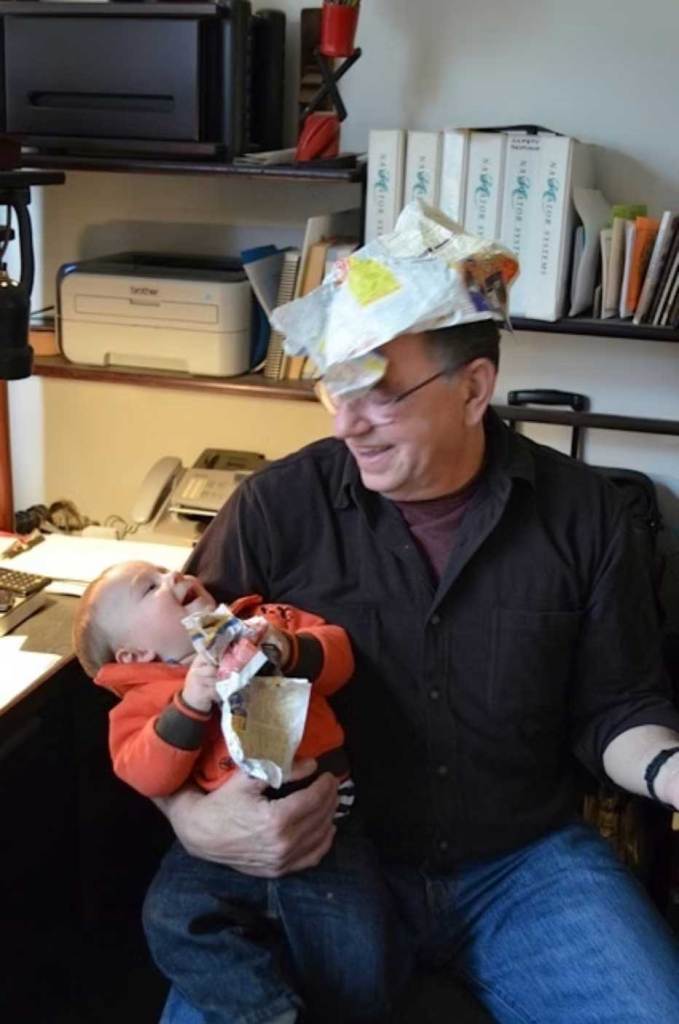 Dean with one his grandchildren.
Related
You have Successfully Subscribed!