
State officials on Friday cleared the final hurdle facing a new suicide barrier for the iconic San Diego-Coronado Bridge: The state Transportation Commission unanimously approved $162 million for the long-awaited project.
That approval will allow crews to break ground this fall on the roughly two-year project, erecting an 8-foot-tall mesh-steel barrier on both outer edges of the bridge to make it less vulnerable to suicide attempts.
The barrier is expected to sharply reduce such attempts on the bridge, which Caltrans says is the No. 2 bridge in the nation for suicide attempts after the Golden Gate Bridge.
Fewer suicide attempts will also mean fewer lengthy closures of the bridge, which require drivers to take a 23-mile detour through Imperial Beach and up the Silver Strand to get to Coronado from San Diego.
Those delays are considered a national security issue, because Coronado is home to two naval bases and there are often aircraft carriers docked in the city.
The funding approval comes two months after the California Coastal Commission approved the design of the barrier, which will be 87% transparent so views of the bay from the 200-foot-tall bridge won’t be damaged.
The barrier would prevent people from jumping off the bridge by requiring them to scale nearly 11 feet — the barrier plus the bridge’s existing 34-inch guard rails.
Unlike the horizontal barrier installed under the deck of the Golden Gate two years ago, the local barrier would be vertical, because the much taller San Diego-Coronado Bridge doesn’t have the ledges and side walkways needed to retrieve a person from a horizontal barrier.
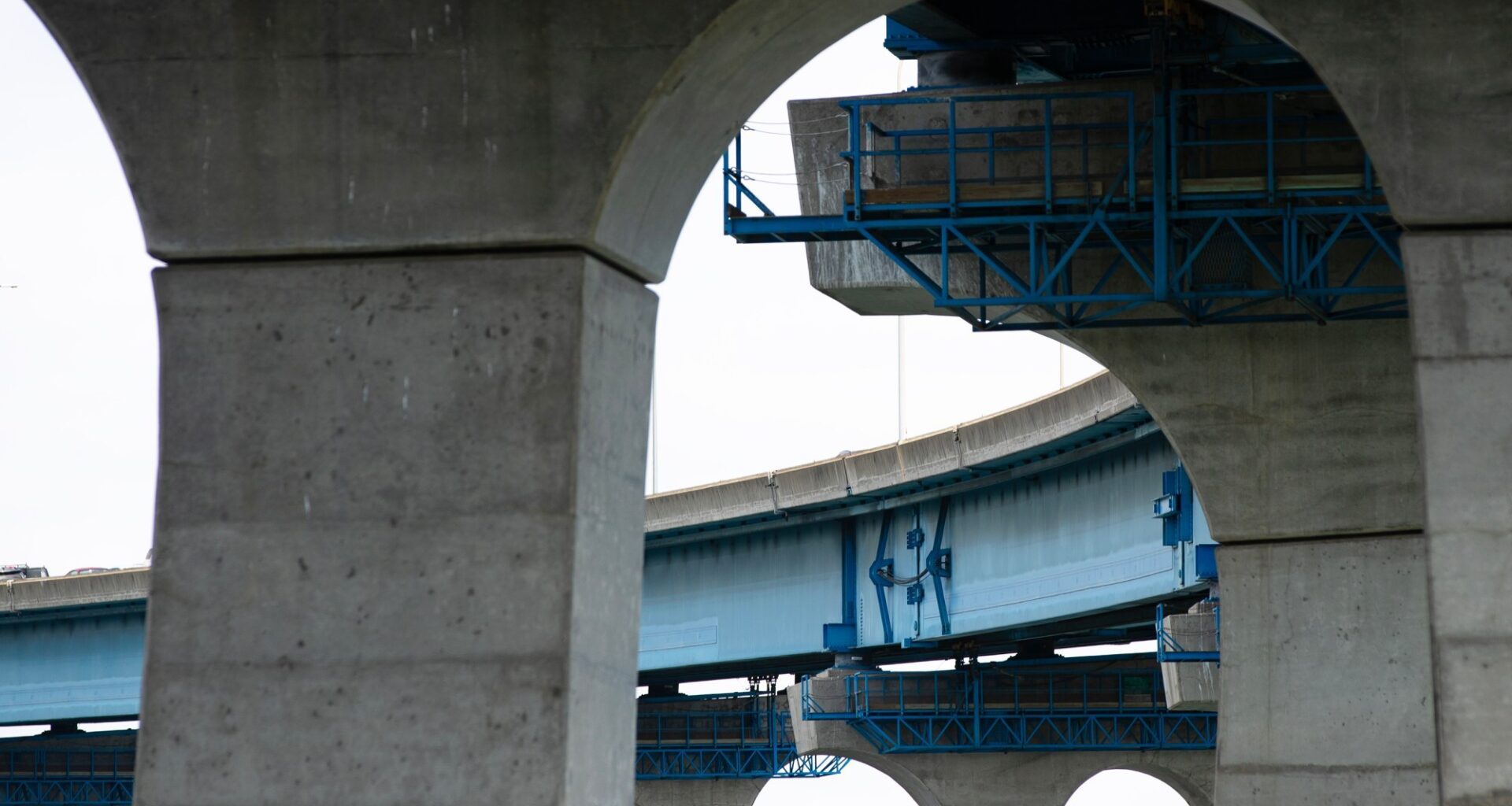
The design required here, which includes a new maintenance catwalk underneath the bridge, helped increase the construction cost in recent years from $94.8 million to $146 million — a hike of more than $50 million.
Allan Kosup, chief deputy director of Caltrans District 11 in San Diego and Imperial counties, said the skyrocketing cost was partly due to designers realizing the new mesh would block easy access to areas underneath the bridge surface.
“The mesh has triggered a problem with how we maintain the underside — how do we inspect it on a regular basis,” Kosup said Friday.
He said the design is also partly inspired by a desire to get the project done quickly to prevent additional suicides.
“There were a lot of competing thoughts about the best solution here to not screw up the iconic bridge and also fix the problem in a timely manner,” Kosup said. “We didn’t want to spend five years going through a robust environmental process.”
He said the initial design was slated to require one construction crew for 170 days, but the revised design is slated to require five construction crews for 350 days.
He noted that the steel mesh for the barrier costs $19 million by itself.
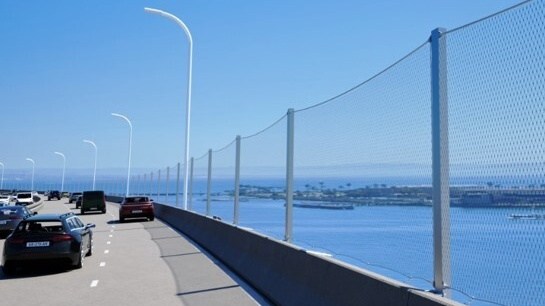 A rendering of the anti-suicide barrier planned for the Coronado bridge. (Caltrans)
In addition to the $146 million for construction, the Transportation Commission approved $16 million for construction support.
Coronado resident Mary Curtis praised the suicide barrier during Friday’s Transportation Commission hearing, which took place in downtown San Diego.
“The sooner this can be completed, the better,” she said. “It will save lives immediately.”
Curtis said Coronado residents are ready for the delays during construction of the barrier because they know the barrier will prevent unexpected closures during suicide attempts.
Construction will take place at night, but Caltrans officials say that at least one of the bridge’s five lanes will remain open in each direction throughout.
Installation is expected to occur on the northeast-bound side of the 2.12-mile bridge for roughly one year, followed by roughly one year of installation on the southwest-bound side.
Charles Bradshaw, community plans and liaison officer at Naval Base Coronado, praised the project Friday.
“The construction of the proposed deterrent barriers on the Coronado Bridge would be physical infrastructure that would prevent tragedies of military personnel and civilians alike,” Bradshaw said.
Estimates by state officials and suicide-prevention groups put the total number of suicides on the San Diego-Coronado Bridge at somewhere between 400 and 550 since it opened in 1969.
Anyone contemplating suicide or struggling with their mental health should call 9-8-8, the state’s crisis center consortium.
The project will include 20 new security cameras, because the six cameras now installed on the bridge don’t provide complete coverage and don’t allow police or other officials to comprehensively analyze an incident.