
Three months after one epic tech battle concluded in Oakland, another got underway there last week with similarly huge stakes.
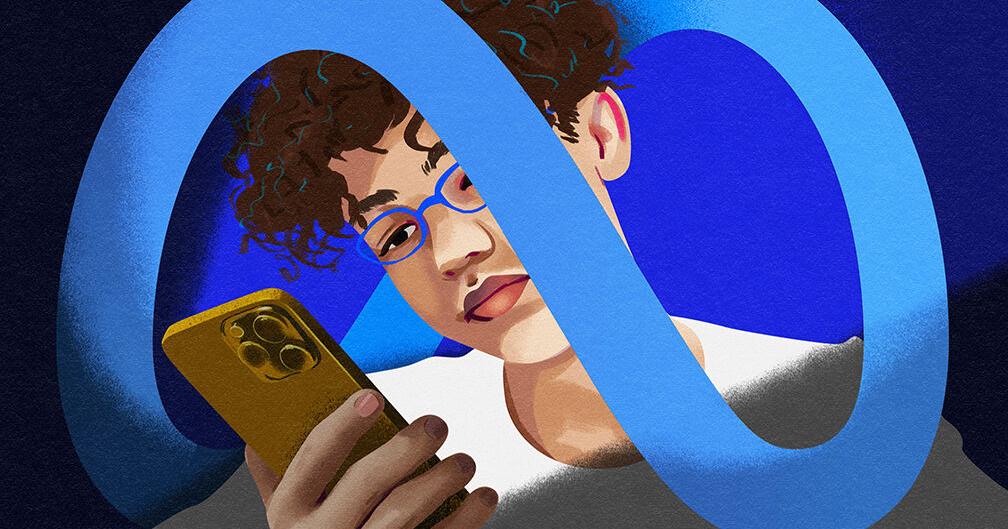
California and 28 other states are suing Meta, accusing the Menlo Park-based social-media giant of knowingly violating a federal children’s privacy law and state consumer-protection laws.
The states are seeking nearly $200 billion in damages and changes to the way the company’s services work, including an end to “like” buttons and the so-called infinite scroll for younger users.
The case — along with literally thousands of others pending against Meta and other companies in the social-media space — has the potential to not only severely damage those businesses but to profoundly reshape the industry as whole, legal experts told The Examiner.
“Social media, at the end of this litigation fusillade, may not look the same as it does today — and it could possibly not even exist,” said Eric Goldman, a law professor at Santa Clara University.


“Social media, at the end of this litigation fusillade, may not look the same as it does today — and it could possibly not even exist,” said Santa Clara University School of Law professor Eric Goldman.
Craig Lee/The Examiner
Although the case was filed on behalf of 29 states, California, Kentucky, New Jersey and Colorado were tapped by federal Chief District Judge Yvonne Gonzalez Rogers to lead the charge.
In the new trial, the states allege that Meta violated the Children’s Online Privacy Protection Act, which requires internet companies to alert the parents of children under age 13 of any data the companies plan to collect on their kids and to get parental permission before collecting that data.
The states allege that Meta — which operates Facebook and Instagram — knew that kids were using its services. Despite that, the company did little to block their access or gain their parents’ consent, but instead collected data on them anyway, according to the kawsuit. Those actions constitute violations not just of COPPA but of certain states’ laws against unfair business practices, they have charged.
Meta engaged in additional unfair business practices, according to the states. It designed its services to encourage kids to compulsively use them, they allege. It did that despite knowing that extensive use of social media among kids can lead to depression, sleep deprivation, anxiety and other harm, the states claim.
Additionally, the states allege that Meta officials misled customers by minimizing in their public statements the potential dangers posed by its products and touting their supposed commitments to safety.
The states “are holding [Meta] accountable for the mental-health harms to kids that they are advancing on kids,” California Attorney General Rob Bonta told The Examiner in an interview last month.

The states suing Meta “are holding them accountable for the mental-health harms to kids that they are advancing on kids,” California Attorney General Rob Bonta told The Examiner in an interview last month.
Noah Berger/Associated Press
For its part, Meta disavows that it knowingly allowed underage users on its services, and it also denies that it was marketing its services to such users.
In its court filings, it notes that underage users can and do misrepresent their ages. While it takes steps to flag accounts that don’t meet its age limits, its systems aren’t 100% accurate, it says.
Regardless, the company says it stops collecting information about child users when it discovers them on its services and takes steps to delete data it had previously gathered on them.
Meta also denies that it attempted to deceive users. Instead, the company argues, the statements the states have highlighted that are supposed to show deception have been taken out of context and don’t represent any kind of coherent campaign to mislead the public.
What’s more, the company says that instead of hiding some of the problematic uses of social media, it disclosed them itself.
In an emailed statement, Meta spokeswoman Liza Crenshaw said the states’ claims were “limited” and not backed up by the evidence. She also said that the penalties the states are seeking are out of proportion with what the company is accused of doing.
“Rather than sticking to the facts or the law, the states have instead decided to chase an outlandish payout,” Crenshaw said in the statement. “We stand by our record of creating strong protections for teens, and look forward to making our case in court.”
One problem for Meta is that the case is just one of thousands it is facing along similar lines — and it’s lost two such lawsuits already.
That same month, a Los Angeles jury awarded a 20-year-old woman $6 million after finding that Meta and YouTube had designed their products to be addictive to kids and failed to warn about the dangers.
Neither serves as any kind of precedent for the one currently underway in Oakland — the case the 29 states have brought against Meta will be decided on its own merits, the legal experts said.

With a record low overdose death count last month and National Fentanyl Prevention and Awareness Day approaching, experts reflect on where things stand

The welcome news followed Major League Baseball’s announcement that Oracle Park will host its 2028 “Midsummer Classic” All-Star Game

SF claims for exemption from foreclosure-related transfer taxes hit $450 million in the past three fiscal years — more than claimed in the prior 15 years combined
But they also said the outcomes of the previous lawsuits aren’t good news for the company.
Those decisions indicate that judges and juries are willing to take seriously claims of social-media addiction and other harms — and to put big dollar figures on the damages caused by them, the experts said. And the attorneys general in the Oakland case are likely to take the arguments that were successful in those prior cases and build upon them.
“I would be very surprised if this came out [with] totally no liability for Meta, if only because the New Mexico case didn’t feel that close,” said Vince Joralemon, a senior fellow at UC Berkeley’s Center for Law and Technology.

“I would be very surprised if this came out [with] totally no liability for Meta,” said Vince Joralemon, a senior fellow at UC Berkeley’s Center for Law and Technology.
Courtesy Vince Joralemon
The company’s potential liability in this case alone is staggering. Two hundred billion dollars is about double the amount of cash and short-term investments Meta had on hand at the end of June, and that amount represents about one-seventh of its total market capitalization.
Other legal experts who spoke with The Examiner see the case as more of a toss-up. The claims the attorneys general are making in the case aren’t frivolous, Goldman noted — they were strong enough to withstand multiple attempts by Meta to get the lawsuit dismissed.
But Meta is likely to adjust its strategy in response to its loss in the New Mexico case, the experts said. And it has some potentially strong defenses it can offer.
One factor that’s likely to be a centerpiece of its defense, the experts said, is that while there are growing concerns about social media, social-media “addiction” is not a scientifically recognized malady.
Meta could also raise doubts that it had concrete knowledge that its services were harmful to users, the experts said. It’s also likely to try to undermine any attempt to connect its services with the harms users allegedly experienced, they said.
Additionally, the company will likely point out that the number of users of its services is so massive — 3.6 billion daily at the end of June — that it’s inevitable that some of them would have negative experiences. It could also argue that those who had such bad outcomes were far outnumbered by those who benefited from its services, the experts said.
Each trial is different and the outcome can depend on the judge, the jury, the specific laws at issue and other factors, said Deven Desai, a professor of business law and ethics at the Georgia Institute of Technology’s business school. That makes the outcome of the Oakland case hard to predict, he said.

Deven Desai, a Georgia Tech business law professor, is among those who liken the Meta trial to the tobacco-company cases of the 1990s in terms of its potential consequences for the industry.
Gary Meek/Courtesy Deven Desai
The fact that Meta lost the New Mexico and Los Angeles cases “doesn’t look great for them,” he said, “but I think it would be overestimating it to say, ‘Oh, well, they’re definitely going to lose.’”
Regardless of the outcome of the case, the company is likely to take further hits to its reputation in the court of public opinion, the experts said.
The attorneys general plan to call to the stand whistleblowers who worked at Meta to testify that the company repeatedly prioritized growth and profits over safety and that the steps it took to protect users or to verify kids’ ages were more for show than designed to actually work.
The states also are expected to call Meta CEO Mark Zuckerberg to the stand. There’s a good chance that won’t go well for him or his company, the experts said.
OpenAI CEO Sam Altman didn’t come across very well when he took the stand in the case Musk filed against him and his company, said Joralemon. Similarly, the attorneys general are likely to paint Zuckerberg as something of a villain, he said.
Zuckerberg might try to aim for nuance in answering questions about what he knew and what the company did, but that’s not likely to make much of an impression on the broader public, Joralemon said.
“What is not going to get lost is this is someone who made several billion dollars [allegedly] knowing that there were harms happening to people and didn’t seem to be that worried about it,” he said.
In addition to further sullying Meta’s reputation, the case — no matter how it ends up — is likely to add to the growing momentum to regulate social media, the legal experts said.
Many observers have compared this case and the collection of lawsuits filed against Meta to those filed against the tobacco industry in the 1990s. While there’s far less certainty today about the harm posed by social media than there was then about tobacco, there are similar questions about what the industry knew and concerns about hooking kids to a dangerous product.
Just as then with tobacco, there has been an explosion of lawsuits against Meta and the social-media companies. And similar to then, in tandem with that effort in the courts, state legislatures have been ramping up efforts to clamp down, particularly in the name of protecting children.
That’s a big change from the laissez-faire approach to social media that regulators previously took, said Thaddeus Hoffmeister, a law professor at the University of Dayton who focuses on social-media law.
“For many years, it’s been the wild, wild West,” Hoffmeister said. “And I just think those days are over.”