
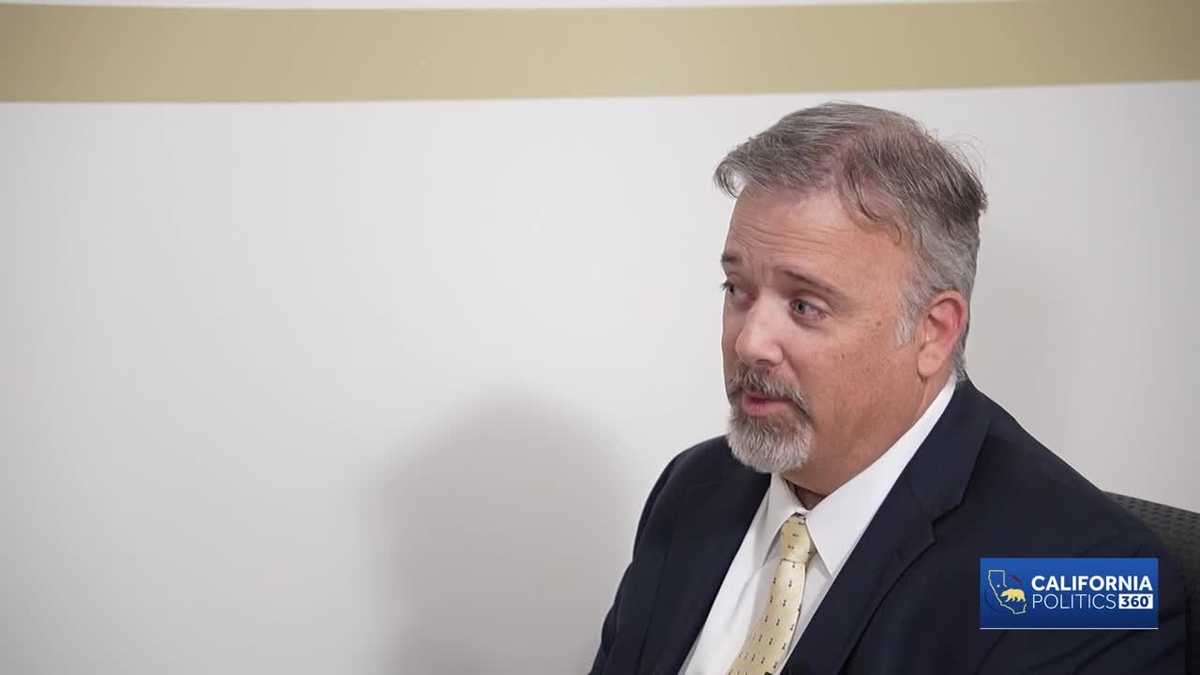
In first TV interview, California State Auditor Grant Parks talks about the state’s high-risk issues | CA Politics 360

State Auditor Grant Parks discussed ongoing financial issues in the state’s government, the growing demands on his office, and his effort to fight wasteful spending in California in his first ever TV interview on California Politics 360.
Gov. Gavin Newsom appointed Parks in 2023.
When asked about claims of widespread waste, fraud and abuse in California’s government, Parks said, “I’m paid to be skeptical, just like the taxpayers are to be skeptical.”
“I think if $1 of fraud happens, that’s $1 too many,” he said, noting he has several audits underway to see how some major state programs are working. The conclusions of those are expected later this year.
High-Risk programs
Late last year, Parks released his office’s ‘High Risk’, a list the state auditor releases every two years flagging state agencies, departments or programs that are at serious risk for waste, fraud and abuse.
The list includes the state’s Employment Development Department, the state’s management of COVID-19 funds, Medi-Cal eligibility, information security, IT oversight, and water infrastructure and the risk to people living downstream of dams. The list also includes concerns over the state’s ability to track the effectiveness of homelessness spending, even though legislators and the governor approved a state law to crack down on the issue.
He acknowledged, he does not have the bandwidth or ability to fully audit all of the programs on the high-risk list but has initiated some.
Parks confirmed two major audits are underway, including one on the state’s water infrastructure and potential risks to residents who live downstream of dams.
He also said the state’s Medi-Cal program, which provides health insurance to low-income people regardless of immigration status, is also at the center of an audit, which will be issued later this year.
Another major problem on the high-risk list is the state government’s inability to provide financial statements on time. The statements are meant to provide the public an accurate picture of the government’s financial health.
“Accurate and timely financial reporting is really a hallmark of good government, it’s sort of a baseline of what I think California citizens expect California government to achieve,” Parks said on California Politics 360.
“If you can’t present how California government is spending taxpayer dollars, doing so on time and doing it accurately, then there’s a problem and things need to get changed so that information is provided to the citizens and the government.” .
Since taking office in 2023, Parks said progress has been slow in addressing the delays, but there has been improvement.
“When I first started as state auditor in 2023, we were late as a state by almost a year in issuing our financial statements,” he said. Despite efforts to improve, the delays have been reduced by a couple of weeks.
Parks noted a recent audit by KPMG, an accounting firm, found the California Department of Finance under Gov. Newsom’s office and California State Controller’s office under Controller Malia Cohen need to do a better job of communicating to prevent the delays.
Parks noted California could be risking federal funds with the late financial reporting.
“The federal government is not going to want to give us money if we’re not auditing their federal programs and sharing with them how we’re spending their federal dollars,” he said. “Getting that information timely to the federal government is important.”
Growing demand for his office to audit state spending
Parks noted he would love to dig deeper into the state’s SNAP Program (Supplemental Nutrition Assistance) given rule changes with the Trump administration and the state’s payment error rate and the risk that has created.
“But it’s a staffing issue, it’s a bandwidth issue,” he said.
Staffing constraints are a challenge for Parks’ office, which has a budget of $50 million a year and approximately 200 employees, 150 of whom are auditors.
Parks noted because of the growing demands on his office, he has recently enlisted the help of accounting and consulting firm, KPMG. The firm helped review the financial audit process and assisted with his office’s audit of the government’s late financial reporting.
“My strong preference is that my office do this work,” Parks said, noting the relationships and visibility his office has with other state agencies. “But staffing is a concern,” he said, while noting the legislature continues to add his office’s role to various state laws and other audit requests.
“On the one hand, it’s great to be in high demand, but on the other hand, gosh, I would love to have more resources to meet some of that demand,” Parks said.
“It’s always a juggling act between how much work the legislature wants to give us through the Joint Legislative Audit Committee and how much I have left over to do either state high-risk work,” Parks said.
The complexity of California’s government also poses challenges for timely financial reporting. Parks noted that coordination between the Department of Finance and the state controller’s office is critical but often complicated by differing priorities. “Things almost have to work perfectly in order for us to do that,” he said.
California’s state government is massive with hundreds of state agencies and departments. Does that make it harder to the state auditor’s office to do its job?
“California is an incredibly complex place, especially from a financial standpoint,” Parks said.
The California state auditor’s office has made several recommendations over the last several years, many of which have yet to be implemented by state agencies. When asked if he thinks the state government takes his office seriously, he said he urges his staff to not “talk past departments, talk with departments, work with departments.”
“No one is going to implement a recommendation if they don’t think they have a fair shot,” he said. “We come up with the best recommendations we can, but we’re also humble enough to believe we don’t necessarily have all the answers every time.”
“I just want to see problems get fixed,” he said.
KCRA 3 Political Director Ashley Zavala reports in-depth coverage of top California politics and policy issues. She is also the host of “California Politics 360.” Get informed each Sunday at 8:30 a.m. on KCRA 3.