
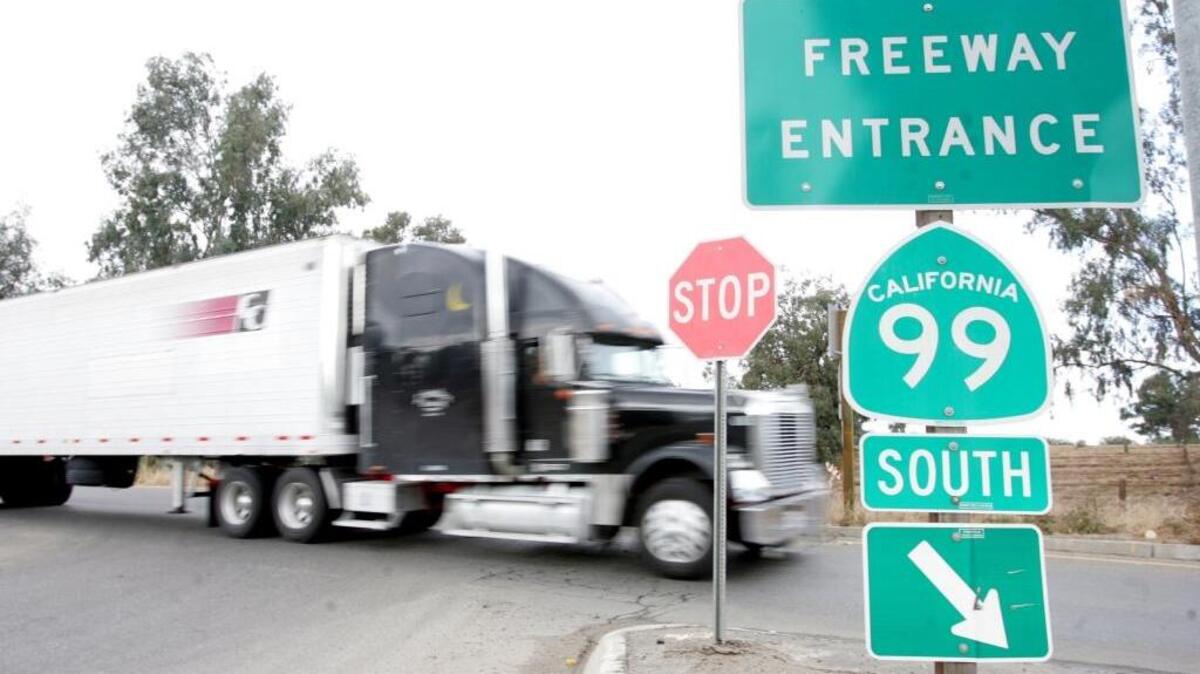
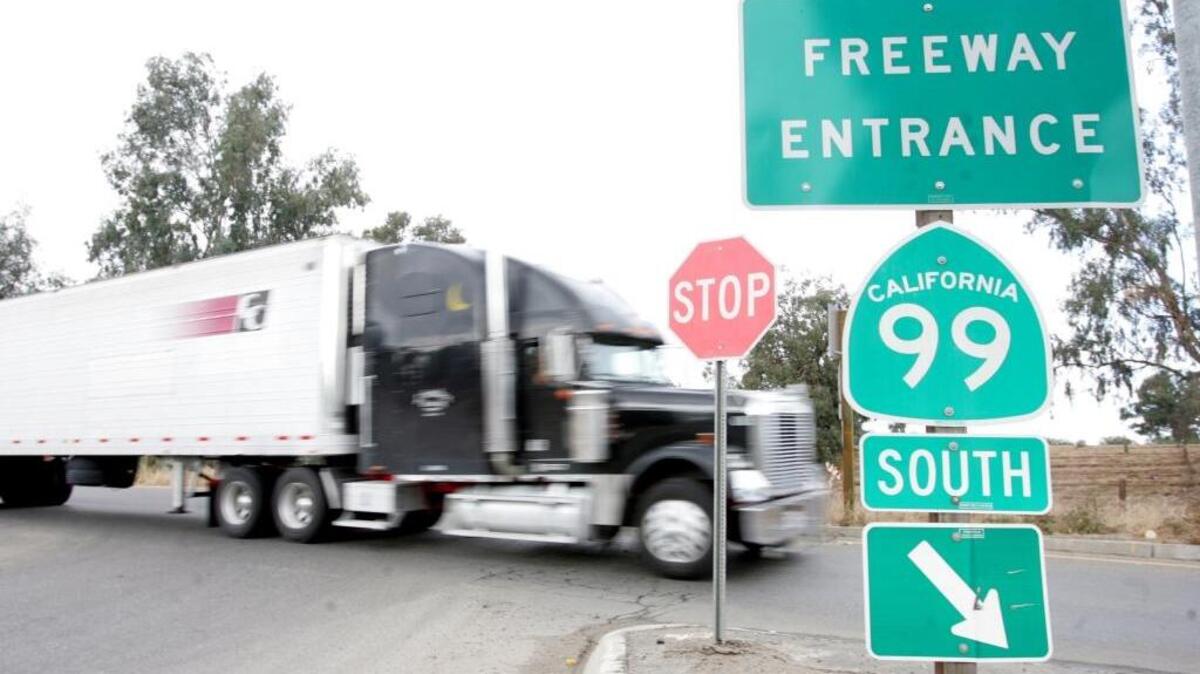
A big-rig truck enters Highway 99 in Fresno. Central Valley residents face disproportionate NOx exposure from freight corridors; the EPA must enforce manufacturers’ pollution commitments to protect public health.
Fresno Bee file
Accountability for NOx exposure
“California sues Trump administration to preserve clean air rules,” (mercedsunstar.com, June 22)
As a doctorally-prepared nurse practitioner working in occupational and environmental health, I spend my career looking at the space between environmental exposure and diagnosis, including researching the diagnostic gaps around Valley Fever, a soil-borne fungal disease dispersed by windblown dust, that disproportionately affects Central Valley communities.
I am writing about a different exposure risk that follows the same pattern: the Central Valley is home to some of the most heavily trafficked freight corridors in California, running through communities that already carry a disproportionate air quality burden. The current Environmental Protection Agency (EPA) rulemaking on heavy-duty truck NOx emissions will directly affect the health of patients and workers here.
Manufacturers have not disputed that pollution controls to reduce NOx emissions are achievable. The disagreement is over whether they should be required to deploy what they’ve already built. It’s a question of whether the EPA will enforce commitments manufacturers have already made or let political pressure erode them.
Central Valley communities living alongside these freight corridors don’t get to opt out of the exposure. The EPA shouldn’t let manufacturers opt out of accountability.
Ayomidamope (Ayo) Adebiyi
Merced
Upcoming programming at Fresno museum
“Armenian museum marks independence of Nagorno-Karabakh with special guest,” (fresnobee.com, Sept. 2, 2016)
On Sept. 2, the Armenian Museum of Fresno will commemorate the 35th anniversary of Artsakh’s Declaration of Independence with an evening of history, photography and personal testimony.
For Armenians, Artsakh is more than a place on the map; it’s an ancestral homeland tied to centuries of faith, culture and memory. In recent years, its indigenous Armenian population was uprooted, adding another painful chapter to a long history of displacement and ethnic cleansing.
Guest of honor Archbishop Barkev Mardirossian served the Armenian people of Artsakh for over three decades through war, independence and upheaval. Photographer Ezras Tellalian will share photography documenting civilian life during the 2020 war, and author Ashot Poghosyan will discuss his biography of Archbishop Pargev Martirosyan, former Primate of Artsakh.
These stories speak to universal questions of homeland and what is lost when people are separated from their ancestral land. The evening opens Armenian Cultural Month, which continues through October as the museum marks its 25th anniversary. We invite the broader Fresno community to learn and reflect with us throughout the month.
Varoujan Der Simonian
Armenian Museum of Fresno, director
Appalling
“Haitians express ‘profound fear’ as Temporary Protected Status deadline nears,” (fresnobee.com, July 23)
Every American should be appalled by the Trump administration’s action to revoke temporary protected status (TPS) for Haitians in the U.S. What is more appalling is that U.S. Immigration and Customs Enforcement is now forcing Haitians in the U.S. who have lost their TPS status to wear ankle monitors.
Sean P Boyd
Fresno
Related Stories from Fresno Bee