

Published Aug. 24, 2026at6:00am
Mayor Daniel Lurie rejected several key recommendations from a highly critical San Francisco Civil Grand Jury report on the city’s oversight of homelessness services, including proposals to publicly track deaths and overdoses by individual housing sites and subject nonprofit contracts to greater scrutiny.
The June report found serious gaps in how the city oversees the nearly $500 million it spends annually on nonprofit homelessness contracts. The grand jury found that, despite collecting reports on hundreds of deaths, overdoses, and other serious incidents, city leaders have failed to systematically analyze related internal data to identify troubled housing sites or service providers.
The investigation also questioned whether the 3-year-old Homelessness Oversight Commission is doing right by its name, finding that it had largely stopped reviewing contract renewals and extensions and had not fully used its authority to hold the Homelessness and Supportive Housing Department and its outside contractors accountable.
The grand jury recommended that the oversight commission request audits of permanent supportive housing sites following spikes in overdoses and deaths at the facilities.
Lurie wasn’t on board with that.
 The San Francisco Civil Grand Jury report released in June concluded that the city doesn’t evaluate permanent supportive housing sites by using safety factors to assess whether unhoused people overdose or die at them. | Source: Anadolu via Getty Images
In a detailed response to the grand jury released Monday, the mayor’s office acknowledged that the oversight commission has the authority to conduct performance audits of the city’s homelessness department, as well as systemic factors behind overdoses and deaths.
However, the mayor’s office said the commission has limited analytical capacity and staffing. And Lurie hasn’t indicated a desire to change that.
His office added that the homelessness department “is already partnering with departments to strategically address issues of overdoses in [permanent supportive housing].”
The grand jury also recommended that the homelessness department regularly bring contracts to the Homelessness Oversight Commission for review and approval — an idea also rejected by Lurie.
His office declared that contract renewals and extensions are administrative matters handled by the homelessness department’s director and aren’t under the purview of the oversight commission, based on the San Francisco’s city charter (opens in new tab).
“Returning all renewals and extensions to the consent calendar would add administrative burden without a corresponding increase in oversight value,” the mayor’s office wrote.
Why the mayor responded
Lurie’s responses Monday offer a view into whether the oversight commission — formed after voters approved Proposition C in November 2022 — has proven effective.
His office had 60 days to respond to the grand jury. In a letter Monday, Lurie and Mike Levine, the homelessness department’s executive director, thanked the Civil Grand Jury for its work.
“We commend the Jury’s desire to strengthen transparency and data-driven oversight across the City’s homelessness response system,” the letter said. “Further, we thank the Jury for raising the importance of client safety in HSH-funded programs and for the time its members devoted to examining how data can improve services and outcomes.”
Every year, the San Francisco Superior Court staffs the jury with 19 members selected from a pool of applicants to serve a one-year term. They choose a few issues to investigate and issue reports by the end of June every year.
While the Mayor’s Office disagreed fully or partially with all but one of the Grand Jury’s findings, it did indicate it will implement a few of the report’s recommendations.
That includes evaluating nonprofit operators of housing sites using resident safety outcomes and developing automated alerts for when housing sites deserve greater scrutiny.
Should internal data be made public?
A quarter of all overdose deaths in San Francisco occur at permanent supportive housing sites, according to 2024 data cited (opens in new tab) in the grand jury report.
When a death, overdose or other serious incident occurs at a housing site, nonprofit operators are required to submit a critical incident report to the homelessness department within 24 hours.
Hundreds of those reports are filed to the city over the course of a year, and the grand jury found that city leaders aren’t using data from them to identify housing sites with troubling safety trends, such as a spike in overdoses or deaths.
The finding isn’t new: The Controller’s Office flagged that issue (opens in new tab) in a report two years ago.
On that point, Lurie agrees.
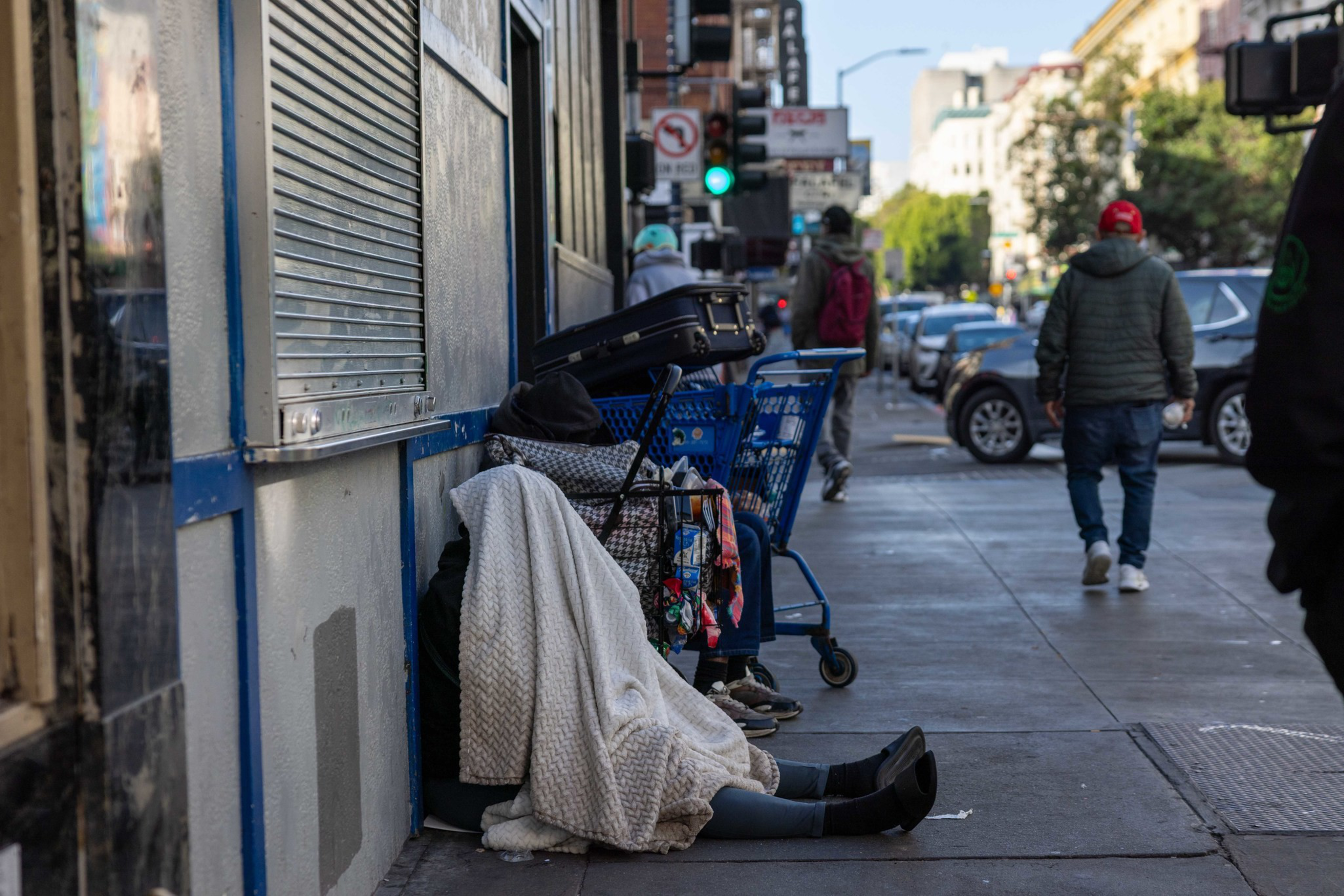 A San Francisco Civil Grand Jury report from June concluded that the city’s Homelessness Oversight Commission isn’t using its power to hold nonprofit operators of housing sites accountable. | Source: Amanda Andrade-Rhoades/The Standard
The mayor’s office acknowledged that the city’s homelessness department could be using data from critical incident reports from nonprofit service providers to “more systematically identify safety trends.”
One of the grand jury’s key recommendations calls for data from critical incident reports to be aggregated and anonymized into quarterly reports to the Homelessness Oversight Commission. The grand jury also recommended publishing the data on a public dashboard.
Lurie rejected both recommendations.
“The City will not implement this recommendation,” his office wrote in its response. “HSH already reports relevant public-safety data monthly for neighborhoods with high concentrations of HSH-funded sites and shares CIR information with the Department of Public Health and other operational partners as needed to support oversight and safety planning.”
Lurie’s office added that some data could be made available to those who file public records requests.
The grand jury report emphasized that outcomes for unhoused people at permanent supportive housing sites must be among the main benchmarks city leaders use when reviewing the work of contracted service providers — typically nonprofit organizations — running those sites.
The report also noted that the 2024 statistic (opens in new tab) — that 26% of overdose deaths took place at permanent supportive housing sites — was an increase from prior years (opens in new tab).