
IRVINE — Orange County architectural firms saw an 11% jump in billings over the past year, growth driven primarily by housing, hospitality and mixed-use projects.
The 27 firms reported $624 million in Orange County billings for the 12 months ended June 30, up from $561 million the previous year.
Twenty-one firms reported or were estimated to have increased local billings, while three posted declines and three were unchanged.
Irvine-based LPA Design, the architecture firm behind Hoag’s new $1.2 billion Sun Family Campus, led all firms with $92.7 million in local billings, up less than 1% from last year.
AO in Orange followed with $81.2 million, a 9% increase. No. 3-ranked Ware Malcomb in Irvine had $74.1 million in local billings, a 34% jump from 2025.
KTGY, based in Irvine, moved up two spots from six to four. Its Orange County billings rose nearly 28% to $42.9 million.
Rounding out the top five, WATG in Tustin climbed four spots to No. 5. Its billings jumped nearly 70% to $40.6 million, up from $23.9 million.
The firms reported 2,708 employees in Orange County as of August, a 3% increase from 2,632. The number of licensed architects rose 11% to 499.
Leaning on Housing
KTGY Chief Executive Will Bate, who took over as CEO in April, told the Business Journal that housing projects drove much of the company’s work.
The firm saw strong demand for senior living, student housing and mixed-use developments with retail.
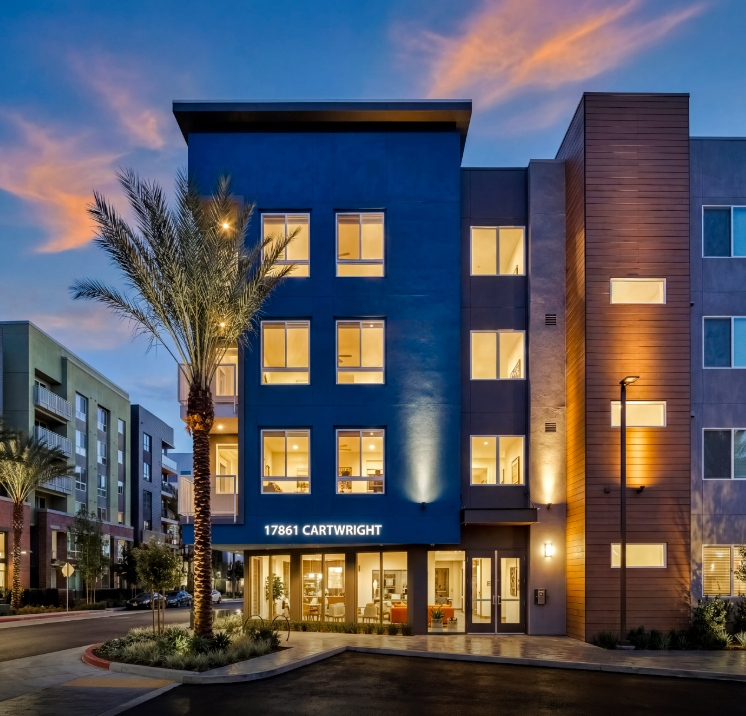
The company was part of the team that opened the $43 million Cartwright Family Apartments, an affordable housing project in Irvine, earlier this year.
“The market continues to experience strong tailwinds from single-family and townhouse development, senior living and new developers breaking ground,” Bate said.
Bate said that uncertainty about tariffs caused some projects to pause last year, but that pressure has eased. Now, clients feel more confident moving forward.
No. 8 ranked MVE + Partners said larger residential mixed-use projects drove their higher billings.
The firm also sees increased interest in adaptive reuse, tenant improvements, and office-to-residential conversions, “as property owners seek to maximize the value of existing assets,” an MVE official said.
No. 24-ranked Taylor Designs dropped 12 spots, reporting a 71% decline in local billings.
“In 2026, we completed some important projects in Orange County. With several exciting new projects on the boards and in the early design stages, we are looking forward to a strong close to the year,” Jamison Delfino, principal and office leader, told the Business Journal.
Meanwhile, WATG, known for its work on the Lido House and Ritz-Carlton Laguna Niguel, has expanded into gaming, entertainment, luxury and lifestyle multifamily and branded residential projects, according to Monica Cuervo, WATG’s managing director for the Americas.
She told the Business Journal that hospitality remains WATG’s largest source of demand.
Challenges Remain
Several officials said it remains challenging to move projects from the drawing board to construction.
“Construction cost volatility and project funding remain significant challenges in the industry,” Cuervo said.
WATG says it works with developers earlier in the design process to look at less expensive structural systems and materials. They also try to use space more efficiently without losing the project’s overall vision.
Bate sees similar pressures.
“Sites are tighter, regulatory frameworks more complex, and financial goals remain at the top,” he said.
Even with the overall rise in billings, architects say they still have to get more out of increasingly limited projects.
For KTGY, this means making decisions about structure, materials and layouts earlier. They are also paying attention to construction innovation and considering options like modular construction and mass timber.
Bate said the question developers are increasingly asking them:
“How do we deliver livable environments within these increasingly tight boundaries?”
Research Director Desmond Celo contributed to this report.