
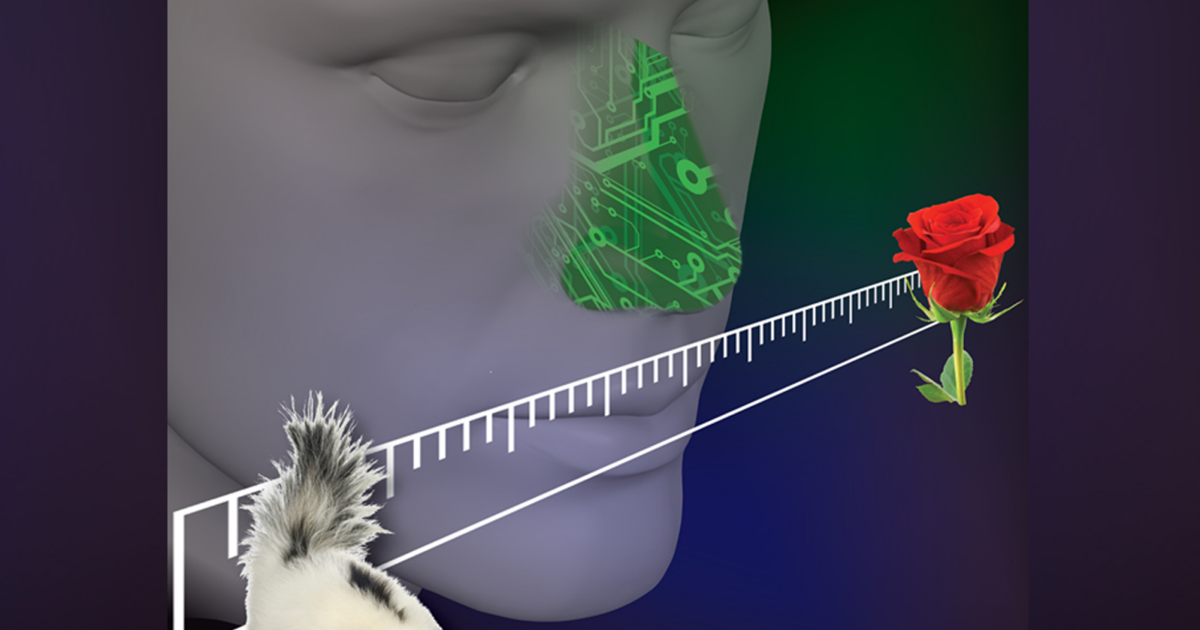
An “electronic nose” developed by campus researchers uses scents associated with certain foods to identify when the foods are in the process of spoiling as well as if they contain nut allergens.
The researchers from Javey Research Group developed a chip with 16 sensors, each detecting a different combination of gaseous compounds. Each sensor reacts differently to the gas molecules that emit from different foods.
Using machine learning, Carla Bassil, a fourth-year Ph.D. student in electrical engineering and computer sciences and the lead author of the study, trained a model to recognize the difference in sensor responses to the scent of foods when they were fresh and when they had been left at room temperature for extended periods of time.
They trained the nose to recognize the scents of different household foods such as strawberries, blueberries, raw chicken, boiled eggs, whole milk and more.
Bassil explained that human noses have about 400 receptors that bind to various gas molecules and create neuron pathways allowing us to recognize scents and smells.
The electric nose, by contrast, uses an array of chemical gas sensors. When gases from food reach the sensors, a chemical reaction occurs. The gas sensor converts the reaction into an electrical signal, which the researchers are then able to read.
The electric nose could have some functional uses beyond the lab. Bassil said one possible use for the technology could be within smart refrigerators.
Some smart refrigerators use cameras to monitor food for spoilage, but cameras in these refrigerators are unable to detect spoilage when food is covered by opaque packaging.
“If you have some opaque packaging around your food, the camera is not gonna be able to see if it’s going bad, like a carton of milk for example,” Bassil said. “That’s where scent sensors can help.”
Bassil said the concept of electric noses has been around since the ’80s, but that they didn’t have the same data processing capabilities that exist today.
Although she hopes the electric nose can be used commercially, Bassil said there are still limitations when it comes to gas sensors. Improving the sensor technology is something she is continuing to work on.
“We are still kind of limited by the same historic issues across the board for gas sensors,” Bassil said. “I really think that the key innovation and the key work in the e-nose community still goes back to those core sensors.”
Bassil said she plans to continue exploring new applications for the technology while improving its sensors, bringing the electric nose closer to commercial use.
This article was authored by Maame-Abena Dwumfuoh, a participant of The Daily Californian’s High School Journalism Intensive.